Happy International Women’s Day

473_485282898203686_1761119145_n(Vietnamese follows English)

I hate today, March 8th, which is called the International Women’s Day. While it does not make much sense in other countries, in Vietnam it makes me think that I am praised for the WHOLE DAY because I have been disadvantaged, marginalized, looked down on, and treated unfairly for the rest of the year, so today I can be patronized and my head can be patted on with a hidden patriarchal message: “See! Half of the world; you are not forgotten yet!”

This picture says it all. Born and raised in Vietnam, I have never seen a woman who only lives as a housewife. Vietnamese women always work, and work harder than men. They are expected to be super beings, that is, to “excel at work and be perfect at home.” I’m not exaggerating. This is the official motto of the Vietnamese National Women Association: “Gioi viec nuoc. Dam viec nha.” I suspect that this association is secretly run by men whose plot is to exploit women by telling them that in order to be a real woman, she needs to be earn money like a proper breadwinner, take care of the whole family like a respective full time working nanny, and still, be charming, sexy, obedient, and submissive towards her husband.

I long for the day this stupid March 8th will disappear like a remnant of a time when women have 1 out of 365 days to be remembered as proper humans.

Tôi ghét cay ghét đắng ngày 8/3. Nó làm cho tôi có cảm giác rằng mình được tôn vinh trong ngày này vì 364 ngày còn lại của năm mình đã bị đối xử tệ bạc, không công bằng, không được nhìn nhận đúng đắn hoặc không đực đánh giá đúng mức. Thế cho nên ngày hôm nay tôi được tặng này tặng nọ và được vỗ đầu với một cái thông điệp nặng mùi gia trưởng: “Đấy nhé! Một nửa thế giới! Các cô có hẳn một ngày…”Cả đời tôi chưa bao giờ thấy một người phụ nữ Việt Nam chỉ ở nhà làm nội trợ. Mẹ tôi thậm chí còn bĩu môi dè bỉu một cô em họ rằng “nó chẳng làm gì chỉ biết ở nhà ôm con”. Phụ nữ Việt Nam lúc nào cũng làm việc cật lực. Từ lúc sinh ra, họ đã bị cả xã hội mong chờ sẽ trở thành những siêu nhân, vừa phải “giỏi việc nước”, vừa phải “đảm việc nhà”. Đây thậm chí là một khẩu hiệu của Hội Liên Hiệp Phụ nữ Việtnam, cái hội sinh ra để bảo vệ quyền bình đẳng của phụ nữ nhưng tôi chắc chắn rằng nó đang được quản lý bởi một tổ chức bí mật của đàn ông nhằm bóc lột phụ nữ bằng cách làm cho họ lú lẫn mà tin rằng: Để có thể làm một người phụ nữ hoàn hảo thì cô phải vừa kiếm ra tiền như một người lao động chân chính, vừa quán xuyến việc nhà như một Ô sin mẫu mực, đấy là chưa kể phải vừa quyến rũ, nghe lời, gọi dạ bảo vâng, ngoan ngoãn với đức ông chồng của mình.Đến bao giờ cái ngày chết tiệt 8/3 biến mất? Đến bao giờ đàn bà nước tôi mới hết “được” “tôn vinh” một ngày để tiếp tục đầu tắt mặt tối hai tay hai súng 364 ngày còn lại?P/S sorry, quên mất! Thậm chí trong cái ngày được tôn vinh đấy phần lớn phụ nữ vẫn hào hứng khẳng định vai trò của mình bằng cách ngày thường cắm hoa đẹp rồi thì 8/3 cắm hoa đẹp hơn, ngày thường nấu ăn ngon rồi thì 8/3 nấu ăn ngon hơn…

PP/S. Việc ở nhà chăm sóc gia đình phải được coi là một nghề (cho bất kể đàn ông hoặc đàn bà), nhưng không ai trên đời có quyền yêu cầu một người bình thường phải vừa làm đàn ông vừa làm đàn bà. Hết.

Culture’s Flow (#4 in a series)

writeshareIn the first three posts ( (#1 in the series, #2 in the series, #3 in the series), I have been hinting at a metaphor for culture that I will explicitly discuss in this post. Let me introduce it with a poem, Culture’s Flow.

FlowPoem

Old conversations and new
Sometimes I ask my trainees or students to close their eyes and imagine culture as this river. Its source, high on a mountaintop, starts with the melting ice that flows from the glacial peaks where the old wisdom of our people and our history has been stored from time beyond memory. In our primeval stream of culture are stories that have been handed down for generations—they carve the deep river bed for the stream of the discourse that flows within us.

Fresh waters of discourse, tributaries join our river’s flow from other places, from others’ mountaintops, from forest-hidden springs and history-pooled rainstorms of experience. Our stream collects, incorporates, assimilates endless sources of discourse. We absorb conversations from face-to-face contact with each other, hear rumors from elsewhere. Especially today, we are inundated by electronic streams of discourse from all over the globe, pouring through virtual media, sometimes going viral. If you’re in social networks, you may get more stories, ideas, reflections, comments than you know what to do with. They overflow your banks. Little by little, and large by large, sometimes tiny imperceptible memes, sometimes by seeping flood, sometimes by tempest and tsunami, they join this river, widen and deepen it and increase its flow. There are stagnant backwaters and rich deltas.

The mix
Discourses intersect. Some join the deeper currents; others cause raging rapids and whirlpools of power and contradiction. We belong and contribute to all kinds of discourses. Everything from our nation to our favorite football team has its story, a discourse about who we are and what we are about. These discourses meet in us to create our culture, shape what we call our person and personality. They produce the endless conversation that we have with ourselves, as we noted last time. We group ourselves with others by the importance, the gravity, and the glue of what we see as our common discourse. The river is meant to nourish the land it cuts through.

When we talk about waters of ancestral glaciers for centuries, we could call them our “primitive conversations,” origins lost in time, those that we share. Then there are “prevailing conversations,” discourse in the air, on the airwaves in cyberspace, conversations that we hear and think about or just absorb, that reflect the cultural values of the specific contexts that we find ourselves in. Prevailing conversations may indeed seem different from the original ones, but then again, not always. Culture is enduring. Its discourses don’t go away, but they flow deeply and they intimately blend with the discourses of the current moment, carrying them along in the river’s course.

Forever old, forever new (Plus ça change, plus c’est la même chose!)
When I was growing up, if you needed to take care of yourself, you went to the doctor and did what the doctor told you. A generation or so later, many of us got into natural foods, natural healing and healers. It looked like a cultural revolution. What didn’t change, but actually got stronger, was the discourse that ran, “I can control my health if I do all the right things.” It is a discourse related to, “I can control my life.” “I can control my career,” etc.”

I remember a European colleague once saying to me, “You Americans think if you do all the right stuff, you can live forever.” He didn’t share my strong US discourse of control, the belief that we are in charge, or think we should be. When I was younger, medical doctors were gods (maybe they still are in some places). Now there are prevailing discourses that tell us that we can diagnose our own problems, for example, through websites like WebMD. What happens when we discuss the problems with only relying on prevailing discourse in spite of older wisdom? While Internet information may help us ask good questions, self-diagnoses based on Internet searches can also go horribly wrong.

That is just one example of how, hearing the prevailing discourse, we may think it’s far afield from primitive wisdom. Yet looking carefully, we may find that it’s just a fresh way of expressing a more ancient discourse flowing from the river’s deep streams. Sometimes there are landslides and earthquakes, events so deep and moving that they may seem to dam up the river and alter its direction, but the power of water…

Seeing culture as a river with both ancient sources fresh inflows helps us see how streams of culture combine to create our reality. We are in a cultural flow. The metaphor allows us to visualize and acknowledge the strong streams and the mix, to accept and speak about both the endurance and the flexibility, the fluidity of culture.

fullnotemptyFull, not empty
More importantly, this metaphor helps us imagine culture as inner fullness of stories and their discourse, replete with possibilities, not emptiness or alienation from our sources. Culture is forever flexible, forever moving, something that belongs to us, something that can irrigate our land and shape our landscape. Flow makes it invalid, impossible for me to stereotype or to label others or myself in fixed, inflexible ways, because we’re all part of the Flow.

Flow is everywhere, everything is flowing. We can see it, we can describe it, we hear its discourse and build our worlds with it. Yet, as the sixth century philosopher, Simplicius of Cicilia said, “You can’t step into the same river twice.” Why? The river has flowed on and you have changed as well. The challenge of viewing culture as a flowing river is that it requires us to accept that we have both inherited and that we continue to create, shape, dismantle, and destroy through the discourses that flow within us.

What can we do with this metaphor?
We can learn about ourselves and about the groups we are part of, identifying, reflecting on and taking ownership of our cultural streams. We can seek out our deepest discourse, the primitive undertows, as well as listen our prevailing self-talk and the chatter around us. We can ask what conversations are “primitive” and which are “prevailing.” What words and tones of our mother’s voice do we still hear, for example? For a humorous but confirming evidence of mother’s voice, listen to Anita Renfroe’s “The Mom Song.”

We can list or map our discourse and the courses it takes us on. I have often recommended using a personal journal for this—some years back I created a handbook on personal writing that is downloadable. When you wish to share, or explore a group’s cultural discourse, a personal or shared blog or a Facebook or LinkedIn group could focus on identifying the streams of identity we take part in. Colleagues and I developed a tool called the Cultural Detective: Self Discovery that provides some basic exercises for identifying our own or our organization’s core values, looking at how our discourse was and is being shaped by people and forces in our story. Mind mapping can be a resource for this. I use MindManager but there are quite a few software tools for this. Take a walk along your river and see what you can see…

This post originally appeared in the blog of the Center for Intercultural New Media Research and is provided with the assistance of its editor Anastacia Kurylo.

I am a creator and destroyer of worlds – and so are you! (#3 in a series)

How We Construct Culture and Reality

In my previous posts (#1 in the series, #2 in the series), I stressed how important it is for us to develop a dynamic rather than a static view of culture. Today we will launch our boat on the river of culture and peer into its sometimes clear and often murky waters to come up with a better sense of what’s down there. We noticed last time how we are ever talking to ourselves. Everything we create is a result of this inner self-talk, this discourse, our listening. So the things that we call “culture,” in the broad sense of the word, arts, music, industry, all of these things are products of this the stories we tell ourselves, this dialogue that goes on within us and around us that helps us shape and break the rules by which we make and do things.

Blog 3.1

Dr. George Simons has long been researching the stories that make us who we are. In this series of blog posts he will be leading us in an examination of critical challenges that can lead us toward a fresh vision of culture. We will explore how we come to terms with our inner and shared identities and learn about how we construct the realities that shape our now and our future world.

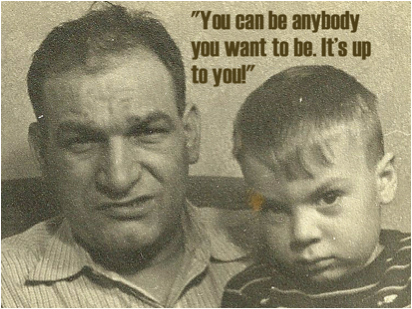
I grew up in the USA. My father was a second-generation immigrant, which often meant trying to be “more American than the Americans” because it wasn’t okay to be “too immigrant.” My father would say to me again and again, “You can be anybody you want to. It’s up to you.” “You have to take charge of your life.” “The squeaky wheel gets the grease.” Such maxims and counsel that were repeated over and over again in my family, during my education, among my peers, in the groups I belonged to, became my outlook, my world, the culture that still flows in me.

Some things we don’t ever forget. When it rains, I still hear my mother’s voice, “Take your rubbers with you.” If you saw the film Outsourced about the manager expatriated to India, you no doubt had a good howl at his conversation with his workers about the meaning of “rubbers”. (If you missed it, have a look.) Rubbers, in my case, were neither erasers nor condoms, but rubber overshoes. I don’t have any now and I haven’t had any in years, but I can still hear my mother’s voice…

Cultural discourse takes the form of memories, stories in our heads and hearts that guide us about how to act, what to think. They shape our attitudes, provide our norms. They are the raw material of our culture. Even if, and especially if these pass into the background of our minds and we no longer explicitly hear them, the ideas and feelings contained in these memories still resonate with us and lead us on.

How do we construct a dynamic definition of culture?
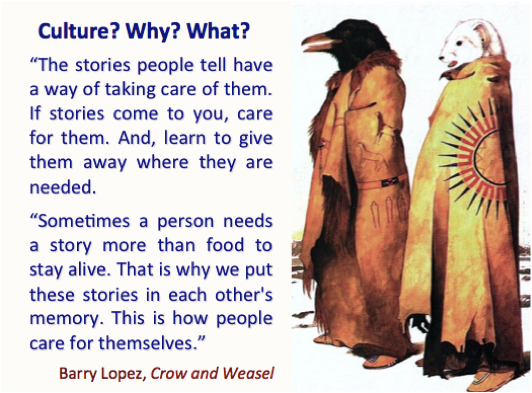
My very favorite definition of culture doesn’t come from a textbook. It comes from a children’s book called Crow and Weasel by Barry Lopez. His is the most disarming definition of culture I’ve ever laid eyes on:

“The stories people tell have a way of taking care of them. So, if stories come to you, care for them, and learn to give them away where they are needed. Sometimes a person needs a story more than food to stay alive. That’s why we put these stories in each other’s memory. This is how people care for themselves.”

Lopez furnishes us with a powerful, very powerful statement about how and why we create and pass on culture. Stories are told and retold in such a way as to shape us, giving us a common memory, common values and behavioral, even moral imperatives “for our own good.” Seeing culture this way, as adaptation to our environment, challenges our more static definitions.

Blog 3.2

Once upon a time, an anthropologist pitched tent in Borneo. Using an interpreter, he interviewed local people, looking for insight into the life and culture of the tribes native to the place. One day, questioning a local chieftain through the interpreter, the anthropologist couldn’t help noticing that the chieftain couldn’t take his eyes off a camp chair—you know, those seats with fold-up wooden frames. Nowadays, most have plastic or metal tubing, but a century ago they were simply canvas and wood. Finally, the anthropologist prompted the interpreter to ask about the chieftain’s fixation on the chair. The interpreter asked, “Why do you keep looking at the chair?” The chieftain replied quizzically, “Why do you stack your firewood that way?”

If you don’t have a use for something, you may not have a discourse for it. It may not even exist for you, or not exist in the way it exists for others. One of the critical tasks of living in a multicultural world is learning how to look at what we’ve never seen before, or have never seen in the fashion that is being presented to us. Things we’ve never “seen” before may not be physical artifacts. They may be feelings and perceptions. They may be opinions, judgments. They may even be colors – not every culture sees or names colors in the same way. We miss out on discourses that drive other people that would never drive us or might “drive us crazy!” These are not easy to discover, certainly not as obvious as puzzlement about a camping chair. Still, ask we must. We are embedded within a cultural discourse that we treat as real, but that is created by, as well as limited to what our own stories have to tell us. 

Blog 3.3Who creates?
In our times, realities, different from and deadly to each other, run rampant. Like it or not, we are challenged to understand our culture, other people’s culture, become familiar with the discourse that drives our behavior, our creativity, and perhaps brings us together in new and different ways and allows us to peacefully cohabit the planet.

So we must ask, where do our realities, where does this culture come from? Well, since culture is a conversation, since it’s discourse, it’s coming from you and me! It’s coming from everybody within earshot, from every handheld device connected to ours. Discourse requires people. It’s going on all the time, and, whether we intentionally listen to it or not, it seduces us with its themes and memes.

Sometimes, probably more often than we think, we deliberately attempt to create realities for ourselves and others. We work on shaping a reality that serves our purposes through the stories we tell in social media, traditional media, conversations with others, as we rehearse and repeat these stories in our own heads. We are as much the creators of these discourses of culture as GM and Volkswagen are designers and manufacturers of automobiles. Like the family car, some discourses can be very helpful and humane. Other discourses can be quite ugly. Like a fast set of wheels, you can use your inner discourse to rob a bank or save somebody’s life by rushing them to the emergency ward.

Roger Peterson, a US academic, is quoted saying this—and I like it:

“The collective memory [the discourse that we share] is systematically unfaithful to the past in order to satisfy the needs of the present. In other words, we attempt to address the present by reconstructing the past as if it always existed in the way we now adopt it.”

Through the stories we tell ourselves we produce a discourse. This discourse is the dynamic way we collectively create the cultural constructs that put our diverse realities, our cultures together. These constructs may be the bearers of mythology, fictional imagination, or as we all know too well, political propaganda. People are competing with their stories to create the realities they want for themselves and for others. For the sake of consistency and credibility we try to present our new story as the true and eternal story.

Enter the discourse of new media
How are new media affecting, constructing this flow? It is probably too early to tell, but certainly not too early to pay attention. For sure, they are being used both in traditional and novel ways.  Certainly they have multiplied by a factor of Xx the sheer volume and range of participation within one generation. They can be the conveyors of the traditional discourse which we consider wisdom, discourses that certain of us would like to impart to the rest of us, philosophical and religious, or New Age ideals; at the same time they are also the tools of revolution and the conveyors of revolutionary values, often drawn from the same sources, but re-expressed and broadcast in nanoseconds in a volume that hitherto would have been deemed sorcery.

How do we sort out what is new and fresh from what is newly or freshly restated to fulfill a desire or to meet a contemporary challenge? The wish to “sort out” in some definitive way is perhaps a false aspiration, a question to which there is no answer, a cul-de-sac, whose alternative is ongoing reflection as an essential part of our reality construction process. In new media, as in any other media that we use to create reality by discourse, these fresh tools are appropriated to change and introduce the realities that its authors, consciously or unconsciously, wish to disseminate.

Blog 3.4We all know that the Internet allows us to create reality ex nihilo. Fake user names create “people,” as do avatars of “aliens.” We even build virtual worlds that allow people to accept a second and a third and perhaps an infinite number of lives and realities. If you can imagine it, say it, you can be it. Yea, “Ye are gods.” Like the Jehovah of Genesis, we say, “Let there be…” And behold, there it is! And, if we are the ones who said it, we are also likely to proclaim that it is good. Like Shiva of old, I am the creator and destroyer of worlds – and so are you!

Charlatans, con men, name changers, shapeshifters and princes donning pauper’s clothing are not new to our human story. But the possibility and the temptation to creation on a quasi-divine level, and the consequences for doing so have never been so available and up for grabs. Even so, we like to imagine the world as somehow stable and static, at least in our desire to create something solid and lasting, even or perhaps especially in a virtual environment. Our human minds and hearts, even in intangible media, are inclined to treat our creations, our culture as real, not constructed.

John Lennon, a great interculturalist in my book, said “The more real you get, the more unreal the world gets.” The more you can get perspective on the discourse that flows around you, the better chance you have of seeing these things, not as useless or false, but for what they are, our attempts to construct things for benefit, for surviving and succeeding. We will look at this again as we seek a fresh cultural discourse to reshape our perspective. Meanwhile, how do you react to this fearful relativity of reality, or to the multiplicity of realities that new media have put at our disposal and which often invade our stability? What have you created as real for you? Are there real worlds, or only virtual ones…?

In Cultural Detective: Self Discovery® we offered some exercises to help you listen to your inner conversations and stories. These are only starting points. In this blog you will sometimes see pictures I have extracted from my past. This is not an exercise in nostalgia or ego promotion, but a suggestion that you might also explore the images and sounds of the past to bring the sources of your cultural discourse into focus.

This post originally appeared in the blog of the Center for Intercultural New Media Research and is provided with the assistance of its editor Anastacia Kurylo.

Cantemos las mañanitas

(English follows the Spanish)
Para muchos de nosotros los que hemos pasado alguna temporada de nuestra vida en un punto geográfico de América Latina, escuchar Las mañanitas nos hace brincar el corazón. Las hemos tomado prestadas de la tierra azteca, de México lindo y querido y nos hemos apropiado de más de una versión para celebrar el día de cumpleaños.

Pues bien, cantemos hoy Las mañanitas al unísono para este blog y el proyecto que Cultural Detective ha emprendido con el fin de llevarnos de la mano en el camino de la interculturalidad. En uno de sus versos dice  “despierta mi bien despierta, mira que ya amaneció, ya los pajaritos cantan la luna ya se ocultó”.

(Una versión con un personaje italiano que conocí como argentino, el Topo Gigio)

Que salga el sol entonces para todos y podamos seguir enriqueciendo este espacio, este encuentro de mundos, ideas, sabores y colores. Que podamos entretodos establecer el entendimiento de las mentes que puedan traer juntos a los pueblos.

Felicidades Dianne, Felicidades Cultural Detective.

Let’s Sing Happy Birthday

For many of us who have passed a portion of our lives in the geographic area that is Latin America, hearing “Las Mañanitas” brings joy to our hearts. We have received the song on loan from the land of the Aztecs, from “Mexico beautiful and beloved,” and we have appropriated more than one version of it to celebrate our birthdays.

So, today, we sing Las Mañanitas in unison for this blog and for the Cultural Detective project, which has been undertaken to promote our journey towards interculturalism. In one of the song’s verses it says, “Wake up my dear, wake up, look what has risen, the birds are already singing and the moon has disappeared.”

The above video is a version of the song with Topo Gigio, an Italian personality that I thought was an Argentino.

I trust the sun will come out for everyone, and that we can continue enriching this space, this meeting of worlds, ideas, flavors and colors. I hope that together we can establish an understanding of the minds that brings people of all communities together.

Congratulations, Dianne, congratulations Cultural Detective.

Happy One-Year Anniversary of this Blog!

congratulations_sticker-p217320826197787657en8ct_325Happy Birthday! The Cultural Detective blog is one year old!

A year ago, on February 17, 2012, we made a commitment to blog regularly to promote cross-cultural understanding, link theory and practice, encourage best-practice use of tools, share resources and techniques, and raise awareness of the importance of building constructive cross-cultural bridges through communication. That commitment was intimidating — life and work are busy and the blog meant adding another major task.

Today, please join us in a bit of celebrating — this is our 128th post — not bad for a busy year and a new undertaking! Our quest isn’t for quantity, but rather to share a variety of quality educational materials.

Playing on the sound of the Cultural Detective, we started our blog with twin themes: 22 posts related to Cultural Effectives and 11 posts illustrating cross-cultural missteps or Cultural Defectives. We welcome your additions to these posts — we all learn from sharing  each other’s experiences!

Speaking of sharing, a terrific gift this year was the series of posts by Phuong-Mai Nguyen, as she made a journey to trace the path of Islam from its origins as it spread outward. And, while we began the blog in English, we are happy to also be able to publish some posts bilingually in Vietnamese and Spanish.

Over the last year, we reviewed 19 resources, including five books, five training and coaching tools, three movies, two sources for research data, and two assessment tools.

We shared eight exercises/activities, eight free gifts/downloads, six how-tos or tips on using the Cultural Detective Series correctly, and one half-day workshop design. We posted four different research studies and theory reviews, as well as seven pieces of feedback and guidance from customers.

We were pleased to see the blog’s popularity building over the course of the year. The blog’s busiest day was December 13th, when seven posts showed record readership:

  1. Respect for All Spiritual Traditions
  2. Developing Intercultural Competence — Online?
  3. Film Review by Sunita Nichani: English Vinglish
  4. Every Organization Needs Intercultural Competence
  5. Resource Review: GDI Benchmarks
  6. What Do You Mean? I Worked Abroad 20 Years and Scored Low?!
  7. Partnerships: 5 Tips for Turning Frustration Into Innovation

Of course you, our readers, are central to us. You are the ones doing the important work in our world, teaching, coaching, educating, consulting, training, managing, guiding, bridging, mediating. You are building intercultural competence, respect, understanding, equity and collaboration in your spheres of personal influence. So who are you?

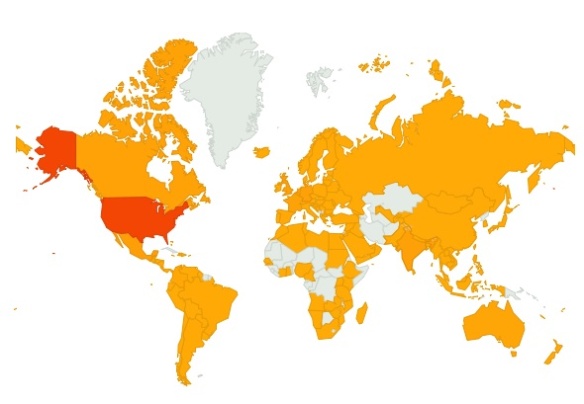
You come from 152 countries — that’s only 40 fewer than the number of UN member-countries. There is not a lot of information about blog readers except for where your IP address is registered. You, our followers, truly come from all over the world — though we could use some readers in Greenland and a few other locations, as you can see on the map below.

CD Blog Readers Year One

Cultural Detective Blog followers log on from these countries

The top 20 countries from which we draw followers are:

  1. USA
  2. Mexico
  3. India
  4. Germany
  5. UK
  6. Canada
  7. France
  8. Australia
  9. The Netherlands
  10. Colombia
  11. Spain
  12. New Zealand
  13. Argentina
  14. Japan
  15. Switzerland
  16. The Philippines
  17. Israel
  18. Malaysia
  19. Brazil
  20. Belgium

Given the diversity of our followers, and the variety and quantity of content, we wondered what you found most interesting in our first year? Surprisingly, three of our top five most-viewed posts were about food! Congratulations and many thanks go out to guest blogger Joe Lurie, who authored two of those. The top ten posts on this blog in 2012 were:

  1. Joe Lurie’s Bicycling in the Yoghurt: the French Food Fixation
  2. Kevin and Rita Booker’s Using Film in Intercultural Education
  3. An anthem for the use of intercultural communication entitled Every Organization Needs Intercultural Competence
  4. Want to Feel Ukiuki, Pichipichi and PinPin? Japanese Food Onomatopoeia
  5. Joe Lurie’s The Squid Has Been Fried: Language, Culture and the Chinese Food Fixation
  6. A book review of How Maps Change Things
  7. A post on cultural appropriation with the case in point: The Swastika
  8. Our post entitled, Infographics on World Cultures and Immigration Trends
  9. A post explaining how to cull learning from some of those images we find in social media, entitled Can You Read This?
  10. Belief Holding as an Intercultural Competence, a competence that has long been one of my favorites, referencing Milton Rokeach’s Open and Closed Mind

Our top five most commented-on posts included one that didn’t make any of the lists above: Diversity Training Doesn’t Work! Obviously a title for some debate and discussion!

Many, many thanks to our regular authors Kris Bibler, Phuong Mai Nguyen, Tereza Bottman, Maryori Vivas, and Kate Berardo. Many thanks as well to our guest authors and contributors, including: Joe Lurie, Anna Mindess, Sunita Nichani, Piper McNulty, Barbara Schaetti, Pari Namazie, Thorunn Bjarnadottir and Avrora Moussorlieva, Kevin and Rita Booker, Carmen DeNeve, Ruth Mastron, Tatyana Fertelmeyster, George Simons, and Madhukar Shukla. We could not have built this terrific blog community without all of you who have commented, shared your resources, reposted our posts, and reviewed our posts before they were published. Many thanks!

If you have a passion for writing about cross-cultural issues and are interested in joining us here as a guest blogger, please contact me. We would love to be able to provide space for talented people to share their voices! We would also welcome your ideas for stories or resources to review, as well as your feedback.

Thank you for accompanying us during this first year of blogging! We trust that you have benefitted from what we have shared, and the thoughts and comments of readers around the world. We look forward to a peaceful and caring 2013!

Culture’s Dynamic… What Are You Listening? (#2 in a series)

Dilemma

Dr. George Simons has long been researching the stories that make us who we are. In this series of blog posts he will be leading us in an examination of critical challenges that can lead us toward a fresh vision of culture. We will explore how we come to terms with our inner and shared identities and learn about how we construct the realities that shape our now and our future world.

If how we talk about culture, as I mentioned in the last post, appears too static, it is not because culture itself is static. Its dynamism penetrates every corner of life. Why this paradox? Why? We need to look at culture not as an idea, but in action.

I can’t tell how many of you are having conversations with your partner, children, dog, or friends at the moment you are looking at this blog, but what I am sure of is that, even if you’re not talking to anybody, you are talking a mile a minute. Research suggests that even in a face-to-face conversation, people are speaking to themselves about eight times as fast as they talk to each other. In a tele-conversation you can mute the microphone but not your mind. This means that, even if you’re not talking to any friends, pets, or other things in your ambience at the moment, you’re talking to yourself—unless of course you’ve fallen asleep and may be dreaming. Sometimes we are totally with these inner conversations—we call it “daydreaming.”

Screen Shot 2013-02-09 at 10.28.47 AMTalking and listening
This is to say, with your inner chatter you’re asking yourself, “What’s this all about?” “What’s he saying?” “Is this useful to me?” “Do I understand this, or this, or this?” Your mind is proposing all kinds of things about what’s going on around and in you, “What am I hearing?” “What am I doing?” “What am I feeling?” Trying to make what we are sensing fit in with what we know. There are even those little conversations we mislabel as distractions, “What’ll I do tomorrow or this afternoon or have for lunch?” We’re always talking to ourselves. We can’t help it. It’s the way we are. Some of us may have learned to meditate to slow down or to quiet our inner voices at times, but they keep chattering on most of the time, whether you pay attention to them or not. What are you talking to yourself about at this moment?

What is this inner flow all about? It is what we call “listening.” I know that sounds crazy because we’ve all probably been taught that to listen, we should shut up, stop thinking and hear the other out. Well, you can’t do that very well. What really happens is that the mind is forever proposing theories about: What’s going on here? What am I reading, hearing? Do I have a second opinion? What should I do? Is this good bad, beautiful or ugly, worth my time? Should I go do something else? And so on and so forth.

Listening is that voice—I’m describing it simply as a voice, but the flow of listening contains pictures, imaginative scenarios and feelings of all kinds that come up in reaction to what’s going on around you and in you. Actively listening means engaging with these conversations, deciding which are focal, which should take priority, which ones we wish to avoid, pursue, take action on.

This is culture!
The conversations, the discourse that you listen to is what we call “culture.” In other words we have inherited, built, built upon, and shared such discourse all of our lives. Today I’m inviting you to take a look at it in this new and different way.  Listening is culture speaking.  It is at once process and content. We have inner conversations, discourses about all kinds of things, about our goals, about the people we are, whether we’re how we should be or not. We have basic discourses about such things as: What’s a man? What’s a woman? How to live out my masculinity, my femininity? We have discourses that come from where we are born, the gangs we hang out with, and discourses that prevail at a certain point in my generation, in your generation.

That discourse not only originates from outside of us, but also springs up from within, as our unconscious mind brings these strains together. With old conversations rubbing up against the new, sometimes helpful, sometimes contradictory, we are ever awash with fresh ideas in the wired, or should we start saying, “wireless” world that we live in.

A torrent of discourse
So today the culture that builds our inner listening is a flow of discourse coming from countless sources; we live in worlds that are continually shaped by these flows of discourse within us and around us. They are continually flowing over us and into us, following old channels and carving new paths. What was once a slower moving stream of discourse has now become a torrent with the explosive growth of social media and facile, inexpensive means of communication. It sometime seems that everyone is wired, everywhere, or, again replacing the aging terminology, it seems that “everyone is wireless everywhere!”

When I was a student at Notre Dame graduate school, I kept a notebook in my dorm room where I jotted down what I needed to research at the library. Every Tuesday and Friday afternoon I trekked across campus toward the arms of “Touchdown Jesus,” the mosaic mural that welcomed scholars to the Hesburgh Library, to satisfy my learning needs and humor my serendipity. Today I can Google and Wiki most information quicker than I can stand up and walk over to the bookcase where I know the exact book that holds my answers. In terms of sheer quantity, I suspect that, now as a septuagenarian, I am learning a hundred times more each day than I did as a collegian. Shivering in the wee hours of the winter morning, I Skype with heat-oppressed colleagues in Australia or friends in Indonesia without thinking it magic. Yesterday I bought a USB flash drive about the size of the first joint of my index finger, but large enough, I am told, to hold 32 copies of the Encyclopedia Britannica I once owned. Go figure!

On the sociopolitical level, we see new media: Twitter, blogs, and Facebook, support the Occupy protests, the Arab Spring, and provide a conduit for wikileaks, all calling into question the way the culture of power is structured and exercised. Battlefields are managed from half a world away. On the commercial level we may feel helpless in the face of mind-bending electronic advertising, victims of strangers who can know everything about us, not just where but how we live, but our likes and dislikes, as well as the GPS coordinates of our smart phones at any given moment. Ought we call in the exorcist or take a digital sabbatical when our inner voices start to babble?

Dynamic culture
There is no end in sight. On one hand our identity seems diluted in the flow of discourse, sound bites and memes, while on the other hand we have powerful means to connect and coordinate our values and our actions to shape both the world we have inherited and this emergent electronic global village we now live in. Given this, we need a truly dynamic discourse about culture, not just a static definition that puts labels on what people have in common and do in similar ways, but one that enlightens us on the ways we share and influence, as well as misunderstand each other.

Please share some reflections on how you see your identity in this new context. What is changing? What is not? How are you and those about you connected, supported, or threatened by the discourse you share? What do you listen? What are the inner voices saying? What is culture telling you?

This post originally appeared in the blog of the Center for Intercultural New Media Research and is provided with the assistance of its editor Anastacia Kurylo.

Unsolicited Review

coverAfAmI just had a chance to review the newly released Cultural Detective: African-American, by Kelli McCloud-Schingen and Patricia Coleman, as well as talk to the authors yesterday in the teleconference on the topic of “Black versus African-American.” Normally, I don’t review items in this series, not just because I’m the co-author of several, but because the formula for their success both in printed versions and now online hardly requires special notice for the individual items which now number well over 50.

However, in this case I think a word is necessary. Necessary, particularly because my suspicion is that most folks reading the title twill probably think largely in terms of diversity and inclusion, rather than in terms of culture. While these issues are at a certain point inseparable, one of the weak points of the diversity movement in the USA has been to imagine itself as intercultural, with little attention, and sometimes fear of dealing with the attitudes and values of targeted groups. There is still a lot of sensitivity here. Consequently when people, particularly outside the US, see publications focused on US minorities, they may think to dismiss them as some of the same-old, same-old diversity stuff.

That is not the case here. This is truly a work of intercultural significance, despite the fact that the participant guide runs to only about 30 pages. First of all, the introduction, slightly longer than the average instrument in this series is absolutely brilliant. It gives the user an overview that is rich, thoughtful, insightful, even for, perhaps particularly for US Americans who tend to see racial issues one at a time, without a sense of heritage and culture in their historical context. But it is certainly what outsiders need and should want to know in order to work well with African-Americans.

“Truly a work of intercultural significance!”
“Absolutely brilliant.”
“Rich, thoughtful, insightful.”
“Heritage and culture in historical context.”

For the many expats going from other parts of the world to the USA, there is usually a question of, “What should I know about… How should I behave around… What should I avoid when dealing with African-Americans?” This instrument helps you cut to the chase, not by offering “kiss, bow, and shake hands tips” but providing insight into the values, strengths, and sensitivities peculiar to a part of the US population who are still to a great degree consciously heirs of a trajectory anchored in slavery, passing through personal pain even while also arriving in corporate boardrooms and occupying the Oval Office. This is a solid cultural perspective on the discourse, on the story that leads to the core values of African-Americans today, in all their diversity, and in contexts where bias and discrimination are still possible obstacles to appreciating cultural identity.

So, if you are preparing expats to go to the USA, or if you are one, this is an important tool, and now one of several dealing with internal cultural dimensions of the very diverse USA, now available in the easily accessible online versions of Cultural Detective.


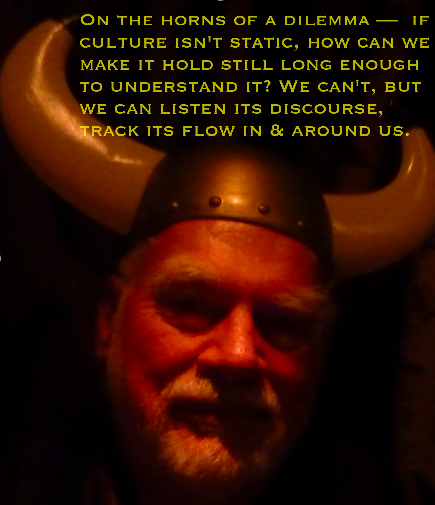
Intercultural Work—Stuck in its own past? (#1 in a series)

GSportrait

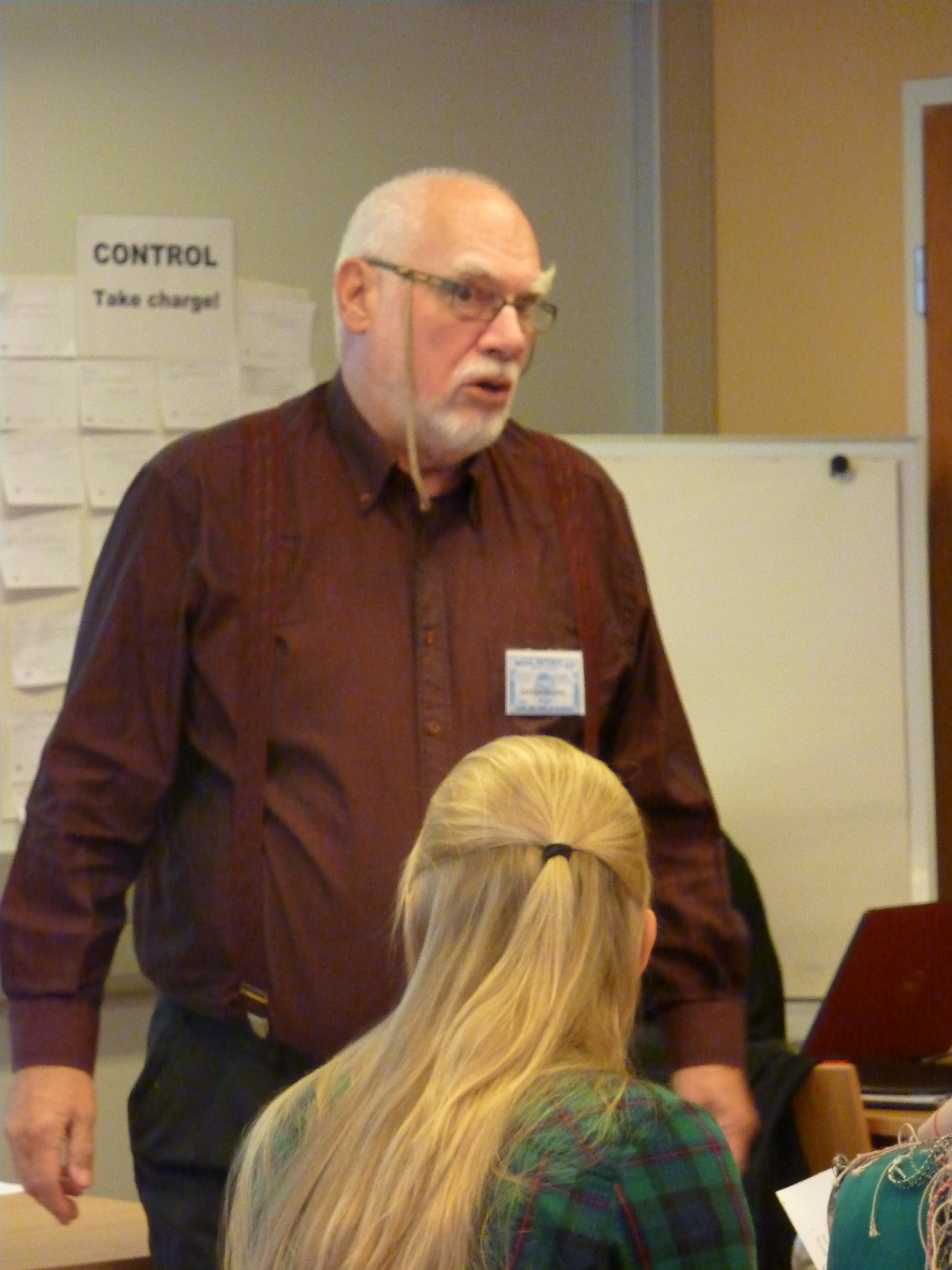
Dr. George Simons has long been researching the stories that make us who we are. In this series of blog posts he will be leading us in an examination of critical challenges that can lead us toward a fresh vision of culture. We will explore how we come to terms with our inner and shared identities and learn about how we construct the realities that shape our now and our future world.

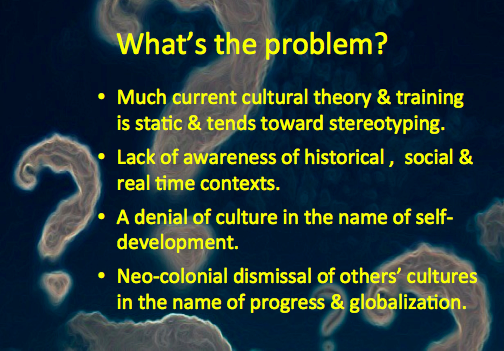
Despite a tide swell in intercultural communication and worldwide immersion in social media, the current field of intercultural communication itself seems static. This blog post articulates five ways in which the field appears to be moving too slowly for the world around it.

1. Essentialism
The word used for the kind of intercultural intervention that leads in the direction of stereotyping is called “essentialism.” One tends to assume that a certain person must inevitably share certain cultural characteristics or behaviors if they come from a particular group, ethnicity or culture. Saying that I am from the USA or that I am German or Nigerian makes a whole mess of things stick to me as stereotypes. Of course, we do have cultural characteristics, but who has them, to what degree as well as when, how and where they’ll be expressed is what we don’t know, and is what we need to learn about each other as we work together. Moreover, we belong to multiple cultural circles that may define us in variable, even contradictory ways. Interculturalists loudly condemn stereotyping but seem less adept at escaping from delivering cultural information.

There may be benefits to identifying with a group despite or in some cases because of the stereotypes, though all too easily an identity is painfully imposed on us. A little story to illustrate this. Nordstrom is a big department store in Los Angeles, in the San Fernando Valley. A young woman in my class at Loyola—let’s call her Yuko—told me how, when working there, a woman making a purchase asked, “Honey, where are you from?” (Yuko had identifiably Asian features in her face). The young woman said, “Oh I’m from right here in the Valley. The woman went on, “But where did your parents come from?” Yuko answered, “Oh, they came from the Valley, too.” The woman persisted, “But where did your grandparents come from?” Yuko answered, “Oh, they weren’t from the Valley, they were from Fresno [another California town].” In fact, Yuko’s Japanese-American family predated the many European immigrants that came at the end of the 19th and first half of the 20th century. Essentialism looks at “difference” as “not belonging.” Yuko suffered this kind of pain repeatedly just because she didn’t look like “everybody else.”

2. Ignoring context
A lack of awareness of the social and particularly historical contexts is another way the intercultural thinking and practice can remain static. A lot of people’s feelings about those different from themselves is not simply a matter of their looking or sounding different, and may be anchored in a story of things that happened in the past. Remember, for example, when Yugoslavia disintegrated into smaller states, how politics called into popular sentiment old memories of “what they did to us” 50 years ago, 500 years ago, 1000 years ago, and so on. These memories live in a culture and affect how we react to individuals in other groups. This is to say nothing of social context, particularly now. Since the financial crisis, we’ve been struggling, in a more conscious way than most of us have done in our lifetimes, with those who have and those who have not. This also provides subtext for our communication with each other.

Questions

©George Simons, blog.culturaldetective.com

3. Cultural denial
A lot of people I work with, particularly many younger people today, have or are encouraged to have an attitude that expresses itself as, “I don’t have a culture,” or “I’m a global person, a global citizen.” This suggests that prioritizing individualism, so strongly promoted in the West, makes it in a way shameful to be connected to our past, to have identifiable roots. This is true not simply of third culture kids (TCK’s), some of whom have been jetsetters while in the womb, but of others, and seems to be part of the educational process. All too many people, and not exclusively the young, have suffered by or are fearful of being labeled, of being stereotyped, as we mentioned above, or they feel a need to disassociate with what feels like the oppression of their origins, their family, religious faith or local context. Having cultural features seems a liability to them, a restriction of freedom. Inability to address this inclination is another point of stasis in intercultural work.

4. Implicit colonialism
An even bigger issue is a kind of lingering sense of better-than-thou-ness, and noblesse-oblige do-goodism that results in a kind of hidden chauvinism, a myopic view of other cultures that too easily infects intercultural efforts and holds them back. Part of this involves interculturalists’ need to come to grips with colonial history and its enduring effects in political and economic terms , not just hand wringing. We are fully aware of having a long history of European colonialism and US colonialism that doesn’t take other people’s cultural and environmental ownership seriously. So we come to enlighten them, to bring them progress, to bring globalization, of course to sell them our products. The need for cultural savvy makes it an important commodity today and this situation begs us to take a larger view. But even more important for intercultural professionals are discovery, exploration and treatment of the psychological residue of colonial thinking in themselves. Failing this, it is hard to imagine our efforts moving forward in the ways we like to think that we intend.

5. Dyadic dimensional thinking
Traditionally, in the boilerplate of the intercultural profession, we studied values in what are called “dimensions.” This was our starting point, something for which we are very grateful to the original researchers, people like Geert Hofstede and Edward Hall. In their observations and studies they raised questions and classified the answers. For example, they identified people as more or less “individualistic” or “collective,” “masculine” or “feminine,” “direct or indirect,” according to how people in different cultures reported their likely behavior given similar situations. Their work made us aware of the fact that there were areas of life in which different people had different ways. Yet, on the other hand, the resulting value labels were a product of Western academic mentality, an attempt to understand other people on our own terms rather than on theirs. This may have been the key to the antechamber of understanding, but leaves us standing in front of a second locked door.

In sum, five road blocks, often in combination with each other, that challenge intercultural thinking and practice. Will social media change our static habits? Perhaps so, because they regularly confront us with evidence from around the world, literally at our fingertips, that may challenge these notions. Yet confirmation bias, our ability to see only what we know or expect to see and make otherness fit into it, is likely to be operative in the online world as well. What think you?

This post originally appeared in the blog of the Center for Intercultural New Media Research and is provided with the assistance of its editor Anastacia Kurylo.
Cultural Detective African-American Now Available!

coverAfAmThe Cultural Detective team is very pleased to announce the release of one of our most requested and highly anticipated packages — Cultural Detective African American! It is now available both in Cultural Detective Online and via site license.

Cultural Detective® African American explores the complexities of the culture and examines the values and communication styles of this community in an effort to bridge cultural gaps and support more inclusive groups, communities, and workplaces. It joins other domestic diversity packages in the series, including Cultural Detective Generational Harmony, Cultural Detective Women and Men, Cultural Detective LGBT, and the soon-to-be-released, Cultural Detective Latino/Hispanic.

Below, a message from package co-author Kelli McLoud Schingen:

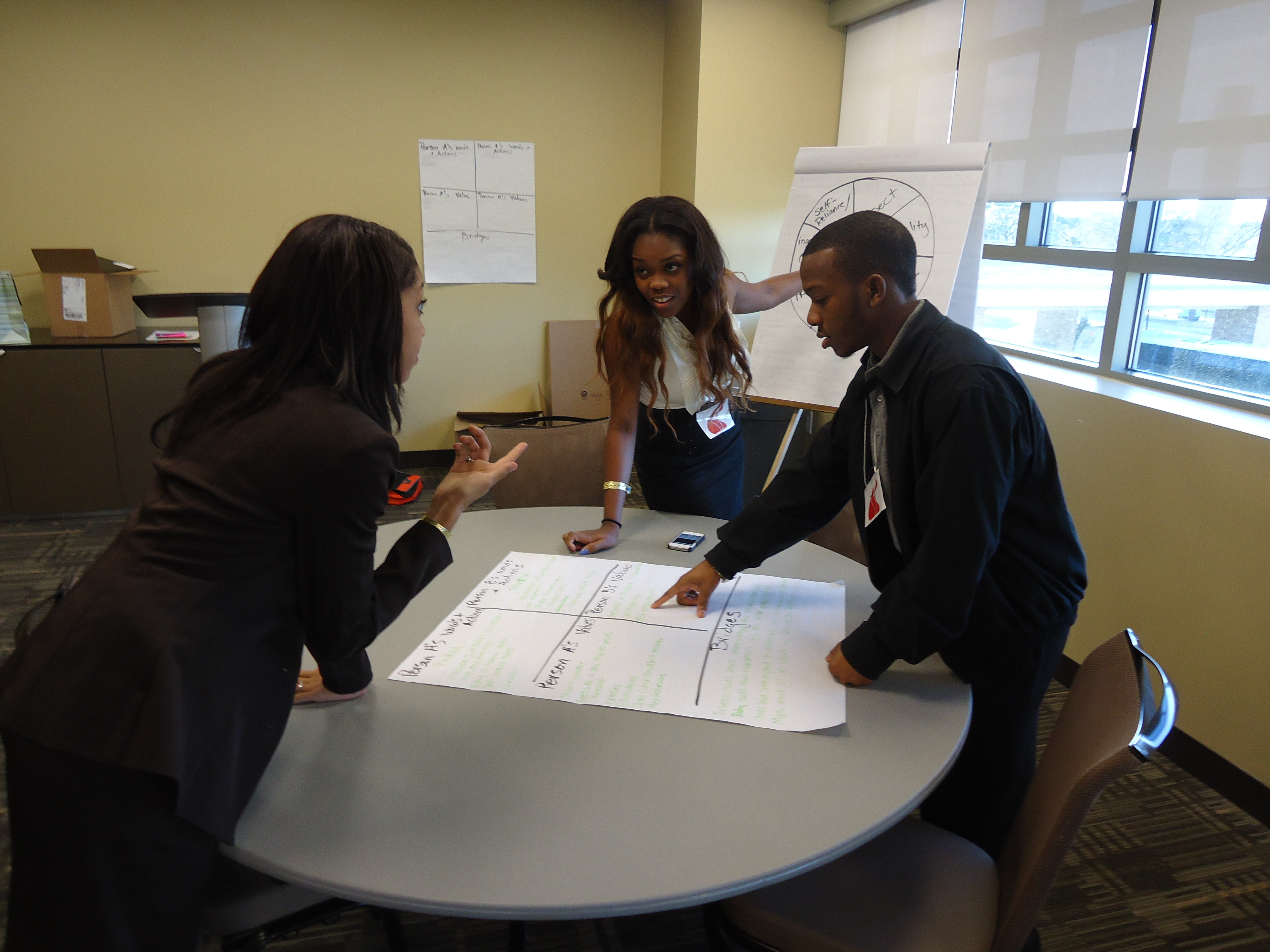
ALI 1I facilitated an Advanced Leadership Institute for the Southwestern Black Student Leadership Conference January 17-20th, and thought that this would be the perfect place to pilot the Cultural Detective African American package that I co-authored with Patricia M. Coleman. There were 25 male and female upper-level students from universities all over the U.S., prepared for an intensive three-day workshop with me on leadership skills and cultural self-awareness. I spent the first day building trust and laying the foundation for the weekend. I facilitated activities that took the students on an exploration of their leadership styles, emotional intelligence, personality types and finally, cultural self-awareness.

ALI 2On the last day I Introduced the Cultural Detective, the purpose and intent of it, and the extensive research and in-depth process that Patricia and I went through to develop the tool. Understandably, the students met the tool with a great deal of suspicion. To say they were skeptical would be a gross understatement. I implored the students to stay with me and trust the process. The students started by working on the critical incidents in the package. I then asked the small groups to present on their findings. They were surprised that there was so much to consider and really convinced that the only valid perspective was the perspective and values of the African American “character” in the incident. I spent a great deal of time sharing how we view things through our own cultural lens, and then I unveiled the African American Values Lens. It didn’t take long for the students to be sold on the process and the values as I walked them through the positive and negative interpretations of each value. They seemed to be having fun and were fully engaged. Many of them commented just how grateful they were to FINALLY have words to describe their feelings, experiences, and cultural norms that they’ve inherited. They laughed at themselves and each other as they peeled back the onion of culture, and were grateful for the opportunity to explore cultural difference in this way. When I asked if they felt that the tool was an authentic representation of African American values they said, “Absolutely Ms. Kelli!”  Then I thought, “I guess we’re ready for launch.”

SIETAR Florida will honor Black History Month 2013 with a dialogue entitled, “Am I Black or African American?” via teleconference.  Featuring co-authors of Cultural Detective African American, Kelli McLoud-Schingen, Immediate Past President of SIETAR USA, and Patricia Coleman, President of SIETAR Florida. Please join us on Wednesday February 13, 2013 at 13h Miami time (1pm EST/12 CST/11MST/10PST).
Please RSVP by February 11th.

Access the event via conference line:

Dial-in Number: (559) 726-1000
Participant Access Code: 857895


Some Cultural Detective Training and Coaching Activities

Exploring how we value our own and each other’s cultural values–another step in CD sleuthing.

All too often we trainers are apportioned a less than useful amount of time for impacting the attitudes of our trainees. This affects our use of Cultural Detective as well as many other tools that we may choose or not choose to use under the pressure of diminished schedules.

When using Cultural Detective, I find it ever more important to differentiate what we do with the Values Lenses and the indigenous discourse that lies behind them from a lot of other intercultural training approaches that focus on dimensions and increasingly lead to stereotyping. When we speak about the values in Cultural Detective, it is important to remember that these have been developed through and by the inner language and feelings of the very members of those cultures that the instruments represent.

Nonetheless, when speaking of values, it is becoming increasingly common for us to have individual participants who question them, who do not identify with them, or who even dismiss them as stereotypes. Given that the best way of dealing with resistance in a pedagogical context (as well as many other contexts) may be to flow with it and direct its energies, I have developed a few approaches that I feel may help us in these somewhat challenging situations. I’ve described them as they might be used in a teaching or training context, but they may be adapted to individual and team coaching situations as well.

First, wherever possible, I use Cultural Detective: Self-Discovery, or at least an exercise or two from it, so that participants can at least claim some inheritance of cultural values and identify them as their own. This legitimizes the discussion of culture where it might be resisted. It usually overcomes or at least mitigates the participant’s temptation to see him or herself as acultural and the tendency to vaunt oneself as a global citizen, uncontaminated by inherited culture. This is not to deny, but to affirm the fact that TCKs and others like them may be digesting a smorgasbord of cultural influences as well as generating certain cultural features pertinent to their common experiences (explored in Cultural Detective: Blended Culture and CD Generational Harmony). Often elements of cultural identity are denied because they have caused pain in growing up and finding social inclusion. Once culture is legitimated as a topic of discussion and a relevant problematic for the individual being coached or the group being trained, other things become possible.

Here are some approaches that we use when one culture is trying to learn about another specific culture, as for example, when working with teams resulting from mergers and foreign acquisitions and installations. In such cases cultural conflicts and misunderstandings are often the elephant in the room, potentially touchy subjects. While Cultural Detective may be the ideal tool for pursuing understanding on both sides, it is not always a given that participants will spontaneously identify with the values of their own culture as they are presented in the Cultural Detective materials.

So, let’s say, for example, that we are dealing with German and US cultures, either in an organizational relationship or collaborative team. Daimler-Chrysler has already demonstrated that even a good bit of upfront diversity work and intercultural instruction may not be adequate to deal with our own deeply rooted values and our perceptions of others unless they are continually identified and addressed. Thus the Cultural Detective process must be mastered and practiced and in many cases facilitation must be applied on an ongoing basis until a functional collaborative culture is established. This can take quite a while.

Facing the possibility of denial of difference as well as the possibility of participants rejecting their own or the others’ cultural Values Lens as stereotypical or just plain wrong, here are a few strategies that I’ve found to be successful. Perhaps some of you have already discovered these on your own. If so, I would be interested in hearing your versions.

  1. Evaluating the strength of the discourse and the value that sums it up. I ask participants to study their own culture’s Lens and then rate on a scale of 0 to 5, weak to strong, their own sense of how they’ve personally appropriated and express in everyday words and actions each of the values described. Then I ask them to share this with their compatriots as well as with the representatives of the other culture who are participating with them. This is a matter of not only sharing their numerical rating of the values, but talking about how each cultural value expresses itself in their thinking and behavior, as well as what parts of it don’t seem to fit or which they don’t like to identify with. This may or may not resemble or relate to the “Negative Perceptions” found on the Lens itself.
  2. Identifying commonalities: Following this discussion, I ask the individuals of each culture to study the other culture’s Lens and to do two things. First, again on a scale of 0 to 5 to assess whether, and if so, the degree to which they identify with each of the cultural values of the other group as found on the lens. Then, secondly, and this is extremely important, to identify and jot down the keywords of their own inner conversation or discourse about the importance they accord to the values they seem to share and the ways in which they may practice each of them.  Thirdly, depending on the size of the group, ask them to share their results either individually, or to conduct a discussion within their same culture group and then have the groups report out their results to each other. Here is where the essential value is gained from seeing how people would express their appropriation of elements belonging to the other culture.
  3. How do we like to be treated? Given adequate time, here is another very valuable activity that could occur at this point, but might be even better to use after the group has resolved a critical incident or two. Ask each separate culture as a group to meet together to discuss and identify and list both the attitudes and kinds of treatment that they appreciate coming from the other culture, as well as those kinds of speech and behavior that they may find uncomfortable or even damaging to the collaborative and social relationship they are trying to create with each other. The previous activities at various points are likely to lead toward the identification and discussion of stereotypes, giving rise to another possibly useful activity. I have found that frequently trainers and teachers, perhaps out of a misguided sense of political correctness avoid the discussion of specific stereotypes or stereotypical expressions, missing a valuable learning opportunity.
  4. Investigating stereotypes: We’ve long accepted the fact that stereotypes contain a kernel of truth, but that the perspective with which they are expressed maybe overgeneralized and conducive to negative judgment. So, instead of dismissing stereotypes out of hand, we can use them as starting points for deeper discussion and further understanding. So, when stereotypes surface, I ask participants to discuss questions like the following ones:
    • What is the truth in them, however small? What do you think brought them about in the first place? What perpetuates them? What insights or cautions do they deliver to us? What is the discourse that we carry about self that makes them true for us when they are about us?
    • What exaggeration do they contain? What is the discourse that makes them noxious, conflictual, etc.? When are they likely to be painful or damaging? What limits do they place on our knowledge and our inquiry about others?

So, as I mentioned above these are some of the useful practices that I keep in my tool bag for enhancing the effectiveness of Cultural Detective.  It would be good to hear what others of you have developed or ways in which you view similar activities.