Facilitated Online Learning Sessions for Cross-Cultural Skills


How can you quickly develop the skills necessary to lead your global team, manage your global project or prepare for expansion to emerging markets, without leaving your desk?


The Cultural Detective team presents a two-part series of Facilitated Online Learning Sessions that will provide you with the keys to a proven, industry-changing and industry-leading toolset for developing your individual and organizational global competence and to ultimately succeed where “culture conflicts” caused failed ventures.

  • Learn how to build trust in your global relationships.
  • Develop highly productive global teams.
  • Complete projects on time and under budget.
  • Determine how to best enter and succeed in your targeted international markets.
  • Know how to deliver superior client service, globally.
  • Get the most from your international assignees by equipping them with the skills necessary to excel in any culture.

Sessions will be held Wednesday and Friday, February 27 and March 1, 2013! Click here for more information or to reserve your spot. Seats are limited.


Cultural Detective Online is LIVE!!!!!!!!

Cultural Detective is proud to announce the new product launch of Cultural Detective Online! This tool is like having a virtual coach in your back pocket, successfully guiding you through the all-too-common missteps of cross-cultural negotiations and communications. Please check out the four videos on the home page. Today only (15-16 October, depending where you are on the planet) there is a 25% launch discount; enter promo code:   CDO-blog25  during checkout.

Huge thanks goes out to each of you who have worked with and incorporated the Cultural Detective Method into work with your clients or employee populations globally, as over the past eight years this tool has become a significant contribution to the intercultural field. Because of our clients and team, Cultural Detective has become globally recognized as one of the premier developmental tools of our time. Now we are on the cusp of very exciting and broader use of the tool through Cultural Detective Online! This new product launch furthers our mission of encouraging communities globally to prosper through intercultural understanding and collaboration.

Cultural Detective Online is useful in a broad range of contexts including global business negotiations and multicultural team effectiveness, international assignments and study abroad, and for successfully communicating within our families and communities, and within and across faith traditions.

A subscription to Cultural Detective Online offers the opportunity to explore the concepts of “culture” and “values” and how they impact communication in everyday life. It provides access to dozens of culture-specific Values Lenses and topic-specific Challenges Lenses, hundreds of real world cross-cultural incidents, and the easy-to-use Cultural Detective process for improving the ability to collaborate successfully across cultures, both on individual and organizational levels.

We are excited to announce that subscriptions are now available for individuals or groups, and we invite you to subscribe to Cultural Detective Online today by visiting http://www.culturaldetective.com/cdonline/ ! Subscriptions start at less than US$100/year, and are less for larger groups of subscribers. You will rarely find more value for your money.

More Cultural Appropriation: The Swastika

The story we published recently about cultural appropriation reminded me of one of my favorite incidents in our series. It resides in the Cultural Detective Global Business Ethics package, and involves a corporate newsletter publishing photos from the office in India. One photo, taken at a temple, shows a swastika.

Outraged, an anonymous writer emails the newsletter editor to complain about a lack of cultural sensitivity, a lack of commitment to diversity and inclusion. The newsletter editor is crestfallen; the comment saps all his energy. It is exactly his commitment to inclusion and diversity that has motivated him to include posts from offices worldwide! How much harder can he try?

The swastika is sadly a symbol of genocide and the Holocaust for many; something to be reviled. There was an unsuccessful effort to ban the use of the swastika in the European Union. Seeing this symbol can bring forth indescribable pain and outrage for many people.

Swastika is a Sanskrit word, a religious symbol of good fortune used by Hindus, Buddhists, Jains and others worldwide. It can be seen in the art of the Egyptians, Romans, Greeks, Celts, Native Americans, and Persians as well.

To me, the swastika is one of the world’s most horrifying misappropriations of a cultural symbol! I’d welcome hearing from anyone who knows the history of Hitler’s and the Nazis’ appropriation of this symbol.

It is important for us to understand both of these very different realities. To some, the swastika symbolizes genocide and hate. To others it symbolizes beauty, the steps of Buddha. Does this therefore mean we should not use it? That we should? Can we transform its use through ongoing learning and dialogue?

Back to the incident, learning to make the most of learning opportunities such as these, to encourage cultures (organizations, communities) in which people listen to, respect and collaborate with one another, is what Cultural Detective is all about. Thank you all for joining us in this mission!

Cultural Detective Online for International Teams

You’ve already told us Cultural Detective is fabulous. That it’s helped your team achieve its deliverables. That it’s rocketed your performance to new levels. That’s why we are very excited to SOON be able to offer you the Cultural Detective product line as an integrated, online system rather than as stand-alone packages! And, better yet, it’s designed as a personal coach, encouraging you and your team members to track your goals, summarize and apply your learning, and upload, debrief and share with a facilitator, team lead or each other your daily life experiences (and make accurate meaning from them).

Be sure to stay tuned for our official launch. Or, enter to win a free subscription for you or your team!

If you are unable to view the video above (if you are on an iPad or other device that doesn’t play Flash), click here to view the video on YouTube.

Please feel free to share this video with others who might be seeking a virtual intercultural coach. Please let us know what you think! Thank you!

Cultural Appropriation — A Cultural “EF”ective Story

I want to share with you a very exciting “Cultural Effective” that has just come to my attention. It is a wonderful story that shows the power of saying our truth, listening with heart, and taking action on what feels right.

It seems a southern California-based fashion house, Paul Frank, hosted a huge party/event with a Native American theme. They seem to sell (or to have sold) quite a few products that include adaptations of native designs (the designer, Paul Frank, is also a cartoonist).

The people at Native Appropriations, among others, complained about cultural appropriation of native designs, and the Paul Frank company reached out to them to ask, learn and take action! They have not only issued an apology but yanked photos of the event and removed all native designs from their product line!

I don’t know the people over at “Native Appropriations,” but the work they are doing indeed looks wonderful! And kudos to Paul Frank for their openness and even eagerness to learn and develop!

There are so many ways we can inadvertently offend one another. Refusing to take offense but rather to tell one’s truth without blame or judgment, and then to be greeted by someone fully listening and wanting to hear and learn from that truth… What a great example they have set for us!

Appropriation is a slippery slope. I can think of several times in my life when a colleague or friend kindly and generously gifted me with traditional dress from their home. I wanted to wear it, to demonstrate my thanks and to show respect. And, in others’ eyes, wearing such dress, when I am not from that place, can insult. So many times appropriation begins as a compliment, as admiration. And so much is in the eye of the beholder.

While I have no direct knowledge or involvement in this story, it appears to be a good example of going beyond “political correctness” to really listening to and collaborating with one another.

Latino Growth in USA Signals Need for Change

Andrés Tapia has written an article for Diversity Executive, in which he outlines the need to adapt US business practices in order to attract, retain and make the most of Latino talent. In the article, he references (and gives you a sneak peak of) our upcoming Cultural Detective Latino/Hispanic.

What also makes people discriminate?

(Tiếng Việt ở dưới cả nhà ạ)

I choked when this picture popped up on my Facebook wall, claiming that Muslims are being oppressed in Vietnam. Within the last few days, almost 4000 people have shared the photo. By now, those who genuinely believe that the Muslims in my country are being rope tied to each other, forced to kneel down, and threatened with knives could be a million. And the number rolls on! Uncontrollably!

There is no doubt that social media is a monstrous tool to promote both goodness and dark deeds. This is an era in which a picture does not just equal 1000 words but can turn 1000 ill-informed innocent people into 1000 martyrs.No time to read, no time to research, no time to cross check, not even time to use our brains to think. All reason can be overwhelmed by the thrilling power and the irresistible waves of emotion that a snapshot or a video clip can deliver.

For your information: This is a picture from the Vietnam war, roughly 40 years ago, capturing an investigation of North-Vietnam solders. The 70,000 Muslims residing in Vietnam are not in danger and often harmoniously mix their lifestyles and rituals with Vietnamese tradition and culture.I can imagine my Vietnamese countrymen would not be happy to see this abuse of history and ignorant act, although it may have originally been posted with good intentions. Yes, note this! It is not only the terrorists with their hideous acts that make people discriminate; it is also those who blindly believe that the whole world is against them and thus turn even a friend into a foe.

Tức ói máu khi nhìn thấy tấm ảnh này trên wall nhà mình với cái tiêu đề to tướng: Người Hồi Giáo bị đàn áp ở Việt Nam. Pót lên mạng ngày 23-8, cho đến nay đã có gần 4000 người share, và có lẽ hàng triệu người trên thế giới này đang đinh ninh rằng người Hồi ở VN bị trói chằng tay vào nhau, bắt quỳ xuống đất với dao găm kề vào cổ.

Mạng xã hội khiến ai cũng cảm thấy như mình là một nhà báo quyền lực vô song. Kể cả khi nhà báo ấy ngu dốt, quan điểm sai lạc, hay như kẻ pót cái ảnh này, thì nhìn gà hóa quốc, chỉ nhăm nhăm muốn gào lên cho cả thế gian này biết mình là kẻ bị hãm hại. Rồi thì trong cơn phẫn uất, bạ ai cũng lên án, vô tình biến cả bạn bè thành kẻ thù. Ai bảo chỉ có mấy thằng khủng bố mới làm cho người ta trở nên dị ứng với đạo Hồi?

Nhiều lúc cảm thấy lo lắng vì mình đang sống trong một thế giới mà tốc độ thông tin phát triển quá nhanh khiến người thường không mấy ai đủ thời gian để thích nghi. Một bức ảnh bây giờ không chỉ còn có sức mạnh hơn 1000 con chữ nữa mà còn có thể biến 1000 kẻ ngu xuẩn thành 1000 kẻ sẵn sàng cảm tử. Ở thế hệ You-tube này, chẳng mấy ai còn có thì giờ để đọc, để cân nhắc, chưa nói đến để suy ngẫm. Đập vào mặt một cái ảnh hay một cái clip thì lập tức tình cảm dồn lên đè bẹp tư duy. Loài người bao nhiêu năm qua đúng là cừu vẫn hòan cừu (câu này ai nói quên xừ mất rồi!)

Tái bút: Gần 70.000 người Hồi ở Việt Nam sống chủ yếu ở vùng của đồng bào Chăm. Họ, cũng như đại đa số những người Hồi trên thế giới chẳng khác quái gì đồng loại xung quanh cả. Từ khi du nhập vào VN, người Hồi thậm chí còn hòa quyện tín ngưỡng tôn giáo Hồi vào các dòng tín ngưỡng khác của dân tộc – một đặc điểm chung của rất nhiều nền văn hóa châu Á.

Endangered Languages Project

Experts estimate that only 50% of the languages that are alive today will be spoken by the year 2100. The disappearance of a language means the loss of valuable scientific and cultural information, comparable to the loss of a species. Tools for collaboration between world communities, scholars, organizations and concerned individuals can make a difference. Such is the raison d’être of the Endangered Languages Project, an online collaborative effort to protect global linguistic diversity.

The first thing I noticed on this site is the incredibly high quantity of red dots on the world map, each indicating a severely endangered language. The site enabled me quickly and easily to look up endangered languages in Mexico, where I live (the closest red dot to my home is the Seri language, one I’d never even heard of!). I also looked up the language that first interested me as a pre-teen in the southwestern USA: Navajo (it is labelled “at risk” and is currently a featured language on the site). Even in my adopted homeland of Japan, as I expected, the Ainu language is ranked “critically endangered.”

The languages included in the project and the information displayed about them are provided by the Catalogue of Endangered Languages (ELCat), produced by the University of Hawai’i at Manoa and The Institute for Language Information and Technology (The Linguist List) at Eastern Michigan University. The list of collaborators in the Alliance for Linguistic Diversity is indeed impressive. The project site is definitely worth using!

Cultural Detective Online: Virtual Coach for Expats and Business Travelers

You’ve already told us Cultural Detective is fabulous. That it’s helped your team achieve its deliverables. That it’s rocketed your performance to new levels. That’s why we are very excited to SOON be able to offer you the Cultural Detective product line as an integrated, online system rather than as stand-alone packages! And, better yet, it’s designed as a personal coach, encouraging you to track your goals, apply your learning to your business objectives, and upload and debrief your own life experiences.

Be sure to stay tuned for our official launch. Or, enter to win a free subscription for you or your team!

If you are unable to view the video above (if you are on an iPad or other device that doesn’t play Flash), click here to view the video on YouTube. Please feel free to share this video with others who might be seeking a virtual intercultural coach. Thank you!

Diversity and Attrition in the Global Executive Suite

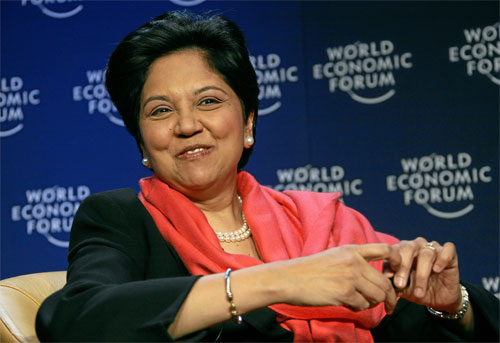
Image of Indra Krishnamoorthi Nooyi, PepsiCo CEO (NOT the subject of this post)

A major global corporation lost a 25-year senior executive at the prime of her career. She explained in her exit interview, “The corporate culture here is too parochial and I am tired of fighting it.”

How did the company lose such a gifted executive, at the point it could have most benefited from her contributions?

I will tell you a story that she shared with me, one that will hopefully provide a taste of how she felt during her career with this company. She shared the story with me at the conclusion of a two-day training course I had conducted, in which she had just participated.

“Dianne, I have so very much enjoyed this global management training you have facilitated for us. These are exactly the cross-cultural skills and mindsets needed in our world today! You are providing us tools and processes for acknowledging and using unique contributions, hearing the voice and perspectives of all involved. This type of training is so very different from diversity training,” she told me.

Well, I happen to be a fan of diversity training. I was troubled by her words, and wanted to understand what this obviously intelligent, wise woman did not like about it.

“Well, Dianne, in my experience diversity trainers go through the motions. They do activities and they often don’t know why. I’ll give you just one example. A year or so ago I was in a senior management diversity training. The facilitator asked us to stand in a line, side by side. He instructed us to take one step back if English was not our first language. A step back if our skin color was not white. He said to take another step back if we were not Christian. A step back if we had not attended a first-tier university. On and on he cited the categories, and I took so many steps back that I was the only person at the far side of the room, alone. There were several others in between, but I was visibly alone.”

“I thought to myself, ‘YES! THIS is what I’ve been trying to tell you all these years! This company forces me to do backbends and jump through hoops in order to succeed! I have to lose who I am to influence decision making. I have to communicate in a way I dislike in order to be heard! Let’s change this corporate culture to be more inclusive!’ Oh, Dianne, I was so excited by this powerful exercise!”

“But, do you know what happened? The President of the company looked at me standing there in the back of the room and said, ‘Look how inclusive we are. A dark-skinned woman, an Indian Jain, can become a senior director!’ I thought to myself, do you know how much harder than a man I have had to try to succeed? How much harder than a white skinned person? How much harder than a European or American? He seemed to have no idea of the price I’d had to pay for my promotions. He didn’t acknowledge my accomplishments or the super-human efforts of other minorities in our organization. Rather, he prided the company on its color-blindness! And worse yet, the trainer didn’t say anything! The exercise concluded, and we went on to the next activity! Rather than a learning moment, the activity only reinforced ignorance and legitimized discrimination! I was absolutely crushed and stunned.”

Such a loss for this corporation. Such a difficult decision for this woman to have had to make. It was also a challenging position for the trainer to have been in; hindsight is 20-20 regarding how the trainer could have handled the President’s comments, and debriefed the activity, more effectively.

Let me close by asking you this: Have we all taken the time today to empathize, to put ourselves in someone else’s shoes? Have we done our part to change dysfunctional systems? What have each of us learned today?

I look forward to your comments on this post. Thanks!

Linked to the My Global Life Link-Up at SmallPlanetStudio.