
Appearance Can Be a Life or Death Matter

Immediately when I heard about the attack on the Sikh temple in Wisconsin (USA), the first thought that came to my mind is that the shooter must have confused Sikhs for Muslims because they wear turbans and grow beards. There have been many similar incidents, one of them in 2002 when four teenagers burned down the Sikh temple Gobind Sadan in New York. The teens told authorities that they believed the temple was named “Go Bin Laden” (!!!)

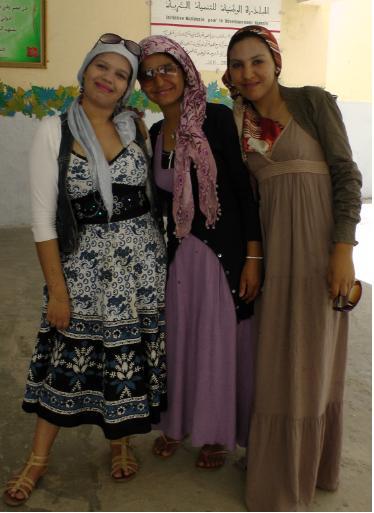
Similarly, Christian figures and nuns may be mistaken for Muslims, with their loose outfits and head coverings. A picture taken in Jerusalem may confuse many, for it can be very unclear who is Jewish, who is Muslim and who is Christian. I have asked lots of my friends and they often think that the three Morrocan Muslim girls in this picture look more like Jewish women because of their headscarf style and their dress.

Almost everwhere I go in the world, people on the streets mostly call me Chinese. I have embraced a business idea of producing millions of T-shirt that say, “Everything is made in China. NOT ME!” and sell them to desperate and angry Japanese, Korean, Singaporean and Vietnamese tourists. I’ll probably be rich and earn enough money to travel more.
When I was in Syria lately, immediately upon stepping into a neighboring house, Abdullah my friend shouted out even before the host could see my face: “She is not Chinese!” Very wise of him, because the man we were visiting belongs to the opposition, who is of course very pissed off with China and Russia for their support towards Assad’s government.
Looks do matter, regardless of how superficial they are. Of course no one should be killed, and most religions have love and respect at their core. It can be detrimental and become a matter of dealth and life in this age of speed, in which people only have time to watch, not to think, and news is more important than knowledge.

Grains of Sand and Cross-cultural Adjustment

Ever look at something and find it so beautiful or fascinating that it just sort of sticks with you? Perhaps it gives you a gut feeling that it speaks to something you’re working on? Then, maybe in the shower the next day, it hits you?

That’s what happened to me a while ago when our Intercultural Competence News Feed curated Dr. Gary Greenberg’s photos, taken through a microscope, of grains of sand.

While most of us normally think of grains of sand as looking fairly similar — tan or brown, some crystals, shiny — Gary’s photos show us that deep down, once we “get to know” the grains of sand, so to speak, each of them is quite unique! Now if that isn’t a metaphor for diversity, inclusion and cultural differences, what is?

We hope you’ll be pleased with the train of thought Dr. Greenberg’s gorgeous photos produced. We put together a PowerPoint on cross-cultural dynamics that you are most welcome to download and use. It hasn’t been polished and perfected like the grains of sand, but if you read the presenter notes, we are confident you’ll have fun customizing the ppt for your programs.

We all have favorite photos, metaphors, comics, and stories, or even video clips, that we love to use in teaching, training and coaching. If you have something you would be willing to share, please pass it on. We’ll be happy to get it out there for you and link through to your website or contact information. Together we can build a more respectful, understanding and collaborative world!

The Case of Who’s in Charge: Whose language will we speak?

Or: “How to lose a US$1 million investment in less than an hour.”

Cultural Detective and the Case of Who’s in Charge

This case takes place in one of the world’s largest companies. The company has recruited, at much expense, a leading Nigerian scientist to head up a project; he is perhaps the only person in the world with the unique knowledge base, experience and connections needed to see this major project through to fruition.

The company has gone to great expense to relocate the Nigerian project manager to western Europe, and to assemble a cross-functional team of the company’s leading professionals to aid with the project. The project is of huge significance for the company. The plan is that it will break new ground and shift the way such projects are implemented worldwide. There is much hope and excitement, as well as huge investment and anticipated return, riding on it.

The project manager, the Nigerian scientist, calls a meeting with three of his team members. All four people greet one another in English, shake hands, and sit at a table for the meeting. The project manager introduces the agenda, in English. After a few minutes the discussion seems to naturally shift from English into the local language, and continues for about 45 minutes.

At the conclusion of the meeting, the four gentlemen stand up, again shake hands, and shift back to English to congratulate one another. One of them says, “I think we have devised an excellent plan.”

The project manager replies, “Oh, yes? And what would that plan be?”

The three others appear puzzled. “The plan we just agreed to,” they say. “The plan we’ve been discussing.”

The Nigerian responds, “I didn’t understand a word you were saying. I don’t speak that language.”

“Why didn’t you say so?! We could have switched to English!!” The others’ mouths drop open in disbelief at this waste of time, and the scientist’s failure to speak up.

“I am the project manager. I called this meeting, and I started it in English. All our correspondence has been in English. You all changed the language. It is a power play. Your colonialist ways never seem to change.”

After this meeting, the project manager requested his removal from the project. It appeared this hugely anticipated effort was dead before it had even gotten going!

An orientation to cross-cultural collaboration, including work on understanding and learning to deal with issues of post-colonialism, may have prevented this rocky start. There are times when, once mistakes have been made, there is no rescue or remedy. Convincing these team members to give it another go, to get past their doubts and discuss ways of respectfully and productively working together, required skilled facilitation. The project manager was convinced that his team members were racist, and the team members were convinced the project manager was overly sensitive. Both thought the other arrogant.

What are some of the techniques you might use in such a scenario? How might you help the team members gain empathy for what the project manager was feeling? How might you equip them with the skills they need to demonstrate respect in such an environment? How might you help the project manager develop the skills he needs to manage team members effectively, given post-colonialist realities?

Link

Interesting article in Diversity Executive magazine about product naming problems in the global market, some good examples, and a link to an article on the value of intercultural competence.

Kudos to all our interpretation and translation colleagues!

What are you favorite “Cultural DeFective” examples? And your strategies for preventing them?

PTPI Americas Regional Meeting 2012

As I had just finished facilitating the PTPI (People to People International) workshop and entering the elevator with some PTPI attendees, I was pleased to hear a funny comment by one participant: “I am so glad this was about developing cross-cultural skills as I was afraid we might be participating in some sort of scavenger hunt!”

Well, it was in fact a hunt in some ways – we searched for clues about what motivates our friends and colleagues to behave the way they do and what motivates us to act and react the way we do!

Key learnings from group wrap up were described as:

  • Seek to understand others values and what’s really motivating their behavior
  • Look for similar values and use those to collaborate
  • Appreciate differences
  • Incorporate the strengths of all team members – there is no “right way” to get things done
  • Show up with an open mind

The PTPI Cultural Detective session was designed to help the PTPI  community members and their board of directors with strategies to improve their diverse recruiting – and it was received very positively with a quick post, “Incredible Presentation by Cultural Detective,” and the above photo from Liz Wegman, PTPI staff member. We had a group of about 35 PTPI leaders in attendance from all over the country and world who will return to their communities with fresh perspectives and strategies around building more diversity in their chapters.

Although diverse recruitment is not typically how I lead into discussions around working with the Cultural Detective tools, it certainly was an applicable organizational need which developing intercultural competence can help solve. Has PTPI’s unique application of the Cultural Detective approach spurred some ideas for you to assist your or your clients’ specific intercultural challenges?

The Connection between Creativity and Intercultural Competence

If I were to ask you what it takes to be effective across cultures, what comes to mind? If you are anything like me, then you have probably started to rattle off some of the classics: self-awareness, open-mindedness, curiosity, flexibility—maybe communication skills. All important.

But where is creativity in this picture? And why isn’t it closer to the top of the list when it comes to what it takes to be effective when working across cultures?

You could argue that creativity is an output of some of the above: if you are open-minded, curious, and flexible, you are likely to be able to be more creative, which will help you to be more effective. But I think it’s worth highlighting the importance of creativity as a stand-alone competency for working across cultures—especially when it comes not just to being aware of cultural differences, but being able to develop effective bridging solutions to differences you may experience.

Take Morfie, our newly named CD animal mascot, as an example. Sure, he may be curious as he scuttles across the ocean floor, but what makes him effective is his creative problem-solving in the face of challenging situations: his ability to morph himself into another sea-creature to ward off danger.

The importance of creativity is something I learned the hard way. When I first moved to Japan, I moved into an apartment subsidized by the company I was working for. There were all kinds of problems with the apartment when I arrived (for example, the heating was broken and it was the middle of winter in Sapporo—yes, the same location as the Winter Olympics in 1972). What would you do in this situation?

My initial instinct was to take a more ‘American’ approach—to take my contract in to my employer, highlight the conditions outlined in the contract that had not been met, and ask for these to be amended. But I wasn’t in the US. I was in Japan, a more relationship-focused and indirect culture. Surely going in and making these kinds of demands and pointing to a contract would not exactly start me off on the right foot with my employer, I thought.

So instead, I tried a more indirect approach. When they asked me how things were in the apartment, I remember trying to be subtle about naming some of the problems. I think at one juncture I might have even said something like, “This is the first time I’ve lived in an apartment where frost and ice forms on the insides of windows.” I kid you not. This raises a whole other topic of the ineffectiveness that can often happen when more direct speakers try to be more indirect.

The point of that story, beyond revealing how much I had to learn about Japanese culture when I arrived, was that I was far from creative in my solving of that situation. In my mind, I had two options: take the American approach, or take the Japanese approach (at least my limited understanding of it at that juncture). Be direct or indirect. It was bifurcated, dichotomized, overly simplified, and therefore ineffective.
  • What if I had invited some of my colleagues over to my apartment for a meal, during which they could have experienced the issues first-hand?
  • What if I had asked a colleague for a recommendation for a repair service? Or even asked them to call a repair company for me, since I had yet to learn the Japanese word for moldy?
  • What if I had written to the American colleague whose role I was taking over and asked him what he would do in this situation?

The point being, I could have and should have considered a lot more creative solutions here, but simply didn’t. And that’s really the point. Often when we are working across cultures, we stop at the first, most obvious answer, and that’s a limitation.

The good news is that my little housing adventure in Japan likely has helped me to become more creative—and it certainly proved the need for me to do so. Interestingly, recent research at Northwestern University in the US and INSEAD in France has highlighted that individuals who have lived abroad often demonstrate higher levels of creativity on classic ‘creative problem solving’ tasks.

That said, waiting until you are stuck in challenging intercultural dilemmas to flex your creativity muscles—or relying solely on living abroad to develop the muscle, doesn’t seem the right answer. It’s the kind of thing that you want to have so ingrained in you, that when you are faced with a tough situation, you naturally think through a number of different possibilities. In essence, it’s about learning to be Morfie-like, to be able to quickly run through a rolodex of possible options as to how to transform yourself effectively in those situations—and to continually be expanding your repertoire of possible options.

Developing your creative problem-solving skills is one of four main competencies we focus on in the newly released Cultural Detective Bridging Cultures for that reason. In the package, we go through a series of exercises that help people to expand their solution space—to really get beyond solutions of the generic, ‘he should get cross-cultural training, she should take the other person out to dinner’ nature. In an earlier post I shared with you an exercise to get started.

One really useful technique that we practice in the package comes from the work of Michael Michalko, a pioneer in creativity. It’s called challenging assumptions. The process is simple. When you are faced with a challenging situation, you name all the assumptions you are making about those situations and challenge those assumptions. The premise is that often the way we frame a problem limits the potential solutions to it.

If we go back to my Japan example, I made a lot of assumptions:
  • that I couldn’t take a typically American approach (yet my colleagues were very accustomed to working with US Americans)
  • that my colleagues were typically Japanese (they may have been attracted to the company I was working with very specifically because it wasn’t typically Japanese)
  • that the solution lied in me adjusting the way I communicated, from a more direct to indirect style (versus, for example, emphasizing another shared value we had), etc.

Challenging even just one of the assumptions would have opened up a lot of other options for me to effectively address this situation.

The experience I had in Japan was ten years ago now, but the lesson it taught me about the importance of creativity is invaluable. I now adopt a number of different creativity techniques regularly in my work. Beyond challenging assumptions, I also regularly change my physical location to prompt me to think about things differently, and I use techniques like thinking through analogies and wearing the hat of the other individual to help me identify more creative and effective solutions.

I would love to hear your experiences with creativity as they relate to intercultural problem solving: whether you’ve experienced situations similar to mine in Japan where it would have served you to be more creative; whether you’ve found other techniques that have helped you to continue to develop truly innovative intercultural solutions; even whether I should challenge the assumption I now have that creativity is a powerful, often overlooked skill in intercultural problem solving.

Developmental Intercultural Competence

The ability to collaborate productively and enjoyably across cultures is more important than ever, whether we focus on communicating with elderly parents or teenaged children, or on building trust and producing results with colleagues at the next desk and across the planet. But what do theory and practice tell us about how to gain maximum effectiveness?

One exceptionally rapid and proven way to successfully improve cross-cultural competence is to use the MashUp: a natural and powerful combination of two leading intercultural competence development processes: Cultural Detective and Personal Leadership.

Starting in September we will conduct a four-month course that will transform your personal and professional practice. It will enable you to use the MashUp in a developmentally appropriate manner to support and stretch learners at all stages of intercultural development.

Coursework will be conducted virtually, allowing you to complete the assignments from your office, home, or during travels. There will be individual and pair assignments, in addition to online classes. Do not miss this opportunity to work with some of those who are doing leading intercultural competence work worldwide. Learn more.

Designing and Implementing Global Diversity

The global scene is expanding and our world has become borderless. Designing and implementing programs for global audiences presents unusual challenges. Familiar activities may be culturally inappropriate, simulations may need revision, or inherent cultural biases may limit our impact.

This five-day workshop will address strategies for adapting programs for highly diverse audiences, and for designing culturally responsive design and instruction. The facilitators will share a learning framework that will help you assess the impact of culture on teaching and learning. You will learn about the success, the challenges, and the next steps for preparing and delivering culturally sensitive global diversity programs.

To be held July 23-27 in Portland, Oregon, as part of the Summer Institute for Intercultural Communication, the workshop is designed for intermediate and advanced designers, developers, and others launching or anticipating launch of a global diversity program within organizations, whether corporate, nonprofit, NGOs, or educational institutions.

In this session, you will:
  • Learn to adapt simulations, games, blended learning and social media for multiple purposes by tailoring design, delivery, and debriefing.
  • Explore multiple approaches to delivering global diversity.
  • Assess how cultural biases impact design and implementation.
  • Identify learning challenges in implementing programs across cultures.
  • Adapt instructional design for culturally diverse populations.
  • Apply new skills to deliver culturally sensitive and culturally adaptive instruction.

The Summer Institute for Intercultural Communication is one of the world’s premier professional development venues. Be sure to join us in beautiful Portland, Oregon this coming July.

“Diversity Training Doesn’t Work!”

“Diversity Training Doesn’t Work: Rather than extinguish prejudice, diversity training promotes it!” This was the title of a 12 March 2012 Psychology Today online article.

While so many of us complain about media sensationalism, I begrudgingly have to admit that, in this case, the inflammatory title led me to read this article from among the 200+ crossing my desk that day.

The article’s author, Peter Bregman, relies on research from 2007 to prove his point. He repeats or paraphrases the subtitle four times throughout his article, each time stating it as fact. Yet, in reviewing the original research he cites, I feel it does not support his premise. The original paper is much more nuanced and even-handed (“certain programs increase diversity in management jobs but others do little or nothing”).

While I take issue with much of what Mr. Bregman says in his article (that there are two types of diversity training, for example: those that tell people what to say/not say, and those that break people into categories. Come on, really?), there is also learning to be gained from it. His conclusion: “We decided to [teach all managers] to listen and speak with each other — no matter the difference — which is the key to creating a vibrant and inclusive environment,” was one I could heartily agree with.

Let me focus this post on the constructive learning we might get from this article. Mr. Bregman urges the reader to do nine different things. I consolidate them, as there was quite a bit of redundancy. They are:
  1. See people as people instead of categories. Train them to work with a diversity of individuals, not with a diversity of categories. Move beyond similarity and diversity to individuality. Don’t reinforce labels, which only serve to stereotype. Reveal singularities. Help them resist the urge to think about people as categories.
    • I wholeheartedly agree! Yes!!! Please! That is exactly why Cultural Detective looks at an interactional process of how people communicate in real situations (using the Worksheet with real-life or prepared critical incidents).
    • It is why we have a package titled, Cultural Detective: Self Discovery, aiding users to create Personal Values Lenses.
    • It is why Cultural Detective: Blended Culture looks at the multicultural experience of so many of the individuals in our world today.
    • It is why our definitions of “culture” go way beyond nationality or ethnicity, and include looking at multiple influences on why we are the way we are (see Layering Lenses).
    • While we are all unique individuals, we are also all members of groups and communities, and our world views are shaped by those groups (cultures) in which we were raised. Cultures establish patterns of behavior that are historically sanctioned, so we each learn all kinds of things that seem natural, yet are culturally determined. Viewing people as unique individuals not influenced by culture is a step backwards, and not helpful in understanding others.
  2. Stop training people to be “accepting” because it doesn’t work.
    • Again I agree! If people can better understand themselves, and get a bit of insight into why others might behave the way they do, we won’t need to lecture them. These are two of the Cultural Detective Model’s three core capacities (Subjective Culture/know ourselves, Cultural Literacy/understand others’ intent, Cultural Bridge/skills and systems for leveraging similarities and differences).
  3. Teach people to have difficult conversations with a range of individuals.
    • Yes! The CD Worksheet came to life as a conflict resolution tool in multicultural workplaces in Japan in the 1980s and 90s. It emerged from diverse individuals having just such difficult conversations.
  4. Teach managers how to manage the variety of employees who report to them. Teach them how to develop the skills of their various employees.
    • While I might offer this as one reason to conduct diversity training, coaching, or mentoring, I can definitely agree with the goal. Cultural Detective offers a process for understanding, valuing and leveraging individual cultural differences. Our newest package, Cultural Detective Bridging Cultures, focuses precisely on skill development.
  5. Help them resist the urge to think about others as just like themselves.
    • Yes! Thinking about others as just like ourselves is one stage of a developmental process. Learning to distinguish the ways in which we truly are similar and different, seeing value in the similarities and the differences, and creating ways to benefit from them, is what Cultural Detective is all about.

The initial research referenced in the article, (“Diversity Management in Corporate America,” Frank Dobbin, Alexandra Kalev, and Erin Kelly, American Sociological Association, 2007), was a systemic study of 829 companies, designed to see which kinds of diversity programs work best, on average. A weakness in the original study is that it looked purely at diversity, not on inclusion or competence to manage diversity.

Having said that, the findings showed that diversity councils, diversity leaders, and mentoring programs most strongly correlate with increased management diversity, while training and diversity performance evaluations have a lower correlation. To quote the study authors, “On average, programs designed to reduce bias among managers responsible for hiring and promotion have not worked. Neither diversity training to extinguish stereotypes, nor diversity performance evaluations to provide feedback and oversight to people making hiring and promotion decisions, have accomplished much. This is not surprising in the light of research showing that stereotypes are difficult to extinguish. … Research shows that educating people about members of other groups may reduce stereotyping.”

“Optional (not mandatory) training programs and those that focus on cultural awareness (not the threat of the law) can have positive effects. In firms where training is mandatory or emphasizes the threat of lawsuits, training actually has negative effects on management diversity. Managers respond negatively when they feel that someone is pointing a finger at them.”

The original article by Dobbin, Kaley, and Kelley presents three broad approaches to increasing diversity:
  • Changing the attitudes and behaviors of managers
  • Improving the social ties of women and minorities
  • Assigning responsibility for diversity to special managers and task forces

These are all situations in which the Cultural Detective Model can be used to help shape constructive interactions and manage differences effectively.

What do you think?

Mixed (&) nuts? A cross-cultural parenting perspective

A Czech and a Jamaican walk into a…. relationship. And BAM! There we have it — my reality in a nutshell. Building my relatively new multiracial, multicultural blended family has been quite the ride: challenging, but worth all the energy, inspiration and personal transformation that the experience has brought about.

The key to making things work has been clear, open and respectful communication and a willingness to self-examine and adjust, while staying authentic and standing one’s ground about the key values that must remain uncompromised. As my sweetie and I say, if he and I can’t work through our differences, how can we ever expect the rest of the world to do the same?

In our case, in addition to the divergent racial realities we experience in this society (he as a black male, and I as a white female), the contrast between our upbringings and home community cultural values is quite vast. Our parenting styles mirror those which guided each of us, and they are nearly polar opposite! The parenting of our children from previous relationships, in fact, has been the hottest point of contention.

My style veers towards the permissive side of the spectrum which gives the child the time and freedom to construct his own internal moral compass experientially through empathy (of course, not totally without guidance). This parenting tendency reflects how I was brought up and is, in a way, indicative of the degree of the privilege, which has applied to me since childhood, to be generally relatively safe, and sheltered from strife.

My partner’s parenting method is authoritarian, bent on instilling strong discipline and ethic as a means to survive and thrive in a sometimes harsh world. His is a form of tough, protective love, “a strict and clearly defined” style, as he calls it. You could see how these vastly different philosophies could drive us nuts, but we are on a journey together, determined to respect one another and find meeting places somewhere in the middle. In fact, an interesting pattern is developing where we, the parents, are adopting a little of each other’s tactics as we evaluate which are useful for our particular circumstances. In short, we are really mixing it up in the mixing bowl that our family is.

What I am most excited about is that we are learning from each other and drawing on not only the richness of what was passed down to each one of us, but also from each other’s worlds. My hope is that this, for our children, rather than confuse, will open new doors and encourage new ways of seeing the world and interacting with the people in it.