This article by Vijay Nagaswami, “Culture vs. culture,” was sent to us via the marvelous Cultural Detective certified facilitator and current SIETAR India President, Sunita Nichani. She says, “Here is an interesting article published this Sunday in one of India’s leading newspapers, The Hindu. With the slow erosion of the custom of marrying within similar communities in India, intercultural competence will be vital for making marriages work.”
Lots of work to do in this world, in so many ways and places. Let’s get started, everyone!
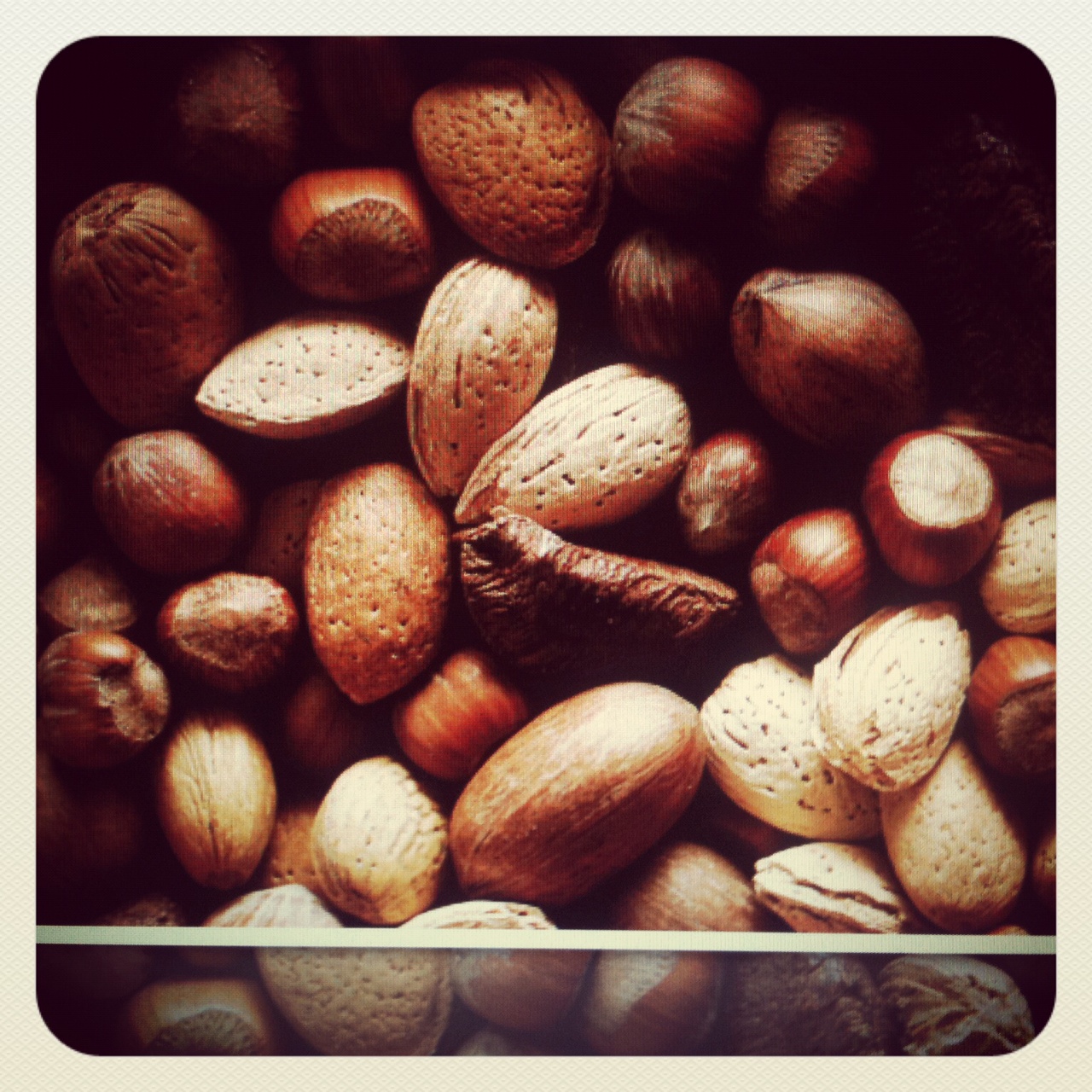
Communicating in the Language of Food, by Joe Lurie
Dear readers, I am very pleased to share with you another guest blog post by the talented Joe Lurie (though Joe, I’d prefer to “swim in the chocolate” rather than “bicycle in the yogurt”). You’ll remember that Joe previously shared with us the very popular article, “Language Under the Gun.”
—
Noting that French President Francois Hollande has been referred to by his political opponents as a fragile strawberry, a wobbly flan , a marshmallow, and “gauche caviar,” with the charisma of a smelly sausage, I was reminded of how a culture’s preoccupations shape the way language is used.
I was first introduced to the pleasures of French cuisine and its influence on the French language as a university student hitchhiking through Normandy, sampling butter, cream and apple brandy-suffused dishes.
Struggling to express myself in village bistros, I realized the truth behind Mark Twain’s observation that Intermediate French is not spoken in France. A friendly waiter, noting my frustration, reassured me saying, I know, it’s not pie, “Je sais, c’est pas de la tarte,” which means it’s difficult. He went on to add, butit’s not the end of the string beans, “maisc’est pas la fin des haricots” – a strikingly French way of saying, it’s not the end of the world.
A decade later, my French was much improved. While directing a US American study abroad program in Toulouse, my understanding of food’s influence on the language deepened. Before taking a French cooking class with my 20 students, we stopped at an open-air market. Because the line to buy cheese was not moving, our impatient guide complained: “on ne veut pas faire le poireau,” we don’t want to be like a leek. Later, we learned the translation: to wait like a motionless leek in the ground. Now late for cooking class, our guide urged the van driver to press on the mushroom! “appuyez sur le champignon!” – meaning step on the gas! Keeping a chef waiting simply would not do.
The students and I were struck by how carefully the chef conducted the lesson – artfully presenting and discussing the ingredients. The meal is serious business, not to be treated like a joke or, as the French say, like custard – c’était pas du flan ce cours de cuisine! As we prepared a fruit salad, the chef mumbled “oh purée!” mashed potatoes! – or damn it! and disdainfully discarded a blemished peach to preserve an aesthetically pleasing fruit plate.
During almost four years living in Strasbourg, Toulouse and the island of Corsica, I saw how the French passion for eating and discussing food flavored the language in tasty and unusual ways, though some expressions are unique to different regions or generations.
It began to make sense that endearing French metaphors are often rooted in the pleasures of taste. “What a nice person” is served up in French as “c’est une crème!” – what cream, while “lacrème de la crème,”the cream of creams is the best of all. And “you are so energetic” takes on a carb boost in French: you have the French fry (tu as la frite). To be in high spirits also can come from the fruit family, as in you have the peach (tu as la pêche), while having a banana (avoir la banane) is to have a big smile. And, of course, there’s the affectionate “mon petit chou,” my little cabbage.
Allusions to food also season the language of love. A broken-hearted UC Berkeley student of mine from Marseille described her flirtatious boyfriend as a Don Juan with the heart of an artichoke,“quelqu’un qui a un cœur d’artichaut,” offering each of his lovers a leaf from his heart. He was skilled at making romantic advances or as my student put it: serving up a dish, “faire du plat à quelqu’un,” a prelude to going off to the strawberries,“aller aux fraises,” to enjoy an erotic interlude.
Even insults and put-downs easily spring from the tongue as if from a farmers’ market. An idiot or jerk, for example, can be described in French as what a pickle! (quel cornichon!); an utter squash (une vraie courge); such a noodle! (quelle nouille!); or as having a green pea in the brain! (avoir un petit pois à la place du cerveau!). When struggling to drive in France, I’ve heard irate, gesturing French men speed past, yelling “espèce d’andouille!” – piece of sausage!– or, you imbecile!
I remember a heated debate in a Paris café about a Gerard Depardieu film. A friend dismissed it as a turnip, “un navet,”a startling vegetable metaphorfor atrashy film. When he called the actor a horrible drunk, an indignant Depardieu fan interrupted with: shut yoursmelly Camembert mouth! “ferme ta boîte à Camembert!”
Just as food evokes passion in France, its metaphorical expressions enliven debate. Butting in on a conversation is to bring your strawberry, ramener ta fraise.Being overly inquisitive about someone’s private life could provoke an acerbic “occupe-toi de tes oignons!” mind your own onions! the French version of mind your own business. But perhaps the classic French way of ending an argument is go cook yourself an egg, “va te faire cuire un œuf,” or go to hell.
Traveling through the Pyrénées with a French couple, my wife and I enjoyed great food and spirited conversations, especially about politics. When the husband praised Sarkozy, his wife sneered that the former President is overly dramatic – making a big cheese out of nothing, “il fait tout un fromage de rien du tout.” She added, you can’t tell if he’s talking about pork fat or pork meat, “on ne sait pas si c’est du lard ou du cochon,” you can’t tell if he’s lying or telling the truth. And she believed Sarkozy had casseroles hanging on his butt – “des casseroles au cul” – a scandalous past.
While serving as Dean of Students at an international college in Strasbourg, I was struck by how much my French colleagues valued using words precisely, reflected in the pervasive use of the verb “préciser.” I chuckled when I heard some professors describe student papers that lacked clarity. They complained that these students were lost, bicycling in the sauerkraut, pédalant dans la choucroute. In other regions, one might say bicycling in the yogurt or couscous. And then there’s swimming in chocolate, nageant dans le chocolat, or skating in the mayonnaise, patinant dans la mayonnaise – getting nowhere. Outside the college, I heard other vivid ways of describing confusion such as being in the soup, the pate or the cabbages (être dansle potage, le pâté or les choux).
Recently, I saw an exasperated French TV commentator despair over the French economy by throwing up his hands exclaiming what a salad! “quelle salade!” what a mess! And then he finished with the carrots are cooked! “les carottes sont cuites!” meaning it’s all over.
If one is unemployed and grouchy or as the French say, “pasdans son assiette,” not on your plate, landing a job would help to putbutter on the spinach “mettre du beurre dans les épinards,” to make things better. And then it’s time to put your hand in the dough, “mettre la main a la pate” – get down to business. After all, you’ve got to defend your steak, “défendre ton bifteck,” as in look out for your interests.
Speaking of steak, making a living is gagner son bifteck, to earn one’s steak; while making a profit is to prepare one’s butter, faire son beurre. And to have a pancakeavoir de la galette, is to be rich. Assuming pancakes are your goal, you’ll have to go all out, put on the sauce, mettre la sauce, and be prepared to make a strong sales pitch, vendre ta salade, by selling your salad.
A UC Berkeley graduate student in computer science from Tours told me he was building a start-up company – “une jeune pousse,” a young sprout and didn’t know what to expect or what sauce he would eat, “ne pas savoir à quelle sauce on va être mangé.” He knew he had bread on the board, avoir du pain sur la planche, a lot of work to do, but realized that while dealing with potential investors he had to avoid being rolled in the flour, être roulé dans la farine – duped. Otherwise, he risked eating the frog, manger la grenouille – going bankrupt. He didn’t want to end up without a radish, ne plus avoir un radis, or as we would say, without a cent. All his dreams for nothing – “pourdes prunes.” Still, if he becomes successful like a Bill Gates, he’s apt to be called a large vegetable, une grosse légume, and be among the grated cheese, le gratin – the elite.
The versatility of the cheese metaphor in a country with hundreds of cheeses is not surprising. “A dessert without a cheese is like a beautiful woman with only one eye,” observed Jean Brillat-Savarin in his Physiology of Taste. His famous 19th century book, exploring the nuances of cuisine – still is sold in France. And no wonder, with a line like: “He who invents a new dish will have rendered humanity a greater service than the scientist who discovers a planet.”
Today, as French supermarkets and fast food restaurants continue to proliferate, gourmands refuse to compromise or cut the pear in two, couper la poire en deux, in defending their culinary heritage. For more than twenty years, during “La semaine du goût,” Taste Week, thousands of chefs visit schools across the country. They teach children to appreciate fine food; make a baguette, a mousse au chocolat; appreciate a bouillabaisse; and learn the anatomy of the tongue. Restaurants with Michelin stars develop special meals for young children. And chefs are invited to daycare centers to prepare gourmet menus.
Will this unique early training insure the survival of the refined French palate and the nourishment of its language? A master chef is likely to respond, of course, “mais oui, c’est du tout cuit” – it’s completely cooked – it’s in the bag.
—
Joe Lurie is Executive Director Emeritus at University of California Berkeley’s International House, a cross-cultural communications trainer, consultant, university lecturer, and certified Cultural Detective facilitator. Another terrific article he wrote for Cultural Detective, also full of metaphor, was called “Language Under the Gun.”
You could say my Mama was a modern-day pioneer. She packed up one suitcase for the three of us — for herself and her two young daughters — and traveled West for the opportunity to reinvent herself, escaping totalitarianism through the seemingly impenetrable Iron Curtain. That was a quarter of a century ago. Still, after so many years, a mother myself, I have yet to truly commune with the place where I live, feeling no tangible connection to the land here.
Why so disconnected? This land seems foreign and not yet part of my “cellular memory” shaped by centuries of Central European living. It is not where my ancestors are buried. In my life, I’ve moved too many times to count, skirting the land, speeding along its slippery surface as if it were ice. Like the original pioneers, and a great many modern-day transplants and migrants, I have internalized the frontier as a state of mind, to paraphrase Native American activist Winona LaDuke. She faults our society’s culture of transience, our belief that a greener pasture lies somewhere else, calling it a psychosis, for disconnecting us from our responsibility to place.
Writer and Mayan shaman Martin Prechtel explains the underlying cause of the westward migration and transient nature of our society as the modern culture’s inability to feed the spirit world from which we come, and our failure to mourn our ancestors which includes acknowledging the damage they have done to this world. He says:
“If this world were a tree, then the other world would be the roots — the part of the plant we can’t see, but that puts the sap into the tree’s veins. The other world feeds this tangible world — the world that can feel pain, that can eat and drink, that can fail; the world that goes around in cycles; the world where we die. The other world is what makes this world work. And the way we help the other world continue is by feeding it with our beauty. All human beings come from the other world, but we forget it a few months after we’re born. This amnesia occurs because we are dazzled by the beauty and physicality of this world. We spend the rest of our lives putting back together our memories of the other world, enough to serve the greater good and to teach the new amnesiacs — the children — how to remember.”
This rings so deeply true for me I weep when I think about it. I live in a new country, a land where I’ve inherited other ancestors’ pain, and I struggle with how to honor it so that I can develop a personal connection and a sense of responsibility to this place. From studying history, I know the magnitude of pain my current life is built on is unfathomable. Between 1774, the year Europeans first arrived on the Northwest Coast, and 1874, an estimated 80 percent of the indigenous population had been decimated by European diseases, including smallpox and measles. According to University of Washington’s Centerfor the Study of the Pacific Northwest, across the US, “a rough estimate holds that Old World diseases depopulated native societies by about 90% within the first century of contact.”
And the assault on native tribes and the earth continues. In the Pacific Northwest, for instance, as little as three percent of old growth forest is what may be left.
“The question is: how do we respond to that destruction?” Prechtel says. “If we respond as we do in modern culture, by ignoring the spiritual debt that we create just by living, then that debt will come back to bite us, hard.”
In fact, we will literally be — and already have been — haunted by the ghosts of our ancestors if we continue not paying homage to them. “Ghosts will actually chase you,” is how Prechtel describes our predicament. “And they always chase you toward the setting sun. That’s why all the great migrations of the past several thousand years have been to the west: because people are running away from the ghosts. The people stop and try to live in a new place for a while, but the ghosts always catch up with them and create enormous wars and pain and problems, which feed the hungry hordes of ghosts. Then the people continue on, always moving, never truly at home. Now we have an entire culture based on our fleeing or being devoured by ghosts.”
He suggests that one way to honor our predecessors and repay the spiritual debt “is simply by missing the dead. . . as (expressed by) a loud, beautiful wail, a song, or a piece of art that’s given as a gift to the spirits.” If we don’t do this, we are “poisoning the future
with violence” against other beings and the earth itself because we then have no understanding of home.
Prechtel’s insight, I believe, is the answer to healing and to reconnecting us to our past and the earth. In order to “be at home in a place, to live in a place well,” we must do the following, he says. “We first have to understand where we are; we’ve got to look at our surroundings. Second, we’ve got to know our own histories. Third, we’ve got to feed our ancestors’ ghosts” by grieving. We do this by using the gifts we have been given by the spirits to make beauty.”
As global nomads, globetrotters or migrants with no deep commitment to one place we inhabit and its history, we could be doomed. As LaDuke urges, our mantra should be “the Holy Land is here, not somewhere else.”
Many have asked me to give a briefing on Syria because I am here in person. Well, here is that briefing, in a VERY simple way.
To many people, the war in Syria is just another Arab Awakening. Being in the country myself, I realize that this is not at all the case. There are at least three conflicts going on:
A true Arab Spring involving young liberals regardless of religious backgrounds, demanding regime reform and democracy.
A war between two Islamic sects, the Alawite government and the Sunni opposition.
A political game with hidden agendas among the big boys (US, EU, Iran, Israel and Saudi).
Mainstream media in the West seems more likely to feature war number 1 and manipulate war number 2 to the advantage of war number 3. Those representing the opposition who appear on CNN and BBC look liberal, westernized and almost victimized.
Next, the media backed by (Sunni) Saudi will call for jihad to provoke war number 2. I saw with my own eyes an opposition’s channel broadcasting from Saudi called “Sunni blood as one.” Note that the Syrian president is not a Sunni Muslim; he is from Alawite, a small sect of Islam.
Last, micro media — social media (blogs, Twitter, forums…etc) and word of mouth will keep circulating around zillions of conspiracy theories and guesswork about war number 3. For example, one of them I have heard: “The West does not want to topple the government; they just want to keep Syria in conflict to the point that it would benefit Israel and weaken Iran, who is Syria’s big ally.”
In this age when images and video clips dominate and cloud our thinking, one easily loses the big picture and falls victim to the vivid power of visual effect. As a good Cultural Detective, please pay attention to hidden biases.
As a journalist, I have the power to CHOOSE what to report. Is there something called “complete objective journalism”? I doubt it.
I have seen demonstrations for and against the regime. Which one would I report? Most secret journalists in Syria would choose to capture the opposition because they and their news (sub)consciously support wars number 1 and 3.
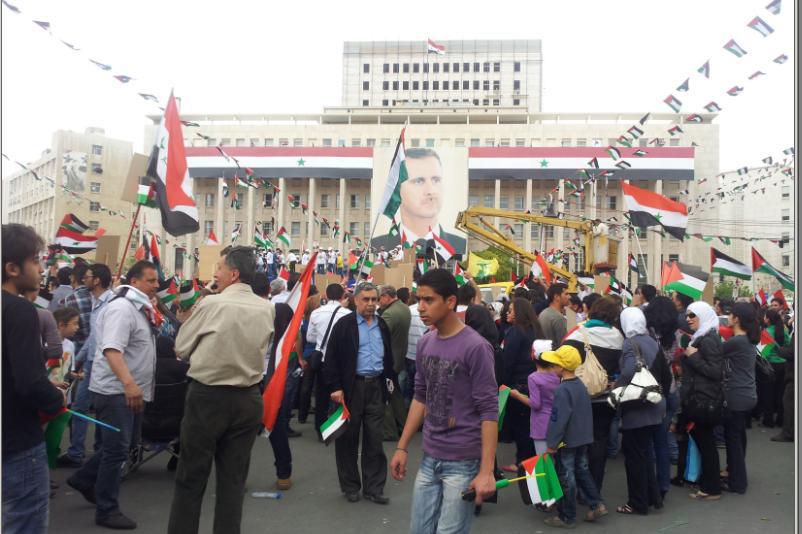
I’ll make a counterbalance here to share with you a view on war number 2. This is the picture of the regime’s supporters who gathered to celebrate with cheerful music and dance. Quoting a local from the crowd: “To be honest, our president is not perfect. But between him and the Sunni extremist opposition, I would go for the lesser of the two evils.”
The ability to collaborate productively and enjoyably across cultures is more important than ever, whether we focus on communicating with elderly parents or teenaged children, or on building trust and producing results with colleagues at the next desk and across the planet. But what do theory and practice tell us about how to gain maximum effectiveness?
One exceptionally rapid and proven way to successfully improve cross-cultural competence is to use the MashUp: a natural and powerful combination of two leading intercultural competence development processes: Cultural Detective and Personal Leadership.
Starting in September we will conduct a four-month course that will transform your personal and professional practice. It will enable you to use the MashUp in a developmentally appropriate manner to support and stretch learners at all stages of intercultural development.
Coursework will be conducted virtually, allowing you to complete the assignments from your office, home, or during travels. There will be individual and pair assignments, in addition to online classes. Do not miss this opportunity to work with some of those who are doing leading intercultural competence work worldwide. Learn more.
We already have a Cultural Detective theme song (La Boca de Cultura) thanks to our multicultural, multi-talented friends Kotolán. I now suggest that, as do many nations of our world, we name an official Cultural Detective animal. And my nomination is the thaumoctopus mimicus.
While many animals change shape or color, the Mimic Octopus studies others and then mimics their movements and their looks — instantly! And this octopus’ repertoire includes at least 15 different species!
Come on, polyglots, global nomads, TCKs, and other blended culture people, can you top that? It changes its behavior to suit its environment, and its behavior is contextually effective. Sound like anyone you know? Wonder who teaches, trains or coaches these octopi?
The thaumoctopus mimicus, or Culturoctopus Detecticus, would definitely seem to be one ethnorelatively developed, or, ahem, shall I say, “marizo-relatively” developed animal. Below you can view a short video of my nomination in action.
Let me know if you have other nominations, or thoughts on this one!
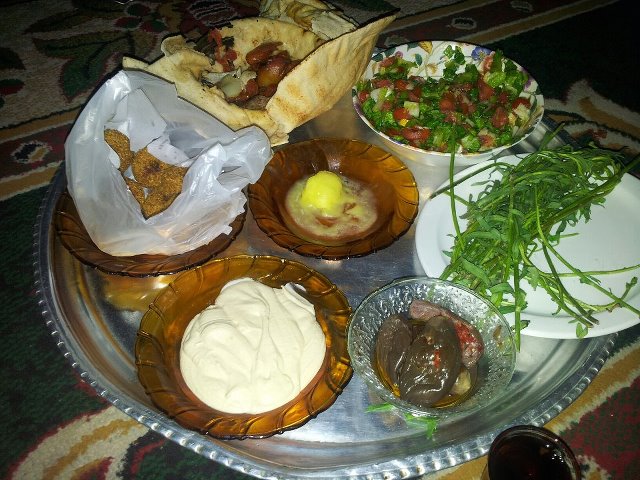
Punch me! Punch me! Tell me this is not a dream. I’m actually in war-torn Syria right now. This is my first meal here with a super hospitable family from Damascus who took me into their home the first second I crossed the border. I was watered, fed, washed, loved and pampered without even asking. Laying in bed last night I could not close my eyes, just listening to the shooting in the far away street …
—–
I am co-author of Cultural Detective Vietnam, and am in the midst of a journey that traces the path of Islam from its origins as it spread outward around our planet. Thank you for following!
The first impression of anyone arriving to Yemen is probably the massive amount of weaponry carried by civilians. I imagine that children here probably sneer at the plastic “Made in China” toy guns. In a picnic area near Sanaa, I was shocked to see young boys of about 12 years old firing their AK-47s into the sky. They broadly smiled at me and furiously waved their hands with two fingers forming a V — sign for victory and peace.
It is estimated that there are 60 million firearms owned by the population of 25 million. Children and women aside, each adult Yemeni man stocks up to 10 weapons at home or tucked into his belt. And that excludes the ornamental daggers that are part of the traditional Yemeni outfit. Quoting political science professor Ahmed al-Kibsi: “Just as you have your tie, the Yemeni will carry his gun.”
However, despite the deeply-rooted gun culture, it is amazing to see what the Yemeni revolution has achieved so far, with a relatively low death toll (approximately 2000) compared to Syria (at the moment estimated at 30,000 and still rising).
One person who greatly contributed to the transition of power in Yemen is Jamal bin Omar — the UN envoy who orchestrated the negotiation process. One day after the election, I had the honor to meet up with him in a casual private gathering. Looking exhausted but calm, he agreed with me that Yemen stands now at the perfect position to transfer away from its gun culture, as security has to be the most important job for the new government.
In the same evening, I also talked with Cathy who is Jamal’s assistant. Overwhelmed with the very limited violence during the election, she told me that what is happening in Yemen is a miracle, given the country’s complex situation and its extreme gun culture: “There must be something very special in the make-up of the people here!” – Cathy explained to me – “They may scare the hell out of you with the loads of weapon they carry around, but they genuinely want peace!”
Strange but true: for Yemeni, weapons do not necessarily mean violence.
—–
I am co-author of Cultural Detective Vietnam, and am in the midst of a journey that traces the path of Islam from its origins as it spread outward around our planet. Thank you for following!
A Czech and a Jamaican walk into a…. relationship. And BAM! There we have it — my reality in a nutshell. Building my relatively new multiracial, multicultural blended family has been quite the ride: challenging, but worth all the energy, inspiration and personal transformation that the experience has brought about.
The key to making things work has been clear, open and respectful communication and a willingness to self-examine and adjust, while staying authentic and standing one’s ground about the key values that must remain uncompromised. As my sweetie and I say, if he and I can’t work through our differences, how can we ever expect the rest of the world to do the same?
In our case, in addition to the divergent racial realities we experience in this society (he as a black male, and I as a white female), the contrast between our upbringings and home community cultural values is quite vast. Our parenting styles mirror those which guided each of us, and they are nearly polar opposite! The parenting of our children from previous relationships, in fact, has been the hottest point of contention.
My style veers towards the permissive side of the spectrum which gives the child the time and freedom to construct his own internal moral compass experientially through empathy (of course, not totally without guidance). This parenting tendency reflects how I was brought up and is, in a way, indicative of the degree of the privilege, which has applied to me since childhood, to be generally relatively safe, and sheltered from strife.
My partner’s parenting method is authoritarian, bent on instilling strong discipline and ethic as a means to survive and thrive in a sometimes harsh world. His is a form of tough, protective love, “a strict and clearly defined” style, as he calls it. You could see how these vastly different philosophies could drive us nuts, but we are on a journey together, determined to respect one another and find meeting places somewhere in the middle. In fact, an interesting pattern is developing where we, the parents, are adopting a little of each other’s tactics as we evaluate which are useful for our particular circumstances. In short, we are really mixing it up in the mixing bowl that our family is.
What I am most excited about is that we are learning from each other and drawing on not only the richness of what was passed down to each one of us, but also from each other’s worlds. My hope is that this, for our children, rather than confuse, will open new doors and encourage new ways of seeing the world and interacting with the people in it.
We’ve all had those dating, or invitation to date, “miss”es. Those times when cultural differences send unintended messages of the “I’m interested” variety. Many of these are funny, and fun to share. Come on, share some of yours, the kind that are safe for public consumption, of course.
A few of mine that come to mind:
In a jungle lodge in northern Thailand, we spent the day on elephants, walking the river. I remember smiling at one of the young guides. That night, after dinner, I climbed up to my sleeping bag, only to find it already occupied! NOT what my smile had intended to communicate at all!
And, on the topic of smiles, it also caused problems for me in Italy. As I was leaving my room in the morning, the door to the room next door was open. I’m US American-born. I smiled at the guy sitting on his bed. That night he knocked on my door at 2 am, and kept knocking. Sob story told to me through the door about how his mother had just died, he was sad, and needed to talk to someone. Stupidly, I let him in. Incredulously, as he started to touch me, I started nervously laughing (I had spent a lot of time in Japan, and had picked up a tendency to laugh when nervous or tense …) Gratefully, my laughter must have offended him, because he left my room quite quickly after that.
I am straight, but when I lived in Tokyo, I absolutely loved joining friends to go to the gay bars in Shinjuku-sanchome. We had great times dancing and laughing the night away! The guys didn’t seem to care I was hetero. So, when a girlfriend in San Francisco invited me to accompany her bar-hopping the lesbian bars of the city, I was excited. However, by the end of the night, I was depressed: not one person at any of the places we’d visited had asked me or joined me to dance, yet she’d danced the night away. “Well, Dianne, you do have that ‘I’m not lesbian’ sign on your forehead.” Funny I hadn’t noticed that sign when I’d powdered my nose earlier…
Finally, this one from Brussels. Touring around the city, no doubt with a map in my hand, a young Belgian offered to show me the sights. “I don’t have money to pay a guide today,” I responded. “No, no, just as friends. I have free time. I’ll show you around.” After walking around and enjoying ourselves, we had a simple dinner and a beer. I offered to pay. “No, no; this is my city. I will pay.” So he did. As we got up to leave, I noticed my little purse was missing from my bag. I looked around for it, but it was not in the restaurant. My new friend helped me retrace our steps, to see if we could find it. Nothing. That’s when I noticed it: the omamori, or Japanese good luck charm, attached to my little purse. It was hanging out of his pocket. “Do you have my purse in your pocket?” I asked. My new friend threw the purse at me, shouting, “I toured you around all day! And you can’t even buy me a beer!” Then he ran away.
Ok, everyone, I’m looking forward to hearing a few of your “Cultural Defective” dating mis-haps. And for all of us to reflect on what we learn from these often funny and painful experiences. Please share your story via the form below, or in the comments. Thanks for helping us build a better world!
 This article by Vijay Nagaswami, “Culture vs. culture,” was sent to us via the marvelous Cultural Detective certified facilitator and current SIETAR India President, Sunita Nichani. She says, “Here is an interesting article published this Sunday in one of India’s leading newspapers, The Hindu. With the slow erosion of the custom of marrying within similar communities in India, intercultural competence will be vital for making marriages work.”
 Communicating in the Language of Food, by





 Cultural Detective Blog