Great Culture-Crossers I Have Known (or wish I had!)

image001

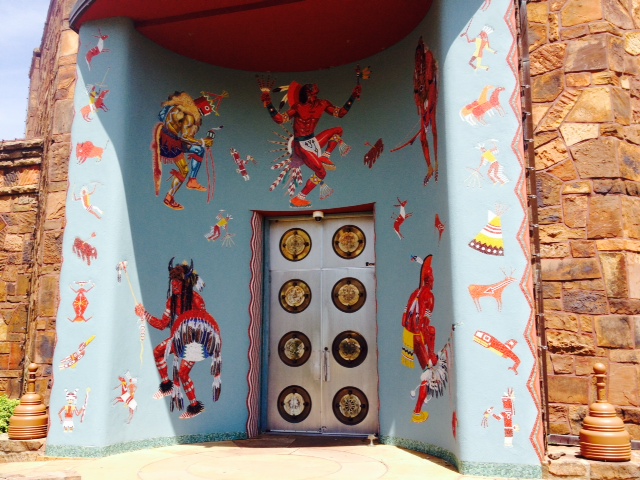
Entrance to Woolarac Museum

This is a guest blog post by Carrie Cameron, co-author of Cultural Detective Russia. I assure you I would have been wrangling to get on the guest list for Frank’s annual party! What a mixer those must have been!

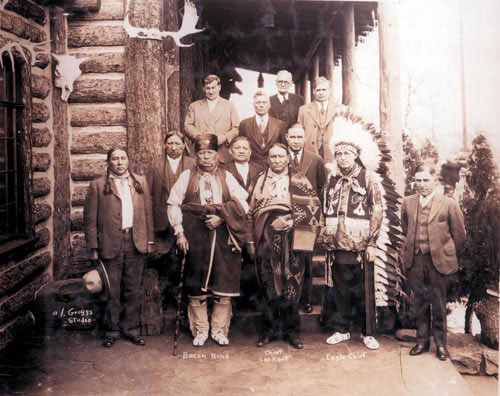
What do oil tycoons, American Indians, and bank robbers have in common? I had a chance to find out recently, when I visited the Woolaroc Museum in Bartlesville, Oklahoma, USA. The name “Woolaroc” is composed of the words “woods,” “lakes,” and “rocks.” The museum and surrounding natural park, located in the beautiful hills in the northernmost vestiges of the Ozark Mountains, was a gift to the people from Frank Phillips, the founder of Phillips Petroleum (Phillips 66). The museum is full of extraordinary Indian art and artifacts, as well as cowboy and frontier art and artifacts.

Mr. Phillips was born on a small farm in Nebraska, became a successful businessman, and married the daughter of a bank president. Moving to northern Oklahoma to buy land and drill for oil, he became deeply attached to the countryside, and also close to the Osage tribe living there. He was the first White man adopted into the tribe, a testament to his ability to transcend cultural differences.

He originally built Woolaroc as a personal retreat, to which he invited his wealthy business associates and friends. But perhaps his most remarkable social contribution was to host a grand party once a year to which he invited his business and family friends, his Osage Indian friends, local White settlers and cowboys, local lawmen, and bank robbers and cattle rustlers (who received full amnesty for that day). What a gathering that must have been.image003Phillips’ ability to value the humanity in an extraordinary range of people—rich and poor, White and Native American, businessman and cowboy, and even citizen and outlaw—was exceptional. It reminds us that building cultural bridges is not just about ethnicity or race, but about the many facets that make up our unique identities. Not simply tolerating—but actually thriving—on this kaleidoscope, Mr. Phillips appears to have been a Cultural Detective par excellence!

So Proud of Our Customer!

MSFT_logo_rgb_C-Gray_DMicrosoft India has been a Cultural Detective customer for six years, and both Heather Robinson and I are so very proud of the abilities their staff members have developed to in turn coach and develop their support engineers’ customer service skills. The entire project has been amazing—truly a privilege to be a part of it! I’d like to take this opportunity to share a bit of their “Cultural Effective” story with you.

Microsoft uses Cultural Detective to coach their large enterprise customer support representatives. In the first six months using the tool, they told us they attributed a 30% increase in customer satisfaction to Cultural Detective! Now, five years later, they know Cultural Detective inside and out, and use the CD Method when interacting with both international and domestic customers.

In March of this year Heather again traveled to Bangalore to work with the trainers, to help improve their abilities to coach using Cultural Detective. The approach she used is what we call EPIC: Essential Practice for Intercultural Competence. It is a combination of Cultural Detective, with which Microsoft has been working for five years, and Personal Leadership, which their staff have been working with for the past year or so.

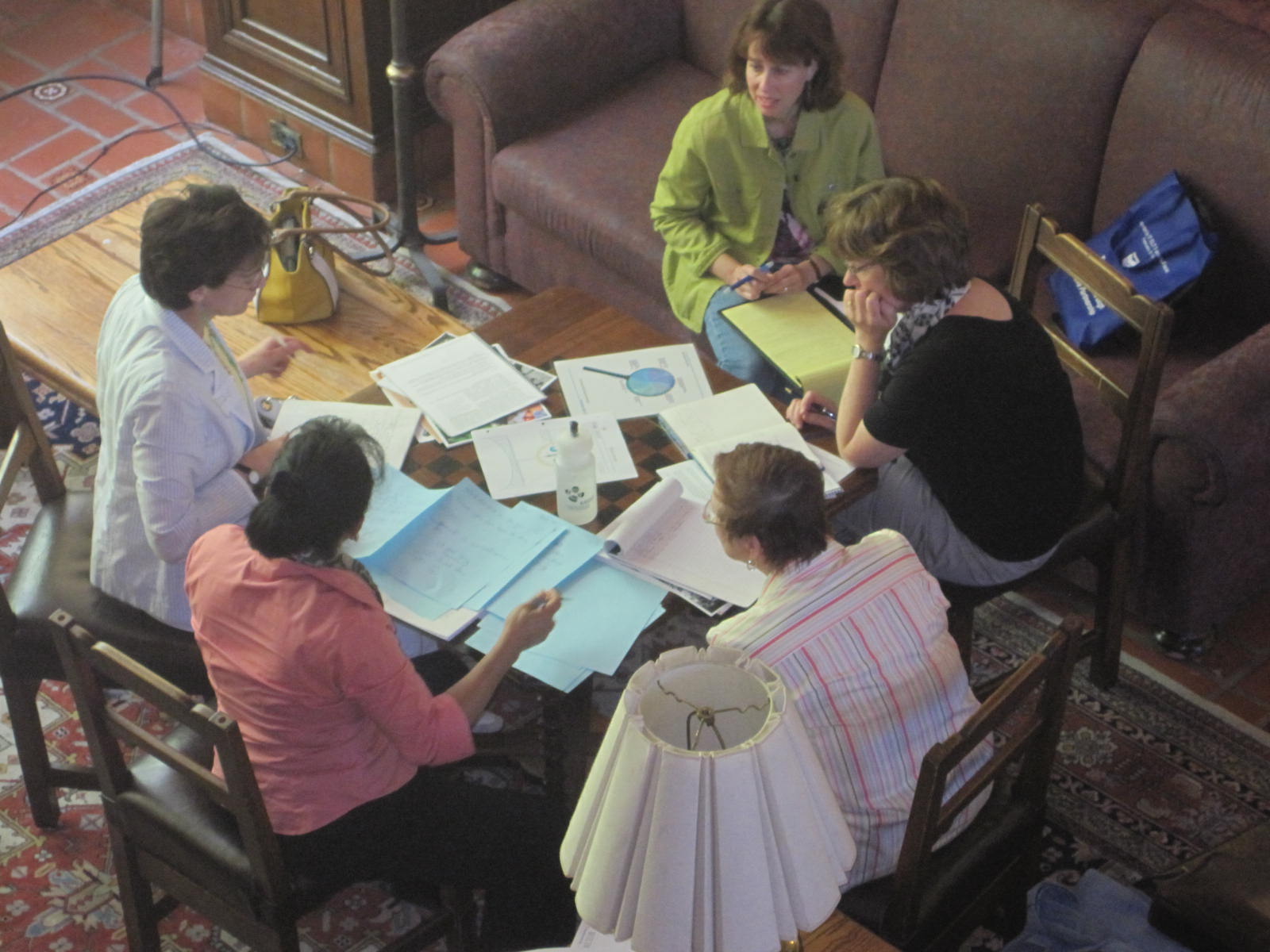
The design was an inspired one. Because Microsoft has experienced facilitators who are also well-versed in Cultural Detective, Heather used these facilitators to get team newcomers up to speed, as well as to facilitate small group breakout sessions. This internal group of facilitators put together the readings, sample interviews and assignments for the three-day training. As is so wonderful when training in India, there were plenty of games, activities and laughter.

As you might imagine, one of the main challenges for the support engineers is knowing how to respond to customers’ emotions. Large enterprises rely on Microsoft products to function in highly customized ways, which often means long days of problem-solving discussions, heightened emotions and frayed nerves. The March training included the learners acting out skits of engineer-customer interactions, videotaping them, and then using the Cultural Detective Worksheet to debrief the contrasting values, and the EPIC approach to discern how to respond most appropriately. We would love to share one or two of those videos with you here, but, of course, they are proprietary.

Instead, let me leave you with a few of the notes scribed in small groups. In case you’re wondering why “Kit Kats” and “Milky Ways,” the participants chose a candy bar and then broke into groups, one of ten techniques you can find in this blog post.

If you or your organization would like to be profiled in an upcoming blog post, we would be happy to talk with you about making that happen. Just let us know. Congratulations to all the Microsoft staff, who are so committed to building intercultural competence in their organization, and to you, the Cultural Detective community, for your efforts on this same journey.

We Are Not (Just) Our Nationality(ies)!

Who of us is a single story? As Chimamanda Adichie so eloquently told us, insisting on a single story is to “flatten” one’s experience. While I am USA born, it definitely irks me when those I know, often interculturalists, insist on defining me purely through that Lens. Yes, I am US American; I claim it. I have also lived overseas half my life; surely that has had no small influence on who I am today? I’m a woman, of a certain age, a mother, a friend. I’m in a committed relationship, I own a small business, I am an immigrant.

We are many things, and different aspects of our identities rise to the fore depending on the context. Shouldn’t intercultural competence enable us to get to know ourselves and others in the fullness of who we are? Two-and-a-half years ago I wrote a post on this blog about the many layers of our cultural identity.

Today, I am very proud to say that Cultural Detective Online makes it very easy to look at how real people interact in real situations, and to reflect on how our many cultures might be influencing us (or others) in a given interaction. Did I react that way because I’m a Mom? Because I’m a Baby Boomer? Or just because I’m me? Cultural Detective Online is a cross-cultural effectiveness tool that doesn’t reduce us to a single story, but rather encourages us to get to know ourselves and others as fully and wholly human. Take a look:

Remember, Values Lenses represent the core values of entire societies of millions of people; they are not intended to be used as yet another “box” into which to stereotype individuals. Try using a Values Lens to gather clues as to why someone may have responded in the the manner she or he did. Then, with perhaps a little more understanding about the other’s positive intent, you can engage in a more effective dialogue, and learn to collaborate more enjoyably and productively.

How do you use the multiple Lenses available to you within CD Online? How often do you upload stories from your everyday work or life, and purposefully learn from them? What creative things are you doing with Cultural Detective Online to further your intercultural competence? We would love to hear your experience!

Cultural Detective as a Facilitator’s Magic Tool

IMG_6335Guest blog post by Tatyana Fertelmeyster, co-author of Cultural Detective Russia,
connecting.differences@gmail.com

First of all a disclaimer: I have a long-lasting love affair with Cultural Detective and see it as the favorite tool in my toolbox, good for almost anything where training or coaching is concerned. It does not mean that I try to squeeze it into every design or set of handouts I do, but it is a go-to resource. In this short post I’d like to invite you to consider the Cultural Detective Model as a very powerful mechanism for effective facilitation of any process (training, meeting, academic classroom learning, etc.) that you might be facilitating.

Let’s say you come in all ready and prepared to teach, but for some reason the group is just not following you, no matter where you are trying to lead them. Observe. Observe the group and observe yourself: who is doing and saying what here? Ask yourself my favorite question: assuming they have a reason to respond to my efforts in that strange way—what might that be? Take your next step in accordance with your analysis and not in accordance with your initial brilliant plan that just flew out the window (assuming it had a good reason to fly out the window—what might that be?)

Say you’ve got yourself a difficult participant (you know the kind I am talking about, though yours might look nothing like mine). Take a deep breath and ask yourself: assuming this person’s behavior comes from some place of value, what might that be? To get really good at it, practice on significant others. If you master doing it with teenagers, the whole world will be yours for the taking.

I owe one of my best co-facilitation experiences to Cultural Detective as well. A few years ago Kate Berardo (CD Self-Discovery and CD Bridging Cultures) and I were teaching a class at the Summer Institute for Intercultural Communication (SIIC) together. It was our first collaboration. As we started preparing for the class we talked about ourselves using the structure of the CD Value Lens: this is what I bring to this project, this is how it can be instrumental, and this is how I can be a pain in the neck for somebody who operates differently. I don’t know too many people whose style as is different from mine as Kate’s is. It could’ve been a huge disaster. Instead we were able to really combine our strengths, which is such a wonderful alternative to drowning in frustration over “how come you are not like me?”

If you want to strengthen your skills as a facilitator, come join me this July in Portland, OR at the Summer Institute for Intercultural Communication. I will be teaching three workshops incorporating Cultural Detective in various ways:

I hope to see you there!

Transforming Lives: Education as an Alternative to Violence

AUN “The youth in Nigeria are beginning to speak—some with violence.
They attract attention. But others are also speaking.
The question is, is anyone listening to this plea
for western education, for training, for reform, for help?”

—Margee Ensign, President, American University of Nigeria

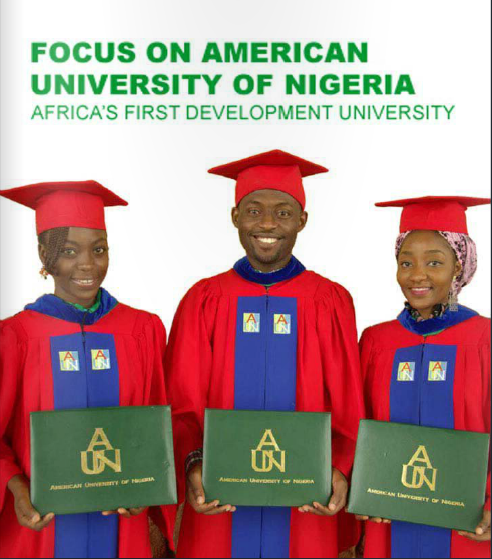
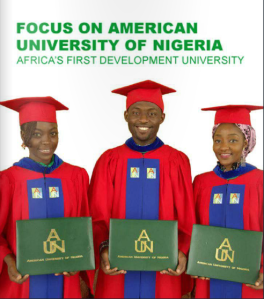
With all the grim news coming out of Nigeria these days, I thought you might want to hear about a little-known educational bright spot in the country: the unique programs offered at the American University of Nigeria, founded in Yola (capital of Adamwa state) in 2005 by the country’s former vice-president, Atiku Abubakar.

Despite Boko Haram’s year-long campaign of terror, including kidnapping over 300 girls from a school, murdering family members, burning villages, and displacing thousands of people, most families still desire an education for their girls and their boys, says Margee Ensign, President of AUN. And AUN provides it.

Both the university’s valedictorian and its graduating class speaker this year are women. The university is one of the leaders in the interfaith peace initiative. It has hired and trained more than 500 female and male security guards to protect the campus and its housing, offering each of them a free education. AUN facilities include a nursery school, primary and secondary school, in addition to the university itself. It recently dedicated a new library that has received international accolades for its efforts to create the finest e-library in Africa.

“Security comes not from our security force, but from our development and peace efforts,” Margee reports. In one of the poorest places on earth, AUN has a program to teach local women literacy and entrepreneurship skills, to enable them to generate income for their families. The university’s Peace Council has created 32 football and volleyball “unity teams” for young people to play in tournaments year-round. None of the young people have jobs, over half have dropped out of high school, and 10% have not even completed elementary school. Sports team members study a peace curriculum focused on building understanding and tolerance. The unity teams help ensure that these youth stay active and involved in their communities—making them less vulnerable to recruiting by terrorist groups like Boko Haram.

This kind of creative programming doesn’t happen by accident. Margee is a tough, dedicated, innovative, and tireless educator. Her extensive experience in administrative and faculty positions in universities in the USA (including Columbia University in New York, Tulane University in New Orleans, and the University of the Pacific, Stockton, California), and her interest and experience in international development in Africa, make her well-prepared to be president of AUN.

“I met with about 80 women in the [AUN entrepreneurship] program…They wanted to learn English, Nigeria’s official language, so that they could read to their children. In modern education, they knew, lay the only hope for the future.”

Margee relishes the challenges of working across cultures. She has embraced the local community culture, while building a university culture that retains important aspects of the US educational experience. After all, this is why parents are sending their children to college at AUN. She’s always recruiting—looking for people with just the right skills, willing to give their time and talent to join the international faculty and staff at AUN, a growing academic community in Nigeria.

The Cultural Detective Team believes it is possible to help make the world a better place through our actions. Yet, it isn’t always easy! Cultural Detective: Global Teamwork investigates some of the challenges involved in managing culturally diverse teams in today’s global environment, even if working in the same geographical location. What is the task? How do we form and maintain a high performing team? How do we manage the terrain or contexts in which team members work? How do we choose the right technology to support the team? How do time and space affect communication? Add culture to this mix, and it is even more complex! These are just the beginning of the challenges Margee faces each day—and she loves it!

All around the globe, dedicated, competent people are working to make a corner of the world a better place—often, not the corner of the world in which they were born and raised. Yet, they are motivated to share their skills in multiple arenas and diverse geographical locations. You probably know people that match this description—or are you one?! We’d be delighted to share their stories or yours with our readers!

With all the doom and gloom in the news, it is good to remind ourselves that generous people are doing wonderful things in difficult circumstances. A recent article written by Margee and published on the BBC.com website offers an often overlooked perspective on the area better known for the rampages of Boko Haram. We invite you to read Margee’s entire article here: “Nigerians defy terror to keep learning.”
Using Cultural Detective Online in a College Class

BCCUNYhoriz_PMS288_PMS286A guest blog post by Dr. Elisabeth Gareis (Communication Studies, Baruch College, City University of New York)

With many colleges increasing their online course offerings, there is a great need for training tools that can be used as segments in online classes. Last fall, I was looking for such a tool for my graduate class in International Business Communication. In previous face-to-face renditions of the course, I had used Ecotonos with great success. When I couldn’t find a simulation game for online asynchronous settings, I decided to try the Cultural Detective Online (CDO).

One course assignment involves student groups investigating a country of their choice through readings and interviews, focusing on sub-topics such as oral and written communication, business customs, and business-related news events. In the end, the groups create webpages on their country, complete with narrated slideshows on each sub-topic.

Last fall, I assigned the CDO only for exploratory purposes. Before the students embarked on their adventure, I gave a screencast lecture on training tools, covering differences in type (e.g., simulations versus games), giving examples of specific ones (e.g., Barnga, Ecotonos, Diversophy), and discussing different uses (e.g., training versus coaching). The students had various levels of exposure to intercultural communication: some had overseas experience and others were new to the subject matter. None of them had used a training tool before.

Ellissa Corwin (COM 9656 Fall 2013)
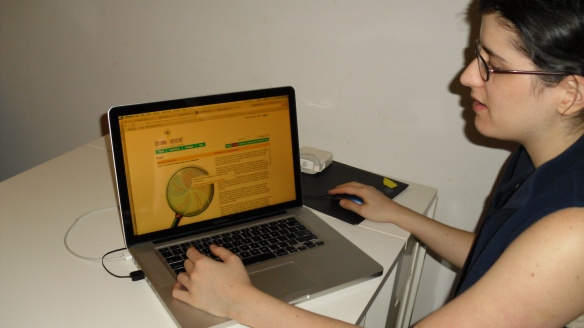
The students all obtained a one-month subscription to explore CDO as an example of a training tool, and, at the same time, to get started on their country research. Their assignment was to view the video tutorials and then to complete the CDO package for their target country (i.e., to explore all sections, including the Lenses, proverbs/sayings, daily life examples, negative perceptions, and all incidents). In the end, they analyzed and discussed the experience. Here are some representative responses:

  • “The interface is easy to use.”
  • “The dashboard is a great way to orient the user at the start of their cultural investigation. It can be very helpful to write out what your aims are when doing research.”
  • “I think the Cultural Detective does a very good job of outlining primary Lenses. I particularly enjoyed the in-depth materials associated with each lens and learning from the interactions. I also appreciated that they include both positive and possibly negative perceptions of each trait.”
  • “I like how the Lenses are organized. I especially like the proverbs and daily-life examples.”
  • “I found it useful to begin learning about my group’s particular country and a good starting point for further research.”
  • “This type of in-the-moment skill-building practice really helps reinforce learning and build user confidence. The Cultural Detective also helped bring our textbook to life and clarify learning.”
  • “I liked the fact that all of the site’s sources are listed. This can really help someone who wants to dive deeper into a particular country.”
  • “Very organized and user friendly!”

Exploring the CDO gave the students insight into the world of intercultural training and coaching, and provided them with quality information on their target country. As it is self-paced, it is easily integrated into asynchronous online college classes.

I am using CDO again this semester, but this time a little differently. In addition to exploring the tool, students’ final presentations will include using their research findings (readings and interviews) to design an activity that is modeled after the incidents in CDO. In other words, each student will contribute an issue from his/her sub-topic to a scenario or dialogue, which will then be analyzed by other classmates. Not only will this better integrate CDO into the course, it will also allow students to directly apply their learning.

Cultural Detective Online is a great tool, and I recommend it highly. Students greatly enjoy their learning via the CDO.

A note from the Cultural Detective Team:

Please contact us if you’d like to learn how to integrate CDO into your classroom experience.

Coming soon—exciting new CDO functionality will allow members of a “group” (e.g., a class or a team) to collaboratively create critical incidents, which can be submitted to the group administrator (professor or team leader) for approval, and then shared with other group members for analysis and discussion.

Have you joined us for a free webinar to see how Cultural Detective Online can be integrated in your academic or business setting? We hold them twice a month—attendance is limited so register now: Cultural Detective Online Webinar


Ten Years of Building Respect, Understanding, Justice and Collaboration!

P1110373Thank you for joining us on the journey to build respect, justice and collaboration across cultures!

A group of our authors recently gathered in Mazatlán, Mexico to celebrate the tenth anniversary of this collaborative project, Cultural Detective. We held three days of work meetings and a facilitator certification workshop; we hosted a wonderful party that included the indigenous Yoreme Deer Dance; and we played—on the beach, in the water, at restaurants, with music, and all around town!

Our community members will have more celebrations around the world throughout 2014; contact us if you’d like to join one!

Below is a slideshow of just some of the many authors and community members who have contributed to making Cultural Detective such an amazing tool, and to using it to transform the world in which we live, bit by bit.

Are you curious about how Cultural Detective came to be? You might want to read this short history of our project.

We have received quite a few greetings from customers and community members—their videos show the breadth of application of this toolset. Take a look at the anniversary playlist on the Cultural Detective YouTube channel.

Want to become more active, transforming the communities in which you live and work? Join us for a free webinar and three-day pass to Cultural Detective Online, or join the conversation on Twitter, LinkedIn or Facebook.

A Vietnamese Woman’s Experience of the Arab Spring

1947577_10203237474119981_1557351267_nCultural Detective Vietnam co-author, Phuong-Mai Nguyen, spent eight months traveling through 13 countries, tracing the path of Islam from Saudi Arabia to East Asia. She chronicled her journey here on this blog. Mai traveled alone, during the height of the Arab Spring, amidst so many changes and so much turmoil. She met hospitality everywhere she went, learned a whole lot, and fell in love with the people and places.

Mai has just launched her Vietnamese-language book (two, actually) about her journey. The English edition will debut in October. Be sure to catch her powerful short video, below.

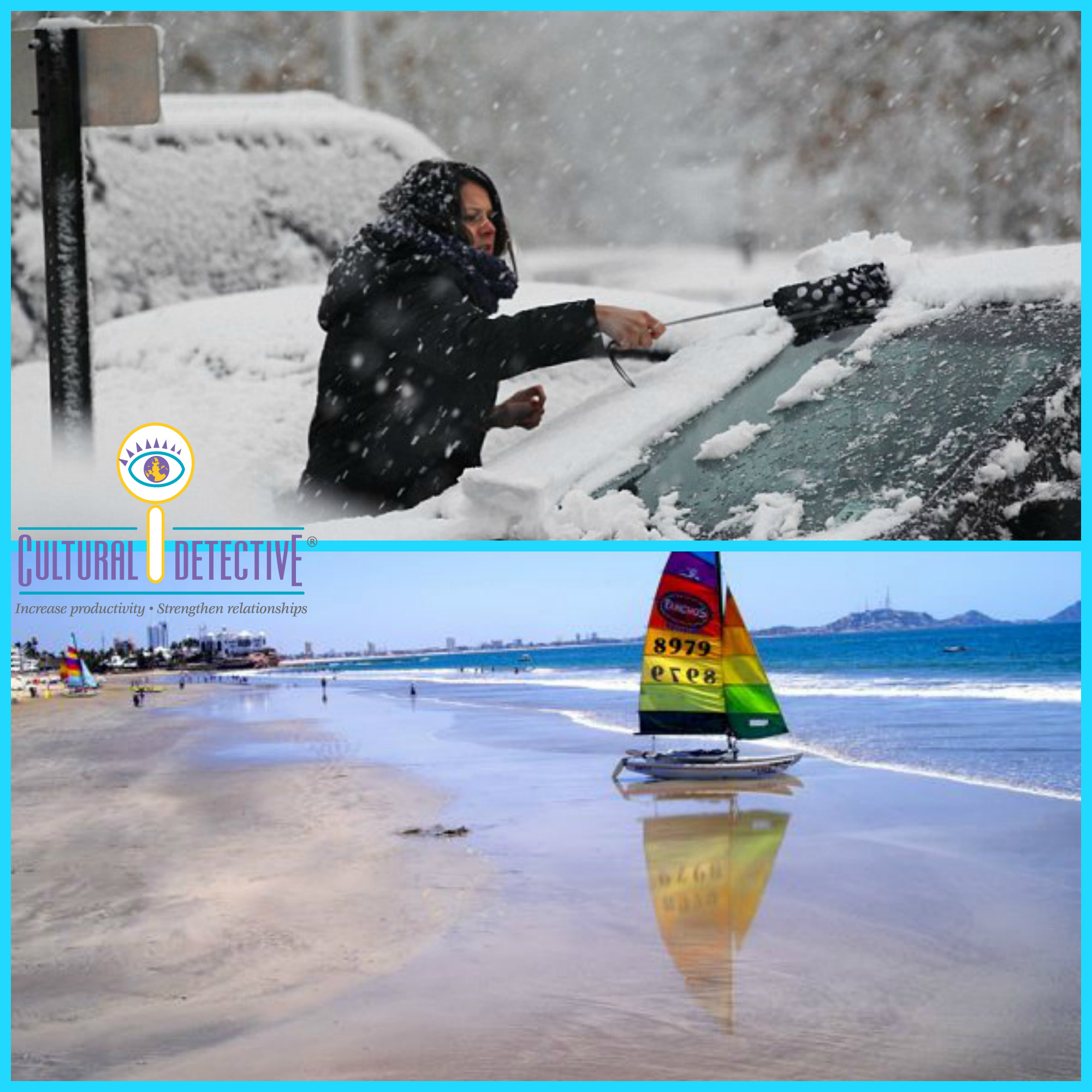
Join us in Warm Sun AND Accomplish a New Year’s Resolution

snowbeach

  • Are you tired of the cold, the ice, and the snow? Is it all getting to be too much, and you’d like a break? Are you longing for some warmth, sunshine, the beach, and vibrant Latin music?
  • Have you promised yourself that in 2014 you will spend more time on yourself, invest in your professional development, network with like-minded professionals, or expand your training/facilitation/coaching repertoire?
  • Do you realize that global and multicultural competence are requisites in today’s world, and you want to improve these vital skills and learn to help develop them in others?

You can accomplish all these things by joining us in Mazatlán Mexico in February, or in Atlanta Georgia in March for our Cultural Detective Facilitator Certification Workshop! Early bird registration rates are available, so now is a good time to secure your seat in one of these workshops.

The Cultural Detective Facilitator Certification Workshop receives high accolades from the most experienced interculturalists as well as from those with significant life experience but who are new to the intercultural field. Clients rave about the Cultural Detective Method and use it worldwide. Facilitators love having Cultural Detective in their toolkit. It helps them truly make a difference and secure repeat business from clients—ongoing coaching, training and consulting revenue—as clients commit to the continuing practice that developing true intercultural competence requires.

Many people do not realize that Cultural Detective is flexible enough to integrate nicely with existing training programs—adding depth and practical skills that learners can use immediately and build upon in the future. Participants easily remember the Cultural Detective Method, and can put it into practice when encountering a challenging situation—solving misunderstandings before they become problems!

“It is difficult to exaggerate how fundamentally important Cultural Detective has become for us. The difference between courses we conduct with and without CD is astounding.”
– Chief Academic Officer

“We have achieved, for the first time in my five years working on the Learning and Development team, a 100% satisfaction rating from our learners. Thank you, Cultural Detective!
– Chief Learning and Development Officer

“Our customer satisfaction rates have increased 30% thanks to Cultural Detective.”
– Customer Support Manager

Click here for details on dates, locations and pricing, and click here for a detailed agenda of the workshop. Sound tempting? Get out of the cold AND spend time developing your effectiveness and employability! We’d be delighted to have you join us! Of course, if you are living somewhere warm, we’d gladly welcome you, too!

New Year’s Gift: Oldie but Goodie—The STADIApproach

Permission is granted to use this model freely and to circulate it, PROVIDED the © and url are maintained.

Permission is granted to use this model freely and to circulate it, PROVIDED the © and url are maintained.

It is said that experience is the best teacher. But learning does not lie in the experience itself; rather, it is our interpretation of the situation—the meaning we give to our experience—that provides our learning.

How might we better enable learners to constructively give meaning to their intercultural experiences? Are you looking for an easy and highly effective way to structure your next intercultural workshop or coaching session? Are you wondering how you might better enable study-abroad students to understand their experience in a way that builds cross-cultural competence? Do you have employees working internationally or multiculturally, and you’d like them to learn to truly harness the potential of diversity?

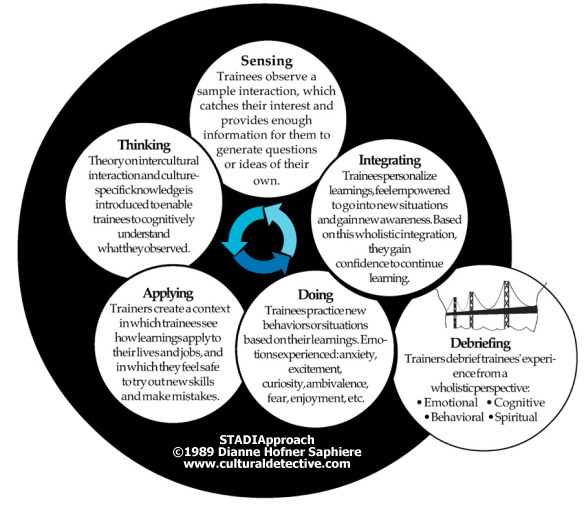
This “oldie but goodie,” the STADIApproach to Intercultural Learning, has been used in dozens of organizations worldwide with huge success. Click on the link to view a full article on the approach. I first published it for use with my proprietary clients in 1989; it is now even more useful as it can provide a design framework for blended learning approaches that leverage Cultural Detective Online. The CD Online system has STADI embedded into its core. In the hands of a skilled facilitator, teacher or coach, you can assist your learners to Sense, Think, Apply, Do and Integrate by analyzing the experience of others via the critical incidents in CD Online, as well as probing their own real life experiences.

We trust you’ll find the STADIApproach article helpful! Please accept it and use it as my new year’s gift to you, this January of 2014. It is my wish that the new year will enable all of you, dear readers, to better facilitate intercultural understanding, sustainability, respect and equity on this planet of ours.

Please share your experiences with us, and your designs that effectively leverage Cultural Detective Online to supplement your training, teaching or coaching endeavors.