 Eight Words of the Year from Other Countries
Great, short, fun, informative re-post. Thank you, Mental Floss!
Which words do you know? Which ones would you add?
Eight Words of the Year from Other Countries
Great, short, fun, informative re-post. Thank you, Mental Floss!
Which words do you know? Which ones would you add?
 (English follows the Spanish)
Estas fiestas de fin de año me han dejado la nostalgia de los ausentes a quienes no pude abrazar con el anhelo del reencuentro. En contraste, me han dado la oportunidad de gozarme lo simple de nuestras tradiciones más sentidas. Una de ellas sin duda para mí es la cocina. Debo confesar soy de las que cocina escuchando música de diciembre, desde villancicos como tutaina o mi burrito sabanero, hasta los infaltables temas de la Billos Caraca’s Boys, Los Melódicos o Los Hispanos. Crecí con esta música y a falta de estaciones, en Colombia es Navidad desde que las emisoras comienzan a emitir estas melodías y las vitrinas de tiendas presentan sus decoraciones. El gran inicio es nuestra fiesta de las velitas el 7 de diciembre, cuando todos los alumbrados oficialmente se encienden y las casas se visten de luz con velas de colores y faroles que se extinguen al amanecer. Es nuestra fiesta de luz.
El ritmo cambia y el tiempo se hace aún más amigo. Contrasta el agite de las calles y sus trancones — embotellamientos — con el ritmo al que se llevan muchas tareas. Esta singular amistad con el tiempo se torna evidente para quienes nos visitan.
Tuvimos con mi familia la gran oportunidad de acoger a quienes estaban solos de paso por nuestra ciudad. Para Navidad, nuestra invitada de California se ganó la membresía en el club de los “gringos chéveres”. La citamos a las 10:00pm, llegó a las 10:15pm pues el taxista la buscó un poco más tarde en el hotel. Brindamos, cenamos y mis padres sin hablar más que yes or hello, le transmitieron nuestras tradiciones — bueno sí, mis hermanos y yo asistimos en la traducción — pero las sonrisas y la música son parte de un idioma universal. La despedimos de madrugada el 25, luego de tres días en Bogotá se preparaba a disfrutar San Andrés y Cartagena. Su periplo apenas comenzaba.
Para fin de año, nuestros invitados esta vez fueron de Alemania y Francia. Los dos invitados de Alemania ya llevan varias semanas en el país. Su periplo ya los había llevado por Cartagena, la zona cafetera, Boyacá y alrededores del Cañón del Chicamocha. En resumen, se han recorrido casi la mitad del país. La cita a cenar era la misma 10:00pm, y mi razonamiento fue, como son alemanes les decimos a las 10:00pm para que cenemos juntos.
Pasaron las 10:15pm, las 10:30pm y nada. Estos invitados se hicieron amigos del tiempo. Llegaron unos 50min tarde luego de varias llamadas al celular disponible. Uno llega a preocuparse si fue que se perdieron o pararon en la cena equivocada. Cuando llegaron ya habíamos iniciado, simplemente pensamos algo se presentó y no iban a venir, !son alemanes! Llegaron, cenaron, brindamos… y hasta bailamos. Uno de ellos ha dicho que es la mejor Nochevieja de su vida. Los tres hablan español muy bien, así que pudieron compartir sus experiencias con todos en casa, y fue así como pidieron mil excusas pues en uno de sus recorridos un simpático colombiano los citó “en diez minutos” que se volvieron tal vez cuatro horas.
Su lógica fue, nos dicen a las 10:00pm así que podemos llegar tarde. Al final les dije de este blog y que les contaría a todos como se puede perder la puntualidad en quince días de paso por Colombia. Ahora uno de ellos está de regreso en Alemania, y un alemán y un francés amigos del tiempo están en las playas de San Andrés.
Mis padres han sido los más alegres con estas visitas. Poco saben de sociedades policrónicas o monocrónicas, de alto o bajo contexto, ni tienen idea que el trabajo de Cultural Detective le muestra al mundo que el tiempo es un amigo en este país. Sin embargo ellos saben lo que nos hace auténticos y algo que siempre han enseñado en casa es el valor de querer lo nuestro, nuestras tradiciones y lo que somos — por supuesto, abiertos a aprender de los demás. Mis padres fueron sin duda los grandes anfitriones, hasta mi madre sacó a bailar a uno de los chicos y dió clases de música tropical. Sin duda para todos unas fiestas inolvidables. Como diría mi padre “my home is your home, welcome”.
Si quiere hacerse amigo del tiempo… visite Colombia.
Felicidades y un muy fructífero 2013.
—
How to Lose Your Punctuality in 15 Days, Written by Maryori Vivas
Translated by Dianne Hofner Saphiere
These end-of-the-year holidays have filled me with nostalgia for those I am unable to hug despite the desire for a reunion. In contrast, they have given me the opportunity to enjoy the simplicity of some of our deepest traditions. One of these for me is without doubt that of the kitchen. I must confess that I am one of those who cooks while listening to holiday music, everything from carols such as Tutaina or Mi Burrito Sabanero, to infallible tunes such as those of the Billos Caracas Boys, Los Melódicos, or Los Hispanos. I grew up with this music; in Colombia Christmas begins when the radio stations start playing such melodies and the shop windows display their holiday decorations. The great beginning of the festivities is the Festival of Lights on December 7th, when holiday lights are officially turned on and the houses are filled with the light of colorful candles and lanterns that aren’t turned off until dawn. This is our Festival of Lights.
The rhythm changes at this time of year, and time becomes even more of a friend than usual. Contrast the excitement of the streets and their traffic jams — traffic stops really — with the rhythm with which we complete the many tasks of the season. This unique friendship with time gradually becomes evident to our guests.
Our family had the wonderful opportunity this year of welcoming into our home those who were traveling alone in our city. For Christmas, our guest from California won membership in the “cool gringos” club. We invited her for 10 pm. She arrived at 10:15, because the taxi had picked her up late at her hotel. We toasted, dined, and my parents, who can’t speak more than “yes” or “hello” in English, communicated our traditions to her — ok, my sister, my brother and I assisted with the translation — but smiles and music are universal languages. We bade her goodbye at dawn on the 25th. After three days in Bogotá she was preparing to enjoy San Andrés and Cartagena. Her journey was just beginning.
On New Year’s Eve, this time our guests were from Germany and France. Our two guests from Germany had already been in our country for several weeks. Their journey had already taken them to Cartagena, the coffee region, Boyacá and the area around the Canyon of Chicamocha. They had travelled over half the country. I told them the same 10 pm for dinner, and my reasoning was that as they are Germans they’d arrive right around 10 pm so we could dine together.
10:15 pm passed, 10:30 pm, and nothing. Our guests had become friends with time. They arrived about 50 minutes later, after various cell phone calls. One starts to worry whether guests have gotten lost or have ended up at the wrong dinner. When they arrived we had already begun, simply imagining that something had come up and they weren’t going to be able to come. After all, they’re German. But they arrived, we ate, we toasted, and we even danced. One of them told us it was the best New Year’s Eve of his life.
All three speak Spanish very well, so they were able to share their experiences with everyone in the house. It was in this way that they asked a thousand pardons for their late arrival, explaining that in one of their travels a kind Colombian had told them “in ten minutes,” which had turned into perhaps four hours. Their logic had been that we’d told them 10 pm, so they could arrive late. In the end I told them about this blog, and that I would tell everyone the story about how to lose punctuality in 15 days of travel in Colombia. Now one of them is back in Germany, and the other German and the French friends of time are enjoying the beaches of San Andrés.
My parents have been the happiest with these visits. They know little about polychronic or monochronic societies, of high or low context, and they have no idea that the work of the Cultural Detective demonstrates to the world that time is a friend in our country. However, they know what makes us authentic and what has always been taught at home: the value of loving what’s ours, our traditions and who we are — of course with an openness to learning about others. My parents were without doubt wonderful hosts; my mother even got one of the young men to dance with her and gave a class on tropical music. These were definitely holidays to remember. As my father would say, “my home is your home; welcome!”
If you would like to be friends with time, visit Colombia.
Happy New Year! I wish you a very successful 2013.

These beautiful, handmade cards are from: http://www.artsycraftsymom.com/2012/11/diy-diwali-card-idea-for-kids.html
Happy Diwali, everyone! The beautiful Festival of Lights is held this year November 13-17.
Diwali celebrates the victory of good over evil and light over darkness. It has major religious significance for Hindus, Sikhs and Jains, and is celebrated not only in India but by Indians living around the world. Want to learn more?
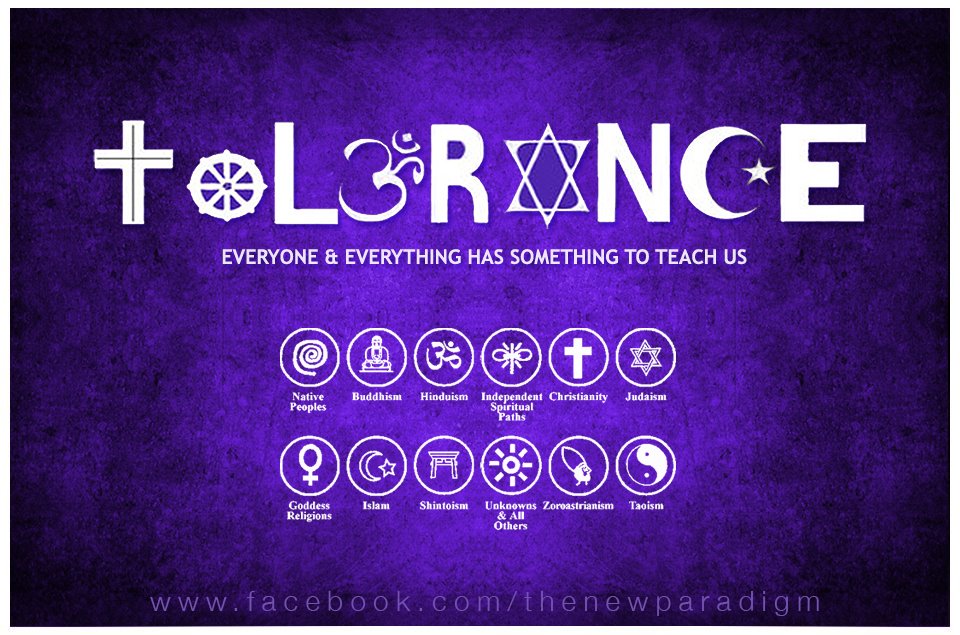
Our belief systems, particularly our spiritual beliefs and traditions, are increasingly important dimensions of culture. We must be able to bridge religious and spiritual differences if we are to live together in a collaborative, inclusive, respectful world. Yet this dimension is far too often overlooked and shortchanged in the intercultural literature.
Today, in this blog post, I offer up a few quotes that speak to me about this topic. It is my hope that taking a few moments to reflect might help each of us better do our part to promote inter-religious understanding.
We are fortunate that so many schools of divinity, congregations, spiritual communities and ecumenical groups use Cultural Detective to promote tolerance, understanding and respect. I’d welcome hearing from any of you about the efforts in which you’re engaged. Please, also, share with us quotes on this topic that speak to you.
—
“Impiety: Your irreverance toward my deity.”
—Ambrose Bierce
“When political conflict is religionized, it is absolutized.”
—Jonathan Saks
“Once you attempt legislation upon religious grounds, you open the way for every kind of intolerance and religious persecution.”
—William Butler Yeats
“So many Gods, so many creeds; so many paths that wind and wind; when just the art of being kind is all this sad world needs.”
—Ella Wheeler Wilcox
The joke (instead of a proverb) in Cultural Detective Jewish Culture that illustrates the value of “group solidarity” (CLASSIC cross-cultural miscommunication; enjoy!):
Several centuries ago, the Pope decreed that all Jews had to convert to Catholicism or leave Italy. There was a huge outcry from the Jewish community, so the Pope offered a deal. He’d have a religious debate with the leader of the Jewish community. If the Jews won, they could stay in Italy; if the Pope won, they’d have to convert or leave.
The Jewish people met and picked an aged and wise rabbi to represent them in the debate. However, as the Rabbi spoke no Italian, and the Pope spoke no Yiddish, they agreed that it would be a ‘silent’ debate.
On the chosen day the Pope and Rabbi sat opposite each other.
The Pope raised his hand and showed three fingers.
The Rabbi looked back and raised one finger.
Next, the Pope waved his finger around his head.
The Rabbi pointed to the ground where he sat.
The Pope brought out a communion wafer and a chalice of wine.
The Rabbi pulled out an apple.
With that, the Pope stood up and declared himself beaten, saying that the Rabbi was too clever. The Jews could stay in Italy.
Later the cardinals met with the Pope and asked him what had happened. The Pope said, ‘First I held up three fingers to represent the Trinity. He responded by holding up a single finger to remind me there is still only One God common to both our beliefs. Then I waved my finger around my head to show him that God was all around us. He responded by pointing to the ground to show that God was also right here with us. I pulled out the wine and wafer to show that God absolves us of all our sins. He pulled out an apple to remind me of the original sin. He bested me at every move, and I could not continue.’
Meanwhile, the Jewish community gathered to ask the Rabbi how he’d won. ‘I haven’t a clue,’ the Rabbi said. ‘First, he told me that we had three days to get out of Italy, so I gave him the finger. Then he told me that the whole country would be cleared of Jews and I told him that we were staying right here.’
‘And then what?’ asked a woman.
‘Who knows?’ said the Rabbi. ‘He took out his lunch so I took out mine.”
Our world is swimming in information, so much so that we often drown in it and find it difficult to make sense of. That’s why infographics play such a valuable role. Recently I’ve come across two different sets that I thought Cultural Detectives might be interested in seeing and using (or making your own for your own purposes).
Borrowing heavily from a concept by Danish designer Peter Orntoft, the Millward Brown Agency designed the two infographics below that put data in context. Interesting, no? More memorable than otherwise?

Photo by Millward Brown

Photo by Millward Brown
Secondly, Lam Thuy Vo of USA’s National Public Radio (NPR) created two graphics which clearly make the point that immigrants comprise about the same percentage of the US population as they did 100 years ago, though their geographic origins have changed.
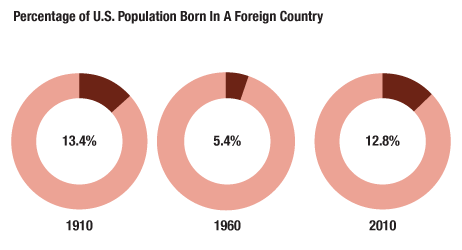
Graphic by Lam Thuy Vo of USA’s National Public Radio (NPR)

Graphic by Lam Thuy Vo of USA’s National Public Radio (NPR)
Do you use infographics in your work? Please share! Have you created any? Strikes me that interculturalists could sure use this terrific approach to creating and communicating meaning.
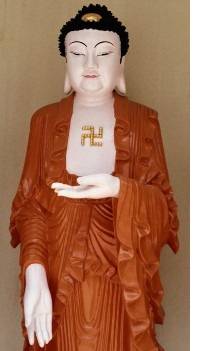 The story we published recently about cultural appropriation reminded me of one of my favorite incidents in our series. It resides in the Cultural Detective Global Business Ethics package, and involves a corporate newsletter publishing photos from the office in India. One photo, taken at a temple, shows a swastika.
Outraged, an anonymous writer emails the newsletter editor to complain about a lack of cultural sensitivity, a lack of commitment to diversity and inclusion. The newsletter editor is crestfallen; the comment saps all his energy. It is exactly his commitment to inclusion and diversity that has motivated him to include posts from offices worldwide! How much harder can he try?
The swastika is sadly a symbol of genocide and the Holocaust for many; something to be reviled. There was an unsuccessful effort to ban the use of the swastika in the European Union. Seeing this symbol can bring forth indescribable pain and outrage for many people.
Swastika is a Sanskrit word, a religious symbol of good fortune used by Hindus, Buddhists, Jains and others worldwide. It can be seen in the art of the Egyptians, Romans, Greeks, Celts, Native Americans, and Persians as well.
To me, the swastika is one of the world’s most horrifying misappropriations of a cultural symbol! I’d welcome hearing from anyone who knows the history of Hitler’s and the Nazis’ appropriation of this symbol.
It is important for us to understand both of these very different realities. To some, the swastika symbolizes genocide and hate. To others it symbolizes beauty, the steps of Buddha. Does this therefore mean we should not use it? That we should? Can we transform its use through ongoing learning and dialogue?
Back to the incident, learning to make the most of learning opportunities such as these, to encourage cultures (organizations, communities) in which people listen to, respect and collaborate with one another, is what Cultural Detective is all about. Thank you all for joining us in this mission!
 I want to share with you a very exciting “Cultural Effective” that has just come to my attention. It is a wonderful story that shows the power of saying our truth, listening with heart, and taking action on what feels right.
It seems a southern California-based fashion house, Paul Frank, hosted a huge party/event with a Native American theme. They seem to sell (or to have sold) quite a few products that include adaptations of native designs (the designer, Paul Frank, is also a cartoonist).
The people at Native Appropriations, among others, complained about cultural appropriation of native designs, and the Paul Frank company reached out to them to ask, learn and take action! They have not only issued an apology but yanked photos of the event and removed all native designs from their product line!
I don’t know the people over at “Native Appropriations,” but the work they are doing indeed looks wonderful! And kudos to Paul Frank for their openness and even eagerness to learn and develop!
There are so many ways we can inadvertently offend one another. Refusing to take offense but rather to tell one’s truth without blame or judgment, and then to be greeted by someone fully listening and wanting to hear and learn from that truth… What a great example they have set for us!
Appropriation is a slippery slope. I can think of several times in my life when a colleague or friend kindly and generously gifted me with traditional dress from their home. I wanted to wear it, to demonstrate my thanks and to show respect. And, in others’ eyes, wearing such dress, when I am not from that place, can insult. So many times appropriation begins as a compliment, as admiration. And so much is in the eye of the beholder.
While I have no direct knowledge or involvement in this story, it appears to be a good example of going beyond “political correctness” to really listening to and collaborating with one another.
 Media has indeed become the strongest destructive weapon one can dare to imagine. An idiot with next to no ethics or professional knowledge can produce a stupid, laughable, amateuristic film about Islam, put it on the internet, and there you go: one ambassador murdered, hundreds wounded, thousands of others threatened with death, and escalating protests across the whole Middle East.
A silly movie with a quality that deserves to die slowly and peacefully in a mossy corner of the internet suddenly caused waves of unrest around the world.
 Andrés Tapia has written an article for Diversity Executive, in which he outlines the need to adapt US business practices in order to attract, retain and make the most of Latino talent. In the article, he references (and gives you a sneak peak of) our upcoming Cultural Detective Latino/Hispanic.
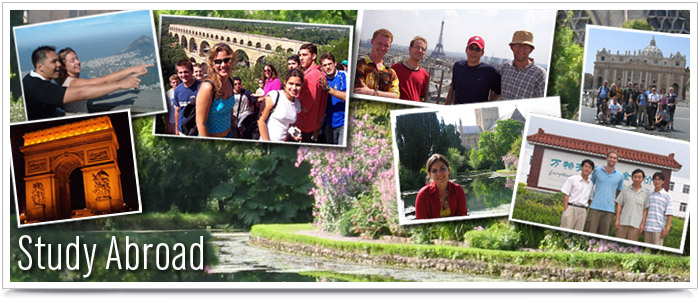 The allure of traveling to exotic places, learning about people, their language and how their lives were shaped differently than our own – these reasons and more attract students globally to explore the opportunities of living and studying abroad.
From my experience, living abroad as a young adult can be one of the first opportunities to see the world through a very different lens. The experience of trying to understand and communicate with a foreign language and adapt to a very different way of daily life can be both eye-opening and a shock to the system.
As an intercultural product development company we have had the unique opportunity to work with several organizations in the study abroad and student exchange industry. I’d like to point out two of them as organizations who not only facilitate the study abroad experience but also enrich the students’ opportunity to have powerfully positive study abroad learning experiences. Both CIEE and AFS International put significant effort into preparing students for their time abroad by teaching about the impact of culture, and how to interpret behavior by getting to what’s underneath – the values that are motivating the behavior.
Enjoy these two different but equally interesting case studies of how enhancing cultural understanding with a core process like Cultural Detective has been successful. I would love to hear your opinion and ideas that have worked for you in this field!
 Cultural Detective Blog