What also makes people discriminate?

(Tiếng Việt ở dưới cả nhà ạ)

I choked when this picture popped up on my Facebook wall, claiming that Muslims are being oppressed in Vietnam. Within the last few days, almost 4000 people have shared the photo. By now, those who genuinely believe that the Muslims in my country are being rope tied to each other, forced to kneel down, and threatened with knives could be a million. And the number rolls on! Uncontrollably!

There is no doubt that social media is a monstrous tool to promote both goodness and dark deeds. This is an era in which a picture does not just equal 1000 words but can turn 1000 ill-informed innocent people into 1000 martyrs.No time to read, no time to research, no time to cross check, not even time to use our brains to think. All reason can be overwhelmed by the thrilling power and the irresistible waves of emotion that a snapshot or a video clip can deliver.

For your information: This is a picture from the Vietnam war, roughly 40 years ago, capturing an investigation of North-Vietnam solders. The 70,000 Muslims residing in Vietnam are not in danger and often harmoniously mix their lifestyles and rituals with Vietnamese tradition and culture.I can imagine my Vietnamese countrymen would not be happy to see this abuse of history and ignorant act, although it may have originally been posted with good intentions. Yes, note this! It is not only the terrorists with their hideous acts that make people discriminate; it is also those who blindly believe that the whole world is against them and thus turn even a friend into a foe.

Tức ói máu khi nhìn thấy tấm ảnh này trên wall nhà mình với cái tiêu đề to tướng: Người Hồi Giáo bị đàn áp ở Việt Nam. Pót lên mạng ngày 23-8, cho đến nay đã có gần 4000 người share, và có lẽ hàng triệu người trên thế giới này đang đinh ninh rằng người Hồi ở VN bị trói chằng tay vào nhau, bắt quỳ xuống đất với dao găm kề vào cổ.

Mạng xã hội khiến ai cũng cảm thấy như mình là một nhà báo quyền lực vô song. Kể cả khi nhà báo ấy ngu dốt, quan điểm sai lạc, hay như kẻ pót cái ảnh này, thì nhìn gà hóa quốc, chỉ nhăm nhăm muốn gào lên cho cả thế gian này biết mình là kẻ bị hãm hại. Rồi thì trong cơn phẫn uất, bạ ai cũng lên án, vô tình biến cả bạn bè thành kẻ thù. Ai bảo chỉ có mấy thằng khủng bố mới làm cho người ta trở nên dị ứng với đạo Hồi?

Nhiều lúc cảm thấy lo lắng vì mình đang sống trong một thế giới mà tốc độ thông tin phát triển quá nhanh khiến người thường không mấy ai đủ thời gian để thích nghi. Một bức ảnh bây giờ không chỉ còn có sức mạnh hơn 1000 con chữ nữa mà còn có thể biến 1000 kẻ ngu xuẩn thành 1000 kẻ sẵn sàng cảm tử. Ở thế hệ You-tube này, chẳng mấy ai còn có thì giờ để đọc, để cân nhắc, chưa nói đến để suy ngẫm. Đập vào mặt một cái ảnh hay một cái clip thì lập tức tình cảm dồn lên đè bẹp tư duy. Loài người bao nhiêu năm qua đúng là cừu vẫn hòan cừu (câu này ai nói quên xừ mất rồi!)

Tái bút: Gần 70.000 người Hồi ở Việt Nam sống chủ yếu ở vùng của đồng bào Chăm. Họ, cũng như đại đa số những người Hồi trên thế giới chẳng khác quái gì đồng loại xung quanh cả. Từ khi du nhập vào VN, người Hồi thậm chí còn hòa quyện tín ngưỡng tôn giáo Hồi vào các dòng tín ngưỡng khác của dân tộc – một đặc điểm chung của rất nhiều nền văn hóa châu Á.

Endangered Languages Project

Experts estimate that only 50% of the languages that are alive today will be spoken by the year 2100. The disappearance of a language means the loss of valuable scientific and cultural information, comparable to the loss of a species. Tools for collaboration between world communities, scholars, organizations and concerned individuals can make a difference. Such is the raison d’être of the Endangered Languages Project, an online collaborative effort to protect global linguistic diversity.

The first thing I noticed on this site is the incredibly high quantity of red dots on the world map, each indicating a severely endangered language. The site enabled me quickly and easily to look up endangered languages in Mexico, where I live (the closest red dot to my home is the Seri language, one I’d never even heard of!). I also looked up the language that first interested me as a pre-teen in the southwestern USA: Navajo (it is labelled “at risk” and is currently a featured language on the site). Even in my adopted homeland of Japan, as I expected, the Ainu language is ranked “critically endangered.”

The languages included in the project and the information displayed about them are provided by the Catalogue of Endangered Languages (ELCat), produced by the University of Hawai’i at Manoa and The Institute for Language Information and Technology (The Linguist List) at Eastern Michigan University. The list of collaborators in the Alliance for Linguistic Diversity is indeed impressive. The project site is definitely worth using!

Appearance Can Be a Life or Death Matter

Immediately when I heard about the attack on the Sikh temple in Wisconsin (USA), the first thought that came to my mind is that the shooter must have confused Sikhs for Muslims because they wear turbans and grow beards. There have been many similar incidents, one of them in 2002 when four teenagers burned down the Sikh temple Gobind Sadan in New York. The teens told authorities that they believed the temple was named “Go Bin Laden” (!!!)

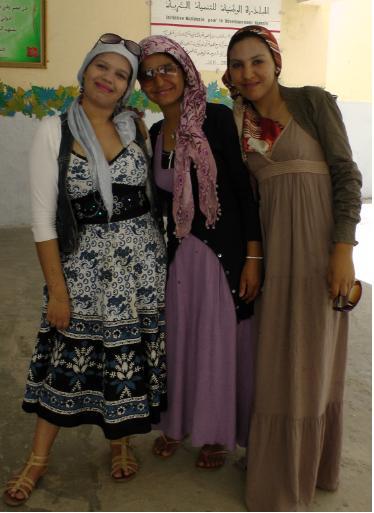
Similarly, Christian figures and nuns may be mistaken for Muslims, with their loose outfits and head coverings. A picture taken in Jerusalem may confuse many, for it can be very unclear who is Jewish, who is Muslim and who is Christian. I have asked lots of my friends and they often think that the three Morrocan Muslim girls in this picture look more like Jewish women because of their headscarf style and their dress.

Almost everwhere I go in the world, people on the streets mostly call me Chinese. I have embraced a business idea of producing millions of T-shirt that say, “Everything is made in China. NOT ME!” and sell them to desperate and angry Japanese, Korean, Singaporean and Vietnamese tourists. I’ll probably be rich and earn enough money to travel more.
When I was in Syria lately, immediately upon stepping into a neighboring house, Abdullah my friend shouted out even before the host could see my face: “She is not Chinese!” Very wise of him, because the man we were visiting belongs to the opposition, who is of course very pissed off with China and Russia for their support towards Assad’s government.
Looks do matter, regardless of how superficial they are. Of course no one should be killed, and most religions have love and respect at their core. It can be detrimental and become a matter of dealth and life in this age of speed, in which people only have time to watch, not to think, and news is more important than knowledge.

Grains of Sand and Cross-cultural Adjustment

Ever look at something and find it so beautiful or fascinating that it just sort of sticks with you? Perhaps it gives you a gut feeling that it speaks to something you’re working on? Then, maybe in the shower the next day, it hits you?

That’s what happened to me a while ago when our Intercultural Competence News Feed curated Dr. Gary Greenberg’s photos, taken through a microscope, of grains of sand.

While most of us normally think of grains of sand as looking fairly similar — tan or brown, some crystals, shiny — Gary’s photos show us that deep down, once we “get to know” the grains of sand, so to speak, each of them is quite unique! Now if that isn’t a metaphor for diversity, inclusion and cultural differences, what is?

We hope you’ll be pleased with the train of thought Dr. Greenberg’s gorgeous photos produced. We put together a PowerPoint on cross-cultural dynamics that you are most welcome to download and use. It hasn’t been polished and perfected like the grains of sand, but if you read the presenter notes, we are confident you’ll have fun customizing the ppt for your programs.

We all have favorite photos, metaphors, comics, and stories, or even video clips, that we love to use in teaching, training and coaching. If you have something you would be willing to share, please pass it on. We’ll be happy to get it out there for you and link through to your website or contact information. Together we can build a more respectful, understanding and collaborative world!

Dealing with Postcolonialism

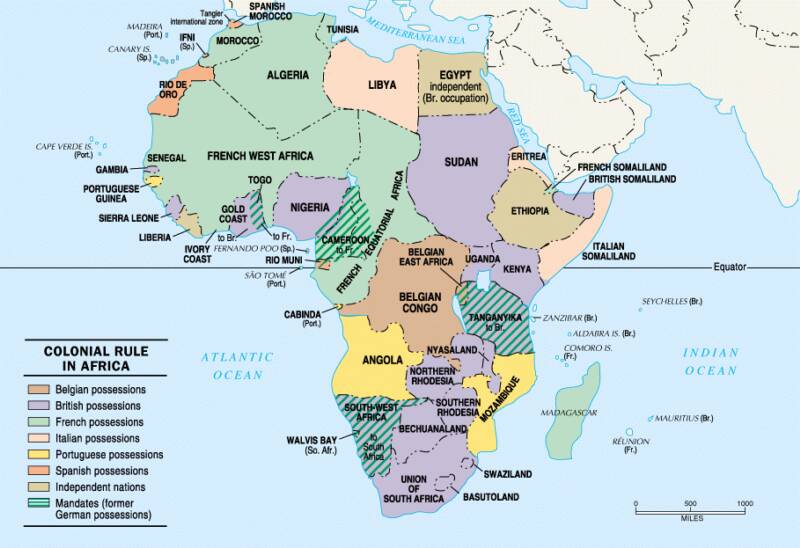
In our last blog post, The Case of Who’s in Charge: Who’s language will we speak, we got a small taste of how African colonialism and slavery have created realities that affect power dynamics and attitudes in our organizations and communities that persist to this day. From the mid-15th century to 1880, roughly twelve million Africans were torn from their homes and families from Senegal to Angola, reaching the Americas as slaves. Other millions died either during the course of enslavement in Africa or en route to the Americas. These are not facts that can or should be forgotten or set aside.

Does post-colonialism exert a negative toll on your organization and people? Is there a way to transform these potentially negative forces into tools for dialogue, understanding and organizational (and societal) transformation?

Our Cultural Detective West Africa (covering Senegal, Côte d’Ivoire, Ghana and Nigeria) authors, Doctors Emmanuel Ngomsi and Seidu Sofo, have very ably written materials that address these questions.

A short quote from their participant materials makes the main point:

“While it is true that current expatriate employees are not responsible for slavery and colonialism, or for problems linked to colonialism in this region of the world, they may nevertheless sometimes be perceived by local workers as part of the system responsible for repeated abuses. It is important to be aware of this fact, and how individual actions are likely to be understood in this historical context.

We encourage you to seize the opportunity presented by Cultural Detective: West Africa to explore the issues of colonialism and modern-day power dynamics with your West African colleagues. While there is a clear attempt on the part of many scholars (African and non-African) to blame past and current African problems on European colonization, the dynamics of colonialism and neocolonialism are complex issues, and it is crucial that business and non-business people be aware of and sensitive to the history that strongly remains in the minds of professional Africans, and often profoundly affects business relationships.

Today, there are limited forums available to openly address these issues. The workplace constitutes one of the few places in which people may discuss how they feel about historical European intervention on the continent, and perceptions of power dynamics and race relations today. Being prepared to handle these issues constructively is smart business.”

Their facilitator manual contains a section entitled “Facilitating a Discussion of Slavery and Postcolonialism,” which adds encouragement as well as how-to:

“Within the Participant Materials we have included a supplement addressing the issues of slavery and colonialism as they relate to West Africa. People are curious and want to talk about these issues, and while they can be difficult and sensitive issues to discuss, they create an important dynamic in relationships and should not be ignored. The Cultural Detective Model provides a way to explore these issues in a non-evaluative manner that can promote mutual understanding. Remember that no one point of view is ‘the truth,’ and it is rare that a discussion will result in consensus or agreement.

West Africans, Europeans, African Americans, Caucasian Americans, Latin Americans and people in the Caribbean, among others, all have different and sometimes opposing points of view on the causes and outcomes of slavery.

Contrary to a common belief among foreigners, West Africans generally are not uncomfortable talking about slavery and are willing to engage in conversations with people who sincerely and genuinely want to explore and learn about slavery and its effects.

Today throughout Africa, Europeans, Americans and other ‘White People’ may still be perceived as exploiters and neo-colonizers. Resentment remains because some believe that the best minds and bodies of the African continent were transported to the Americas. And while many agree that slavery is wrong, many West Africans also feel that if ‘Whites’ could have their way politically and socially, slavery would still be practiced.

Given the sensitivity toward these issues, foreign business owners need to be particularly mindful of their words and actions. Derogatory acts or sayings by expatriate employers directed toward West African employees are not only unkind but unwise. While private individuals react strongly to such acts, governments may also take swift and decisive action, and some have deported expatriate employers for such misconduct.

Regardless of the economic benefit that a foreign investment might bring to a West African nation, dehumanizing conduct, utterances, or work conditions are not tolerated.”

We eagerly urge you to look through these materials, and put them to good use. We would love to have those of you who work in spaces where you deal with post- and neocolonialism issues to share with us some of your experiences and learnings, so that we might all transform our practices and do our bit to heal this world of ours.

The Case of Who’s in Charge: Whose language will we speak?

Or: “How to lose a US$1 million investment in less than an hour.”

Cultural Detective and the Case of Who’s in Charge

This case takes place in one of the world’s largest companies. The company has recruited, at much expense, a leading Nigerian scientist to head up a project; he is perhaps the only person in the world with the unique knowledge base, experience and connections needed to see this major project through to fruition.

The company has gone to great expense to relocate the Nigerian project manager to western Europe, and to assemble a cross-functional team of the company’s leading professionals to aid with the project. The project is of huge significance for the company. The plan is that it will break new ground and shift the way such projects are implemented worldwide. There is much hope and excitement, as well as huge investment and anticipated return, riding on it.

The project manager, the Nigerian scientist, calls a meeting with three of his team members. All four people greet one another in English, shake hands, and sit at a table for the meeting. The project manager introduces the agenda, in English. After a few minutes the discussion seems to naturally shift from English into the local language, and continues for about 45 minutes.

At the conclusion of the meeting, the four gentlemen stand up, again shake hands, and shift back to English to congratulate one another. One of them says, “I think we have devised an excellent plan.”

The project manager replies, “Oh, yes? And what would that plan be?”

The three others appear puzzled. “The plan we just agreed to,” they say. “The plan we’ve been discussing.”

The Nigerian responds, “I didn’t understand a word you were saying. I don’t speak that language.”

“Why didn’t you say so?! We could have switched to English!!” The others’ mouths drop open in disbelief at this waste of time, and the scientist’s failure to speak up.

“I am the project manager. I called this meeting, and I started it in English. All our correspondence has been in English. You all changed the language. It is a power play. Your colonialist ways never seem to change.”

After this meeting, the project manager requested his removal from the project. It appeared this hugely anticipated effort was dead before it had even gotten going!

An orientation to cross-cultural collaboration, including work on understanding and learning to deal with issues of post-colonialism, may have prevented this rocky start. There are times when, once mistakes have been made, there is no rescue or remedy. Convincing these team members to give it another go, to get past their doubts and discuss ways of respectfully and productively working together, required skilled facilitation. The project manager was convinced that his team members were racist, and the team members were convinced the project manager was overly sensitive. Both thought the other arrogant.

What are some of the techniques you might use in such a scenario? How might you help the team members gain empathy for what the project manager was feeling? How might you equip them with the skills they need to demonstrate respect in such an environment? How might you help the project manager develop the skills he needs to manage team members effectively, given post-colonialist realities?

Link

The latest update on my Middle Eastern travels has been published in the Jerusalem Post. I hope you’ll let me know what you think!

Link

This article by Vijay Nagaswami, “Culture vs. culture,” was sent to us via the marvelous Cultural Detective certified facilitator and current SIETAR India President, Sunita Nichani. She says, “Here is an interesting article published this Sunday in one of India’s leading newspapers, The Hindu. With the slow erosion of the custom of marrying within similar communities in India, intercultural competence will be vital for making marriages work.”

Lots of work to do in this world, in so many ways and places. Let’s get started, everyone!

Tahrir Square at 3 am

Tahrir Square (Cairo) at 3 am. Thousands of protesters still occupy the ground. They want a new revolution as dictator Mubarak may get away with his crimes in the Supreme Court and his ministers walk free from all charges.

I spent the whole night with the protesters, being introduced to everyone by none other than the leader of one of the most important revolutionary movements in Egypt: The Free Forum for Change.

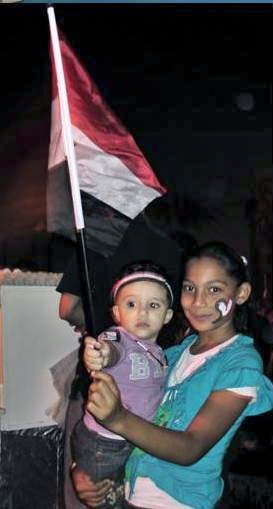
In this picture, you see Layla and her brother wide awake. At 3 am children their age are supposed to be dreaming about Disneyland. Tonight they are here learning to support a democratic land. Not sure if they understand it, but I am certain they are the youngest protesters on the ground.

“Interculturalidad” – View on Interculturalism from Latin America

During my recent and incredibly learning- and success-filled trip to Colombia, a client asked me to do a short presentation on the state of intercultural competence in Latin America. Such a small request, right (asked wryly and facetiously)? I live in México, but after four years I sure don’t count myself a culture-specific expert, and I am surely not qualified to speak for over half the hemisphere! So, what to do? Turn to an esteemed colleague’s expertise, of course. In this case, I turned to Adriana Medina (and her co-author, John Sinnigen).

The beauty of the source article I used, “Interculturality vs. Intercultural Competencies in Latin America,” is that the authors introduce facts and history we all know, but they put them into a context in such a way that makes total sense and creates new meaning. At least for me.

For example, one of their points is how Latin Americans have lived interculturality for hundreds of years if not longer: wars, imperialism and commerce between the many distinct indigenous cultures, then conquistadores, colonialism, slavery and intercontinental commerce. Intercultural competence on this stage is not some new import during the current age of global economic interdependence. Rather, Latin America’s gold, silver, emeralds and such were important to European economies beginning centuries ago. The authors’ point is, one of the valuable contributions that Latin American interculturalidad can add to the largely northern and western-originated notions of intercultural communication or intercultural competence is this: power, specifically power imbalances.

“Interculturality, the preferred term in Latin America, refers to a historic condition, a radical restructuring of the historically uneven relations of wealth and power that have existed between Europeans and their descendants and indigenous and other subordinated groups during the last half millennium. The aim is decolonization of institutions and the sociocultural fabric of the country.”
— A. Medina-López-Portillo and John H. Sinnigen, “Interculturality vs. Intercultural Competencies in Latin America,” chapter 13 in Deardorff 2009, Sage Handbook of Intercultural Competence

In their article the authors present six strengths that Latin American interculturalidad can contribute to the intercultural communication and competence field. And, speaking for myself, our field is in huge need of hearing and incorporating these perspectives into our theory and practice! Contributions of interculturalidad, according to Medina and Sinnigen,  include that it:
  1. Is counter-hegemonic; focuses on the balance of power
  2. Starts with the needs of marginalized cultures (diverse indigenous movements from Mexico to Bolivia and Ecuador)
  3. Advocates mutual respect and economic and political equality rather than the acculturation of the oppressed
  4. Incorporates Andean/Amazonian concepts such as respect for Pachamama, good living, communitarian practices
  5. Multilingual integration
  6. Decades of dialogue leading to constitutional specificity

I want to thank this client for making this request of me, as it spurred me to learn more about a colleague’s work, and also to learn more about the work of Nestor García Canclini (more about his work in another blog post). I also want to thank Adri and John, whose work, I feel, is very important. I hope this might spur more of us to read, incorporate and build on their findings.

I have posted three PowerPoint slides summarizing this article, and you are welcome to download and use them if they might serve you. Please be sure to retain all source references, including the authors’ and Cultural Detective‘s. Together we can make a difference!

What do you think about the authors’ premises? How might we help the intercultural field to incorporate the Latin American perspective? How do you handle power differences in your work? I look forward to hearing from you!

Born and raised in Mexico City, Adriana Medina-López-Portillo is Assistant Professor of Intercultural Communication and Spanish in the Department of Modern Languages, Linguistics and Intercultural Communication at the University of Maryland, Baltimore County (UMBC). She is an accomplished intercultural trainer, having designed and led workshops for higher education, not-for-profit, governmental, and corporate clients in the United States and abroad. Among her favorite appointments are training for The Scholar Ship, a transnational academic program housed on a passenger ship, and offering pre-departure and on site orientations for the King Abdullah University of Science and Technology (KAUST) in Saudi Arabia. John Sinnigen is Prof. of Spanish and Intercultural Communication at UMBC.  He is the co-editor of América para todos los americanos:  prácticas interculturales (Mexico: UNAM, 2012).