Unknown's avatar

About Dianne Hofner Saphiere

There are loads of talented people in this gorgeous world of ours. We all have a unique contribution to make, and if we collaborate, I am confident we have all the pieces we need to solve any problem we face. I have been an intercultural organizational effectiveness consultant since 1979, working primarily with for-profit multinational corporations. I lived and worked in Japan in the late 70s through the 80s, and currently live in and work from México, where with a wonderful partner we've raised a bicultural, global-minded son. I have worked with organizations and people from over 100 nations in my career. What's your story?

The “Veil” in Tunisia

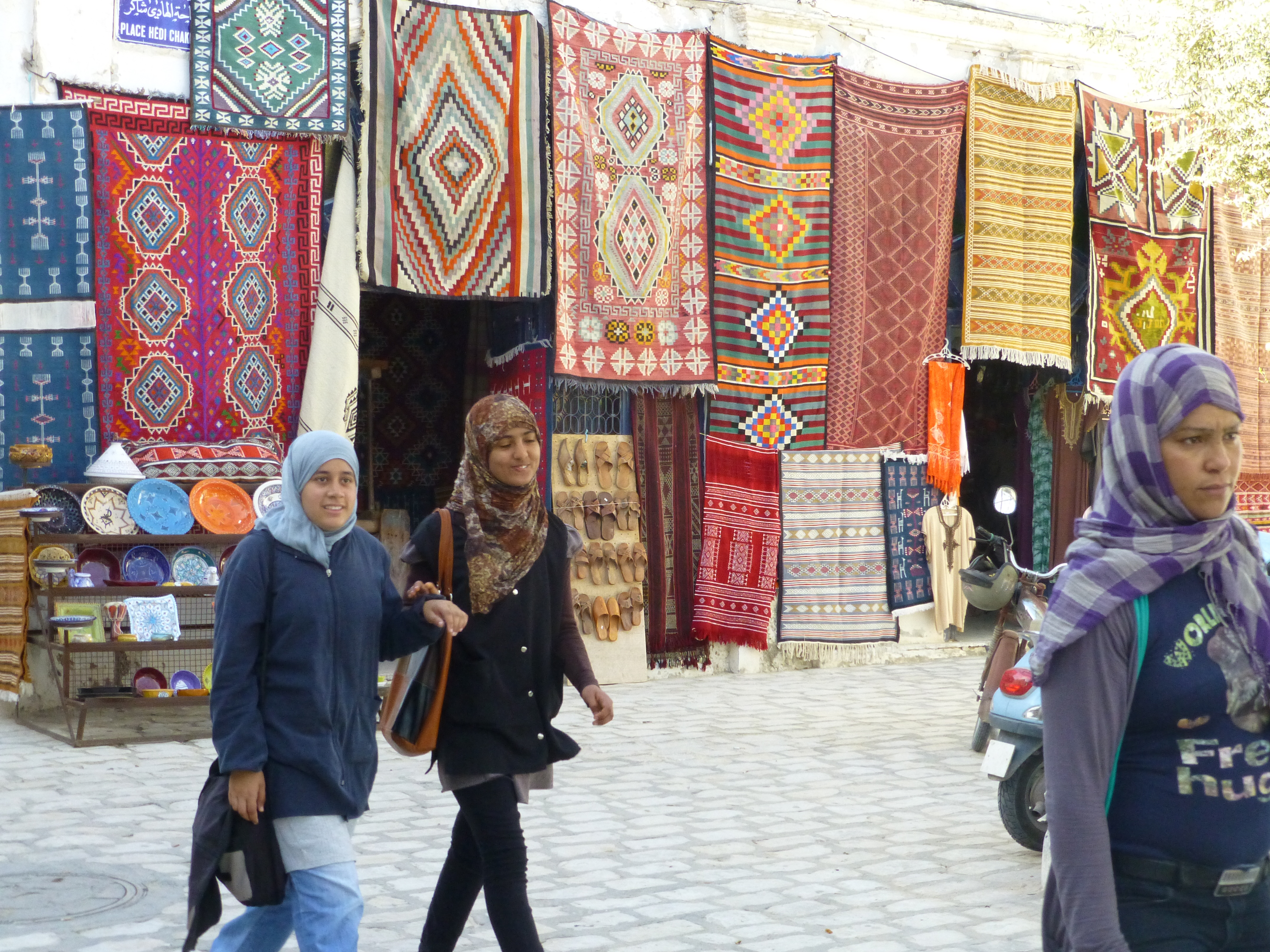
P1020927I am very happy to share this guest blog post, written by a new member of our Cultural Detective community, Dr. Larry Michalak. His story illustrates a topic we’ve posted about before: veiling and how easily people can jump to the (wrong) conclusions about a person’s appearance.

What I particularly appreciate about Larry’s piece is that his list at the end illustrates a vital cross-cultural skill: the ability to generate multiple possible motivations for behavior. This ability is crucially important if we are to get beyond our own biases and expand our worldview, really get to know others, and develop respect, empathy and the ability to collaborate. Here is Larry’s post:

Sit in a café on any street in Tunis (one of the pleasures of life!), and you will notice that the women who pass are covering up more than they used to in years past. There is a new kind of women’s clothing that didn’t exist when I was here in the 1960s—headscarves and smock-like dresses that cover the arms.

This “veiling” phenomenon has become a widespread topic of conversation, journalism, and social and even political analysis. Women began covering up more in the late 1970s, the headscarf was suppressed by the government in schools and public offices until the Tunisian revolution in January 2011, and now women are free to dress as they please.

Some scholars count the percentage of Tunisian women who are veiled, and cite these statistics in articles. This mode of dress (the argument goes) has religious and/or political meaning. It shows an increase in religious conservatism, and/or means that the wearer of the veil is showing sympathy with Islamic politics, opposition to the U.S., etc. When these observations come from secularists they are usually accompanied by expressions of disapproval of the veil.

But there are problems with this argument. One of them is the difficulty of defining what constitutes “veiling.” There is the hijab, which in Tunisia can mean a headscarf or else a headscarf accompanied by a smock-like dress that covers the arms and comes down to the ankles. Sometimes there is just a headscarf, and sometimes the headscarf is worn to cover the woman’s hair—sometimes completely and sometimes not. Full veiling, such as one finds in the Eastern part of the Middle East (e.g., the chador in Iran, the burka in Afghanistan, and the nikab in Saudi Arabia), is very rare in Tunisia. The term “veiling” is used indiscriminately to refer to all these different ways of covering.

Some years ago there was an excellent article in Jeune Afrique by a Tunisian woman journalist who thought that fashion was probably the most important reason for veiling. Some women wear the veil as they would a miniskirt—because it’s the fashion—and the cut and the color are more important than any religious content. Many of these women who veil have never read the Qur’an or performed the prayer. Some go veiled on weekdays and wear bikinis on the beach on the weekend. Some wear the veil to nightclubs with their whisky-drinking boyfriends. And on the boulevards of Tunis, one can see veiled women holding hands with their boyfriends.

My conclusion is: You can’t tell much about people by looking at how they dress. Just as you can’t judge a book by its cover, neither can you judge a woman by her clothing. This goes for men, too. I have known traditionally dressed men with very modern ideas, and men in Western suits who would feel right at home with the Taliban. I once heard a scholar give a paper at a conference, with statistics on what percentage of the women he observed in different places and at different hours were “veiled.” But he was calling lots of things “veils” and assuming that the “veil” reflects religious and/or political opinions.

To make my point, here is a list of ten reasons, other than religious or political, that a Tunisian woman might “veil.”

  1. “I do it to piss off my parents—especially my mother, who doesn’t veil.”
  2. “On TV I saw some women in Egypt who wear it and I think it looks great!”
  3. “I just got married and now I don’t have to advertise my looks.”
  4. “I just washed my hair, and I can’t do a thing with it.”
  5. “So that the guys will leave me alone on the bus.”
  6. “I want people to think that I’m a virgin so that I can find a husband more easily.”
  7. “I’m on my way to have sex with my boyfriend and I don’t want anyone to recognize me.”
  8. “I’m so beautiful that I have to cover up to keep the guys from going crazy.”
  9. “I’m not attractive and I’m self-conscious about it, so I leave my looks to people’s imagination.”
  10. And, finally: “It’s cold out today and I want to keep my head warm.”

In other words, sometimes a headscarf is just a headscarf!

Dr. Larry Michalak is a cultural anthropologist with degrees from Stanford, London and UC/Berkeley. He was Vice Chair of Berkeley’s Center for Middle Eastern Studies for 23 years. His specialty is the Arab World, especially Tunisia, where he was a Peace Corps Volunteer in the 1960s. He has now spent over ten years there. Larry is fluent in Arabic and French. In his retirement he has enjoyed traveling with his wife Karen as an enrichment lecturer for UC/Berkeley and the Smithsonian, and he has also taught on Semester at Sea.  His favorite topics are anthropology of food and anthropology of tourism.

Burka-Clad Super Hero Fights for Girls’ Rights!


ba-cover
This week saw the television launch of an exciting new female superhero, direct from Islamabad, Pakistan: The Burka Avenger!

The star of the animated series of thirteen, 22-minute episodes is a teacher who uses books and pens to fight the evil people who shut down schools and prevent girls from getting an education. The humorous show also teaches kids to protect the environment, and, good news for the Cultural Detective community, to respect diversity and include others.

Each episode features an original song and guest appearances by some of the biggest musical acts in South Asia, including Ali Zafar, Haroon, Ali Azmat, Adil Omar, and Josh. Goals include entertainment and positive messages to youth. The series’ trailer (in English) is below.


The Burka Avenger is the brainchild of Aaron Haroon Rashid, a Pakistan pop star who wanted to create a positive role model to counter the Taliban’s ongoing opposition to girls’ education. In explaining the choice of the burka, which the teacher, Jiya, only wears in superhero mode, Rashid explained, “It’s not a sign of oppression. She is using the burka to hide her identity like other superheroes. Since she is a woman, we could have dressed her up like Catwoman or Wonder Woman, but that probably wouldn’t have worked in Pakistan.”

Of course this may well remind us of the indomitable Malala Yousafzai, whom the Taliban   famously attempted to assassinate last October. On her 16th birthday this past July 12, the amazingly poised and well-spoken Malala delivered the first-ever education policy recommendations written for youth, by youth, to the United Nations (video below). July 12th has now been named Malala Day in her honor.


It is not just Pakistan where girls’ rights to education are in danger. Fortunately, the people at Mighty Girl Books have assembled a terrific list of books for children and teens that explore the challenge of girls’ access to education, worldwide and throughout history.

You may also remember the comic book series “The 99,” in which superheroes inspired by Islam (they are named after the 99 attributes of Allah) fight crime, smash stereotypes and battle extremism. Series creator Naif Al-Mutawa gave a talk at TED Global 2010. A video of his talk is below, and a free online issue is also available.

Need help figuring out 50 million Latinos?

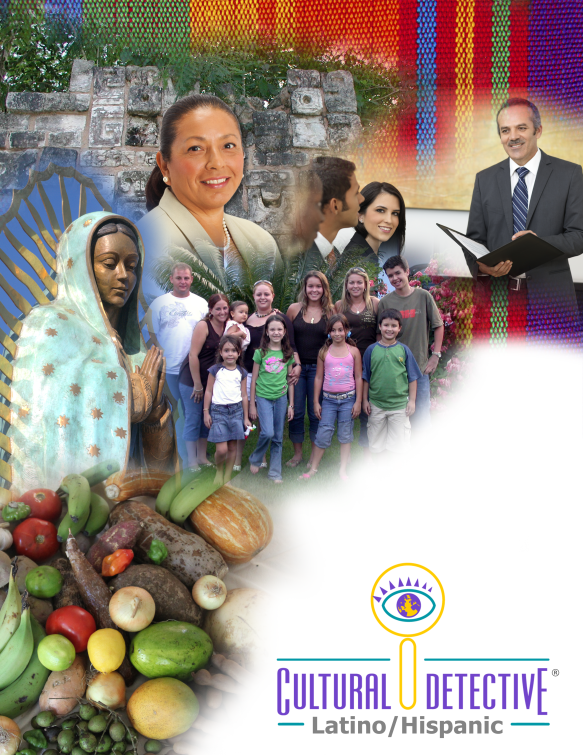
coverLatino—Guest blog post by Brenda Machado-Koller

Yes, I know, it’s a loaded question. But it’s worthwhile taking a look at possible answers.

Latinos or Hispanics are the largest, fastest-growing, and one of the most influential socio-economic ethnic groups in the USA. More than 50 million Latinos reside in the USA today. By 2050, one-in-four US Americans are projected to be of Hispanic descent.

We encounter Latinos in virtually every setting, including business, education, healthcare, politics and in our communities-at-large. It’s time to gain an even deeper understanding of Latinos and to continue building more successful organizations and communities.

You’ll find some of the answers to the fundamental changes in US society in the Cultural Detective® Latino/Hispanic. Interculturalist Dianne Hofner Saphiere and I developed this latest installment of the Cultural Detective Series, and many experts contributed their thoughts to the training materials (my heartfelt thanks to all!). The Cultural Detective Series now includes more than 65 culture- and topic-specific educational guides that have been published over the past decade and frequently updated.

Cultural Detective Latino/Hispanic is available as part of a Cultural Detective Online subscription, or via license as a printable PDF. The participant materials are a 26-page educational guide that introduces an insightful Cultural Lens of overarching Latino values that drive beliefs and behavior. In addition, the package features real life scenarios, best practices and a broad selection of reference materials for further study. Cultural Detective Latino/Hispanic is a powerful tool for human resources professionals, training experts, line managers, team leads or interculturalists who are dedicated to improving organizational effectiveness in a broad variety of settings.

Brenda Machado-Koller is President of Intercultural Business Services LLC. She was born and raised in Puerto Rico by a US American mother and a Puerto Rican father. Brenda holds an M.A. in Intercultural Relations.

Using Army Recruitment Ads to Develop Cross-Cultural Skills

Terracotta ArmyLooking for exercises and activities for practicing cross-cultural skills? We at Cultural Detective emphasize that intercultural competence takes practice, is a practice, and cross-training with alternative approaches can help develop strong skills. Here is an approach that I personally never would have thought of, but it is really powerful!

Marion Burgheimer, a very active contributor to our Cultural Detective community, recently shared with us a selection of army recruitment ads from around the world. “Army recruitment ads?!” was my initial thought. I’ve used advertising clips, movie clips, but I for one never would have thought of this approach. Yet, Marion is based in Israel, and for me it makes perfect sense that this approach would be born from that experience. Take a look at the ads and you’ll see what I mean. The differences are astounding.

Marion tells us these ads are terrific tools for learning the skills for discerning what is important to the people with whom we live, work, and in other ways collaborate. The videos are embedded below.

Thank you for your generosity, Marion! Together we can enable equitable, sustainable cross-cultural collaboration!

Activity Instructions:

  1. Have students or participants view the films, then complete one side of a Cultural Detective Worksheet, in order to practice discerning the values at play in the ads, and link them with the messages and wording those values stimulate. Both are important skills that require practice.
  2. As a second step, encourage users to reference the corresponding CD Values Lenses, to see if they provide further clues about and depth of insight into the national values at play in the ads. You can find those Values Lenses in the Cultural Detective Online system.

Australia: (embedding is disabled for this one; just click through)

India

Japan

Lebanon

Russia

USA

Please share with us some of the values you see inherent in these various recruitment ads!

A Question of Trust

Doi Suthep Temple, Horizontal Image (500x332)A small US American software company has been contracted to design some specialized broadcast technology software for a radio station in Thailand. This is the first time the company has received a contract in Southeast Asia and their company executive, Tom Bennett, is looking forward to doing business in the region.

The initial meetings and negotiations with the radio station management have been successful, and Tom Bennett senses that he has built up a good rapport with Khun Chai, the radio station manager. Khun Chai himself is delighted with Tom Bennett’s interest in Thailand and the local Thai community, and he is particularly impressed with Tom’s liking for spicy Thai food. Khun Chai is already contemplating the possibility of doing business with the American company again in the future.

The price is settled, the contract is signed and a deposit is paid…

Are you are a business leader, coach, consultant, speaker or teacher?  Do you want to become culturally competent and self-confident in the global arena?  Does the above story sound similar to projects in which you, your colleagues or clients engage? Despite this auspicious start, all does not end well, as you’ll discover in our upcoming webinar: Cross-cultural Coaching: A Creative and Transformative Process. In that webinar we will introduce you to a powerful and transformative coaching process with Cultural Detective Online!

The coaching process combined with Cultural Detective Online provides you with a comprehensive learning experience that is stimulating, supportive and transformative! In addition to exploring key cultural concepts and culture-specific information, the collaborative and creative coaching environment helps you develop new perspectives and skills for bridging the gap between your personal cultural “sense” and the cultural “sense” of your colleagues and clients.

Our facilitator will be Jan O’Brien, IAC-MCC, who will show us how she coaches expatriate executives towards cross-cultural success. Jan is President of Culture-Conscious International, a coaching and consulting company based in Houston, Texas. She is a US/UK dual national and has lived and worked extensively overseas, in particular in the US and the South East Asia region. Jan is a Certified Cultural Detective facilitator and a Master Certified Coach with the International Association of Coaching (IAC). She has worked with clients from many language and cultural backgrounds and has personally experienced the benefits and challenges of living and working in the global arena.

Register now, as only a few seats remain.

Meeting time is Tuesday 23 July, 2013 at 10 am Mazatlán, Sinaloa, México time. Meeting place is online. Please consult a world clock to verify your local time. 
  • Los Angeles: 8 am
  • Houston: 11 am
  • New York & Santiago de Chile: 12 noon
  • Buenos Aires or Rio: 1 pm
  • Brussels, Paris, Rome, Johannesburg: 6 pm
  • Abu Dhabi & St. Petersburg: 8 pm
  • Delhi: 9:30 pm

TCK (Third Culture Kid) Stories On Film

Video

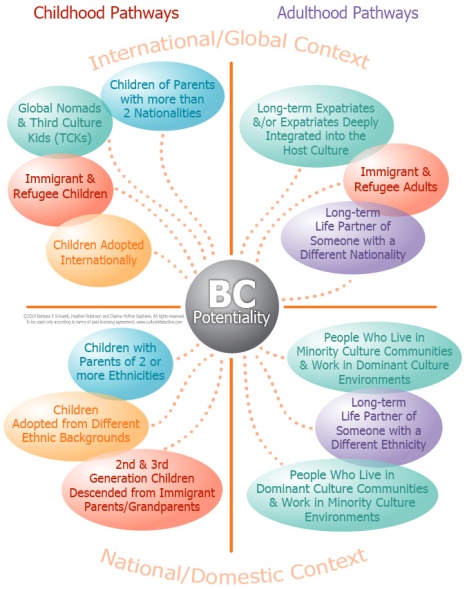
Paths to BCThird culture kids, or “TCKs.” One type of Blended Culture, TCK refers to those of us who have grown up in multiple locations and enlarged our definitions of “home.” We have multiple homes, all near and dear to us. We have multiple cultures, some of which we may be more fluent in than others, and all of which hold deep meaning for us. And, we have created “third cultures,” “blended cultures,” a global, multicultural or cosmopolitan definition of self and family.

The Blended Culture experience is increasingly common. As an expatriate myself, my son is a TCK with multiple national culture affiliations; it’s crucial for me to understand a bit of his experience if I am to parent him appropriately. I pray he grows up to reconcile his identity in constructive, multicultural ways. For those of us who work in international business, schools, study abroad, and with immigrants, it is also extremely helpful to understand at least a bit about the TCK experience. Three recent films may help us do just that.

The first film is called So Where’s Home? A Film About Third Culture Kid Identity, and is by Adrian Bautista. You can view the nine-minute film in its entirety below.

A second film is the award-winning “The Road Home,” directed by Rahul Gandotra. This 24-minute short can be rented or purchased, and the director is currently making a feature length movie about the same characters. You can view a two-minute clip of the film below.

TCKs have unique skill sets and unique challenges. The powerful trailer below (almost nine minutes) shows us what Aga Alegria has in mind as she sets about fundraising to make her documentary film about the TCK experience. Click here to learn more about that effort, or perhaps help her out.

http://vimeo.com/11658942#at=0

We wish all these ventures very well with this important and timely topic! Learn more about a tool to help make the most of the TCK experience.

10 Surefire Ways to Divide into Groups

saltyspicysweetsourAs educators and trainers, we often find ourselves needing to sort class members into small groups for an activity. Tried-and-true ways include having participants “number off” or color-coding their name tags. But even the ways in which we divide our students or trainees into small groups can contribute to learning and enjoyment: it can ground learners in the topic at hand, reinforce key points, provide insight into ourselves and others, and help develop teamwork.

In short, the way we divide into groups can become a subtle yet powerful element of spiral learning. For those of us who teach intercultural communication or diversity and inclusion, it can be helpful to divide into groups in ways that encourage learning about similarities and differences.

In that spirit, here are ten of my favorite “Quick Tips” for dividing a large group into small groups. Whether you want to explicitly debrief the learning or leave it as-is depends on your purposes. As with any activity, it needs to suit your style and that of your students, and be appropriate for the environment.

1. Salty/Spicy/Sweet/Sour
Using food is always fun and low stress for the participants. As individuals we like different tastes, and there are cultural tendencies as well. For me, the “sour” tastes of pickled food unite my German blood and my life experience in Japan, for example.
  • Instructions: Make a small sign with a flavor or taste, using as many flavors as you need groups. Then, ask class members to go to their favorite flavor.
  • Variations: Alternatively you could divide the group by having participants choose their favorite fruit or choose their favorite dish from among several common dishes. Or, try having a real snack at each location, and just see where people gravitate. Depending on the context, this could be a good time to use international and ethnic snack foods.
  • If you want to Debrief: Once you have the small groups, you can ask people to take a look around. Do they see themes in the groupings? Any cultural tendencies? Or, do they see reinforcement that we all have our individual taste preferences? Each time will be different. Ask people to reflect on why they like the taste they chose. What life experiences taught them to value that taste? Might this enhance their cultural self-awareness?
2. Goodies Sort
Again using food, this is one of my favorite methods, and one very popular with students or trainees! In the context of teaching or training, a treat is a good pick-me-up, and it’s easy to “internationalize” or add something new and different given the variety of food.
  • Instructions: Prepare “goodies” (chocolates, candies, pretzels, cheese sticks; I’ve even used dried squid and roasted grasshoppers) in as many varieties as you want groups. Put one item for each of your class members in a basket, and pass the basket. Then ask “pretzel people” to meet over here, “cheese people” over there, etc.
  • Variations: You can also use multicultural snacks! Another simple variation is to use the same kind of candy but in different colors: all the reds meet over here, the blues over there, etc. If you have a group that genuinely embraces informality, have them suck their candy, then stick out their tongues to find their fellow group members.
  • If you want to Debrief: Which snacks attracted you and why? Are your food preferences influenced by your ethnic and cultural heritage? Which rules your snack preference: personality or culture? Did any of the snacks look very unappetizing? If so, why? Perhaps make the point that just as our snack preferences vary according to whom we’re with and how we’re feeling (whether we’re tired, excited), our behavior in multicultural teams depends on the context, too.
3. Pertinent Quotes
Quotations have become quite popular on social media sites, and they are a powerful way to introduce a new topic or to summarize learning. Since this activity involves a bit of walking around, it gets people up and moving as well. It’s one of my favorite ways to get people into pairs.
  • Instructions: Assemble a set of quotations on the topic you are teaching. Choose half as many quotes as you have participants. Type up the quotes, dividing them in the middle: choose a fairly obvious place for breaking the quotation in half. Print them, cut them apart, fold them up, and have participants each choose one out of a basket. Then, ask them to find the person with the other half of their quote.
  • Variations: You can combine this method with the “Goodie Share” by taping the half-quote onto the bottom of a candy or snack, then asking participants to find their partners.
  • If you want to Debrief: To aid in this process, you could post a list of complete quotes on a flip chart. You can have some/each of the couples read their quotes aloud to the class. You might ask participants to speak to how “their” quotes relate to what they want to get out of your class today.
4. In • ter • cul • tur • al
This one’s a simple, quick, and easy way to divide participants into groups using a word that reinforces the theme, topic or key skill of the day’s learning session.
  • Instructions: Choose a word that represents an aspect of the theme you are teaching. That word should have the same number of syllables as the number of small groups you want. Instead of numbering off, have class members recite the word’s syllables. It’s a good way to reinforce key concepts.
  • Variations: You could say the word in another language, thus teaching a bit of a destination language, for example.
  • If you want to Debrief: Really not necessary, but… You could ask participants about different ways of hyphenating words, dividing syllables, in the languages they speak.
5. Playing Cards
This is another very quick way to divide participants into small groups: it can have a cultural component, yet it doesn’t necessarily need to be debriefed. With a unique deck of cards, it can be even more interesting.
  • Instructions: From a deck of playing cards, choose one card for each person in your class. Make sure you have “sets” of cards, one set for each group you want. Put all the cards from the abridged deck facedown on a table, and have participants each choose a card. Then group people as you’ve planned, by number (all 2s, 3s, etc.), or by suit, color, odds/evens, higher/lower than 8, etc.
  • Variations: Use Mexican Lotería cards, Japanese Hanafuda cards, mahjong playing cards, or another culturally appropriate (or new-to-your-participants) card deck to divide your class.
  • If you want to Debrief: Ask if everyone felt comfortable with your instructions. Were they familiar with the words you used (suit, Ace, etc.)? People who play cards have a culture unfamiliar to non-card players: shared “common sense,” vocabulary, customs. Some people associate card playing with gambling, and thus don’t like, or feel religiously forbidden from, playing. As with any educational activity, make sure this one will be comfortable for your learners.
6. What You’re Wearing 
I have learned so much from this simple activity over the years because participants always see something I hadn’t noticed. It can also serve as a wonderful impetus for reflecting on value differences.
  • Instructions: Have class members get into groups of 3 or 4, whatever you choose, based on similarities in what they are wearing. They decide what they have in common.
  • Variations: An alternative is to have learners group according to shoe type. This can be very fun, too, and it’s sometimes surprising the categories people come up with.
  • If you want to Debrief: If you choose to debrief this group-sorting activity, you may find a myriad of perceptions about clothing and shoe styles. Often people group into categories that they themselves might not have thought of on their own. Ask participants to discuss in their small groups how they decided to group themselves. Were they all focused on the same thing, or did they have different understandings of their clothing commonality? Groups can share with one another how they grouped, and compare similarities and differences. Did anyone share a perception of someone else’s clothing that surprised you? That echoed or differed from your own perception? What can this tell us about values and perceptions?
7. Number of Languages You Speak, Countries in Which You’ve Lived
This method also helps everyone learn a bit about each other quickly, that they might not have otherwise known.
  • Instructions: Have people line up according to the number of languages they speak, or the number of countries in which they’ve lived, and then divide them into groups.
  • Variations: Tell participants to assemble in groups of people who speak 1, 2, and someone who speaks 3 (or more) languages. This gives a bit more diversity in each small group. You can do the same thing with the number of countries in which participants have lived.
  • If you want to Debrief: Ask participants if they are surprised at who is in their group—have they learned something new about one or more of their colleagues? Does this change their perception of the other person? How and why? Does this change their perception of themselves? How and why?
8. Animal Sounds or Industry Vocabulary Across Languages
I have always been fascinated by the different sounds that animals make as represented in different languages. Really, in Japanese, mice say “chu”?! Use this interesting trivia to your advantage, and insert a bit of lightheartedness to your session.
  • Instructions: Print cards with an image of an animal and the sound that animal makes in a different language. Then ask people to make the sound on their card in order to find each other. You will need one card for each participant, and the number of animals you use should correspond to the number of groups you want to form.
  • If you want to Debrief: Explain that animal sounds are lighthearted, then shift to the inextricable connection between linguistic and cultural fluency. Ask participants to share with you differences they’ve noticed across languages, words that sound similar but mean different things in different places, or how much vocabulary, even in the same language, varies place-to-place. You could ask participants share other interesting sounds animals make in languages they speak.
  • Variations: You can use the same animal and have participants divide into groups according to the sound it makes in Spanish vs. German vs. Chinese, etc. You could use different animals and the sound they make in a destination language. Alternatively, you could use industry-specific vocabulary in different languages, or words having to do with the subject of your workshop in various languages.
9. Arm Cross/Hand Cross
This is a very easy way to divide the room into two groups, and to illustrate how something that looks similar can really be quite different once you analyze it a bit more.
  • Instructions: Ask your students to cross their arms over their chests. Those people with their left arms on top form one group, and those with their right arms on top form the other.
  • Variations: Asking participants to clasp their hands or cross their legs works just as well.
  • If you want to Debrief: We all have automatic habits that we don’t pay much attention to, things we do without making a conscious choice—like the way we cross our arms, or how we attempt to persuade someone, or apologize or disagree. Another  point you might debrief: ask whether, at first glance, with arms crossed, they all seemed to be doing the same thing? It wasn’t until you called attention to the subtle differences in how people were crossing their arms that they noticed. And so it can be with culture.
10. The Name Game
Many cultures around the world have a variety of traditions around naming their children: a girl may be called “daughter of __,” sons may be named according to birth order, a child may be named after an ancestor, or given a name that indicates a hope the parents have for the child (beauty, peace, etc.). Many people are very, very proud of their names, and others may have no idea how they were named or why. Some may have changed their name or had their names changed for them.
  • Instructions: Ask your students to think about their name, and a short (30 second) story about how they got the name, what their name means, how their name or nickname has varied over the years. Then tell students to walk around sharing their “name stories” with one another, until they find someone with a name story similar to theirs in some way. Participants can form pairs, groups of 3, 4, or 5—whatever is helpful.
  • Variations: An alternative of course is to find partners with very different name stories.
  • If you want to Debrief: This is a wonderful activity through which you can talk about value differences, or strategies for adapting to a new culture (do you change your name, adapt its pronunciation…).

Hey, all you trainers and teachers out there: What’s your favorite way to divide a large group into small groups for activities? Please share your creative approaches and recommendations!

Cross-cultural Competence Enhances Productivity AND Satisfaction

Last week a new brochure, this week a new introductory presentation! Thank you all for the incredible work you do with this process and these materials, to build cross-cultural respect, teamwork, productivity and equity!!!!

Use it, pass it around, and do the good work! Thank you, everyone!

Help us Build Respect and Collaboration

brochure

CulturalDetectiveBrochure

We have an updated brochure that we are debuting. Please click on the link above to view it.

We are hoping that all of you will please pass it around, use it in your spheres of influence, and put the Cultural Detective Method to good use, building a more cross-culturally respectful, inclusive, collaborative and equitable world, in which our diverse experiences generate innovative solutions to our shared problems.

You can also find the brochure on our website:

Please let us know what you think!

#nochildforsale

Check out this excellent, simple and clear video from WorldVision, designed to combat child trafficking.

Those of us committed to intercultural competence know that child labor is sadly a matter of family survival in many places on our planet. We work to change this systemic reality and create a more equitable world in which children can study and better their lot. Children who are loved and contribute to their family’s sustenance can indeed feel proud, despite the hardships they face and while we effect change.

Child trafficking, on the other hand, is a reality we need to say no to NOW. Absolutely not. There are many levels of “wrong” in the world. Putting an end to human trafficking has got to be a key focus of our efforts.