Year-end Gift from diversophy

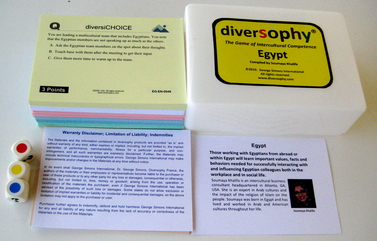
DiversophyMany thanks to Cultural Detective author George Simons and his colleague Wiebke Döscher, who have put together a small diversophy game about holiday food habits across cultures and traditions, and offered it free to their colleagues to play as we slip into the New Year.

Each of the zip files contains the full game of fifty cards, along with printing and playing instructions:
  1. If you are in a place where A4 is the standard size paper, download from this link:
  2. If you use US letter size paper, download from this link:

Incredible Offer for USA Law Enforcement and Policy Making Agencies!

Luby Ismael is a colleague I very much respect. I am delighted to be able to pass on her note, below.

If you work in law enforcement or policy making, and are interested in more effectively engaging Muslims in your community, act quickly to take advantage of this opportunity, please.

For the past 12 years, I have conducted trainings on Building Cultural Competency: Understanding American Arabs and Muslims.

Today, I am writing to let you know of a new training opportunity, based on a generous grant from my partners Unity Productions Foundation, that I am offering to law enforcement and policy making agencies.

This training is designed to improve cultural competency and promote more effective engagement with American Muslims. The content and interactive modules have been cleared by the U.S. Attorney General’s special committee.

Beginning immediately, I am able to waive the training fee for the first 10 agencies that email me to schedule a training. Trainings can be scheduled beginning January 2014. 

Please contact me at luby@connecting-cultures.net or (301) 438-3153 to learn more and ask me any questions.

I look forward to working with you,

Luby

Lobna “Luby” Ismail
T. 301-438-3153
luby@connecting-cultures.net
www.connecting-cultures.net

Reconciling Dilemmas—Les Miserables

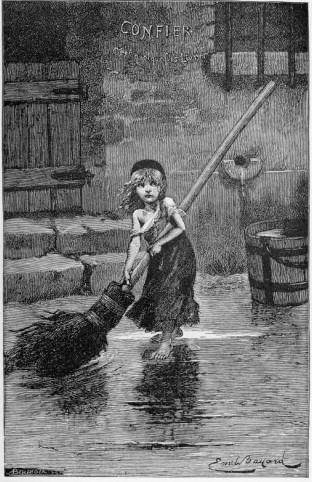
Portrait of "Cosette" by Emile Bayard, from the original edition of Les Misérables (1862)

Portrait of “Cosette” by Emile Bayard, from the original edition of Les Misérables (1862)

I was a 19-year-old coed when I first became a fan of Charles Hampden-Turner. His just-published Maps of the Mind had me so excited about our brains’ potential! In the decades since, having the pleasure of teaching on the faculty of the Summer Institute for Intercultural Communication with Charles, I have learned how truly incredible his mind is, and what a terrific person he is, as well. I’ve threatened to make him autograph my first-edition copy of Maps of the Mind!

Unfortunately, I was unable to make it to the recent SIETAR Europa (Society for Intercultural Education, Training and Research) Congress in Tallinn, Estonia. However, Cultural Detective was very well represented: our authors delivered about ten pre-conference workshops and concurrent sessions. Plus, we had a booth in the exhibit hall so attendees could chat with our authors and experience CD Online. 

One of the conference events that sounded particularly attractive was a special session on  Friday evening of the Congress, conducted by this very same Renaissance man, Charles Hampden-Turner. It was titled, Diversity and Dualism in Les Miserables. Here is the session description that enticed me:

Victor Hugo said, “I condemn slavery, I banish poverty, I teach (to) ignorance, I treat disease, I lighten the night, and I hate hatred. That is what I am, and that is why I have written Les Miserables.”

This session will use video excerpts and song lyric transcriptions from the musical rendition of Les Miserables to explore its unusually enlightened 19th century view of social deviance and its equally sophisticated treatment of dualism and value reconciliation. Attendees can expect to participate in a lively discussion of justice, ethicality, identity, and other issues that figure centrally in the living and teaching of intercultural communication.

The event’s sponsors, our colleagues over at IDRI (Intercultural Development Research Institute in Milano), have mostly kindly uploaded the slides used during this event. Not nearly as good as being there, but wonderful nonetheless. If you loved Victor Hugo’s book, or the musical on stage or film, definitely take some time to review the slides.

Developmental Intercultural Competence Using Cultural Detective Online

CDO
Are you doing your best to develop cross-cultural effectiveness in your organization, and want better results? Quicker results? Longer lasting results? Or, maybe even just results—heightened productivity and satisfaction? Our clients have achieved amazing increases in cross-cultural effectiveness—their people improving two stages on the DMIS (the Developmental Model of Intercultural Sensitivity) in a few months, and customer satisfaction increasing 30%—using Cultural Detective developmentally. How did they do that?…

Index for This Post (jump ahead if you’d like)
The DMIS
The DMIS and Cultural Detective
How Customers Successfully Build Intercultural Competence
Additional Resources

Developmental Model of Intercultural Sensitivity ©Dr. Milton J. Bennett, 1986 & 1993.

Developmental Model of Intercultural Sensitivity ©Dr. Milton J. Bennett, 1986 & 1993.

The DMIS
Let me start by telling you about the DMIS. First published by Dr. Milton Bennett in the International Journal of Intercultural Relations in 1986, and more fully developed in Education for the Intercultural Experience in 1993, the DMIS has proven to be a key milestone in the intercultural field. It provides a roadmap for those of us who aim to develop intercultural competence.

A developmental model is a conceptual framework that helps us better understand a progressive process, as well as providing guides for continued development. Examples of a developmental model with which most parents are familiar are those charts that track the major milestones of an infant’s growth. Such models help us anticipate when our baby will smile, sit up, crawl, or distinguish right from wrong, and they can help us ready our children for their next big challenge. There are abilities our baby generally must develop (e.g., roll over) before being ready to accomplish tasks at a higher stage of development (e.g., crawl). At each stage, the baby needs to be appropriately encouraged, while also feeling safe enough to take the risk to try something new.

Similarly, the DMIS is a conceptual model of six stages of the development of intercultural sensitivity, from ethnocentrism to ethno-relativism. The IDI, or Intercultural Development Inventory, is a psychometric instrument that assesses one’s stage of development. Its origins are based in the DMIS, though it uses a slightly modified version of the model today, called the IDC (Intercultural Development Continuum). The DMIS and the IDI enable us to track where we are in the development of our intercultural sensitivity, and ready ourselves for enhanced sensitivity or effectiveness.

The DMIS and Cultural Detective
The beauty our clients have found in the Cultural Detective Method is that it challenges and supports, stretches and comforts, learners at each stage of their development of intercultural sensitivity. While the DMIS and IDI indicate where one is on the developmental continuum, Cultural Detective assists in the learning and development of the skills needed to succeed in cross-cultural interactions.

The process works organically. The designer must make the case for diversity and inclusion in developmentally appropriate ways, and debrief learning in ways that comfort and challenge the learners. However, the Cultural Detective (CD) Method itself need not vary, no matter the developmental stage. Learners, depending on their abilities, will naturally use the CD Method differently at different levels of development.

Let me give a couple of examples.
  • Learners in ethnocentric stages of development will easily and fairly quickly solve a Cultural Detective mystery—they will be eager to complete the Worksheet, solve the problem, give the participants in the critical incident advice on what they should have done differently. Facilitators will observe, however, that learners at earlier development stages will suggest Cultural Bridges that are naïve or unrealistic, though of course possible. They might suggest, for example, that “the Japanese person just needs to speak up more assertively,” or “the Mexican manager needs to be more considerate of others and trust that his and his company’s welfare will be looked after.” Both of these recommendations are within the realm of possibility, both are achievable by Japanese and Mexicans of certain personality types or personal discipline, but such Bridges are not realistic for the majority of people from those cultures. Learners in ethnocentric stages feel good that they are able to solve the problem, which encourages them to try another and, with practice, learn what really works and what doesn’t when teaming across cultures.
  • When completing that same Cultural Detective Worksheet, learners in ethno-relative stages of development will enjoy pairing Values, Beliefs and Cultural Sense with the Words and Actions they motivate. They will invest effort into discerning the commonalties, as well as the differences, between the participants in the critical incident. They will develop ways to build on shared interests, while also leveraging diverse opinions and abilities, so that all players more fully contribute and the organization or community benefits. They will, without prompting, compare themselves, their values and beliefs, to the players in the incident—constantly learning, discovering, and refining their self-understanding. They will, in an organic way, explore and cultivate their cultural (or multicultural) identities, their understanding of and empathy for others, and their abilities to collaborate across cultures.

Thus, in a very natural way, learners at all stages of development receive the support as well as the challenge they need to continue their developmental journey towards intercultural sensitivity. There is very little stress on the facilitator to adapt the CD Method for the learner’s level of development, freeing the facilitator to focus effort on answering questions and dealing with resistance in ways that are both appropriately challenging and supportive to the learner.

And such a flexible process can be a blessing when we work with groups from mixed developmental levels. I often compare the Cultural Detective Method to the Montessori approach, because learners at all developmental levels can gain from helping one another.

So, How Do Customers Do It? How Do They Successfully Build Competence?

1. Research shows the development of intercultural competence requires ongoing, structured learning. That is precisely what a subscription to Cultural Detective Online (CDO) provides. So, first, get a subscription. If you want to build competence in your team or organization, if you are an experienced interculturalist, or if you are new to the Diversity and Inclusion space, a CDO subscription is a small investment with huge potential. The subscription agreement allows you to project CDO contents onto a screen for group viewing in any work you personally deliver, as long as you explain to your learners that Cultural Detective Online is a tool that anyone can subscribe to. Our goal is to get these materials used!

2. USE the system, regularly. Cultural Detective Online isn’t an entertainment system; it isn’t passive; it won’t give you intercultural competence through osmosis or by using magic dust. (That’ll be version 2! Just kidding.) Log onto the system once a week, and spend 20-30 minutes debriefing a critical incident, and using Values Lenses to supplement what you see. Respond to the prompts asking you what you’ve learned. Review your notes.

3. After a few weeks using your subscription, once you feel comfortable and competent with the Cultural Detective Worksheet, upload your own incident. Choose something from your real life: perhaps an interaction with a family member, friend, or colleague that puzzled you. Once you write the brief story, link the participants in your incident (yourself and others) to the Values Lenses in the Cultural Detective Online system. Think about why you behaved the way you did, and reflect on the influence that national, gender, generational, and spiritual values had on your behavior. Think about these same influences on the other people in your incident.

4. Then, you can discuss the incident with the real people involved in the situation. Having worked through a CD Worksheet, you will be able to move beyond judgment in your discussion. You will have already thought through the possible positive intentions of the other person, so your dialogue will proceed constructively. You both can learn, and collectively develop strategies to collaborate, or cohabitate, more enjoyably.

5. If you are a team lead or an organizational facilitator, gather your learners together regularly (monthly, quarterly), to discuss what skills they are acquiring using the CD Online system, questions they have, and the challenges they’re experiencing in developing intercultural competence.

6. Remember, Cultural Detective need not stand alone; supplement the tool with your favorite activities: simulations, exercises, videos, role-plays, etc. The core Cultural Detective Method dovetails smoothly with just about any other intercultural tool or technique, because it is a process.

7. If you want to track your progress, be sure to use the IDI to get baseline measurements of participants in your group. I’d then recommend participants take the IDI again, after three months of structured learning using CDO. You will be amazed by the results!

8. Cultural Detective Online is a tool. It doesn’t replace skilled facilitation; it supplements and extends it. You may already use the MBTI, the IDI, dimensions models, etc., in the training or coaching you do. Add CD Online to your repertoire and you will be delighted at how it transforms what you are able to achieve with your learners.

9. Be sure to share your Cultural Effective success story with us, and get your organization some positive kudos!

Additional Resources
A few years ago, two very experienced and well-regarded intercultural facilitators, Heather Robinson and Laura Bathurst, wrote an article explaining what I’m talking about.

I am also happy to share with you one of the handouts I prepared for a session at a recent IDI Conference (be sure to scroll down to view all three pages). This handout is a table showing the needs for challenge and support at each stage of development, and explicates the ways in which the Cultural Detective Method meets those needs. You are most welcome to download and print this handout. Note that in the handout you will find the five stages of development that are currently used by the IDI (slightly different than those of the DMIS, above).

Please let us know how you have used Cultural Detective in your teaching and training to facilitate your learners’ intercultural development. I would also like to invite any researchers or graduate students who are interested in conducting research on this important topic to contact us.
Resumen de las principales diferencias culturales

CultDiffsMapSpanish

(English follows Spanish.)
En mayo de 2012 escribí un blog acerca de cuando trato con las dimensiones de cultura, frecuentemente las utilizo en forma de mapa, para ayudar a la gente a encontrar los factores que pueden estar en el camino de una mejor comunicación. He encontrado que esta es una excelente manera de trabajar las dimensiones.

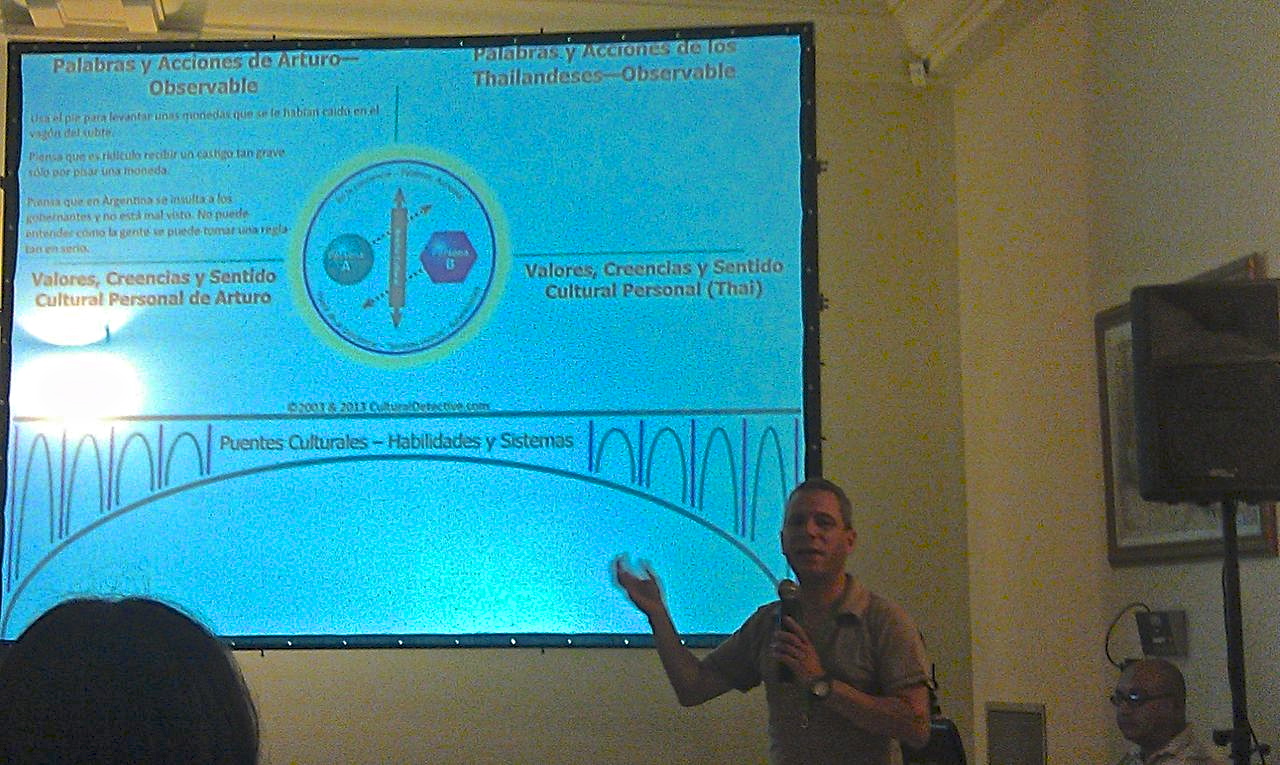
Fernando Castro debriefing a critical incident using the Cultural Detective Worksheet

Fernando Castro analizando una historia con la Hoja de Trabajo Cultural Detective.
Fernando Castro debriefing a critical incident using the Cultural Detective Worksheet

Este mes he tenido la alegría y el privilegio de trabajar con Fernando Castro de AFS Argentina y Uruguay. Él generosamente tomó este mapa de las diferencias y lo tradujo al español para nosotros.

Invito a todos a utilizar esta nueva versión en español bajo la licencia Creative Commons. Esto significa que usted puede utilizar el gráfico y la información en el artículo, siempre y cuando mantenga los derechos de autor y URL original.

¡Mil gracias, Fer!

In May of 2012 I wrote a blog post about how I frequently use the dimensions of culture in map form, to aid people to locate the factors that may be getting in the way of better communication. I have found that this is a terrific way to put the dimensions to use.

Fernando Castro debriefing a critical incident using the Cultural Detective Worksheet

Fernando Castro debriefing a critical incident using the Cultural Detective Worksheet

This month I had the joy and privilege of working with Fernando Castro of AFS Argentina and Uruguay. He most generously took this Map of Differences and translated it into Spanish for us.

You are all welcome to use this new Spanish language version under a Creative Commons license. This means that you may use the graphic and the information in the article so long as you retain the original copyrights and url.

¡Mil gracias, Fer!

The Best-Kept Secret of Successful Teams

4 Phase ModelAlmost every team and community today is diverse in some way or another: gender, age, spirituality, professional training, ethnicity, nationality… While we respect other styles and cultures, most of us still get stuck at some point where we say, “OK, we’re different; now how do we work (or live) side-by-side? How do we harness our differences as creative assets? At a minimum, how do we simply keep from driving each other crazy?”

We might work with partners who view time as flexible and events as unfolding. This may mean that, to them, deadlines are mutable and subject to change. Meanwhile, we push ourselves and our bodies, working overtime to make sure we honor our commitment to an agreed-upon deadline. While we may respect our colleagues’ view of time management on a theoretical basis, and perhaps envy them their apparently healthy work-life balance, how do we succeed with partners who don’t seem to respect their commitments to deadlines?

Perhaps we have a neighbor or even a waiter at a favorite restaurant who communicates very directly, yet we prefer a bit more indirection, thank you. While we respect their communication style, it can get irritating and try our patience.

Too often we fail to actively seek to bridge differences because we see them as something negative, as something that separates rather than unites us. Yet, by ignoring our differences, by pretending they are not there, we imbue them with great power. Eventually they can get the best of us, surprising us at awkward moments and causing frustration and tension. Our reluctance to address differences may stem from a fear that acknowledging their existence may push us farther apart rather than allowing us to collaborate enjoyably.

So, how do we transform these differences into assets? How do we convert them from something to be denied, hidden, or tamped down, into something to be embraced and used for the good of the organization and the team?

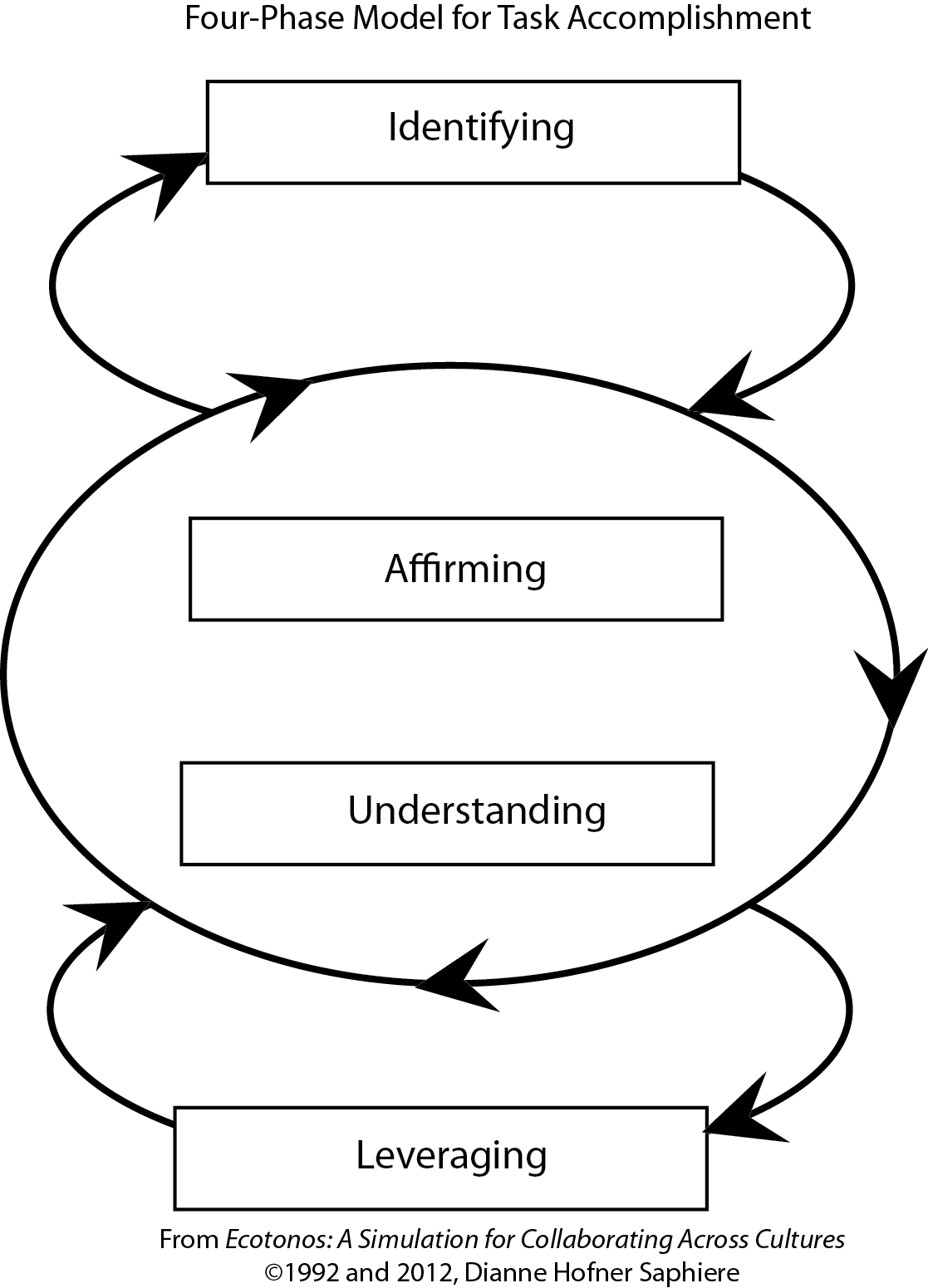
One model that has proven quite useful over the past two decades of use comes from the classic and widely used simulation, Ecotonos: A Simulation for Collaborating Across Cultures. Called the “Four-Phase Model for Task Accomplishment,” this very simple approach guides us to first identify the similarities and differences at play in our interaction, verbally affirm them, spend time understanding them and, finally, explore how to leverage them.

How a specific team leverages similarities and differences will depend on the members of the team and their shared goals and realities. Each team creates its own team culture, ideally based upon and growing out of the first three phases of this Four-Phase Model.

As you can see in the graphic above, the Four-Phase Model is not linear, but rather each phase weaves into and out of the other. For example, understanding may lead to further identifying, or leveraging may lead to added affirmation.

A text description of the Model accompanies Ecotonos and provides further elaboration of the graphic:

Identifying
  • Perceiving similarities and differences
  • Establishing which differences are divisive and which commonalties unite
  • Creating self-awareness of one’s own strengths and styles
  • Appropriate balancing of the tension between sameness and difference
Affirming
  • Confirming individual commonalties and differences
  • Substantiating that difference is desirable
  • Legitimizing difference in the eyes of the group
  • Welcoming conflict and paying attention
Understanding
  • Attempting to understand the other person’s perspective
  • Stepping into the other’s shoes
  • Mirroring/exploring and discovering together
  • Probing for deeper comprehension using various approaches
  • Seeing an issue from several vantage points
Leveraging
  • Defining how team members can contribute to goal accomplishment
  • Agreeing on methods for utilizing team expertise
  • Facilitating the generation of creative solutions
  • Creating a “team” culture
  • Focusing on efficiency and effectiveness

Once people become comfortable with the Identifying Phase, they may perceive the Affirming Phase as something unnecessary, a waste of everyone’s time. “We are all adults. We don’t need to give one another kudos.”

But my extensive experience proves, over and over again, that taking the time and effort to actively engage in the Affirming Phase is well worth the investment. Proceeding more slowly allows the team to accomplish more in less time, so to speak.

Below is one video that illustrates the value of affirmation in our lives. It is pretty long, but you’ll get the idea pretty quickly and I’m confident you’ll enjoy watching it.

The Four-Phase Model is one tool that can powerfully transform conflict into productivity and innovation. And, by the way, don’t forget that you are awesome!


Oldie but Goodie: Comprehensive Expatriate Support System

Expat-Flow

Moving overseas is an exciting yet stressful time for all involved: the person transitioning to a new position, the expat’s family who is relocating, and the organization—both the office dealing with the loss of a valued employee, and the receiving organization. We all know there are a myriad of details involved in preparing someone to work abroad, but where to start and what to include?

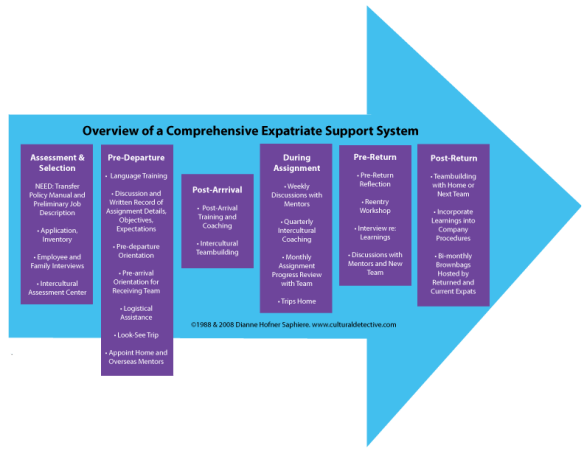
Years ago, when Cultural Detective Online was not yet a glimmer in anyone’s dreams, I put together the above guide for a client. You are most welcome to use it if it can be of assistance (click through to view a larger version), though I ask that you retain the copyright and url of the original.

I was proud to work with that client. They valued their international assignees, desiring that the employee and the relocating family become stronger from international assignment, and that both the receiving organization and the organization as a whole learn and grow. They thus asked me to “map” a process to help make that happen.

Today, Cultural Detective Online is an excellent tool to use with expatriates, relocating families, and receiving teams and organizations, at each stage of the relocation process. It offers a process as well as information at your fingertips — anytime, anywhere — to help build bridges across cultures, to help each of us better understand those we work with, and to get to know ourselves better.

“The Cultural Detective Online product is a sound investment for my work as an intercultural and relocation coach. I suggest to my clients to get a subscription for themselves.”
—Maartje Goodeve, Nascence Coaching, BC, Canada

How might you update the process in the graphic above? How could you use Cultural Detective Online in combination with other tools, approaches and your own facilitation to enhance expatriate performance?

Resource Review: GDI Benchmarks

We tend to get a lot of phone calls asking us to recommend a cross-cultural assessment instrument. Usually I ask what  seems to me a very logical question: “What is it you are trying to assess?” I am then often shocked to hear that the caller is not able to answer my question!

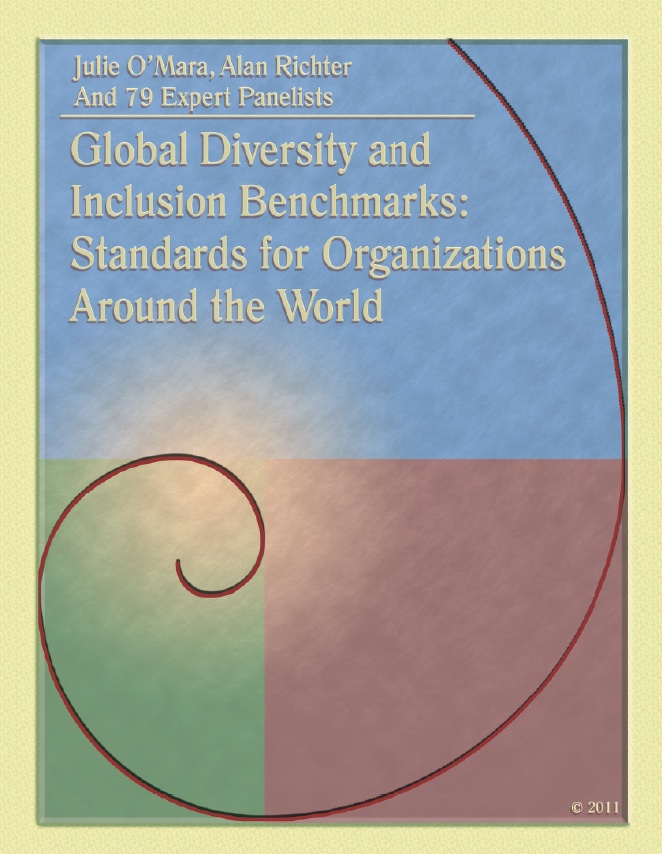
As an organizational effectiveness practitioner I am concerned with individual and interpersonal effectiveness as well as that of the overall organization. We all live and work within systems, and if that system rewards and encourages us NOT to be cross-culturally competent, we are going to nurse burnout if we try to demonstrate and develop that skill. Organizational systems and structures need to support and reinforce individual and interpersonal competence. That is why “Global Diversity and Inclusion Benchmarks: Standards for Organizations Around the World” is one of my favorite assessment tools.

Written by Cultural Detective Global Diversity and Inclusion co-author Alan Richter, along with the very talented Julie O’Mara, the tool is available for use free of charge, though the authors ask that you submit a written request for permission (julie@omaraassoc.com or alanrichter@qedconsulting.com).

Newly updated in 2011, the 32-page booklet is based on a core model of 13 categories arranged into four key areas: Foundational Factors, Internal Abilities, External Benchmarks, and Bridging Competencies (you can already imagine how well this blends with a Cultural Detective approach!). The assessment instrument involves rating the organization at one of five levels for each of the 13 categories. Thus, it is very easy to use and educates as it assesses.

The GDI Benchmarks are based on extensive contributions from 79 experts around the world, and were developed from groundbreaking research in the early 1990s. Please contact Julie or Alan to learn more. And please share with us your organization’s progress with these benchmarks as you use Cultural Detective!

Every Organization Needs Intercultural Competence

Nearly every organization these days, even the smallest and most local, works with diverse customers, team members, vendors, and service providers. A corner grocery store serves people from different age groups, ethnicities, and spiritual traditions. So, which holiday greetings should the grocery store use, if any, so as not to offend or exclude? Why do some of the regular customers talk only to male employees? Could the store increase profits or attract new customers if it started offering halal meats or Latino grocery items?

What about the graphic designer who puts up a website or Facebook page designed to attract local clients, only to find that the first inquiries come in from overseas? The mere fact that you have an online presence can mean you offer your products and services worldwide. And what about the free clinic that finds itself dealing with patient care issues of recent immigrants from places halfway across the planet? Or disaster relief agencies attempting to coordinate aid from around the world, getting it to the places it needs to be, quickly?

Cross-cultural competence, the ability to communicate effectively across cultures, is a mandatory skill in today’s interconnected world. It will help you:
  • Service diverse customers in the ways they expect.
  • Attract, retain and make the most of the talented professionals your organization needs to succeed.
  • Sell more products or services, to the people who need them.
  • Achieve success in your negotiations.
  • Discern the “right” mergers and acquisitions for your purposes.
  • Get more productivity and satisfaction out of your local and virtual teams, projects, and vendors.
  • Jump start the outcomes of study abroad and international education, as well as expatriate assignments.
  • Ensure you get the most out of the time and money you invest in international, cross-country and regional business travel.
  • Develop mutually respectful relationships with clients, employees and other stakeholders.

Cross-cultural competence is a needed skill for all of us, and it helps improve our family and social lives as well as our work lives. But amidst all the competing priorities for our time and attention, how can we develop such competence? To most of us, going back to school or even taking a few days off work for a class isn’t doable. And besides, like physical fitness, cultural fitness requires ongoing, structured practice, not just one trip to a training room.

If only there were an online cross-cultural coach available to us anytime, anywhere, at low cost. One that didn’t make us memorize lists of dos and don’ts, that didn’t promote stereotypes but rather encouraged dialogue and critical thinking. An online coach that would provide a process for recognizing cultural differences, helping us to understand and leverage them as assets rather than as roadblocks. Better yet, an online coach that could help us make sense of our everyday experiences, learning how to transform obstacles into opportunities, and frustration into innovation. A tool we could navigate freely, according to our needs and interests, not some online talking heads or narrated slide show. A tool that would be available on our time — when and where we want it…

I am very excited to be able to share with you just such a solution, yours free for three days, no strings attached. It is a brand new online system based on the proven Cultural Detective Method used by governments, NGOs and for-profit organizations around the world.

Free 3-day trial to Cultural Detective Online!

Cultural Detective is directly responsible for a 30% increase in our customer satisfaction ratings.”

Cultural Detective sped up my learning curve; it allowed me to become a part of the team and have an impact on the business more quickly.”

“I have received kudos from my managers and the Vice President for having chosen the Cultural Detective. But the kudos should really go to you. Cultural Detective is a rock solid methodology.”

Pass this offer around; the 3-day-free trial offer is good from now through December 31, 2012.
To redeem:

  1. Log on to http://www.culturaldetective.com/cdonline/orders/trial
  2. Enter your name, email address and the code: Promo3
  3. You will receive a verification email from cdonline@culturaldetective.com. Click the link in the email, follow the instructions and you will be ready to go!

Enter your learning goals, explore 50+ fully integrated packages including full Values Lenses and 400 Critical Incidents, or upload and debrief your own real-life situations. Your customers, partners and employees, even your family members, will notice the difference!

Improve your ability to understand and collaborate across cultures, and help your friends, family members and colleagues to do the same! Let’s create a more inclusive, creative, collaborative and productive world out there! Get a clue!

A Gift for You from Thorunn and Avrora

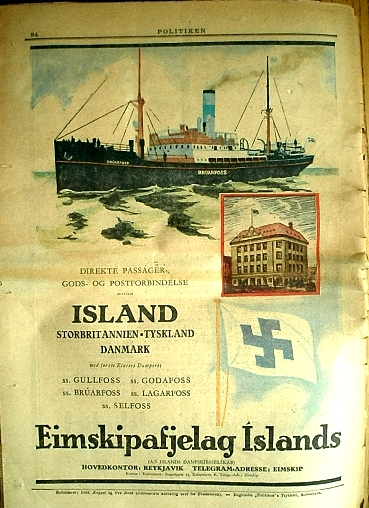
eimskip_1930.jpg

Photo credit to Vilhjálmur Örn Vilhjálmsson, https://fornleifur.blog.is
Used with permission.

The power of social media and online networking just keeps amazing me. Since starting this blog we’ve had soooo many great examples of how you all build on one another’s work and generously share with each other! It is our privilege to hold space here that helps do that.

You will remember our recent post entitled, More Cultural Appropriation: The Swastika? Well, a good friend and respected colleague of mine read it and said, “You know, Dianne, the swastika held a prominent place on a huge building, home to a major Icelandic shipping company, for decades. It’s gone now, though.” As we talked about it, she told me she’d used that story, with quite a few pictures, in a powerpoint slide presentation that she developed with a colleague.

With Thorunn and her co-presenter Avrora’s generosity of spirit, we are privileged to share with you a gift to all Cultural Detectives from them. Their slides summarize the swastika’s history, and include photos of its use in Bulgaria, Greece, Iceland, Native America, and Tibet, as well as the Nazi version. Thorunn and Avrora help you pull learning from these photos with slides explaining culture, judgments, and symbols.

Download their powerpoint slides here. And please let us know how you put them to use!

As an aside, I’d share with you that I recently met an incredibly interesting woman who is Indian and Austrian. Her stories about personal and family conflicts and learning around the swastika were really something to hear! Hopefully I might convince her to share some of them with you in a future guest post.