Bridging Cultures Online Learning Event: Register Now!

Bridging Cultures2
How do you translate knowledge of cultural differences into practice? What should you actually do differently to communicate better, and how do you ensure that what you are doing is effective?

  • Identify “bridge builders” and “bridge blockers” to your success
  • Learn techniques for in-the-moment bridging of differences to ensure that conversations spiral upwards instead of downwards
  • Develop strategies to both prepare for and repair cross-cultural relationships
  • Develop high impact, creative resolutions that take into consideration interpersonal, intercultural, and situational factors

During the webinar we will use Cultural Detective Bridging Cultures. This package is a little different than many in our series: rather than focusing on a specific culture, this package includes exercises and processes to help you navigate the differences you face. It is all about translating cultural savvy into action.

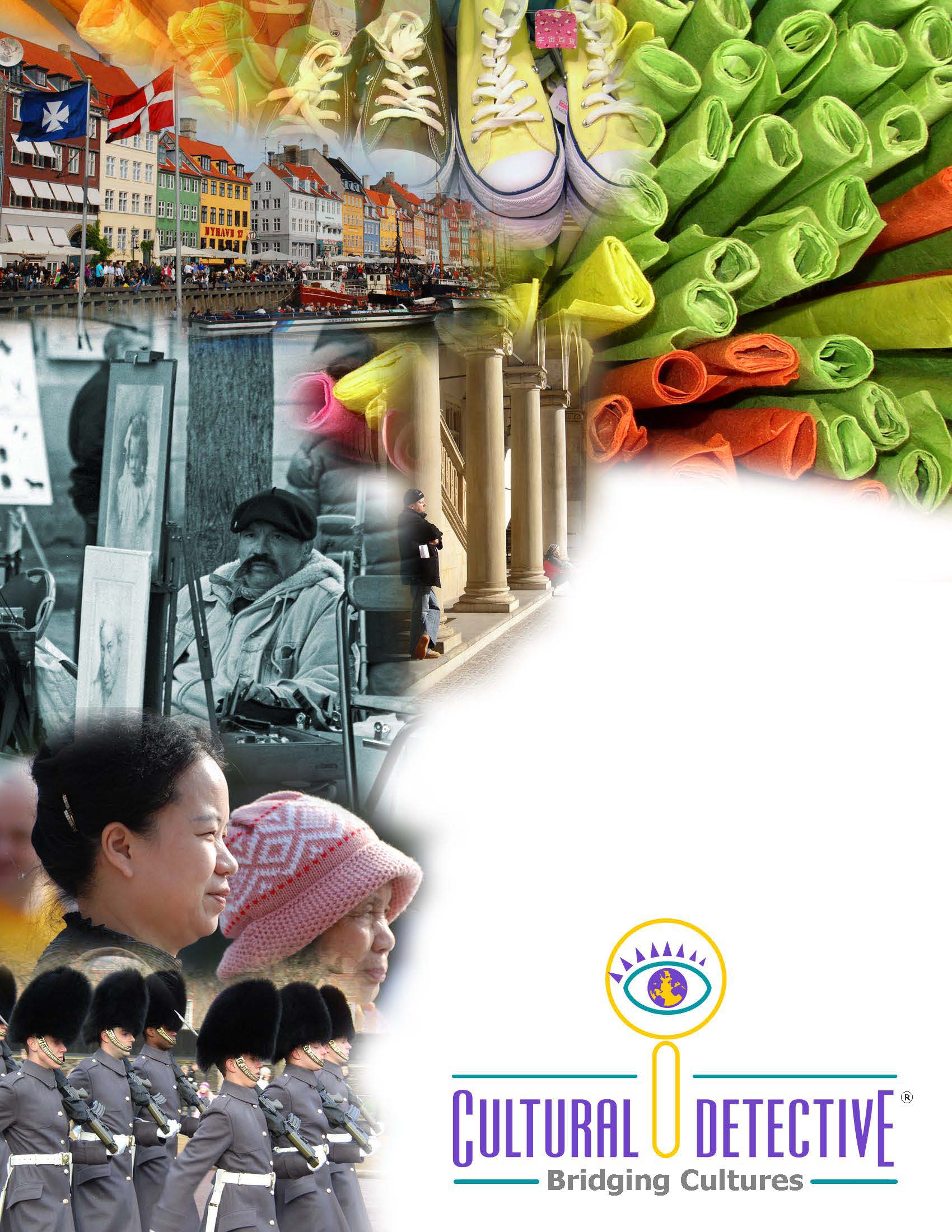
Cultural Detective Bridging Cultures cover

As you probably know, the Cultural Detective Series develops three core intercultural capacities: Subjective Culture, Cultural Literacy, and Cultural Bridging. Every packet in our series develops all three of these capacities; culture-specific packages have a particular focus on Cultural Literacy, while CD Self Discovery and CD Bridging Cultures focus more in-depth on the other two target capacities.

The Cultural Detective Bridging Cultures package is for anyone wanting to move from awareness to action, and it makes a great complement to any Cultural Detective culture-specific package. Join the webinar and learn more about the package and how to use its unique activities and exercises to enhance your own skills and/or your training program.

WHO

Facilitator for this event will be Kate Berardo, co-author of Cultural Detective® Self Discovery and Cultural Detective® Bridging Cultures. She provides consulting, training, and coaching to help individuals be effective global leaders and organizations to navigate complex cultural challenges. Kate has developed and delivered learning events in more than eighteen countries, with individuals from over fifty nations, using both online and traditional facilitation tools. Her work has been featured in media worldwide, most recently on CNN’s Business Traveller and the Dubai daily Gulf News.

Kate holds a distinguished Master’s in Intercultural Communication from the University of Bedfordshire, UK, and is a summa cum laude graduate of Northwestern University in the USA. She is certified in the Myers-Briggs Type Indicator®. With George Simons and Simma Lieberman, Kate authored Putting Diversity to Work, a training guide for managers to leverage diversity in the workplace. Raised in California, she has also lived in Japan, Spain, France, England, and Denmark. Her work and travel to over forty countries have given her a deep understanding of the intricacies of bridging boundaries and barriers.

WHEN
Monday, June 13, 2016 from 10:00 AM to 11:30 AM (MDT)
Register now to secure your place! 

Announcing the Fifth Edition of Ecotonos: Build Cross-Cultural Teams!

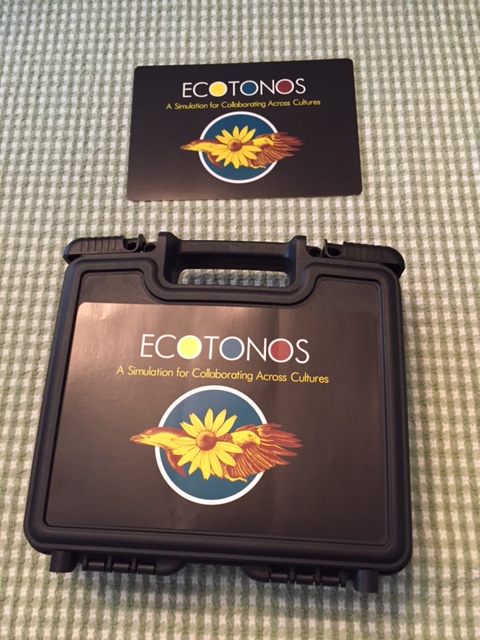
IMG_1735

Ecotonos: A Simulation for Collaborating Across Cultures is a classic in the intercultural field. It simulates teaming across cultural differences, and thus helps learners practice and refine cross-cultural collaboration skills. It can be played multiple times for developmental learning, since there is no “trick” to the game. Play and debrief require a minimum of 100 minutes, but is so rich that quite a few professors refer back to and pull learning from the Ecotonos experience throughout the entire semester of a course.

First published in 1992, Ecotonos is now in its fifth edition!

I want to thank—immensely—Kathryn Stillings, who headed up the most recent reprinting: from finding sources for the plastic carrying case and the metal culture buttons, to proofreading and managing the printing, and hardest of all, assembling the finished product and getting it shipped off to our fulfillment center. And she claims to have had fun doing it!

The photos below prove that when you purchase Ecotonos you are getting hand-assembled, artisanal quality goods! 😉 Click on any image to view it larger or see a slideshow. Of course, Kathryn took the pictures, so you sadly don’t see her in any of these.

If you don’t use Ecotonos in your classes or trainings, you are missing out on an invaluable tool for developing cross-cultural teaming competence. The game can be reused for years and years; order yours today!

How Language Can Deceive

PERCEPTION AND DECEPTION COVER FACE 3“We’re all coming to be like each other. While there’s some truth to that, it’s also truth that in coming together so rapidly—with technology, migration across borders—we are unprepared for the contact between people and cultures we know nothing about.”

Joe Lurie recently spoke to a sold-out crowd at the Commonwealth Club of California. In this two-minute excerpt from that presentation, Joe tells the sad story of a woman looking for a job who isn’t hired, at least in part, because of her name.

We’ve published about the importance of names previously on this blog. While Joe and Fadwa’s story is anecdotal, it echoes the experience of thousands of others worldwide. You may recall the widely reported story of José Zamora, who was hired only after he changed the name on his resumé to “Joe.” According to Recruiter magazine:

Job applicants with white names needed to send about 10 resumes to get one callback; those with African-American names needed to send around 15 resumes to get one callback. This would suggest either employer prejudice or employer perception that race signals lower productivity.

The book, Perception and Deception: A Mind Opening Journey Across Cultures, tells hundreds of stories like this one, in an effort to help the reader develop awareness and understanding, so they can then use Cultural Detective to build their skills and competence. If you haven’t yet read the book, be sure to order it now. Better yet, order a copy for Aunt Margret or your Cousin Vinny, too.

War Zones and Cultural Disconnects

PERCEPTION AND DECEPTION COVER FACE 3Our book, “Perception and Deception: A Mind Opening Journey Across Cultures,” is getting incredible reviews and selling like hotcakes (or roti, sushi, tacos…)! Quite a few successful, internationally renowned professionals leading multicultural lives—a famous news anchor, an ambassador, journalists, professors—have written on Amazon to tell us how much they’ve learned from the book. Check out the reviews for yourself. As Joe tells us:

I wrote the book because I think that in this age of globalization, more and more cultures are coming together in ways for which we are not prepared. We don’t understand the real intent behind behaviors, behind images, gestures, and how we use our voices.

Perception and Deception‘s author, Joe Lurie, is born a storyteller. Most of his speaking engagements to promote the book have been sold out, including the one in the video below, taken at the Commonwealth Club of California.

Over the next couple of months, I’ll share excerpts of Joe’s talk there. This first clip, below, is four minutes long, and in it Joe discusses the cultural disconnects in modern war zones.

Perception and Deception is a great gift for anyone who would benefit from taking some time to reflect on what is really involved in communication across cultures, even or especially those who live and breathe it on a daily basis. Copies are available through Amazon.com or your local bookstore. Through more effective intercultural communication we can build justice, equity, respect, and collaboration in our world!

“Those who were dancing were thought to be insane by those who could not hear the music.”
—F. Nietzche

No Child Labor a Good Thing?

©1.DSC_0402

Doing the wash while her parents are in the fields

The plight of migrant agricultural workers sadly continues, decades after César Chavez’ death.

In one month this year, five children died in the migrant camps of Teacapán, near where I live in Mexico: one fell into a ravine, another was bit by a scorpion, a third choked, a fourth drowned in an uncovered water tank… On our trip to visit the migrant workers recently, we met a family that had lost a two-year old just a few months ago. Such is what happens when adults need to work in the fields to feed their families, and children are left home to take care of younger siblings and neighbor kids.

Click on any photo in this post to enlarge it or view a slideshow.

Most of us can agree that child labor isn’t a good thing. Many of us perhaps campaigned or voted to outlaw child labor. Grocery store chains won’t buy produce harvested by children, so the local growers are vigilant to ensure that children don’t participate in agricultural activities. But, with the absence of effective support systems, and given the horribly inequitable economy in which we live, outlawing child labor has meant that children are dying, and are not being educated, in record numbers.

The thousands of migrant workers in my state of Sinaloa come from places like Oaxaca, Chiapas, Guerrero—poorer states of the Mexican Republic. Most of the workers are native Mexicans: Miztecos, Zapotecos… Many of them don’t speak Spanish; it’s a foreign language to them. Most of them don’t have birth certificates or official documentation—they were born at home and it’s not their custom to register with the government. Given the lack of language and birth certificates, most migrants are unable to enroll their children in school.

Sound like a hard life? Add to it the fact that the migrant workers are treated like outsiders in most any community in which they work. In Teacapán, for example, I was told the migrants pay 2000 to 3000 pesos a month for rent—of a ROOM, with no running water, no furniture, and most definitely no toilet or kitchen. In Mazatlán you can rent a functioning apartment for that price. It was heartbreaking to see.

During my trip to visit the migrant workers, there were still huge puddles of standing water on the roads, in the yards, and in fields. I was told that Hurricane Patricia dumped 25 inches of rain on Teacapán in 15 hours; the puddles were the last remnants of that flooding, still remaining months after the event.

The migrant workers experience discrimination. Many of the townspeople tell their children to stay away from the migrants; they call them filthy and stupid. I suppose if I didn’t have access to water or a toilet at home, I’d be dirty, too. Last Christmas, a church in Mazatlán brought toys to the migrant workers’ kids, and some of the townspeople made such a fuss because their kids didn’t get toys, that the church was afraid to go back this year. The mistreatment of migrants is by no means limited to Teacapán; that is just where I happened to visit.

The migrant workers told me they stay here in Sinaloa for about six months, then travel to Baja or Zacatecas to continue their labors, rotating their residence to follow the agricultural cycle. One worker told me he is paid two pesos for a bucket of chiles; how is that for exploitation! Can you imagine how long it must take to pick a bucket of chiles? Women work all day in the fields, then return home in the evening to cook and care for the kids.

I went to visit the migrant worker families on a trip organized by Sue Parker of Vecinos con Cariño. Each of the ten of us on the trip that day paid 400 pesos, money which is used to buy food, disposable diapers, baby formula, and basic medical supplies (cough syrup, cold medicine, aspirin, first aid supplies), after paying the expenses of the van and driver.

In Teacapán, we visited the home of Helen and Jerry Lohman, who are on the Cultural Detective learning path. They have a gorgeous place, right on the ocean. Their yard is the biggest stretch of green grass I’ve seen in Mexico outside a golf course. The Lohmans and their driver, Ulises Gil Altamirano (a retired engineer), do all they can to help the migrant workers. Helen has learned the hard way that the migrants do not like to wear shoes (they wear huaraches or go barefoot), nor do the women wear slacks. She has personally sewn 22 pairs of jeans, 57 dresses, and 72 receiving blankets that she’s given out to the migrant families just in the past couple of months. She has five volunteers who now help her. Ulises works as ambulance driver, interpreter, and lawyer for many of the migrant families.

On this trip we met another Cultural Detective, Brenda Irvin, who lives in Teacapán with her husband. Despite having her arm in a sling, Brenda goes out three days a week, every week, to hand out nutritive biscuits and milk to the migrant children. Oh, how they look forward to her visits! She has divided the town into four zones, and each of the days she goes out, she visits a different zone, in rotation.

Brenda, the Lohmans, and Ulises worked hundreds of hours to get registration information for 500 members of the migrant worker community. They got a judge to agree to issue them birth certificates so the kids could go to school and the parents could get access to health insurance. But, after all that effort, the documentation remains in limbo; the judge has not come through on his word.

Brenda told me that a few years ago she happened to gain an audience with our state governor. She showed him photos of the conditions in which the migrant workers live. He agreed to get the state DIF (Family Development Services) involved. Now Sinaloa DIF sends milk, the nutritive cookies, and some other basic items to Teacapán regularly, and Brenda delivers them to the workers’ families.

I am posting a lot of photos, because the photos tell you more than I can with my words.

Vecinos con Cariño (VCC) will welcome your donations; 100% of what you donate will go to help the migrant worker families. The money goes a long way; a donation of US$300 helps them clothe all the kids, for example. They will also take donations of gently used clothing, basic medical supplies, disposable diapers, and non-perishable food items. Contact Sue Parker via email for specifics.

“No Child Labor” is an interesting and sad example of the unintended consequences of imposing a well-intentioned system outside of its culture of origin, and not making appropriate adjustments/modifications. For years, in families all over the world, children have helped with the jobs that needed to be done. Children “came with,” and even if the younger children watched those still younger, it was within proximity of parents. That is how they learned to do various jobs including childcare, and that, in and of itself, is not the problem. The problem arises when child labor is exploited and precludes education.

As good Cultural Detectives, we must remember there are usually at least two “sides” or perspectives to every situation. I trust you will use Cultural Detective Online to develop your ability to understand alternate realities and reflect on the possible unintended consequences of our actions, so that together we can, indeed, build justice and equity in our world.

Ready for Some Good News?

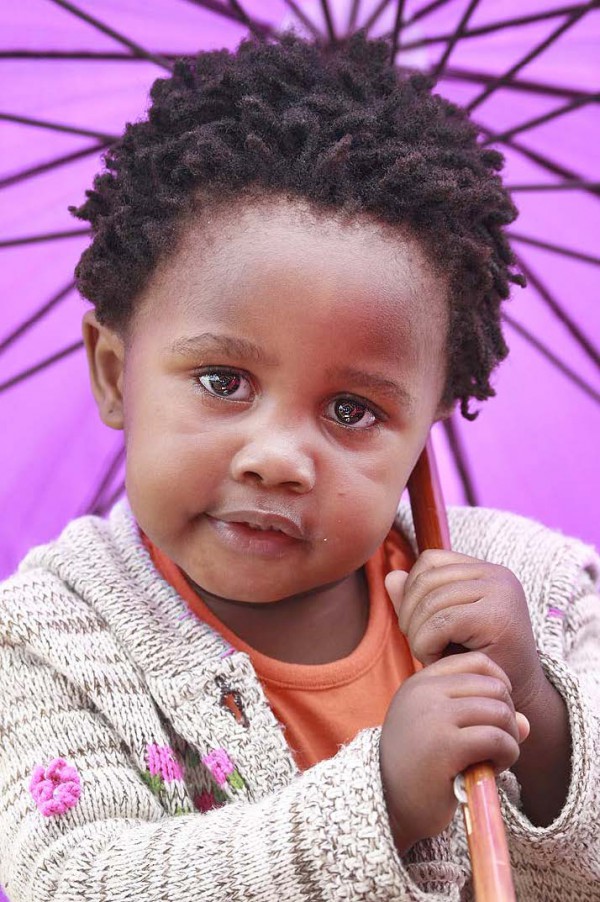
girl with curls v1

photo by Steve Evans from Citizen of the World (South Africa  Uploaded by russavia) [CC BY 2.0 (http://creativecommons.org/licenses/by/2.0)%5D, via Wikimedia Commons

…maybe the most important thing happening in the world today is something that we [journalists] almost never cover: a stunning decline in poverty, illiteracy and disease.”

—Nicholas Kristof, NY Times, Oct. 1, 2015

Things seem so grim some days that sometimes I want to turn off the news. But such a “head in the sand” approach isn’t beneficial — it is important to me to know as much as I can about what’s going on globally. But I keep believing there are many good things that are happening in the world that we just aren’t hearing about — the kindness and compassion of people, the connections that make us truly human, the tireless efforts to educate more children, feed more people, and eradicate diseases.

On a particularly glum day, I was delighted to find a NY Times Op-Ed Column by Nicholas Kristof—something that actually gave me reasons to feel more optimistic about the improving situations of people globally. While the daily struggle continues to be difficult for too many around the world, there actually is some good news.

Funny thing is, US Americans don’t know about it. Kristof puts this lack of knowledge squarely on the shoulders of US journalists, but I wonder if others around the world know this information?

According to Kristof, “…the proportion of the world’s population living in extreme poverty… has fallen by more than half, from 35 percent in 1993 to 14 percent in 2011 (the most recent year for which figures are available from the World Bank).”

What? Why didn’t someone tell me? All this work actually is making a difference! For example, in the 1980s, only half the girls in developing countries completed elementary school; today the number is 80 percent. In 1990, more than 12 million children died before they were 5; now the number is less than half that amount.

Kristof writes: “The world’s best-kept secret is that we live at a historic inflection point when extreme poverty is retreating. United Nations members have just adopted 17 new Global Goals, of which the centerpiece is the elimination of extreme poverty by 2030. Their goals are historic. There will still be poor people, of course, but very few who are too poor to eat or to send children to school. Young journalists or aid workers starting out today will in their careers see very little of the leprosy, illiteracy, elephantiasis and river blindness that I have seen routinely.”

Steven Radelet, a development economist and Georgetown University professor, in a forthcoming book, The Great Surge: The Ascent of the Developing World, notes, “We live at a time of the greatest developmental progress among the global poor in the history of the world.”

All this is very encouraging news—caring, hard working people do make a difference, just as I want to believe! Thousands of people all over the world share their knowledge, skills, and expertise to help others have a better life. We at Cultural Detective salute each of you doing your part to make the world a better place!

Developing Cultural Competency as a Life-long Journey

CSxMJSzXAAARY7-I have long admired Christian Höferle of The Culture Mastery. He is a German-born intercultural trainer and consultant living in Georgia (USA), a certified facilitator of Cultural Detective, and writes a funny and useful blog that has taught US-born me a lot about southern US culture.

Christian recently began a new podcast series—The Culture Guy—that keeps me chuckling while also reminding me what’s important about cross-cultural effectiveness. I was honored to be his third guest, and thoroughly enjoyed the wide-ranging conversation. Christian is intelligent, witty, and committed to excellence. I trust you will find the interview worthwhile; you can listen by clicking the playbar below or on this link.

After you’ve listened to the podcast, please take a moment to share with us one of your “cultural fool” moments, an example of when your “common sense” wasn’t shared, or a favorite tip for success across cultures. We look forward to reading them!

University of Valencia Master’s in Cross-cultural Management

logo-uvSo many people in Europe ask us about Cultural Detective Facilitator Certifications and other professional development opportunities. We of course always mention the Intercultural Development Research Institute in Milan, of which I’m a proud faculty member.

Soon there will be a terrific new opportunity: a Master’s in Cross-cultural Management, offered by the University of Valencia in Spain. The program is extensive and very practical, including cross-cultural management theory as well as cross-cultural marketing, project management, negotiation, conflict resolution, global teams, international assignments, and intercultural training and coaching. The program culminates in an internship or final project.

The faculty teaching this program are incredible, and I am proud to be among them. It is an incredibly talented and diverse group of professionals from around the world.

You can pre-register now, or download a brochure to pass on to your students or colleagues.

The Blame Game

BlameVAcccountabilityBlame is one of the most powerful tools in the repertoire of a Cultural Defective. Do you want to diminish trust in a relationship? Cause irritation? Ensure that others do not want to help you succeed? Ruin a perfect opportunity for cross-cultural collaboration? Then blame is a good strategy.

In contrast, Cultural Detective advises you to “refuse to take offense”—a much smarter operating norm for Cultural Effectives. Has someone failed to inform you in a timely manner? Rather than blaming them for rudeness or unprofessionalism, it is more constructive to learn the intentions behind their (lack of) communication, explain your preferences, and together create a shared way forward—a “third culture.”

“Blame is the discharging of discomfort and pain. It has an inverse relationship with accountability.”
—Brené Brown

When others have a different cultural norm, mindset, or “common sense,” it is most productive and sanity-preserving to acknowledge and understand these differing “cultural senses”! Actively taking accountability for co-creating shared norms provides a way to work together more effectively. It also facilitates trust, while embedding as “normal” the processes and a mindsets to help solve future problems.

We are fans of Brené Brown, as many of you may be, too. The video below captures this basic concept of blame vs. accountability in her inimitably humorous and insightful style, albeit not in a cross-cultural context.

Are you looking to build intercultural competence, and learn a reliable process to transform blame into accountability? A subscription to Cultural Detective Online for you, your family, or team will help you accomplish just that!

Cultural Detective is DiversityBusiness.com’s “Top Business 2015”

gk-1Nipporica Associates LLC, the company behind the Cultural Detective brand, is proud to announce that it has been been named to the Diversity Business.com “Top Business” list for the 15th year in a row—each year since the inception of the prestigious award!

This honor speaks to the hard work and dedication of our Cultural Detective team, beginning with Dianne Hofner Saphiere, founder and principal, and including our highly talented and diverse group of 138 authors, hundreds of certified facilitators around the globe, and to YOU—our clients, colleagues, and community. Together we engage passionately every day to build respect, understanding, collaboration, and justice across cultures!

Here is the notification letter:

Dear Honoree,

We are honored to announce that your company has been recognized as a 2015 “Top Business” recipient by DiversityBusiness.com! You have distinguished yourself as one of the leading entrepreneurs in the United States and are most deserving of this award and recognition. We are pleased to present you with this honor.

Over 1,300,000 businesses in the United Sates participated in our 15th annual business survey and you were among the select few chosen based on both your annual gross revenue and the business profile you presented to us. This award reflects our annual “Top Business List” which receives over 20 million viewers annually. We could not have done it without you!

Our “Top Business List” offers the most comprehensive look at the strongest segment of the United States economy – America’s privately held companies. These companies are the most recognized and respected which truly differentiate themselves in our indeterminate market place. We are proud to say this esteemed list has been coveted by the most successful companies in the U.S and, as one of the strongest your company has joined its ranks!

Your award is intended to inspire, motivate and honor your employees, customers, community and most of all, you. Your dedication and hard work has created incentive to stimulate economic growth in America. Like you, we at DiversityBusiness.com are dedicated to empowering the economic growth of our country and we are proud to walk alongside you as we all work to make this happen.

As an awardee, I am pleased to extend a personal invitation to you and your team to attend the “15th Annual National Entrepreneurship Summit”. This event will honor you and a select number of businesses which have dedicated themselves in stimulating econonmic growth throughout America. The event will be held at the Harvard Club of NY in NYC on April 30, 2015.

On behalf of DiversityBusiness.com and our sponsors, we salute you and your employees for achieving this momentous honor.

We look forward to congratulating you and your team in person at the awards ceremony on April 30th at the Harvard Club of NY in NYC!

With warm regards,
Kenton

Kenton Clarke
President & CEO
DiversityBusiness.com
(203) 255 – 8966
kenton@diversitybusiness.com

Here is the official explanation of the award:

“The ‘Top Businesses in America’ program recognizes and honors individuals who have established themselves as a world class community of entrepreneurs that continue to transform the way we live and advance our economy forward. In recognition of these outstanding accomplishments and contributions, the program is also designed to celebrate and support their efforts in order to generate public awareness among their peers, customers, press and to organizations who seek their products and services.

Now in its 15th year, Diversitybusiness.com has been privileged through business intelligence in identifying the USA’s most successful entrepreneurs on a state and national basis. Over 1.3 million businesses participated in the annual survey. The ‘Top Businesses’ are determined by a selection committee which evaluates the eligibility for all submissions in each award category.

The ‘Top Businesses in America’ program is sponsored by major brands which include Apple, AT&T, Wal-Mart, Coca-Cola, Office Depot, Toyota, Cisco, and Verizon, among others. This ongoing partnership and support has allowed the “Top Businesses in America” program to progress into the nation’s most coveted awards program.

The goal each year of the ‘Top Businesses in America’ program is to continue to celebrate another year of innovation, progression and growth and to raise the profile of entrepreneurs who remain committed to strengthening our competitive global landscape and rebuilding our future. No matter what circumstances, these men and women continue to build successful business relationships. They also continue to create an atmosphere of pride, camaraderie and confidence among their family, customers, suppliers and communities they serve.

DiversityBusiness.com is proud to be in the position to identify and stand behind these individuals. We know their accomplishments will serve as inspiration to current and future generations.”

We are pleased to receive this honor again this year, and we recognize it is a team effort that puts us in this competitive group. There is a great deal of work to be done building bridges across cultural gaps in this world, and we are thrilled to be able to make a small contribution to this process!