International educators have historically assumed that K-12 international schools are, by default serving multinational and multicultural expatriate communities, providing students with experiences that result in intercultural competence. But are international schools truly teaching students to make meaning of their unique cultural experiences or, when it happens, is it more by good-fortune than by design?
I recently had the honor of being invited to present a series of half-, one-, and two-day programs, at the Student Services Summit sponsored by the Hong Kong International School (HKIS). HKIS is among the top tier of K-12 international schools worldwide, and enjoys a well-deserved reputation as a premium institution. Although it was my first time at HKIS, working with and at the School had a quality of home-coming for me: I grew up attending international schools in West Africa and South East Asia, and consulted extensively with international schools throughout Europe and South Asia in the 1990’s. Although each international school varies from the next, the culturally diverse environment they typically offer is very much home territory for me.
And so what a joy to be asked to facilitate a two-day program for international educators titled Deepening Intercultural Competence: Developing an Intercultural Practice. Participants were international educators from across Asia and beyond, mainly developmental guidance counselors (with a couple of administrators too), who share a common passion for preparing their students to participate successfully in a globalized world. They were very ready for a professional development program focused on strengthening their own abilities to role model moment-to-moment intercultural practice.
I centered our time together on The MashUp: A Professional Toolkit for Developing Intercultural Competence. The MashUp (MU) is a natural and powerful combination of two leading processes in the development of intercultural competence: Cultural Detective (CD) and Personal Leadership (PL). Where PL provides a process to disentangle from automatic judgments, emotions, and physical sensations, and to open to the unique possibilities of the present moment, CD provides a process for deconstructing the intercultural dynamics at play, considering the values, beliefs and personal cultural sense that may be motivating people’s words and actions, and developing cultural bridges to close the gap. As an integration of the two, the MashUp offers a proven and exceptionally effective way to successfully strengthen intercultural competence in individuals, in teams, and across organizations.
In Hong Kong, the MashUp was very well received by participants who immediately saw its relevance and practical service to the daily situations they encounter – as international educators and as expatriates themselves. As one person put it:
“How thrilled I am to have experienced these past 2 days – I feel excited and energized, ready to begin a new journey! This has been everything I had hoped it would be, and more. I am leaving today with great ideas to enrich my practice, and steps to move towards this goal. I also believe that I have a group of colleagues who have a similar mindset and interest in adding value to their practice.”
I too left the session inspired. These international educators are ready to intentionally provide their students (no longer simply to trust to good-fortune) with the role-modeling, orientations, and practices that develop intercultural competence. And if that’s true of the educators in my session, then we can know it’s true of many more!
You have two opportunities to learn more about this developmental MashUp of PL and CD.
The first opportunity will be live and in-person at the Summer Institute for Intercultural Communication, July 16-20. Developing Intercultural Competence: An Integrated Practice will be conducted by Dianne Hofner Saphiere and myself, Barbara F. Schaetti.
Communicating in the Language of Food, by Joe Lurie
Dear readers, I am very pleased to share with you another guest blog post by the talented Joe Lurie (though Joe, I’d prefer to “swim in the chocolate” rather than “bicycle in the yogurt”). You’ll remember that Joe previously shared with us the very popular article, “Language Under the Gun.”
—
Noting that French President Francois Hollande has been referred to by his political opponents as a fragile strawberry, a wobbly flan , a marshmallow, and “gauche caviar,” with the charisma of a smelly sausage, I was reminded of how a culture’s preoccupations shape the way language is used.
I was first introduced to the pleasures of French cuisine and its influence on the French language as a university student hitchhiking through Normandy, sampling butter, cream and apple brandy-suffused dishes.
Struggling to express myself in village bistros, I realized the truth behind Mark Twain’s observation that Intermediate French is not spoken in France. A friendly waiter, noting my frustration, reassured me saying, I know, it’s not pie, “Je sais, c’est pas de la tarte,” which means it’s difficult. He went on to add, butit’s not the end of the string beans, “maisc’est pas la fin des haricots” – a strikingly French way of saying, it’s not the end of the world.
A decade later, my French was much improved. While directing a US American study abroad program in Toulouse, my understanding of food’s influence on the language deepened. Before taking a French cooking class with my 20 students, we stopped at an open-air market. Because the line to buy cheese was not moving, our impatient guide complained: “on ne veut pas faire le poireau,” we don’t want to be like a leek. Later, we learned the translation: to wait like a motionless leek in the ground. Now late for cooking class, our guide urged the van driver to press on the mushroom! “appuyez sur le champignon!” – meaning step on the gas! Keeping a chef waiting simply would not do.
The students and I were struck by how carefully the chef conducted the lesson – artfully presenting and discussing the ingredients. The meal is serious business, not to be treated like a joke or, as the French say, like custard – c’était pas du flan ce cours de cuisine! As we prepared a fruit salad, the chef mumbled “oh purée!” mashed potatoes! – or damn it! and disdainfully discarded a blemished peach to preserve an aesthetically pleasing fruit plate.
During almost four years living in Strasbourg, Toulouse and the island of Corsica, I saw how the French passion for eating and discussing food flavored the language in tasty and unusual ways, though some expressions are unique to different regions or generations.
It began to make sense that endearing French metaphors are often rooted in the pleasures of taste. “What a nice person” is served up in French as “c’est une crème!” – what cream, while “lacrème de la crème,”the cream of creams is the best of all. And “you are so energetic” takes on a carb boost in French: you have the French fry (tu as la frite). To be in high spirits also can come from the fruit family, as in you have the peach (tu as la pêche), while having a banana (avoir la banane) is to have a big smile. And, of course, there’s the affectionate “mon petit chou,” my little cabbage.
Allusions to food also season the language of love. A broken-hearted UC Berkeley student of mine from Marseille described her flirtatious boyfriend as a Don Juan with the heart of an artichoke,“quelqu’un qui a un cœur d’artichaut,” offering each of his lovers a leaf from his heart. He was skilled at making romantic advances or as my student put it: serving up a dish, “faire du plat à quelqu’un,” a prelude to going off to the strawberries,“aller aux fraises,” to enjoy an erotic interlude.
Even insults and put-downs easily spring from the tongue as if from a farmers’ market. An idiot or jerk, for example, can be described in French as what a pickle! (quel cornichon!); an utter squash (une vraie courge); such a noodle! (quelle nouille!); or as having a green pea in the brain! (avoir un petit pois à la place du cerveau!). When struggling to drive in France, I’ve heard irate, gesturing French men speed past, yelling “espèce d’andouille!” – piece of sausage!– or, you imbecile!
I remember a heated debate in a Paris café about a Gerard Depardieu film. A friend dismissed it as a turnip, “un navet,”a startling vegetable metaphorfor atrashy film. When he called the actor a horrible drunk, an indignant Depardieu fan interrupted with: shut yoursmelly Camembert mouth! “ferme ta boîte à Camembert!”
Just as food evokes passion in France, its metaphorical expressions enliven debate. Butting in on a conversation is to bring your strawberry, ramener ta fraise.Being overly inquisitive about someone’s private life could provoke an acerbic “occupe-toi de tes oignons!” mind your own onions! the French version of mind your own business. But perhaps the classic French way of ending an argument is go cook yourself an egg, “va te faire cuire un œuf,” or go to hell.
Traveling through the Pyrénées with a French couple, my wife and I enjoyed great food and spirited conversations, especially about politics. When the husband praised Sarkozy, his wife sneered that the former President is overly dramatic – making a big cheese out of nothing, “il fait tout un fromage de rien du tout.” She added, you can’t tell if he’s talking about pork fat or pork meat, “on ne sait pas si c’est du lard ou du cochon,” you can’t tell if he’s lying or telling the truth. And she believed Sarkozy had casseroles hanging on his butt – “des casseroles au cul” – a scandalous past.
While serving as Dean of Students at an international college in Strasbourg, I was struck by how much my French colleagues valued using words precisely, reflected in the pervasive use of the verb “préciser.” I chuckled when I heard some professors describe student papers that lacked clarity. They complained that these students were lost, bicycling in the sauerkraut, pédalant dans la choucroute. In other regions, one might say bicycling in the yogurt or couscous. And then there’s swimming in chocolate, nageant dans le chocolat, or skating in the mayonnaise, patinant dans la mayonnaise – getting nowhere. Outside the college, I heard other vivid ways of describing confusion such as being in the soup, the pate or the cabbages (être dansle potage, le pâté or les choux).
Recently, I saw an exasperated French TV commentator despair over the French economy by throwing up his hands exclaiming what a salad! “quelle salade!” what a mess! And then he finished with the carrots are cooked! “les carottes sont cuites!” meaning it’s all over.
If one is unemployed and grouchy or as the French say, “pasdans son assiette,” not on your plate, landing a job would help to putbutter on the spinach “mettre du beurre dans les épinards,” to make things better. And then it’s time to put your hand in the dough, “mettre la main a la pate” – get down to business. After all, you’ve got to defend your steak, “défendre ton bifteck,” as in look out for your interests.
Speaking of steak, making a living is gagner son bifteck, to earn one’s steak; while making a profit is to prepare one’s butter, faire son beurre. And to have a pancakeavoir de la galette, is to be rich. Assuming pancakes are your goal, you’ll have to go all out, put on the sauce, mettre la sauce, and be prepared to make a strong sales pitch, vendre ta salade, by selling your salad.
A UC Berkeley graduate student in computer science from Tours told me he was building a start-up company – “une jeune pousse,” a young sprout and didn’t know what to expect or what sauce he would eat, “ne pas savoir à quelle sauce on va être mangé.” He knew he had bread on the board, avoir du pain sur la planche, a lot of work to do, but realized that while dealing with potential investors he had to avoid being rolled in the flour, être roulé dans la farine – duped. Otherwise, he risked eating the frog, manger la grenouille – going bankrupt. He didn’t want to end up without a radish, ne plus avoir un radis, or as we would say, without a cent. All his dreams for nothing – “pourdes prunes.” Still, if he becomes successful like a Bill Gates, he’s apt to be called a large vegetable, une grosse légume, and be among the grated cheese, le gratin – the elite.
The versatility of the cheese metaphor in a country with hundreds of cheeses is not surprising. “A dessert without a cheese is like a beautiful woman with only one eye,” observed Jean Brillat-Savarin in his Physiology of Taste. His famous 19th century book, exploring the nuances of cuisine – still is sold in France. And no wonder, with a line like: “He who invents a new dish will have rendered humanity a greater service than the scientist who discovers a planet.”
Today, as French supermarkets and fast food restaurants continue to proliferate, gourmands refuse to compromise or cut the pear in two, couper la poire en deux, in defending their culinary heritage. For more than twenty years, during “La semaine du goût,” Taste Week, thousands of chefs visit schools across the country. They teach children to appreciate fine food; make a baguette, a mousse au chocolat; appreciate a bouillabaisse; and learn the anatomy of the tongue. Restaurants with Michelin stars develop special meals for young children. And chefs are invited to daycare centers to prepare gourmet menus.
Will this unique early training insure the survival of the refined French palate and the nourishment of its language? A master chef is likely to respond, of course, “mais oui, c’est du tout cuit” – it’s completely cooked – it’s in the bag.
—
Joe Lurie is Executive Director Emeritus at University of California Berkeley’s International House, a cross-cultural communications trainer, consultant, university lecturer, and certified Cultural Detective facilitator. Another terrific article he wrote for Cultural Detective, also full of metaphor, was called “Language Under the Gun.”
You want to know about the real Arab Spring? Look at this picture. These young people, both Muslim and Christian, are those who started the revolution in Egypt in 2011, demanding dictator Mubarak to step down. However, this spontaneous, penniless, and immature movement has been hijacked by the more organized Muslim Brotherhood who stole the spot light and became the prominent candidates for the new regime.
Yesterday, just a few hours after the voting box closed down, I found myself in a secret apartment in the heart of Cairo, the headquarters of the youth revolution. A dozen young activists were working like bees in a beehive on their laptops, updating thousands of tweets and Facebook posts, sending the results of every single voting spot, reporting to the people of Egypt every potential problem of the election.
“Yes, our revolution has been kidnapped by the Islamists!” admitted Ahmed. “I slept in Tahir square, protesting for days, to see a new regime with a liberal and democratic mind set, not someone from the Muslim Brotherhood who wants the country to be back in the stone age. The only thing we can do right now is to be keen observers to make sure this is a fair election. If the Muslim Brotherhood wins, we will have a new revolution, a real Arab Spring.”
Intercultural communication is about how we can communicate effectively with one another. A frequent approach to improving intercultural communication is to develop our understanding of ourselves and of others. And probably the most common way of doing that is to teach about cultural differences, often referred to as the “dimensions of culture.”
There are many different versions of the dimensions of culture. I generally find them valuable as tools to help us compare cultures, or to cognitively learn about ourselves and others. And I also find they really limit us. While not intended this way, their use has a tendency to reify culture, to cause us to think about culture as a “thing” rather than a process. It’s why I’m such a fan of the Cultural Detective Worksheet: it’s a process for understanding self and others, for leveraging similarities and differences in order to collaborate in more innovative, rewarding, and satisfying ways.
Enough about that. This post is about cultural differences. In my training one of the ways I talk about cultural differences is to ask people to think of them as a map of the terrain, and to use them as a scanning tool. In a given interaction, which difference(s) got in the way? For example, was status important for her and not for me, and I just missed it? Was it a different sense of responsibility that really upset me? Maybe he likes to do several things at once, and I’m more one-thing-at-a-time? Was it the fact that I don’t think religion belongs in the workplace that caused him to think I’m not trustworthy?
That is how the map above came to be. It is a graphic summary of some of the cultural differences or dimensions, at least as I saw them back in 2008. It is available for you to use freely under a Creative Commons license. You can introduce the various cultural differences to your team and then, when you get mired in cross-cultural miscommunication, you can take out your map of differences and decipher just which dimension might be causing the problem. Or, maybe it’s something not even on the map.
I’m really interested to hear from you about how you use the dimensions of culture to promote effective interaction. What are your tools and techniques? Your dos and don’ts? And what do you think about this “map of the culprits of miscommunication” idea?
Or so claims Jeanne Brett in a recent Harvard Business Review blog post. I will agree that most of the multicultural teams I’ve worked with over the past 28 years have been dominated by a sub-group of members. My guess is that’s the same for most teams, no matter the visible diversity of their composition.
This idea caught my attention, and I also really liked that rather than the usual analogy of talking about multicultural teams as symphony orchestras or likening them to herding cats, Jeanne relates multicultural teams to fusion cuisine. And who doesn’t like fusion cuisine? Way to sell multiculturalism!
“It turns out that fusion teams often … break a large team into smaller subgroups, encourage informal conversations, and thereby get input from previously quiet team members. Eventually, the subparts have to be integrated back into a whole; this turns out to be less of a problem than you’d think. In the teams we studied, the trust and respect generated within the subgroups made it reasonably easy to facilitate collaboration in the larger group.”
Another of Jeanne’s points very much echoes what the six expert, globally dispersed authors of Cultural Detective Global Teamwork have to say. Many of you know what a dynamite package that is and, if you don’t, please be sure to check it out! To quote Jeanne’s post:
“We’ve come across team leaders who achieve the same result (getting the most out of all cultural subgroups) by carefully establishing team norms at the start of a project. For example, we know of one manager who was leading an English-language software-development project; English was not his first language. In fact, his English was strongly accented. When he met with the team for the first time, he told them, ‘You’ve probably noticed I have an accent. If I could get rid of it, I’d be happy to do so, but since I cannot, we’re going to have to communicate … regardless of my accent or for that matter yours. If you do not understand me, or one another, whether it’s because of accent or anything else, we need to communicate until we do understand.'”
What do you think? In what ways are multicultural teams like fusion cuisine? What are some of your tried-and-true best practices for multicultural teamwork?
Ever read or watch something, made for one purpose, and realize how completely perfect it is for another purpose? There is definite joy in that, right?
Yesterday Anna Mindess sent me a link to her latest food blog. As you have learned by now, our Cultural Detective Deaf Culture co-author very deftly combines her passions for food and new restaurants with her passion for intercultural. Her newest restaurant review teaches us so much about Deaf Culture that I’ve added the video to our CDTV channel. Take a look:
What does this short video teach us about Deaf Culture? About hearing culture? About cross-cultural communication? Please share your responses with us by clicking “Leave a reply” below.
For those of you interested, here are a couple of paragraphs from Anna’s original post: “While Mozzeria proudly holds the distinction of being San Francisco’s first deaf-owned restaurant, the Steins prefer that the focus remains on their food. There is no posted sign to alert customers that many of the employees are deaf. Melody and Russ toyed with the idea of putting an explanatory sheet about Deaf culture in the menu or name tags on the servers identifying who was deaf or hearing, but dropped these as unnecessary. Basically, they believe, if patrons enter with an open mind, the communication will work itself out — and it usually does.
This low-profile set-up stands in contrast to probably the first, and definitely the most famous deaf-run dining establishment in the world, Café Signes in Paris, which I visited shortly after its opening in 2003. That cafe’s menu comes with an explanation of culturally appropriate tips — in Deaf culture, not French culture — for attracting your server’s attention. The list is a great example of the universality of much of Deaf Culture* (the sign languages, by the way, are different in each country). A waving hand, a stomp on the floor, a slight tap on the arm, the toss of a light object within the visual field, instituting a chain of taps among neighbors around the room will all work as attention getting devices. But in the end, Cafe Signes installed small light signals at each table so diners need only flick a switch to get attention.
At Mozzeria, having servers who can all sign (regardless of their own hearing status) makes for an accessible “deaf-friendly” environment. It also carries side benefits for hearing diners. In many restaurants, attempting to get the server’s attention for a simple glass of water can often feel like trying to flag down a racer at the Indy 500. Since the eyes are such an important part of Deaf culture, however, most deaf people are especially attuned to visual cues. I was thrilled to find that to attract my server’s attention at Mozzeria, even from the other end of the long narrow space, all I needed to do was to establish eye contact and raise a finger or even an eyebrow. Hearing customers also seem to appreciate the relatively low noise level which permits actual conversations with their tablemates. (Mozzeria’s hearing employees do set background music nightly, but it is never overbearing).
While Mozzeria has become a new San Francisco must-visit-destination for deaf visitors from across America and around the world, both deaf and hearing diners probably care more about chowing down on some awesome pizza and all signs point to the fact that this is what you’ll find at Mozzeria. In the end, it might not matter that much who made it all possible. Indeed, a recent Yelper (who failed to mention if he had been enjoying some of their well chosen beer on tap or glasses of Italian wine) didn’t even realize that the staff was mostly deaf, “thought they were just being all Italian, waving their arms around and such.”
Check out more videos on Deaf Culture by visiting our CDTV: Cultural Detective’s channel on YouTube. You’ll see a bunch of package playlists at the lower right. Select Deaf Culture, and watch the videos!
Is there a bottom-line business benefit to intercultural competence? As someone who has lived and breathed cross-cultural and intercultural business competency for well over thirty years, that question tends to elicit a chuckle in me. And today, the person on the phone who asked me that question reminded me of a story.
You see, just yesterday I received an invitation to an “OB-OL-kai” in Japan, a “get together of Old Boys and Old Ladies,” a reunion of a group of colleagues that I miss terribly and would love to party with, again, face to face. We went through a lot together. They are some of the most talented professionals I’ve had the pleasure of working with in my career. And a few members of that group were involved in the story I’m about to tell you:
Cultural Detective and the Case of the Ion Exchange Resins
We worked for a multinational business that globally sourced ion exchange resins. IERs are small beads used to separate, purify or decontaminate; they are used to make ultra-pure water, for example. Don’t worry about the technicalities; this story focuses on how the people worked together.
In this case, the IERs were produced in southern France, at a facility that was one of the absolute best in the world. My client imported the IERs to Japan, selling them primarily to the semiconductor manufacturing industry.
The Japanese customers had extremely high quality standards, and the French-produced IERs consistently met all the customer’s requirements. The product was well within spec. But, the Japanese customers were worried: occasionally the IERs they received from France would vary slightly in color. One shipment might arrive quite clear, the next shipment more yellow or orange. Always the specifications were met. The IERs functioned to their purpose. But the color varied.
“The color doesn’t matter,” the French vendor explained. “The color has absolutely no impact on the performance of the IER.”
“Yes, that is true. We understand that color does not affect performance,” came the reply from the Japanese customer. “But we are concerned about why there is a color variation? We feel it must indicate a variance in the production process itself. There must be some variable in production that is not consistent and could be improved.”
A classic cultural gap: a focus on result vs. a focus on process. Does the product perform as required? Or do we look at continuous improvement of the production process itself?
In this case, the argument could quickly produce a stalemate, with both supplier and customer insisting their view is “correct.” The French could insist that their IERs are the best the customer will find. As long as the customer doesn’t find an equivalent product, that could be ok. But, it’s not a very good answer on a global stage, where there always seems to be another supplier waiting in the wings, with cheaper cost, easier shipping, or more commitment to listening to the customer.
Possible results of the vendor insisting that color doesn’t matter?
Lost customer (and this was a lengthy and very lucrative relationship),
Lost business/profit/cash flow,
Lost investment in developing this customer,
Huge reinvestment to develop a new customer of the same caliber,
Loss of opportunity to improve their product and their production process,
Not to mention the human aggravation.
The Japanese, in turn, could blame the supplier. “They are not committed to being the best they can be. They are resting on their laurels, on their prior success. We need suppliers who strive to maintain their leading edge. We need a supplier who listens to us and respects us.”
Possible results of the customer insisting color variation matters?
Diminishing trust of, communication and collaboration with the vendor, leading to
Loss of a strategic vendor,
Loss of the investment in selecting and developing the vendor,
Huge reinvestment to source and develop a new vendor,
Major time and financial commitment to establishing a relationship and educating a new vendor regarding customer needs, in hopes that the new relationship might become a strategic partnership.
I have seen this push-pull occur so often in my career. It frustrates those involved, it causes aggravation, it wastes time, and it wastes money. Take a moment to put some money to the points above, to calculate the “bottom-line impact” of such a simple cross-communication. In this industry, it is easily in the millions of dollars. And why? Due to pride, to arrogance, but mostly due to ignorance: not really understanding cultural differences and how to navigate them effectively.
And what might an interculturally competent solution look like? We know it involves multi-directional bridging, and systemic as well as interpersonal solutions. And, usually, such interculturally competent solutions are win-wins for both customer and supplier.
How so? Well, the vendor could listen to the customer, learn from the customer, even though the customer’s points don’t pertain directly to the product performance. In this way, the vendor would:
Strengthen trust and teamwork with the Japanese customer,
Could very well improve the quality of its manufacturing process, which in turn
Could help ensure it remains best-in class.
The customer will refer more customers to the vendor, due to the strong relationship with and excellent quality of the vendor, and the vendor’s global markets will grow.
In turn, the customer could voice its praise for the vendor’s quality, and explain that it’s intentions are collaborative and collegial; to help both vendor and customer be the best they can be. The customer could apologize for the hassle, and offer its process expertise to the vendor. In this way, the customer would:
Strengthen a very lengthy and very strategic vendor relationship,
Improve the cross-cultural skills of its staff, enabling them to partner more effectively with other vendors,
Improve the customer’s reputation in the global marketplace, as one of collaboration and loyalty.
Thus, the French and Japanese could work together to manufacture more color-consistent IERs, grow their global markets, strengthen their partnership, improve their employees’ skills, and polish their reputations in the marketplace. Win-win-win.
In real life, what actually happened was somewhere in between. These people were smart enough to hire a full-time intercultural consultant, after all, which I believe is one demonstration of their commitment to success. They got advice, and they did their best to put it to good use. They realized that intercultural competence is a lifelong process, contextually based, and strived to always do a bit better. It’s one of the reasons I want to travel halfway around the world to go to that OB-OL-kai!
What do you think? I would love you to share with us why you believe intercultural competence is helpful? Do you have a Cultural Defective or Cultural Effective case to share?
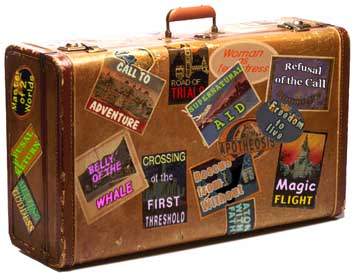
You could say my Mama was a modern-day pioneer. She packed up one suitcase for the three of us — for herself and her two young daughters — and traveled West for the opportunity to reinvent herself, escaping totalitarianism through the seemingly impenetrable Iron Curtain. That was a quarter of a century ago. Still, after so many years, a mother myself, I have yet to truly commune with the place where I live, feeling no tangible connection to the land here.
Why so disconnected? This land seems foreign and not yet part of my “cellular memory” shaped by centuries of Central European living. It is not where my ancestors are buried. In my life, I’ve moved too many times to count, skirting the land, speeding along its slippery surface as if it were ice. Like the original pioneers, and a great many modern-day transplants and migrants, I have internalized the frontier as a state of mind, to paraphrase Native American activist Winona LaDuke. She faults our society’s culture of transience, our belief that a greener pasture lies somewhere else, calling it a psychosis, for disconnecting us from our responsibility to place.
Writer and Mayan shaman Martin Prechtel explains the underlying cause of the westward migration and transient nature of our society as the modern culture’s inability to feed the spirit world from which we come, and our failure to mourn our ancestors which includes acknowledging the damage they have done to this world. He says:
“If this world were a tree, then the other world would be the roots — the part of the plant we can’t see, but that puts the sap into the tree’s veins. The other world feeds this tangible world — the world that can feel pain, that can eat and drink, that can fail; the world that goes around in cycles; the world where we die. The other world is what makes this world work. And the way we help the other world continue is by feeding it with our beauty. All human beings come from the other world, but we forget it a few months after we’re born. This amnesia occurs because we are dazzled by the beauty and physicality of this world. We spend the rest of our lives putting back together our memories of the other world, enough to serve the greater good and to teach the new amnesiacs — the children — how to remember.”
This rings so deeply true for me I weep when I think about it. I live in a new country, a land where I’ve inherited other ancestors’ pain, and I struggle with how to honor it so that I can develop a personal connection and a sense of responsibility to this place. From studying history, I know the magnitude of pain my current life is built on is unfathomable. Between 1774, the year Europeans first arrived on the Northwest Coast, and 1874, an estimated 80 percent of the indigenous population had been decimated by European diseases, including smallpox and measles. According to University of Washington’s Centerfor the Study of the Pacific Northwest, across the US, “a rough estimate holds that Old World diseases depopulated native societies by about 90% within the first century of contact.”
And the assault on native tribes and the earth continues. In the Pacific Northwest, for instance, as little as three percent of old growth forest is what may be left.
“The question is: how do we respond to that destruction?” Prechtel says. “If we respond as we do in modern culture, by ignoring the spiritual debt that we create just by living, then that debt will come back to bite us, hard.”
In fact, we will literally be — and already have been — haunted by the ghosts of our ancestors if we continue not paying homage to them. “Ghosts will actually chase you,” is how Prechtel describes our predicament. “And they always chase you toward the setting sun. That’s why all the great migrations of the past several thousand years have been to the west: because people are running away from the ghosts. The people stop and try to live in a new place for a while, but the ghosts always catch up with them and create enormous wars and pain and problems, which feed the hungry hordes of ghosts. Then the people continue on, always moving, never truly at home. Now we have an entire culture based on our fleeing or being devoured by ghosts.”
He suggests that one way to honor our predecessors and repay the spiritual debt “is simply by missing the dead. . . as (expressed by) a loud, beautiful wail, a song, or a piece of art that’s given as a gift to the spirits.” If we don’t do this, we are “poisoning the future
with violence” against other beings and the earth itself because we then have no understanding of home.
Prechtel’s insight, I believe, is the answer to healing and to reconnecting us to our past and the earth. In order to “be at home in a place, to live in a place well,” we must do the following, he says. “We first have to understand where we are; we’ve got to look at our surroundings. Second, we’ve got to know our own histories. Third, we’ve got to feed our ancestors’ ghosts” by grieving. We do this by using the gifts we have been given by the spirits to make beauty.”
As global nomads, globetrotters or migrants with no deep commitment to one place we inhabit and its history, we could be doomed. As LaDuke urges, our mantra should be “the Holy Land is here, not somewhere else.”
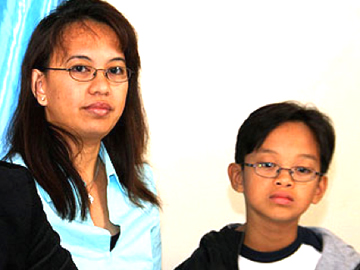
Recently another sad story about dining etiquette across cultures has been in the news.* This time it involves cultural differences over how to use a spoon and fork, and involves a Filipino family living in Canada. Fortunately this child, Luc Cagadoc, was not removed from his family, but his mother, Maria-Theresa Gallardo, explains that the school’s reprimands for Luc eating in a typically Filipino way have negatively affected his self-esteem as well as his performance in school. She won her case before the Quebec Human Rights Tribunal (the judge ordered the school district to pay the family $17,000 in damages), though the case is now in appeals.
Once again, a terrific Cultural Detective has filmed a video about how Filipinos eat with a fork and spoon in combination. This was evidently the behavior that led Luc’s school lunch monitor to conclude that he “ate like a pig and should learn to eat like other Canadians.”
Thank goodness Luc’s Blended Culture mother responded very constructively. She says, “We’ve been travelling around. I’ve been showing him different ways of eating, and saying there’s nothing wrong with what he’s doing.” Unfortunately, she says, her son can’t shake off the incident. “I think it’s going to last him a lifetime to remember what happened in that experience that he had.”
Have you ever gotten in trouble for “poor” dining etiquette that was due to cultural differences? Come on, share your story!
—
* Earlier we reported to you about an Indian family living in Norway, whose children were removed from the family home. One of the reasons cited was that the children ate with their hands. In response to that post, one of our authors made a terrific video about how to eat with one’s hands. Eating with one’s hands is, of course, the norm and custom in many cultures.
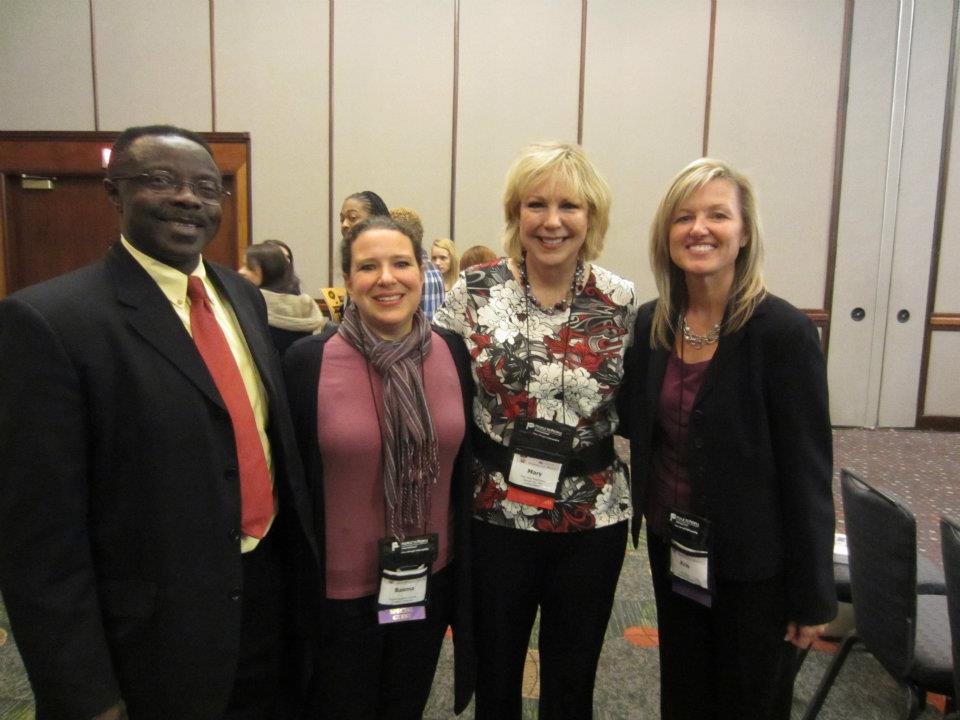
Over the past several years I have enjoyed developing a professional and personally meaningful relationship with the People to People International organization (PTPI). For those of you who are not familiar with PTPI, the organization was founded by President Dwight D. Eisenhower in 1956 and is now run by his granddaughter, Mary Jean Eisenhower. Their mission is “to enhance international understanding and friendship through educational, cultural and humanitarian activities involving the exchange of ideas and experiences directly among peoples of different countries and diverse cultures.” They are a dynamic group of dedicated staff and thousands of volunteers in over 135 countries truly working to promote the benefit of people working and living cooperatively together throughout our world. They are known by their tagline, “Peace Through Understanding.”
Last year in November Cultural Detective had the privilege of sponsoring and designing the student curriculum for the PTPI Global Youth Forum 2011 (GYF). We focused on designing curriculum that would readily engage about 130 students and GYF leaders and most importantly inspire them to explore building relationships outside of their perhaps “look and act like me” group of students and friends in their local communities. Based on the testimonials of both students and teachers, we feel we did a pretty good job!
This spring I’ve been asked to present the Cultural Detective Method to PTPI Board Members and the PTPI Community at Large so they can focus their attention on recruitment of diverse leaders and members. In the upcoming session I hope to show how generational differences as well as national cultural differences impact with whom we as individuals may naturally gravitate to, which can limit the growth opportunities possible by confidently reaching out to people of multiple cultures. Stay tuned for more about the event in a future post!

 present a series of half-, one-, and two-day programs, at the Student Services Summit sponsored by the Hong Kong International School (HKIS). HKIS is among the top tier of K-12 international schools worldwide, and enjoys a well-deserved reputation as a premium institution. Although it was my first time at HKIS, working with and at the School had a quality of home-coming for me: I grew up attending international schools in West Africa and South East Asia, and consulted extensively with international schools throughout Europe and South Asia in the 1990’s. Although each international school varies from the next, the culturally diverse environment they typically offer is very much home territory for me.
 A Professional Toolkit for Developing Intercultural Competence. The MashUp (MU) is a natural and powerful combination of two leading processes in the development of intercultural competence: Cultural Detective (CD) and Personal Leadership (PL). Where PL provides a process to disentangle from automatic judgments, emotions, and physical sensations, and to open to the unique possibilities of the present moment, CD provides a process for deconstructing the intercultural dynamics at play, considering the values, beliefs and personal cultural sense that may be motivating people’s words and actions, and developing cultural bridges to close the gap. As an integration of the two, the MashUp offers a proven and exceptionally effective way to successfully strengthen intercultural competence in individuals, in teams, and across organizations.
 educators are ready to intentionally provide their students (no longer simply to trust to good-fortune) with the role-modeling, orientations, and practices that develop intercultural competence. And if that’s true of the educators in my session, then we can know it’s true of many more!
 Communicating in the Language of Food, by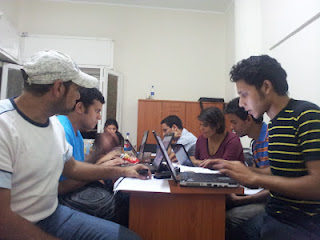



 Cultural Detective Blog