Film Review by Sunita Nichani: “English Vinglish”

Reprint from SIETAR India Newsletter, November 2012
Written by Sunita Nichani

The topic of cultural dimensions (individualism vs. collectivism, monochrone and polychrone) is almost de rigeur in intercultural training workshops. Most of these models remain quite theoretical in the minds of our Indian participants.

As I watched the Bollywood film “English Vinglish,” I saw some great examples of these dimensions being acted out, and am delighted that some of these scenes can be used to illustrate these dimensions in a way that will resonate with Indian audiences. Please note that like with most films that portray another culture through the eyes of a foreigner, some of the situations and characters might seem a bit exaggerated or even culturally inaccurate. However, the film has many select scenes that would be a great resource for intercultural trainers looking for ways to connect theory and application. So read on!

This film by Gauri Shinde is a heart-warming tale of how an Indian housewife, played by Sreedevi, discovers her hidden potential after landing in the US and learning the English language. The film can be used for a variety of training objectives: questioning existing stereotypes, ethnocentrism, or how the film accurately or inaccurately depicts cultural differences.

Being part of a collectivist culture, Sreedevi puts her family’s needs before her own and her individual efforts are often unrecognized or even mocked by her family at home. She is an excellent cook and in India she sells her speciality “ladoos” (an Indian dessert) during weddings and other festivals. During her first English language class in the United States, her English instructor asks her what she does (individualist orientation) and Sreedevi, not used to talking about her individual accomplishments, sheepishly confesses that she sells “ladoos.” Her English instructor provides her with the term “entrepreneur,” and her face lights up at this definition of her individual identity. This theme is quite recurrent in the movie and can be used in discussions on how to leverage the best of both individualism and collectivism. For example, after having discovered the joys of individualism such as “me time,” personal development, and individual accomplishment, Sreedevi does not bail out on collectivism. On the contrary, she explains the core philosophy of collectivism in her speech at the wedding of her niece.

Yet another dimension is beautifully illustrated in the scene where Sreedevi orders a cup of coffee in New York for the first time. To see the differences between monochronic and polychronic attitudes. I encourage you to watch the film!

Thank you for this great review, Sunita, Cultural Detective extraordinaire and current President of SIETAR India.

We would like to encourage all of you to purchase early-bird registration before December 9th for the SIETAR India 2013 conference, “From Internationalization to Intercultural Competence.” It will take place in Mumbai on the 2-3 of February.

Many Thanks to All of You!

The Cultural Detective team is very grateful to all of you in this community for the terrific work you do to help make our world a more inclusive, respectful, equitable, sustainable and collaborative place.

Today is Thanksgiving Day in the United States, and while our team members are based all over the world and the holiday isn’t celebrated here in Mexico where I live, it seems a good occasion on which to formally thank you all for accompanying us on this journey!

We wish you energy, clarity, wisdom and joy as you pursue our shared yet often challenging goals.

Every Organization Needs Intercultural Competence

Nearly every organization these days, even the smallest and most local, works with diverse customers, team members, vendors, and service providers. A corner grocery store serves people from different age groups, ethnicities, and spiritual traditions. So, which holiday greetings should the grocery store use, if any, so as not to offend or exclude? Why do some of the regular customers talk only to male employees? Could the store increase profits or attract new customers if it started offering halal meats or Latino grocery items?

What about the graphic designer who puts up a website or Facebook page designed to attract local clients, only to find that the first inquiries come in from overseas? The mere fact that you have an online presence can mean you offer your products and services worldwide. And what about the free clinic that finds itself dealing with patient care issues of recent immigrants from places halfway across the planet? Or disaster relief agencies attempting to coordinate aid from around the world, getting it to the places it needs to be, quickly?

Cross-cultural competence, the ability to communicate effectively across cultures, is a mandatory skill in today’s interconnected world. It will help you:
  • Service diverse customers in the ways they expect.
  • Attract, retain and make the most of the talented professionals your organization needs to succeed.
  • Sell more products or services, to the people who need them.
  • Achieve success in your negotiations.
  • Discern the “right” mergers and acquisitions for your purposes.
  • Get more productivity and satisfaction out of your local and virtual teams, projects, and vendors.
  • Jump start the outcomes of study abroad and international education, as well as expatriate assignments.
  • Ensure you get the most out of the time and money you invest in international, cross-country and regional business travel.
  • Develop mutually respectful relationships with clients, employees and other stakeholders.

Cross-cultural competence is a needed skill for all of us, and it helps improve our family and social lives as well as our work lives. But amidst all the competing priorities for our time and attention, how can we develop such competence? To most of us, going back to school or even taking a few days off work for a class isn’t doable. And besides, like physical fitness, cultural fitness requires ongoing, structured practice, not just one trip to a training room.

If only there were an online cross-cultural coach available to us anytime, anywhere, at low cost. One that didn’t make us memorize lists of dos and don’ts, that didn’t promote stereotypes but rather encouraged dialogue and critical thinking. An online coach that would provide a process for recognizing cultural differences, helping us to understand and leverage them as assets rather than as roadblocks. Better yet, an online coach that could help us make sense of our everyday experiences, learning how to transform obstacles into opportunities, and frustration into innovation. A tool we could navigate freely, according to our needs and interests, not some online talking heads or narrated slide show. A tool that would be available on our time — when and where we want it…

I am very excited to be able to share with you just such a solution, yours free for three days, no strings attached. It is a brand new online system based on the proven Cultural Detective Method used by governments, NGOs and for-profit organizations around the world.

Free 3-day trial to Cultural Detective Online!

Cultural Detective is directly responsible for a 30% increase in our customer satisfaction ratings.”

Cultural Detective sped up my learning curve; it allowed me to become a part of the team and have an impact on the business more quickly.”

“I have received kudos from my managers and the Vice President for having chosen the Cultural Detective. But the kudos should really go to you. Cultural Detective is a rock solid methodology.”

Pass this offer around; the 3-day-free trial offer is good from now through December 31, 2012.
To redeem:

  1. Log on to http://www.culturaldetective.com/cdonline/orders/trial
  2. Enter your name, email address and the code: Promo3
  3. You will receive a verification email from cdonline@culturaldetective.com. Click the link in the email, follow the instructions and you will be ready to go!

Enter your learning goals, explore 50+ fully integrated packages including full Values Lenses and 400 Critical Incidents, or upload and debrief your own real-life situations. Your customers, partners and employees, even your family members, will notice the difference!

Improve your ability to understand and collaborate across cultures, and help your friends, family members and colleagues to do the same! Let’s create a more inclusive, creative, collaborative and productive world out there! Get a clue!

A Gift for You from Thorunn and Avrora

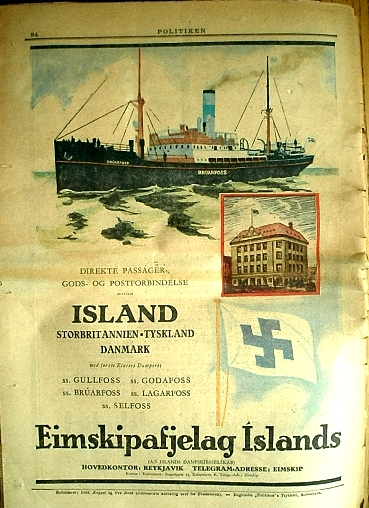
eimskip_1930.jpg

Photo credit to Vilhjálmur Örn Vilhjálmsson, https://fornleifur.blog.is
Used with permission.

The power of social media and online networking just keeps amazing me. Since starting this blog we’ve had soooo many great examples of how you all build on one another’s work and generously share with each other! It is our privilege to hold space here that helps do that.

You will remember our recent post entitled, More Cultural Appropriation: The Swastika? Well, a good friend and respected colleague of mine read it and said, “You know, Dianne, the swastika held a prominent place on a huge building, home to a major Icelandic shipping company, for decades. It’s gone now, though.” As we talked about it, she told me she’d used that story, with quite a few pictures, in a powerpoint slide presentation that she developed with a colleague.

With Thorunn and her co-presenter Avrora’s generosity of spirit, we are privileged to share with you a gift to all Cultural Detectives from them. Their slides summarize the swastika’s history, and include photos of its use in Bulgaria, Greece, Iceland, Native America, and Tibet, as well as the Nazi version. Thorunn and Avrora help you pull learning from these photos with slides explaining culture, judgments, and symbols.

Download their powerpoint slides here. And please let us know how you put them to use!

As an aside, I’d share with you that I recently met an incredibly interesting woman who is Indian and Austrian. Her stories about personal and family conflicts and learning around the swastika were really something to hear! Hopefully I might convince her to share some of them with you in a future guest post.

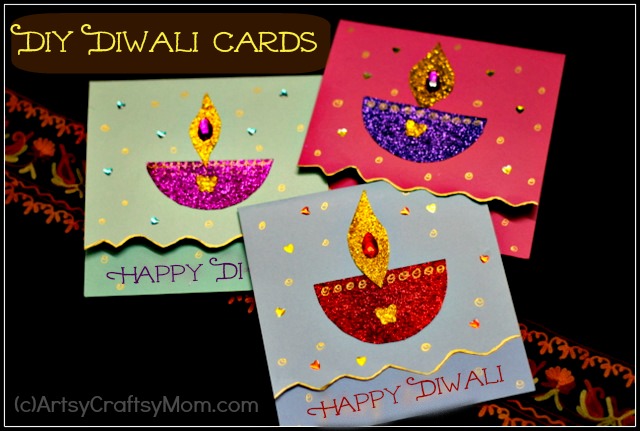
Subh Diwali!

Happy Diwali, everyone! The beautiful Festival of Lights is held this year November 13-17.

Diwali celebrates the victory of good over evil and light over darkness. It has major religious significance for Hindus, Sikhs and Jains, and is celebrated not only in India but by Indians living around the world. Want to learn more?

What Do You Mean?! I’ve Worked Abroad 20 Years and Score Low?!

Image from The Vegetarian Athlete

So many of you seemed to resonate with my blog post about intercultural fitness, Tweeting it, Scooping it and passing it around the social media networks, that I thought you might be interested in a short article I originally drafted back in 2005 that uses the metaphor of an athlete to explain intercultural competence.

Developmental Intercultural Competence and the Analogy of an Athlete

Milton Bennett’s Developmental Model of Intercultural Sensitivity (DMIS), first published in 1986, provides a well-regarded theory about the process people go through as they learn to make sense of the complexity of cross-cultural communication. In the late 1990s after much research, an assessment for measuring intercultural sensitivity based on the DMIS was developed. Version 3 of the Intercultural Development Inventory (IDI) is currently in use by qualified practitioners. Owners and users of the IDI have in turn used their results to revamp the DMIS into the Intercultural Development Continuum (IDC).

While such tools can be useful for measuring program effectiveness when used for pre- and post-testing, and can be hugely beneficial for individuals who want to improve their cross-cultural communication and collaboration, there are downsides. I’ve worked with career expatriates and global nomads, for example, who score quite low on the IDI. What this means is that the low-scorer may have a lot of experience, but has not yet engaged in systematic, structured sense-making of those decades of complex intercultural experience. I’ve also worked with quite a few individuals who value harmony as fitting in, and thus, on a scale that measures celebrating differences, they score comparatively low. Predictably, low scores can cause people to become focused on discrediting the instrument or rationalizing the assessment process, rather than on gaining benefit from what the results have to say.

To help learners focus on the guidance these tools can provide, I often use the analogy of an athlete. Just as athletes need multiple abilities to perform well, so do intercultural communicators. Both athletes and intercultural collaborators can use assessments to guide their performance improvement training.

Let’s say that the data on my athletic performance shows that I need increased flexibility. I dedicate several months to becoming more flexible, and then my coach tells me that I now need to shift my focus to building strength — of course while maintaining my flexibility. Months later, I may find that I need to refine my technique in order to make the most of my superior strength and flexibility. Or, I get injured, and I decide to add to my training a focus on my mental game: overcoming adversity, learning from mistakes, being fully present in the moment. Athletes thus focus on multiple abilities at different points throughout their careers in order to perform at their best.

In a similar way, the DMIS, IDI and IDC can be used to show us which issues we should focus on at a given point in time in order to maximally improve our intercultural performance. While developmental models and assessments are designed as measuring sticks or standards of comparison, their value for personal competence development is to highlight to us what competencies we should focus on building at each point in our careers in order to improve our overall performance.

Each of us has to balance the dynamic between comfort and stretch, challenge and support, growth and rest, in our own ways. Knowing what we are good at, as well as where we can improve, can help ensure we continue to develop. Using an assessment tool to gauge and target our intercultural development, in combination with a competence development tool such as Cultural Detective Online for ongoing, structured learning, is a powerful combination.

Empower Leadership to Embrace and Leverage Differences

Your seminar was a beautiful illustration of the effect of the quality of cultural response in an executive’s decision process.  The interactive example was instructive and memorable—not a person in the room hadn’t been in situations precisely like those we experienced in the practical exercise. Yet, we had in this case an opportunity to “unpack” the experience and follow its likely conclusion. You fulfilled every expectation that I had for the seminar—my only regret is that we didn’t have more time!
—Turner White, Executive Professor Helzberg School of Management

What processes and tools do your executives have at their fingertips to make those “game changing” decisions that affect important employee groups? Does culture play into their decision-making process? How do they adapt when working across cultures when we know that common sense is really culturally based?

In business today we almost all concede culture—at a minimum—has an increasing impact on real-world outcomes and ultimately the bottom-line. So developing the key skills necessary to make culturally informed decisions can mean the difference between profitability and losing loyalty of high potential employees.

Wouldn’t it be nice to learn a simple process that once learned can increase your leadership’s effectiveness in working across all cultural lines – from gender, national, ethnic, industry, functional role to even sexual orientation differences? A process so uniquely rich that, once internalized, it can be used for elevating a leader’s communication and decision-making effectiveness on a global scale?

It’s Cultural Detective. And for a special collaborative event we’ve teamed with KMA to offer you a taste of our Methodology and their web-based training focused on the LGBT culture. This facilitated online learning event led by industry expert, Rita Wuebbeler, teaches the core Cultural Detective Method and unveils the LGBT shared values which often motivate behavior—allowing you to focus on the differences that make a difference and promote inclusion and productivity.

Register for this virtual event to be held December 6th from 10am-11:30am Central USA Time, and bring this unique set of cross-cultural tools to your leadership today!

Respect for All Spiritual Traditions

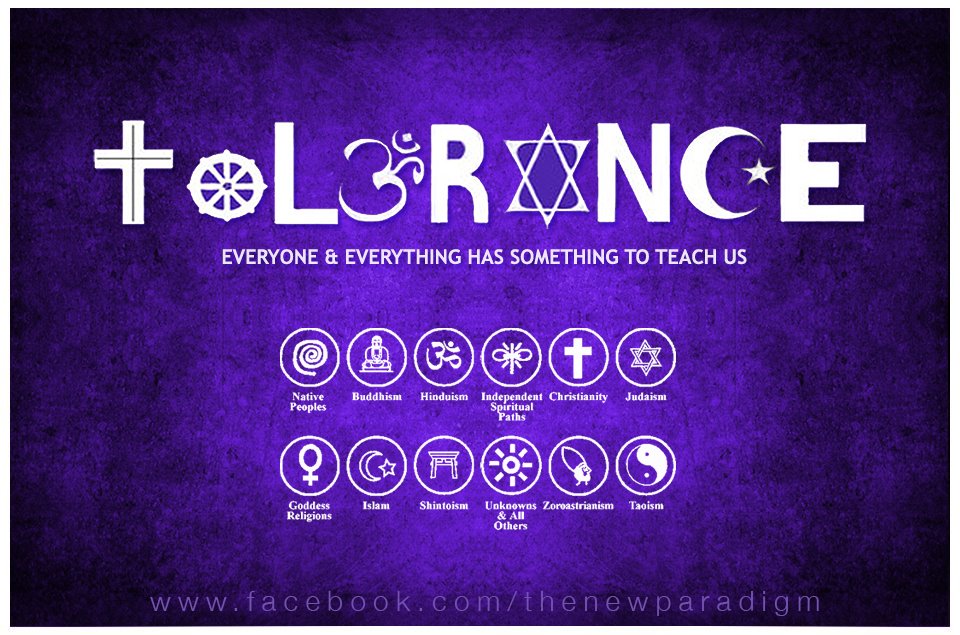
Our belief systems, particularly our spiritual beliefs and traditions, are increasingly important dimensions of culture. We must be able to bridge religious and spiritual differences if we are to live together in a collaborative, inclusive, respectful world. Yet this dimension is far too often overlooked and shortchanged in the intercultural literature.

Today, in this blog post, I offer up a few quotes that speak to me about this topic. It is my hope that taking a few moments to reflect might help each of us better do our part to promote inter-religious understanding.

We are fortunate that so many schools of divinity, congregations, spiritual communities and ecumenical groups use Cultural Detective to promote tolerance, understanding and respect. I’d welcome hearing from any of you about the efforts in which you’re engaged. Please, also, share with us quotes on this topic that speak to you.

“Impiety: Your irreverance toward my deity.”
—Ambrose Bierce

“When political conflict is religionized, it is absolutized.”
—Jonathan Saks

“Once you attempt legislation upon religious grounds, you open the way for every kind of intolerance and religious persecution.”
—William Butler Yeats

“So many Gods, so many creeds; so many paths that wind and wind; when just the art of being kind is all this sad world needs.”
—Ella Wheeler Wilcox

The joke (instead of a proverb) in Cultural Detective Jewish Culture that illustrates the value of “group solidarity” (CLASSIC cross-cultural miscommunication; enjoy!):

Several centuries ago, the Pope decreed that all Jews had to convert to Catholicism or leave Italy. There was a huge outcry from the Jewish community, so the Pope offered a deal. He’d have a religious debate with the leader of the Jewish community. If the Jews won, they could stay in Italy; if the Pope won, they’d have to convert or leave.

The Jewish people met and picked an aged and wise rabbi to represent them in the debate. However, as the Rabbi spoke no Italian, and the Pope spoke no Yiddish, they agreed that it would be a ‘silent’ debate.

On the chosen day the Pope and Rabbi sat opposite each other.

The Pope raised his hand and showed three fingers.
The Rabbi looked back and raised one finger.

Next, the Pope waved his finger around his head.
The Rabbi pointed to the ground where he sat.

The Pope brought out a communion wafer and a chalice of wine.
The Rabbi pulled out an apple.

With that, the Pope stood up and declared himself beaten, saying that the Rabbi was too clever. The Jews could stay in Italy.

Later the cardinals met with the Pope and asked him what had happened. The Pope said, ‘First I held up three fingers to represent the Trinity. He responded by holding up a single finger to remind me there is still only One God common to both our beliefs. Then I waved my finger around my head to show him that God was all around us. He responded by pointing to the ground to show that God was also right here with us. I pulled out the wine and wafer to show that God absolves us of all our sins. He pulled out an apple to remind me of the original sin. He bested me at every move, and I could not continue.’

Meanwhile, the Jewish community gathered to ask the Rabbi how he’d won. ‘I haven’t a clue,’ the Rabbi said. ‘First, he told me that we had three days to get out of Italy, so I gave him the finger. Then he told me that the whole country would be cleared of Jews and I told him that we were staying right here.’
‘And then what?’ asked a woman.
‘Who knows?’ said the Rabbi. ‘He took out his lunch so I took out mine.”

Facilitated Online Learning Sessions for Cross-Cultural Skills


How can you quickly develop the skills necessary to lead your global team, manage your global project or prepare for expansion to emerging markets, without leaving your desk?

The Cultural Detective team presents a two-part series of Facilitated Online Learning Sessions that will provide you with the keys to a proven, industry-changing and industry-leading toolset for developing your individual and organizational global competence and to ultimately succeed where “culture conflicts” caused failed ventures.

  • Learn how to build trust in your global relationships.
  • Develop highly productive global teams.
  • Complete projects on time and under budget.
  • Determine how to best enter and succeed in your targeted international markets.
  • Know how to deliver superior client service, globally.
  • Get the most from your international assignees by equipping them with the skills necessary to excel in any culture.

Sessions will be held Wednesday and Friday, February 27 and March 1, 2013! Click here for more information or to reserve your spot. Seats are limited.


Infographics on World Cultures and Immigration Trends

Our world is swimming in information, so much so that we often drown in it and find it difficult to make sense of. That’s why infographics play such a valuable role. Recently I’ve come across two different sets that I thought Cultural Detectives might be interested in seeing and using (or making your own for your own purposes).

Borrowing heavily from a concept by Danish designer Peter Orntoft, the Millward Brown Agency designed the two infographics below that put data in context. Interesting, no? More memorable than otherwise?

Photo by Millward Brown

Photo by Millward Brown

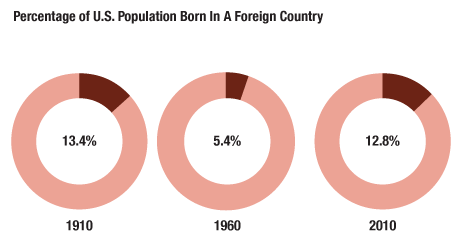
Secondly, Lam Thuy Vo of USA’s National Public Radio (NPR) created two graphics which clearly make the point that immigrants comprise about the same percentage of the US population as they did 100 years ago, though their geographic origins have changed.

Graphic by Lam Thuy Vo of USA’s National Public Radio (NPR)

Graphic by Lam Thuy Vo of USA’s National Public Radio (NPR)

Do you use infographics in your work? Please share! Have you created any? Strikes me that interculturalists could sure use this terrific approach to creating and communicating meaning.