Join Us for Some Awesome Professional Development!


DSC_0223

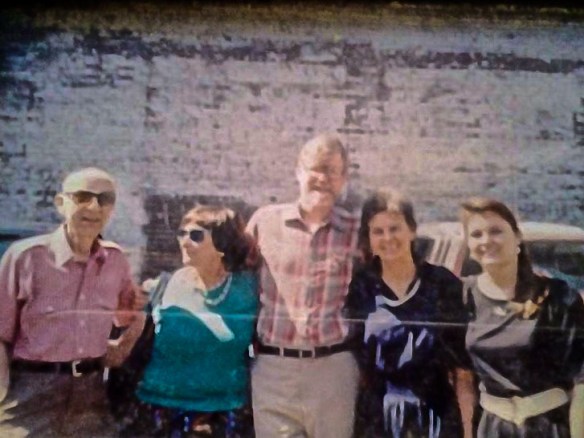
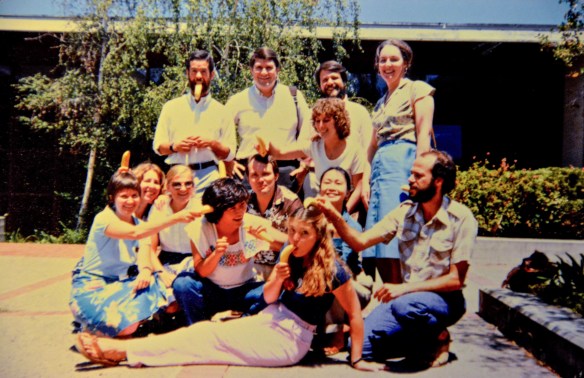
SIIC interns of the “Banana Crew of ’82” including Cultural Detectives Dianne Hofner Saphiere front and center, and Kathryn Stillings, half-standing with the curly hair. Also in the photo are the founders of the Stanford Institute for Intercultural Communication (SIIC): Cliff Clarke (back row, second from left) and King Ming Young (behind Dianne’s head), along with Jack May (back row, far left), administrative assistant.

My initial involvement with SIIC—then the Stanford Institute for Intercultural Communication—was in 1982, as an intern for Michael Paige. It is where I first met Kathryn Stillings, also an intern, who remains a dear friend and plays a crucial role with Cultural Detective. Several years later, the Institute relocated from Stanford University to the Intercultural Communication Institute, Portland, Oregon, keeping its “SIIC” acronym and changing its name to the Summer Institute for Intercultural Communication.

The Institute has been an annual professional touchstone for me in the 34 years since. In 2016 it celebrates its 40th anniversary! Teaching over the years beside such pillars of intercultural communication as Dean Barnlund, Jack Condon, LaRay Barna, and Stella Ting-Toomey, among so many other incredibly talented, passionate souls, and having the privilege to call many of them friends, has been one of my professional life’s most treasured blessings.

BarnlundRenwickDianne

Some SIIC faculty circa 1990: Dean Barnlund, Nessa Lowenthal, George Renwick, Sheila Ramsey, Dianne Hofner Saphiere

This year, I am privileged to repeat a course I first conducted last year with Daniel Cantor Yalowitz, which was a hoot to deliver and extremely well received, called Gaining Gaming Competence: The Meaning is in the Debriefing (Session II A, Workshop 12). It will be a five-day course held July 18-22.

I am also thrilled about a brand-new course that I will be facilitating with Fernando Parrado, entitled Latin America and Its Place in World Life (Session I, Workshop 6), scroll down on the page). Latin America has so very much to offer today’s world, and is so very misunderstood; I cannot wait to work with participants to help develop our understanding of the region and the ways we teach about it. The topic is both timely and crucial.

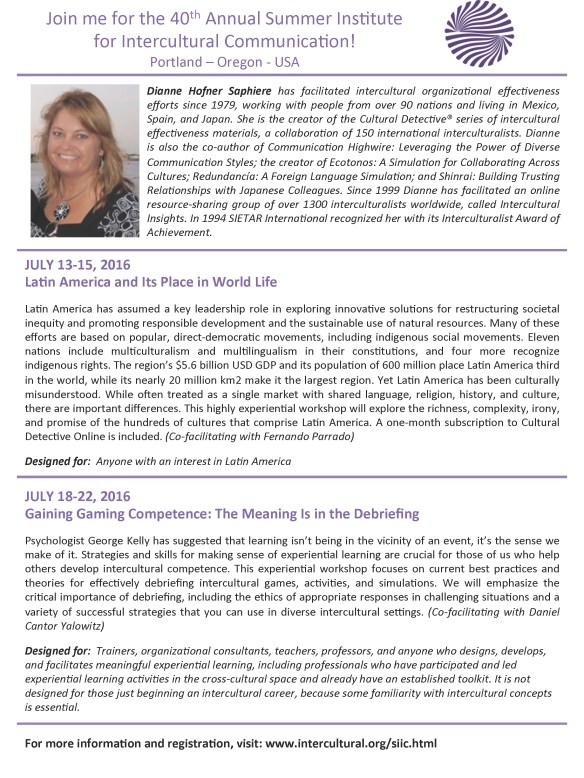
Dianne_SIIC_FlyerI very much hope you will join me for either or both of these workshops; click here for financial information and a link to the registration page, or download a brochure for printing or sharing: SIIC_Flyer_Dianne. Here is a link to the full SIIC schedule.

Cultural Detective is also working in conjunction with the Intercultural Communication Institute to provide a 2-day facilitator certification workshop. This workshop receives kudos from even the most experienced intercultural trainers and educators. It will be conducted by Tatyana Fertelmeyster, July 23-24, in between SIIC Sessions II and III. We look forward to having you or your group join us! Click here for registration.

Bridging Cultures Online Learning Event: Register Now!

Bridging Cultures2
How do you translate knowledge of cultural differences into practice? What should you actually do differently to communicate better, and how do you ensure that what you are doing is effective?

  • Identify “bridge builders” and “bridge blockers” to your success
  • Learn techniques for in-the-moment bridging of differences to ensure that conversations spiral upwards instead of downwards
  • Develop strategies to both prepare for and repair cross-cultural relationships
  • Develop high impact, creative resolutions that take into consideration interpersonal, intercultural, and situational factors

During the webinar we will use Cultural Detective Bridging Cultures. This package is a little different than many in our series: rather than focusing on a specific culture, this package includes exercises and processes to help you navigate the differences you face. It is all about translating cultural savvy into action.

Cultural Detective Bridging Cultures cover

As you probably know, the Cultural Detective Series develops three core intercultural capacities: Subjective Culture, Cultural Literacy, and Cultural Bridging. Every packet in our series develops all three of these capacities; culture-specific packages have a particular focus on Cultural Literacy, while CD Self Discovery and CD Bridging Cultures focus more in-depth on the other two target capacities.

The Cultural Detective Bridging Cultures package is for anyone wanting to move from awareness to action, and it makes a great complement to any Cultural Detective culture-specific package. Join the webinar and learn more about the package and how to use its unique activities and exercises to enhance your own skills and/or your training program.

WHO

Facilitator for this event will be Kate Berardo, co-author of Cultural Detective® Self Discovery and Cultural Detective® Bridging Cultures. She provides consulting, training, and coaching to help individuals be effective global leaders and organizations to navigate complex cultural challenges. Kate has developed and delivered learning events in more than eighteen countries, with individuals from over fifty nations, using both online and traditional facilitation tools. Her work has been featured in media worldwide, most recently on CNN’s Business Traveller and the Dubai daily Gulf News.

Kate holds a distinguished Master’s in Intercultural Communication from the University of Bedfordshire, UK, and is a summa cum laude graduate of Northwestern University in the USA. She is certified in the Myers-Briggs Type Indicator®. With George Simons and Simma Lieberman, Kate authored Putting Diversity to Work, a training guide for managers to leverage diversity in the workplace. Raised in California, she has also lived in Japan, Spain, France, England, and Denmark. Her work and travel to over forty countries have given her a deep understanding of the intricacies of bridging boundaries and barriers.

WHEN
Monday, June 13, 2016 from 10:00 AM to 11:30 AM (MDT)
Register now to secure your place! 

Announcing the Fifth Edition of Ecotonos: Build Cross-Cultural Teams!

IMG_1735

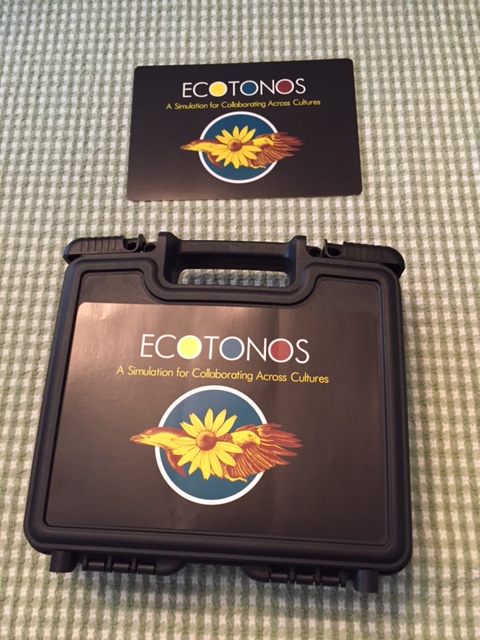
Ecotonos: A Simulation for Collaborating Across Cultures is a classic in the intercultural field. It simulates teaming across cultural differences, and thus helps learners practice and refine cross-cultural collaboration skills. It can be played multiple times for developmental learning, since there is no “trick” to the game. Play and debrief require a minimum of 100 minutes, but is so rich that quite a few professors refer back to and pull learning from the Ecotonos experience throughout the entire semester of a course.

First published in 1992, Ecotonos is now in its fifth edition!

I want to thank—immensely—Kathryn Stillings, who headed up the most recent reprinting: from finding sources for the plastic carrying case and the metal culture buttons, to proofreading and managing the printing, and hardest of all, assembling the finished product and getting it shipped off to our fulfillment center. And she claims to have had fun doing it!

The photos below prove that when you purchase Ecotonos you are getting hand-assembled, artisanal quality goods! 😉 Click on any image to view it larger or see a slideshow. Of course, Kathryn took the pictures, so you sadly don’t see her in any of these.

If you don’t use Ecotonos in your classes or trainings, you are missing out on an invaluable tool for developing cross-cultural teaming competence. The game can be reused for years and years; order yours today!

To Slurp or Not to Slurp

PERCEPTION AND DECEPTION COVER FACE 3One of the greatest benefits of working across cultures, aside from the terrific people, is the fabulous food we are privileged to enjoy. I’m sure most of you agree, as some of our food posts have proved to be popular entries on this blog:

  1. French Food Culture Selling Men’s Underwear
  2. Food Speaks in Many Tongues
  3. The Squid Has Been Fried: Chinese Food Culture
  4. Ukiuki, Pichipichi, Pinpin: Japanese Food Onomatopeia
  5. Bicycling in the Yogurt: the French Food Fixation

In the 90-second video below, Joe Lurie, author of Perception and Deception: A Mind Opening Journey Across Cultures, tells the story of a Fulbright Scholar who spoke five languages, yet refused to sit next to Japanese colleagues during meals.

Differences in customs and etiquette can damage relationships; Perception and Deception provides stories from nearly 100 cultures. Be sure to order your copy today.

Once you’ve read it, remember that it is the underlying values we hold and the assumptions we make that are the differences that make a difference to productivity and satisfaction. Cultural Detective helps you learn on that deeper level, building understanding as well as strategies and skills for harnessing differences as assets. Get  your subscription today!

How Language Can Deceive

PERCEPTION AND DECEPTION COVER FACE 3“We’re all coming to be like each other. While there’s some truth to that, it’s also truth that in coming together so rapidly—with technology, migration across borders—we are unprepared for the contact between people and cultures we know nothing about.”

Joe Lurie recently spoke to a sold-out crowd at the Commonwealth Club of California. In this two-minute excerpt from that presentation, Joe tells the sad story of a woman looking for a job who isn’t hired, at least in part, because of her name.

We’ve published about the importance of names previously on this blog. While Joe and Fadwa’s story is anecdotal, it echoes the experience of thousands of others worldwide. You may recall the widely reported story of José Zamora, who was hired only after he changed the name on his resumé to “Joe.” According to Recruiter magazine:

Job applicants with white names needed to send about 10 resumes to get one callback; those with African-American names needed to send around 15 resumes to get one callback. This would suggest either employer prejudice or employer perception that race signals lower productivity.

The book, Perception and Deception: A Mind Opening Journey Across Cultures, tells hundreds of stories like this one, in an effort to help the reader develop awareness and understanding, so they can then use Cultural Detective to build their skills and competence. If you haven’t yet read the book, be sure to order it now. Better yet, order a copy for Aunt Margret or your Cousin Vinny, too.

University of Valencia Master’s in Cross-cultural Management

logo-uvSo many people in Europe ask us about Cultural Detective Facilitator Certifications and other professional development opportunities. We of course always mention the Intercultural Development Research Institute in Milan, of which I’m a proud faculty member.

Soon there will be a terrific new opportunity: a Master’s in Cross-cultural Management, offered by the University of Valencia in Spain. The program is extensive and very practical, including cross-cultural management theory as well as cross-cultural marketing, project management, negotiation, conflict resolution, global teams, international assignments, and intercultural training and coaching. The program culminates in an internship or final project.

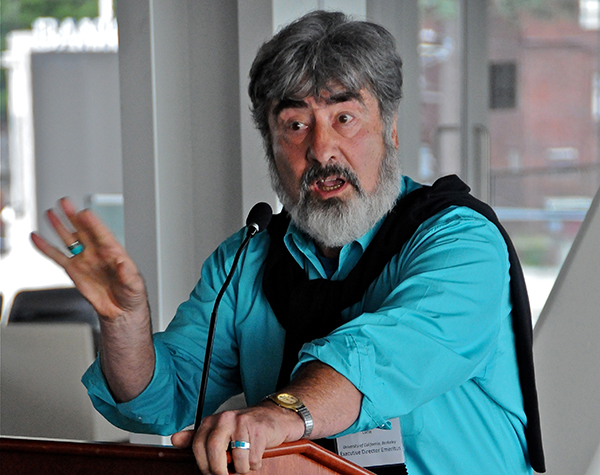
The faculty teaching this program are incredible, and I am proud to be among them. It is an incredibly talented and diverse group of professionals from around the world.

You can pre-register now, or download a brochure to pass on to your students or colleagues.

Great Press Response to CD’s New Book!

JoeLurie600Cultural Detective is the proud publisher of a wonderful new book chock-full of stories of intercultural interaction from around the world—a book that contains loads of proverbs and insights to current events as well: Perception and Deception: A Mind-Opening Journey Across Cultures, authored by Joe Lurie.

Response from the press to the new book has been swift and highly positive.

  1. The first article came from the National Peace Corps Association. Joe has a fellowship endowed in his honor, one designed to enable returned Peace Corps volunteers to obtain their PhDs. Isn’t that terrific? So they used our book to encourage people to apply and further their education! Read more about Joe, the book and the fellowship in this terrific article.
  2. University of California Berkeley profiled Perception and Deception in a public affairs news release, Former I-House director explores cross-cultural encounters in new book.
  3. Perception and Deception was also showcased recently in Psychology Today, in an article entitled, Do You Perceive Things the Way They Really Are?

Joe has been doing quite a few readings, and one that is open to the public is coming up on Tuesday, December 8, at the Commonwealth Club in San Francisco. He is an incredible storyteller, and it’s sure to be a lively audience, so don’t miss the opportunity!

Perception and Deception: A Mind-Opening Journey Across Cultures is available in print or ebook versions, via your local bookseller or amazon. Be sure to get your copy today! The book makes a wonderful gift.

What Will They Think of Me?

ImprovMannheim

The International Improv Conference in Mannheim Germany June 2015

We are pleased to share with you today a guest blog post by Patricia Comolet; bio follows the post.

What is one of the main challenges of going into a new cultural situation? Of course—dealing with the unknown—and, often, the self-doubt that it can trigger:

OMG do I need to take off my shoes here? But I have a hole in my sock! What will they think of me?

In other situations, it could be defensive self-assertion that might be triggered:

It is clear that this situation requires someone here to take charge. As the new COO it is my job to step up to that challenge. I need to show that I know what I’m doing or what will they think of me?

Underneath the stress of adapting to an unknown situation or culture can be the insidious fear of judgment.

“Improv” is the art of improvisational theatre, and I find that building an “Improv mindset” is a unique way to prepare for a new office, new city, new country, and /or new culture. It offers a different and vibrant way to deal with the underlying question: What will they think of me?

Why is this so? In the world of Improv, the notion of judgment, with time and practice, fades. Instead, we learn a serendipitous mindset of responding, to the best of our ability, to whatever is presented. I believe that I can manage whatever shows up if I adapt some essential guidelines gained through Improv.

Through Improv exercises we can learn to give ourselves this initial moment to pause and open up to where we are and with whom we are interacting.

Want to try it? Get a partner who is open to learning.

  • Begin by simply looking at your partner to assess his/her current state. What’s going on for him/her? Take the time to assess the environment. What is happening around you? (Developing observational skills and emotional intelligence are two very fundamental intercultural competences, pivotal for any Cultural Detective.)
  • Then comes the basic improv approach: Yes, and. You respond to what has been proposed with a “yes, and.” However, this is not your run-of-the-mill “yes, I hear your thoughts, and here is my idea.” Rather, this is a most distinctive and committed “Yes, and I could add this to your thoughts.” Improv involves an upward spiraling “yes, and” with each participant focused on what they can add to the original proposition. You’ll find the “yes and” in the Cultural Detective list of A Dozen Best Practices for Enhancing Intercultural Excellence.

The magic happens in the process. Allowing ourselves to let go of our own approach or perspective long enough to hear and work with someone else’s provides the time and space necessary to really connect with others. The process builds bridges across divides.

It requires focused intention to step into the other person’s idea/culture/mindset, but once there, like Alice through the Looking Glass, there is a sort of wonder at what is possible. I found, in my improv training, a simmering excitement as I was caught up in the possibilities I could come up with—once I acknowledged the other’s vision of things.

By working with this technique we build acceptance and openness to new ideas. (More intercultural competences being honed here, right?)

Facts, feelings, and intentions are the raw material we have to work with. In the theatre, as in the world of cultural differences, it is the interpretations we assign to what we see and feel that trigger emotions within us. It is those emotions that influence our interpretations. By raising awareness of the power of the interpretations we unconsciously apply to unfamiliar situations, we can open a whole new way to experience what is going on around us. Improv provides a framework for considering other possible interpretations.

In the theatre, as in the world of cultural differences, it is the interpretations we assign to what we see and feel that trigger emotions within us.

Another valuable idea coming from the world of Improv is the simple notion of “make the other one look good.” No matter what is tossed at us during an Improv session, the spirit is to take what is and build on it positively, with the intention of making the other look good. Again, Cultural Detective’s “positive intent” parallels the philosophy of Improv.

Imagine what strength we would gain if we would approach new situations with the idea that it is up to us to make the other shine! What impact could such a positive sense of purpose have on us? How could it help us to adapt more enthusiastically to a new situation?

Improvisation has the benefit of being experiential learning that can help us truly assimilate the knowledge of a culture or people. This fits nicely into intercultural coaching, as cultural differences are easier to perceive when actually experienced. By playing with scenarios in a relaxed atmosphere, we can work through the specific challenges our clients are dealing with to help them experience a shift in their understanding—a shift to help fade the fear of “What will they think of me?

Improv techniques and Cultural Detective integrate easily together, with CD providing a framework in which to use the skills acquired through Improv to better communicate across cultures. Learning to let go of the idea that our approach is the only approach is part of what can be derived from utilizing the CD process. Cultural Detective Value Lenses help us to recognize that our interpretation of events is but one of many potential interpretations. And, the “yes, and” approach may help each person value and build on the diversity found within the interaction. If you haven’t yet, be sure to subscribe today.

PatriciaComoletOur guest author, Patricia Comolet, has a background in surgical nursing, and has worked and lived in seven countries on four continents, including work in Africa and India, honing her ability to get real results in difficult conditions. Currently, she focuses on coaching global and virtual team dynamics, integrating her skills developed during challenging work experiences with her coaching training. Patricia helps global teams to clarify their team dynamics and establish concrete objectives by promoting clear communication, creative problem solving, collective intelligence, and strong team identity. More information about her work can be found on her website: camcomcoaching.com

The Pulitzer’s of Diversity

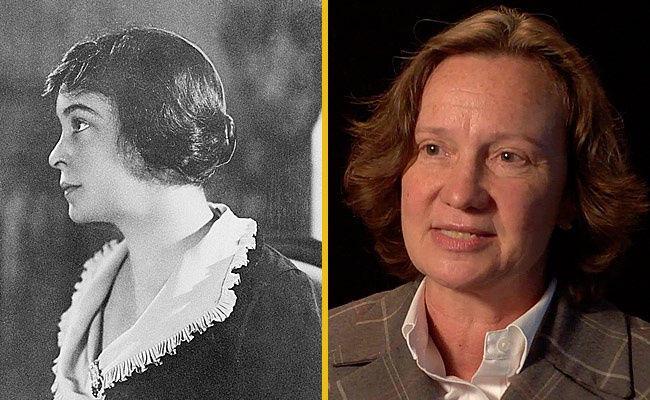
Edith Anisfield Wolf, Photo from the Cleveland Foundation

Edith Anisfield Wolf, photo from the Cleveland Foundation

Do you think you are well-read on world cultures? Do you occasionally wonder what one person can do to promote justice in this world of ours? Are you someone who thinks that it’s primarily people of color who recognize the vital importance of diversity on our planet? If so, think again and most definitely read on.

Edith Anisfield Wolf, born way back in 1889, was a poet, businesswoman and philanthropist from Cleveland who had a lifelong passion for social justice. The daughter of immigrants, Edith spoke four languages (English, French, German and Spanish) and used literature as a means to explore racial prejudice and celebrate human diversity.

In 1935 she created the Anisfield-Wolf Book Awards, to honor books that explore these very issues. That makes 2015 the Award’s 80th anniversary! Congratulations and thank you, Edith! Note how visionary that makes her—establishing this important Award 20 years before the U.S. Supreme Court’s landmark Brown v. Board of Education decision! Edith died in 1963, but her legacy lives on.

“The Anisfield-Wolf Book Awards recognize books that have made important contributions to our understanding of racism and our appreciation of the rich diversity of human cultures…Today it remains the only American book prize focusing on works that address racism and diversity. Past winners have presented the extraordinary art and culture of peoples around the world, explored human-rights violations, exposed the effects of racism on children, reflected on growing up biracial, and illuminated the dignity of people as they search for justice.”
—Anisfield-Wolf website

Over the past 80 years the Award has highlighted nearly 200 significant books, most of which I have not read. So I need to get going! For those of us who may be intimidated by such a long list, they also have a smaller list of 24 “Lifetime Achievement” books, or you can sort winners by year or according to the categories of fiction, non-fiction or poetry.

Again from the Award’s website: “The Cleveland Foundation, the world’s first community foundation, has administered the Anisfield-Wolf prize since 1963. Before then, the Saturday Review sponsored the awards. From the early 1960s until 1996, internationally renowned anthropologist and author Ashley Montagu chaired the awards jury. That panel of globally prominent scholars and writers has since been overseen by Henry Louis Gates Jr., the acclaimed scholar, lecturer, social critic, writer, and editor.”

Have you heard of this Award? Despite its prestigious history and huge contribution, and the fact that the Anisfield-Wolf’s cash prizes equal the Pulitzer’s, many people haven’t heard of it. Perhaps that’s due to how ahead of its time the Award was, though Karen Long, the Award’s manager, has another theory:

“[The] Anisfield-Wolf remains a relatively unknown honor. Awards manager Karen Long suspects she knows why. ‘Things that address race are considered, sometimes in the larger culture, as homework or broccoli or good for you.'” —USA’s National Public Radio

Cultural Detectives, I am thrilled to be on the journey to developing intercultural competence, respect, understanding, collaboration and justice with you. And, I’m feeling like we need to work together to make sure more people know about this incredible resource! Let’s start by watching the Awards via live feed this Thursday, September 10, at 6:00 pm Cleveland time (GMT-4), and by circulating this post widely to your networks.

The Blame Game

BlameVAcccountabilityBlame is one of the most powerful tools in the repertoire of a Cultural Defective. Do you want to diminish trust in a relationship? Cause irritation? Ensure that others do not want to help you succeed? Ruin a perfect opportunity for cross-cultural collaboration? Then blame is a good strategy.

In contrast, Cultural Detective advises you to “refuse to take offense”—a much smarter operating norm for Cultural Effectives. Has someone failed to inform you in a timely manner? Rather than blaming them for rudeness or unprofessionalism, it is more constructive to learn the intentions behind their (lack of) communication, explain your preferences, and together create a shared way forward—a “third culture.”

“Blame is the discharging of discomfort and pain. It has an inverse relationship with accountability.”
—Brené Brown

When others have a different cultural norm, mindset, or “common sense,” it is most productive and sanity-preserving to acknowledge and understand these differing “cultural senses”! Actively taking accountability for co-creating shared norms provides a way to work together more effectively. It also facilitates trust, while embedding as “normal” the processes and a mindsets to help solve future problems.

We are fans of Brené Brown, as many of you may be, too. The video below captures this basic concept of blame vs. accountability in her inimitably humorous and insightful style, albeit not in a cross-cultural context.

Are you looking to build intercultural competence, and learn a reliable process to transform blame into accountability? A subscription to Cultural Detective Online for you, your family, or team will help you accomplish just that!