For those of you who just love our Cultural Detective Deaf Culture co-author Anna Mindess‘ food blog, here’s another delightful post….
What was the only economy in Europe that did not suffer a contraction in the global debt crisis of 2008-2009?
Reply
What was the only economy in Europe that did not suffer a contraction in the global debt crisis of 2008-2009?
Think before you read! Do you know the answer???
Poland! And you have a terrific resource at your fingertips for doing business in Poland and working with Poles: Cultural Detective Poland.
Here are some reasons you want to keep your eyes on Poland, as explained by CNN:
“Ever since it broke from the Soviet Union back in 1989, Poland has been racing to make up for last time, as a member in good standing of Western Europe. Today Warsaw is the far side of the moon from the decadence and growing indebtedness of Moscow. Poland is staid, predictable, with no wild parties even on weekdays or outrageous displays of new wealth. Since joining the European Union in 2004, Poland has been working hard to meet the additional requirements of joining the Eurozone, which sets very specific targets for government deficits, debt, and other keys to economic stability like inflation and long-term interest rates. While many states that already belong to the Eurozone (from Greece to Spain) failed to achieve these targets, Poland largely succeeded, which is why it was in such good position to weather the crisis of 2008.
Today things look so good that Poland has the most vibrant labor market in Europe, creating jobs at a pace so rapid that many immigrant Poles are returning from the United Kingdom and other hard-hit nations to find work at home. Poland’s success was quite unusual – the only other EU economy in a similar position is the Czech Republic – but it does show that Europe can be a model for growth, at least for those who follow the rules.”
Want to Feel Ukiuki, Pichipichi and Pinpin? Japanese Food Onomatopoeia
 I have been quite ujiuji (melancholy) in recent weeks, feeling uzu-uzu (a burning desire) to hear and speak Japanese. Living in a small city in Mexico, zenzen (almost never) can(‘t) I hear Japanese, and my heart gets shoboshobo (sad).
Joe’s recent blog post on the French food fixation only fueled more tsukuzuku (heartfelt thinking) on my part. As you may have already figured out from my wazawaza (purposeful) language, I’ve been thinking about Japanese sound symbolism, particularly in the context of food.
Whether you eat gatsugatsu (gobble or devour) or potsupotsu (little by little), if you want to talk about food in Japanese you will be using words that mimetically represent feelings and senses. As the originators of the concept of umami (pleasant savory taste — one of the five basic tastes), Japanese tend to mokumoku (munch) the way they listen: with all their senses. Taste, texture, and temperature, sound, smell and sensation… all are important elements that combine to keep people ukiuki (cheerful), pichipichi (young and vigorous) and pinpin (in good health).
While many people think of Japanese food as the tastes and textures of sashimi or sushi, a typical meal may also contain iroriro–na (a variety of) food including boiled, broiled, fried or pickled dishes, a soup and hokahoka (warm) steamed white rice. Is your stomach starting to guuguu (growl hungrily)?
 For the fresh or raw component of your meal, would you like something shakishaki — crisp as in veggies or fruits, e.g., lettuce washed in cold water? Or would you prefer something more korikori — crunchy and crisp, as in fresh raw abalone? Be sure to rinse the abalone well, so it doesn’t taste jarijari (gritty) or zarazara (coarse). Maybe you want something sharishari — tangy and juicy, like an Asian nashi pear or sherbet? Or is your tongue like mine, and craves the piripiri (sting) of wasabi or fugu (blowfish)? Any of these dishes will require chokichoki (cutting with a knife) preparation.
 A boiled dish in our meal might include pumpkin nimono, stewed hokuhoku (steamy and dense but not soggy), or something more furufuru (soft and jiggly) like boiled eggs. Maybe we should make some chikuwa (fish paste roll) for oden till it’s buyobuyo (swollen and soft) and fuwafuwa (fluffy)? Oh that sounds good! There are just so many possibilities! So many tastes and textures!
 There are madamada (still) ippai-ippai (lots) more onomatopoeia to consider. What about a main dish? Shall we eat something sakusaku (freshly cooked crisp and light) like tempura shrimp? I could fry it till the shrimp inside are puripuri (plump with a nice resistance) and the breading is poripori (quietly crunchy). Perhaps you are really craving the shikoshiko (chewy, elastic firmness) of some udon noodles? Never over-boil the pasta so it becomes betobeto (sticky and gummy); rather, you’ll probably be wakuwaku (trembling with excitement) to eat your tsurutsuru (shiny and slurpy) noodles and gabugabu (drink heartily) a beer!
Instead of your normal bowl of rice you might enjoy something a bit more mochimochi (soft, sticky and chewy) or netoneto (glutinous and gummy) like sticky rice. Maybe rice that’s a bit more pasapasa (dry), like jasmine rice, sounds appetizing? The kunkun (smell) is so nice! Tabitabi (once in a while), though, I like the parapara (moist but loose) of fried rice.
 Even though by now you are panpan (full), pukupuku (swollen), and maybe even kokkurikokkuri (nodding off), a karikari (hard and crispy) biscotti, a fukafuka (soft and fluffy) cream puff, or even some purupuru (wiggly, jiggly) kanten (gelatin) for dessert might refresh your soul. Maybe just a handful of something punyupunyu, like some gummis?
After such a big meal your throat may feel karakara (thirsty). I’d definitely recommend a chibichibi (sip) of a kachikachi (ice cold) shuwashuwa (sparkling) beverage over a betabeta (sticky) dessert wine. It can help settle any mukamuka (queasiness) you might have.
 What if you’re not really that hungry, and you just want to mushamusha (munch)? You might want the paripari (thin and crispy) of nori (toasted seaweed) or chips. Sometimes, though, we crave a louder pachipachi (crispy snapping sound), like the baribari (loud crunchiness) of sembei (rice crackers) or the kachikachi (crisp firmness) of arare (another kind of rice cracker).
For those of you interested in this subject, I found a really cool study conducted by a cross-disciplinary group of students (information science, engineering, medicine) from the University of Tokyo. They “harvested” online food reviews in Japanese to find the most common food-related onomatopoeia. How cool is that — a terrific application of science to language and culture studies! Below is one of the tables from their report, detailing the most commonly occurring onomatopoeia for food. 
There are several categories of onomatopoeia in Japanese. They are:
- Giongo (擬音語): These are the words that mimic the sounds of life around us, such as the sound of sprinkling vs. heavy rain, a door creaking or glasses clinking. Most of the food onomatapoeia above are giongo.
- Giseigo (擬声語): Sounds made by people or animals, such as a cat’s meow or a dog’s woof.
- Gitaigo (擬態語): Words that describe actions, such as smiling or grumbling, or psychological states, such as cheerful or irritated. Sometimes these latter are also called gijogo. Technically these are not onomatopoeia, since they don’t mimic sounds; they are mimetic words that mimic actions or emotions. However, since we don’t use these types of words often in English, and they are very important to speaking and understanding Japanese, I include them here.
I also found several online dictionaries of Japanese onomatopoeia. The first is Giongo Dictionary, where you can sign up for a daily email to keep learning. A second, if you read Japanese, is Onomatopedia. The third is a cool little resource with sounds you can listen to. Finally, though it only works sporadically, is Nihongo Resources, where you can search in English or Japanese. I hope you’ll enjoy them.
Japanese speakers: Please share some more of your favorite 擬音語 (giongo) and insights with us! There are of course regional (and personal!) variations of many of these!
Speakers of other languages: We’ll be happy to publish it if you send us your post about unique features in your language. Thanks!
There is Nothing New in Egypt
 Egyptian mobile company Mobinil has found an extremely cheap and effective way to advertise itself in Cairo Airport. Shiny billboards welcome foreign tourists and journalists with provocative quotes from USA President Obama — “We must educate our children to become like young Egyptian people,” and former Italian Prime Minister Berlusconi — “There is nothing new in Egypt. Egyptians are making history as usual.”
On the eve of the new government here, the Obama quote echoes one of my favorite sayings: “When people fear authority, we get dictators. When those in authority fear the people, we get democracy.” Although the young Egyptian people that Obama honored are those who started the revolution and ended up empty handed, it is now clear that the new President — be it Shafiq, the ex-regime candidate, or Morsi, the Muslim Brotherhood candidate — must take its people into account. In short, the people don’t want another Mubarak.
For Berlusconi, he (for once, thank God) has a point. Being one of the three oldest civilizations in the world and still standing after 5000 years, making history seems to be the 9 to 5 job of every single Egyptian. Together with the recent court ruling to dissolve the parliament, Egypt is more than ever at a crossroads and is wide open for surprises.
—
Thán phục hết nước công ty Mobinil của Ai Cập với chiêu quảng cáo vửa rẻ vừa ngon ở sân bay Cairo. Khắp tường trên kính dưới lấp lánh hai câu nói của Tổng Thống Mỹ Obama “Chúng ta phải giáo dục con em mình để chúng giống như những người trẻ tuổi Ai Cập” và của cựu Thủ Tướng Ý: “Có cái gì mới lạ ở Ai Cập đâu. Người Ai Cập chỉ vẫn đang bận bịu với việc tạo dựng lịch sử như chuyện thường ngày ở huyện thôi mà”.
Cái ý của Obama khiến tôi nhớ tới một câu nói tôi từng rất thích (bây giờ thì nhìn với vẻ soi mói hơn là thích): “Chế độ độc tài là khi người dân sợ chính quyền. Chế độ dân chủ là khi chính quyền sợ người dân”. Mặc dù những người trẻ mà Obama vinh danh khởi đầu cách mạng rồi kết thúc trắng tay, có một điều chắc chắn rằng chính quyền mới dù là thân chế độ cũ Shafiq hay Muslim Brotherhood – tổ chức đã cướp diễn đàn của Mùa xuân Ả rập, đều sẽ phải dè chừng người dân hơn.
Về câu nói của Berlusconi, ơn Chúa là ông ta dẫu sao cũng được một lần phun ra vài từ có ý nghĩa (nhận xét có phần hằn học vì bản thân không ưa Berlusconi J). Là một trong 3 nền văn minh lâu đời nhất thế giới, hơn 5000 năm tuổi và vẫn đứng vững vàng, người Ai Cập quả là đáng nể phục. Trước thềm một chính phủ mới, lịch sử Ai Cập lại đứng giữa ngã ba đường, tiếp tục trò chơi ú òa cho thế giới thót tim với vô số điều bất ngờ dấu trong tay áo.
Link
 Interesting article in Diversity Executive magazine about product naming problems in the global market, some good examples, and a link to an article on the value of intercultural competence.
Kudos to all our interpretation and translation colleagues!
What are you favorite “Cultural DeFective” examples? And your strategies for preventing them?
Sample Half Day Global Competitiveness Program Design
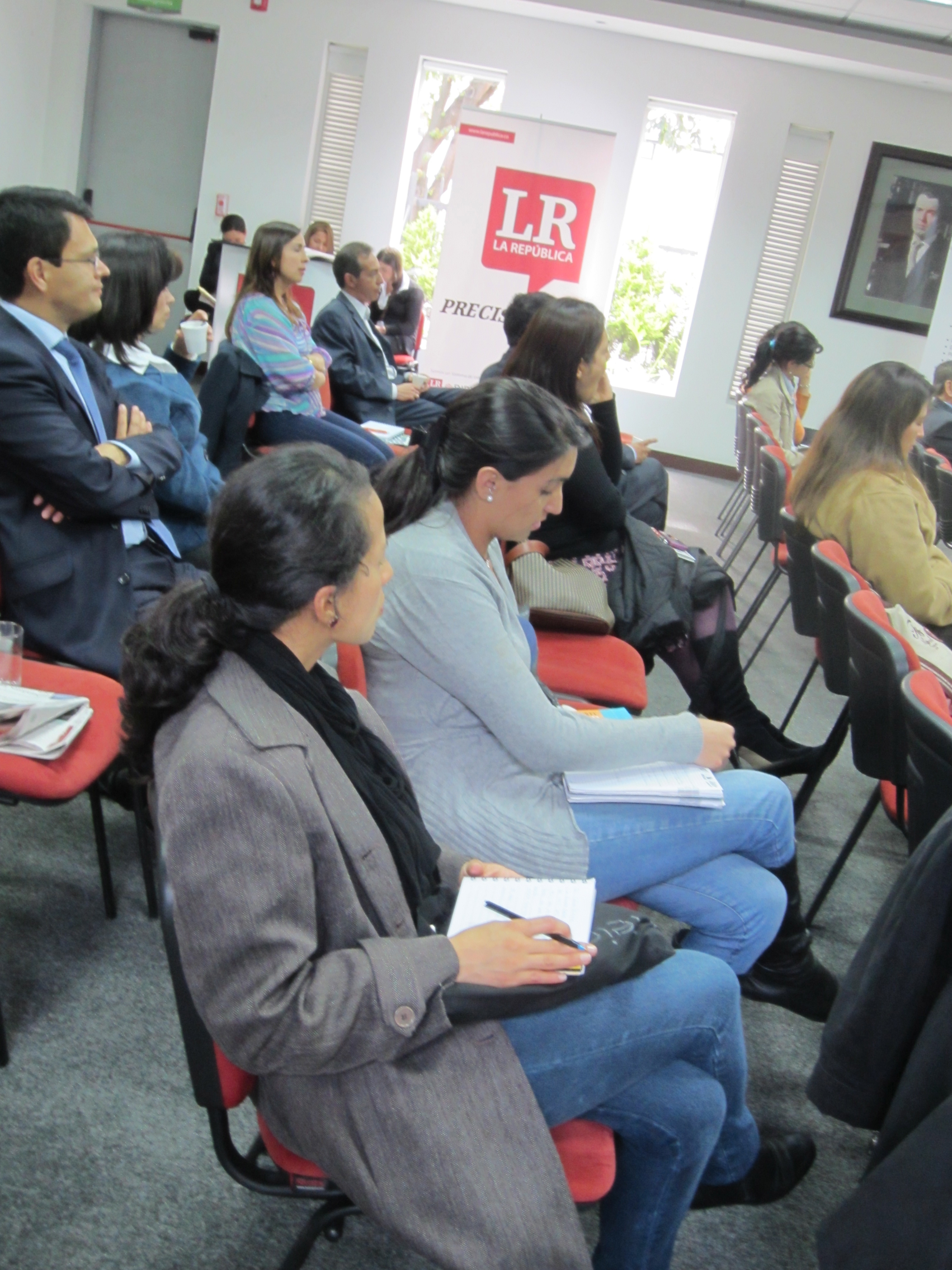 Many of us have found ourselves in the difficult situation in which people ask us to equip others to be cross-culturally effective and globally competitive – and then give us just a few short hours to do so.
Such was my task recently in Bogotá. The Colombian government had just signed a Free Trade Agreement (FTA) with the USA, and I had been invited to work with a lawyer and a business consultant, so that the three of us could, in five hours (ok, we started a bit later than scheduled, so really 4-1/2 hours), better enable local businesses to make the most of this new opportunity. My colleagues were excellent, and thanks to terrific teamwork and generous sharing of expertise, we were able to take a very diverse group of enthusiastic participants a long way in a short time.
I thought some of you might find the design useful for adapting to your own needs.
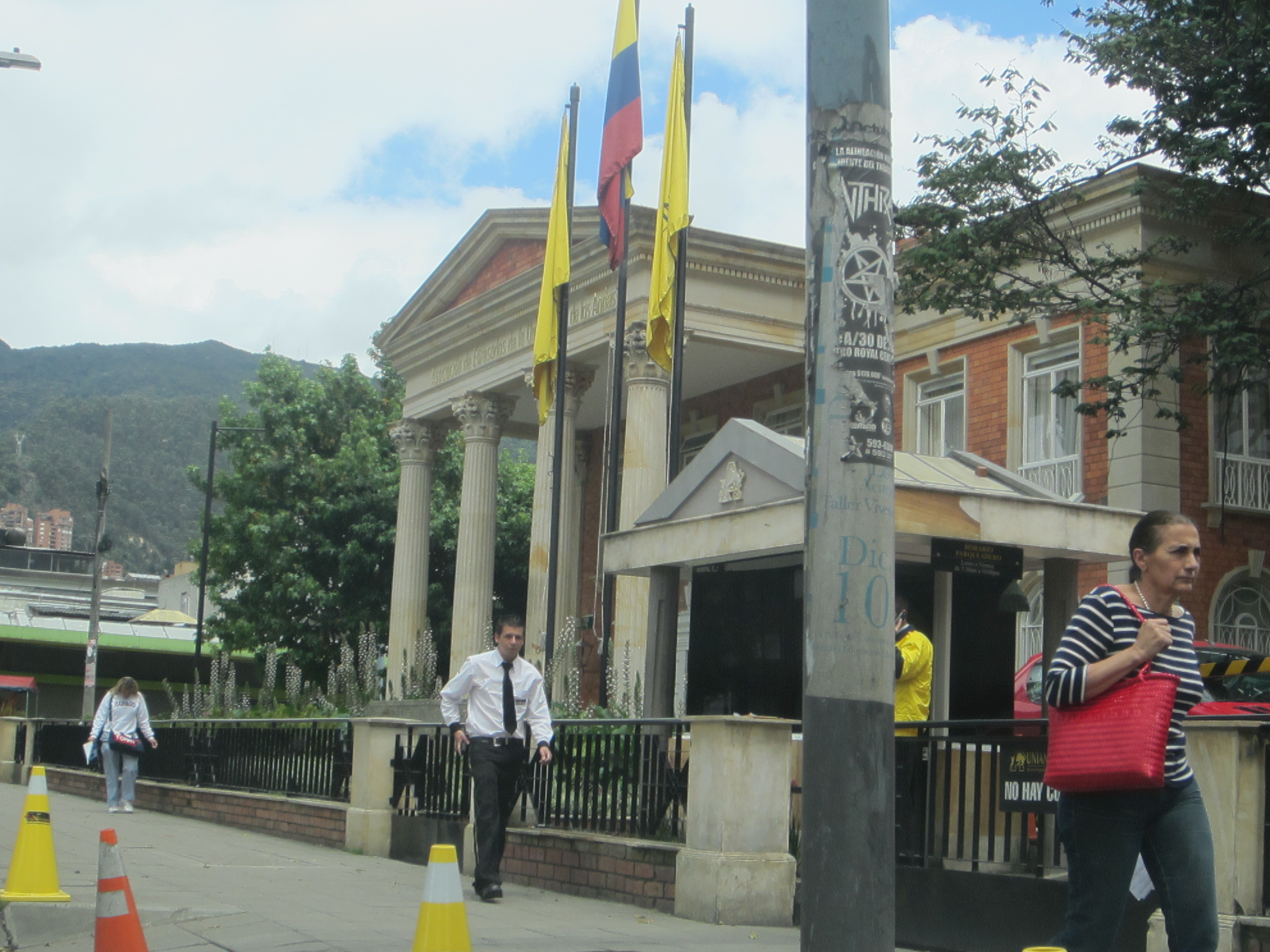 Session Title: Global Competitiveness and Productivity
Advertised Session Objectives: Learn how to make the most of the new FTA, how to conduct business at international levels of quality and competitiveness, and how to negotiate effectively with US Americans.
Advertised Session Components: Legal context of the new FTA, negotiating with US Americans, and global business ethics.
OUR DESIGN
 Legal Aspects of the FTA – one hour
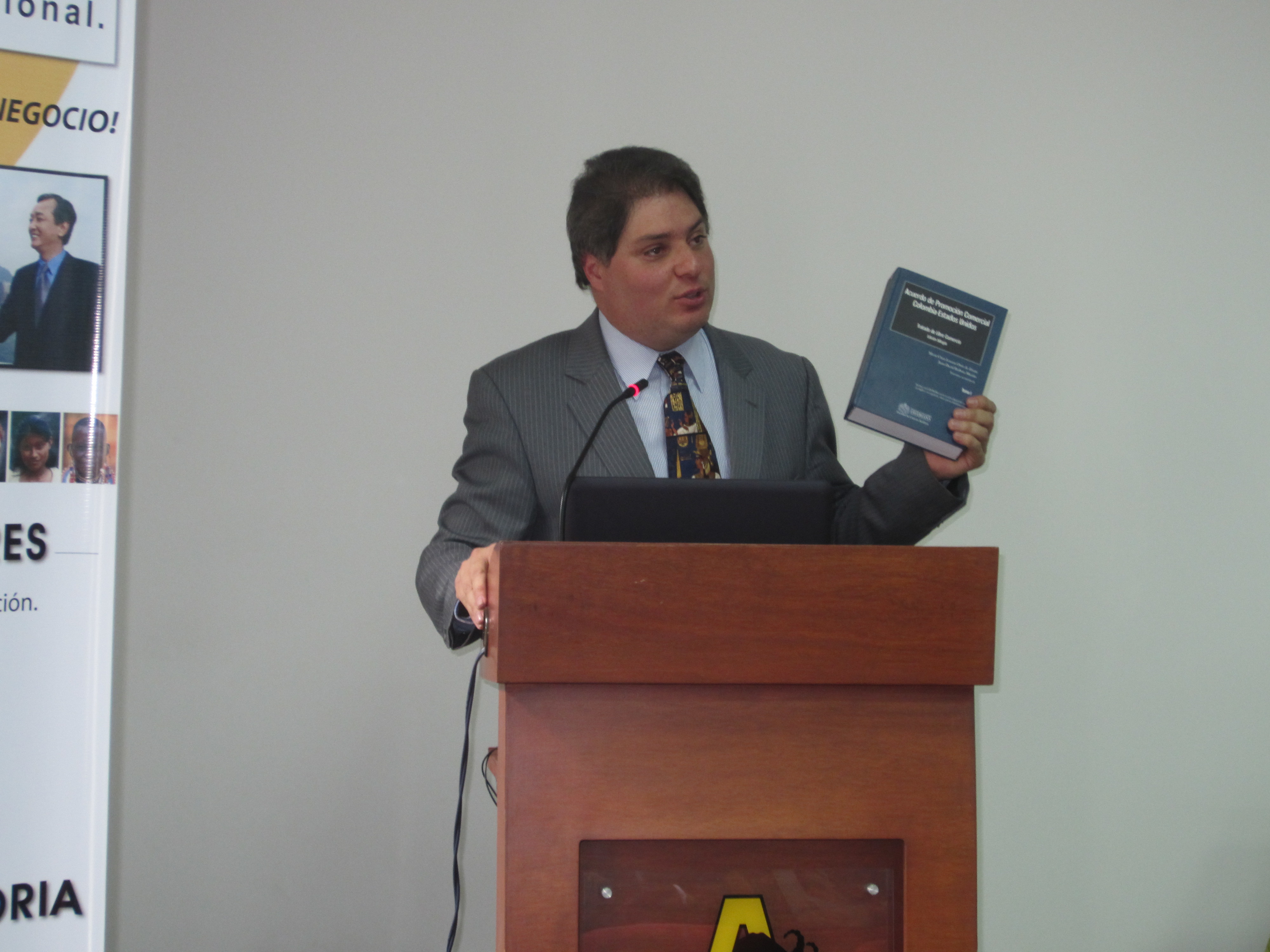
First, a very talented international lawyer, Andrés Forero, based in Bogotá, walked us through the various aspects of the new FTA, including a summary of the opportunities it presents for Colombian businesses. This was a most interesting session; Andrés knows the FTA inside and out, and he knows Colombian business. He took the complex and made it practical and understandable. He motivated those in attendance by explaining about the huge opportunities. And he also scared us a bit, telling tales of cross-cultural failures that he’d witnessed. Of added interest was the fact that he had been involved in translating the text of the FTA into English, and showed the full two volumes to the public for the first time ever.
 Negotiating with US Americans – 2 hours
The extremely talented business consultant with whom I was working, Ing. Fernando Parrado, and I decided that we needed to just “jump in” with this group and immerse them in a case study of a typical Colombian-US negotiation. So we did. We told the story, and we debriefed it using the Cultural Detective (CD) Worksheet. This took about 45 minutes.
Once we had the Worksheet completed, we urged the participants to reflect on what they had done. They saw two different world views, two different approaches, both “correct” and both with value. They saw connections between actions and values, and that values and beliefs motivate behavior. And they saw that really effective strategies use the resources provided by all parties. This took another 10 minutes.
From there we introduced the three intercultural capacities on which Cultural Detective is premised (subjective culture, cultural literacy, cultural bridge), and then reviewed instructions for using the CD Worksheet/the CD Method properly. This took another 15 minutes or so.
Focusing on the US American values section of the now completed Worksheet, we began talking about what is important to US Americans. We defined the concept of culture, cultural diversity, and cultures such as regional, ethnic, socioeconomic, gender, and generational. We made sure participants understood that when we generalize we want to talk about central tendencies of a group of people. We don’t want to stereotype, to “box” an individual into the central tendency of the group.
Then we introduced the concept of a Values Lens: that there are core values or central tendencies of a group of people. And that for each value there is a negative perception, that is, a way in which it can be viewed negatively by those who do not share the value or its expression. I told the participants, as I always do, about the danger of the Values Lenses. I cautioned them not to use them as yet another box into which to fit people, but rather as a tool for discovery, as clues for analysis. The values might apply to the situation, or they might not; they are a guide, a place to start.
These last two items took another ten minutes. It was quick. We covered a lot of territory in a short amount of time.
From here we introduced the US American Values Lens, sharing sample behaviors for each value, and sample negative perceptions. We asked participants if the Values Lens provided them any further clues to understanding the behavior of the US American in the case study, and indeed it did. Participants shared their stories of working with US Americans, and we were all able to learn from one another. This part took about 30 minutes.
Then we took a short break to eat some wonderful cheese-filled pastries and drink some of the famous Colombian coffee.
 Understanding Colombians – 45 minutes
We came back from break ready to experience the debut of Cultural Detective Colombia. And what a debut it was! Fernando walked us around the Colombian Values Lens, sharing a story about each value, and explaining how to use it as a strength in working across cultures and making the most of the Free Trade Agreement. He also explained the Negative Perceptions for each value, again with illustrations, and positioning them as skills or competencies to develop when working internationally, at global standards.
Participants, who came in feeling that they had to “change” in order to be successful, now glowed with pride that they already held within them a heritage to be proud of, and onto which they could wisely add cross-cultural competence.
We again asked the participants if the Values Lens provided any further insight into the critical incident, and they found that it did. They enthusiastically declared the accuracy of the Colombian Values Lens. I felt very fortunate to be present for its debut.
This portion took about 45 minutes. While it was not requested by the client, it was an aspect we knew was very important if the participants were to achieve their objectives.
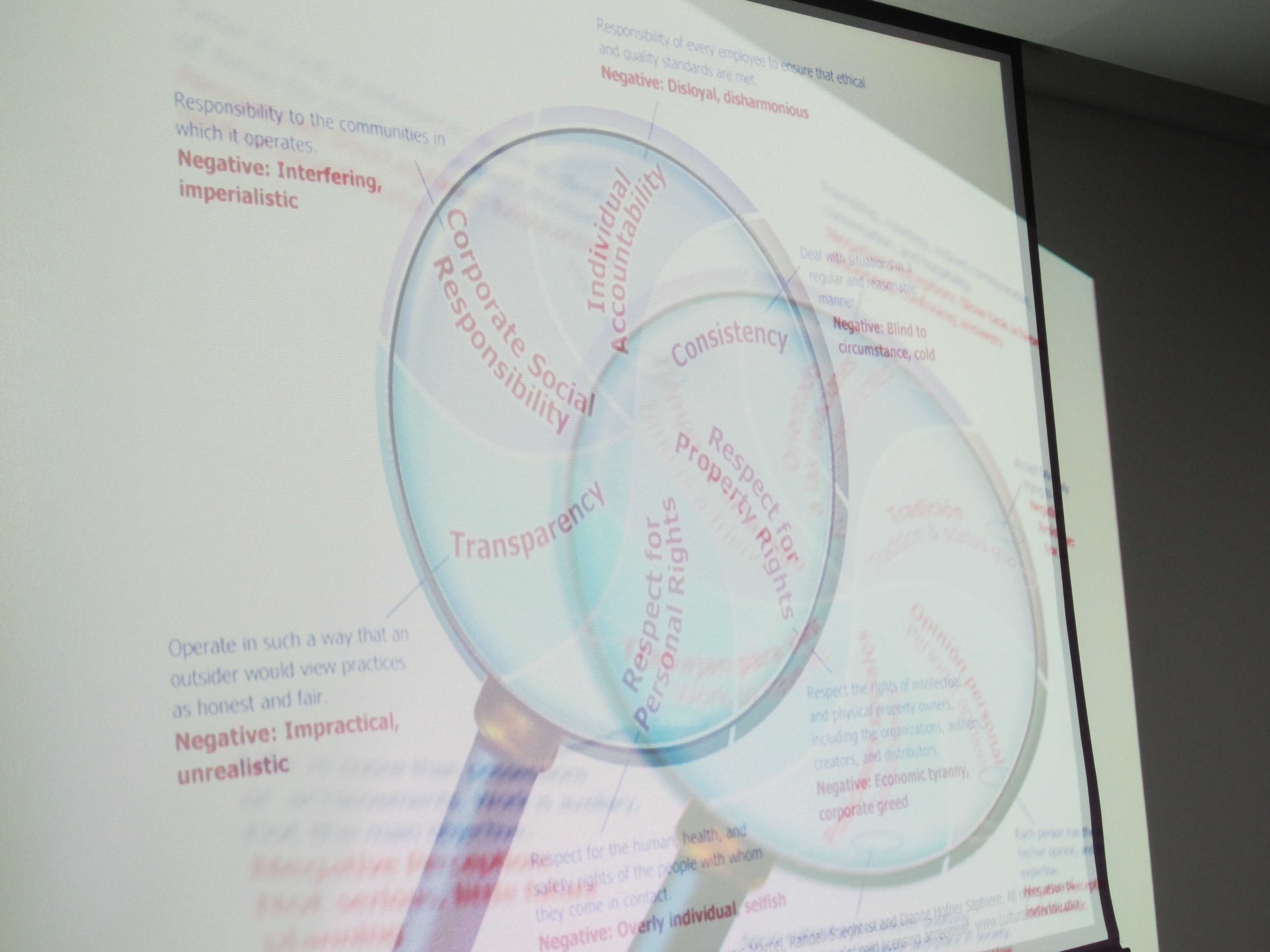 Global Business Ethics – 20 minutes
I am not an ethics professional, but the Cultural Detective Global Business Ethics enabled me to be able to define the topic of ethics in an understandable way. More importantly, I was able to explain the difference between compliant and ethical behavior, and the grey areas created by cultural differences: an action might be “non-compliant” yet seen as the ethical or right thing to do, or an action might be “compliant” but seen as unethical or wrong from a cultural perspective.
With the help of Andrés, our lawyer, we introduced the CD Global Business Ethics Values and Negative Perceptions, using real-life examples. We then asked participants if the values from this ethics lens provided further insight into the Colombia-US negotiation case study. Indeed it did! We also asked them to overlay the Colombia Lens with the Global Business Ethics (GBE) Lens, and the USA Lens with the GBE Lens, and the huge contrasts were apparent. They saw the difference that culture makes on perceptions of right and wrong. Unfortunately we were only able to spend about 30 minutes on this portion.
Personal Values Lenses – 30 minutes
Why such a short time on Global Business Ethics? Because I knew that, if these people were to succeed in global business, they also really needed a grounded understanding of who they were as individuals. Thus, we gave participants about 15 minutes to fill in their own Personal Values Lenses, using an exercise and Lens from Cultural Detective Self Discovery. They could then easily compare their Personal Lens to the Colombian Lens and the USA Lens, as well as the GBE Lens.
In closing, we passed out laminated copies of the 75 or so Lenses in the Cultural Detective series, so participants could get a feel for how they might adapt their approach to a German or an Israeli or South Korean marketplace.
All in all, it was a very fast romp across a very broad territory. But, oh, the insights the participants gained! They left the room in the evening standing tall and looking enthused, which I tend to take as a very good sign.
—
Fernando and Andrés, thank you so much for this opportunity to work with you both in this way. It is not often I have the pleasure of working with people for the first time and we are able to find such synergy of talents; it was truly a privilege and a joy!
Everyone: what do you think of this design? What are your strategies for doing the impossible in a very short amount of time? I’m eager to hear!
Going Global: International Expansion Strategies
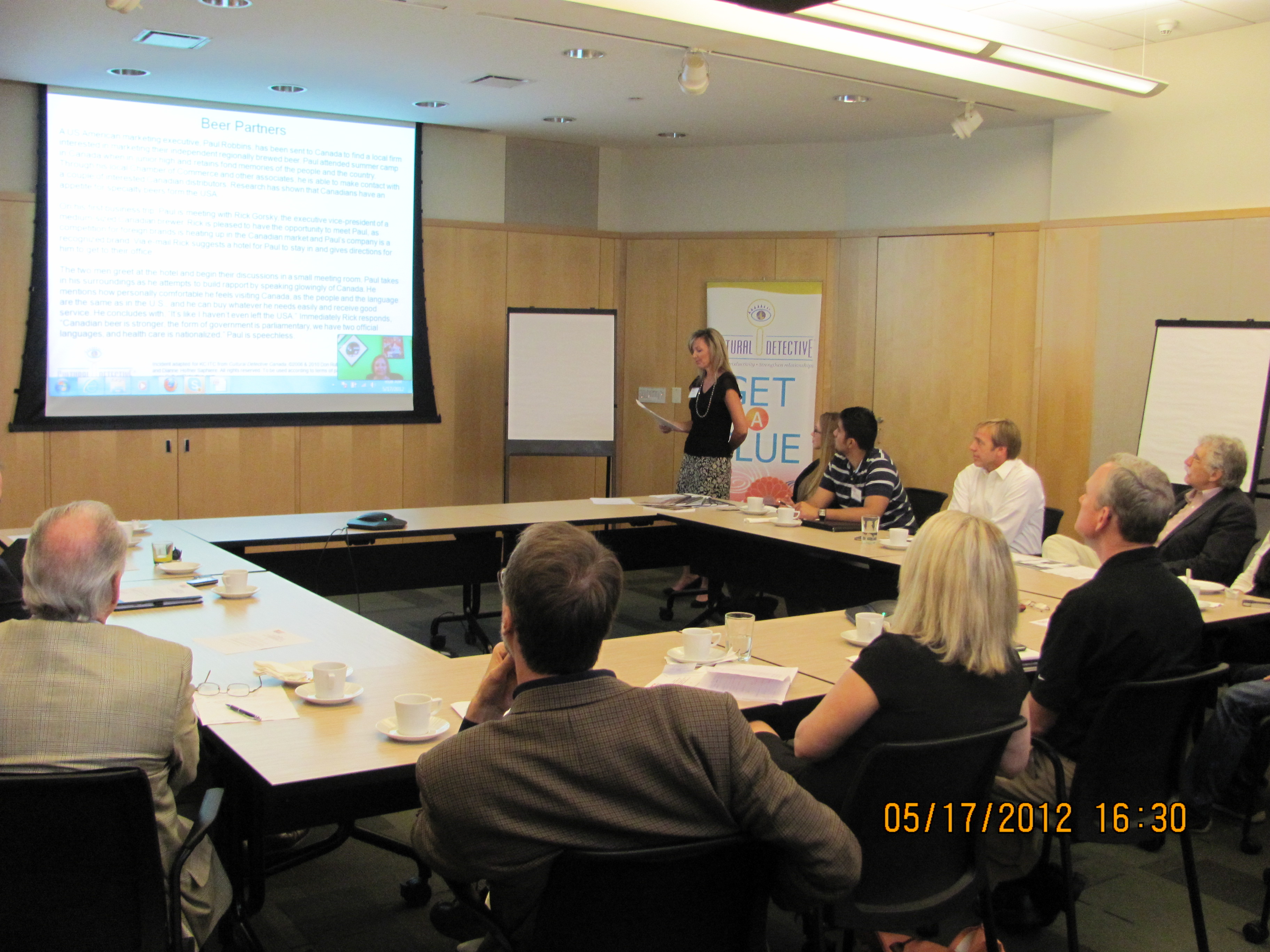 I recently had the opportunity to co-facilitate a Kansas City International Trade Council workshop focused on global expansion with Dianne Hofner Saphiere (via Skype from Mexico) and Janet Graham, who is currently a Baker University adjunct professor of International Business, Marketing, and Economics. We had a diverse group of business professionals, university professors, independent consultants and college students who actively participated in the workshop held at the beautiful Kauffman Foundation facilities.
Janet Graham brought a wealth of knowledge, discussing the various entry strategies when considering expanding globally. Some key decisions organizations must make in order to form a clear market entry strategy that she referenced include: which market to enter, when to enter the market and on what scale, and which entry mode to use? Great questions to which she provided some resources (such as globaltrade.net, globalEDGE, and WorldoMeters) to help direct the decision-making process. She quoted a local business leader from Hill’s Pet Foods who said the countries in which they have been most successful they’ve had a dedicated local distributor who markets and sells their products – and the relationship is key!
 We then got to have fun bringing culture into the picture! Dianne pointed out that culture touches all parts of the strategy – communication, negotiation, competitiveness – and will ultimately affect how successful your business can be at expanding globally. I had the opportunity to showcase the Cultural Detective Method with the group by working through a global expansion incident involving a local specialty beer manufacturer exporting to Canada. We ended with an activity that tied the learning together by incorporating Values Lenses into developing strategies for expansion. The workshop was quick and to the point but brought together some true experts in the field and real world application of the Cultural Detective tools to meet local business needs.
The International Trade Council of Greater Kansas City was a gracious host and sponsor for the global expansion workshop – have you checked within your local community to partner with such organizations? It’s a great way to link the cross-cultural skill development to relevant community and business needs!
Tahrir Square at 3 am
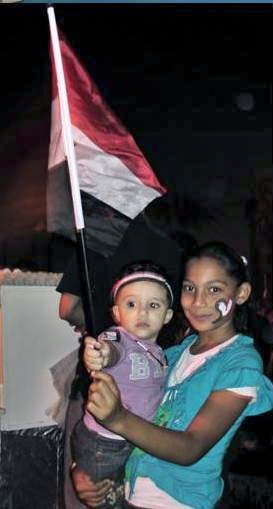 Tahrir Square (Cairo) at 3 am. Thousands of protesters still occupy the ground. They want a new revolution as dictator Mubarak may get away with his crimes in the Supreme Court and his ministers walk free from all charges.
I spent the whole night with the protesters, being introduced to everyone by none other than the leader of one of the most important revolutionary movements in Egypt: The Free Forum for Change.
In this picture, you see Layla and her brother wide awake. At 3 am children their age are supposed to be dreaming about Disneyland. Tonight they are here learning to support a democratic land. Not sure if they understand it, but I am certain they are the youngest protesters on the ground.
“Interculturalidad” – View on Interculturalism from Latin America
 During my recent and incredibly learning- and success-filled trip to Colombia, a client asked me to do a short presentation on the state of intercultural competence in Latin America. Such a small request, right (asked wryly and facetiously)? I live in México, but after four years I sure don’t count myself a culture-specific expert, and I am surely not qualified to speak for over half the hemisphere! So, what to do? Turn to an esteemed colleague’s expertise, of course. In this case, I turned to Adriana Medina (and her co-author, John Sinnigen).
The beauty of the source article I used, “Interculturality vs. Intercultural Competencies in Latin America,” is that the authors introduce facts and history we all know, but they put them into a context in such a way that makes total sense and creates new meaning. At least for me.
For example, one of their points is how Latin Americans have lived interculturality for hundreds of years if not longer: wars, imperialism and commerce between the many distinct indigenous cultures, then conquistadores, colonialism, slavery and intercontinental commerce. Intercultural competence on this stage is not some new import during the current age of global economic interdependence. Rather, Latin America’s gold, silver, emeralds and such were important to European economies beginning centuries ago. The authors’ point is, one of the valuable contributions that Latin American interculturalidad can add to the largely northern and western-originated notions of intercultural communication or intercultural competence is this: power, specifically power imbalances.
“Interculturality, the preferred term in Latin America, refers to a historic condition, a radical restructuring of the historically uneven relations of wealth and power that have existed between Europeans and their descendants and indigenous and other subordinated groups during the last half millennium. The aim is decolonization of institutions and the sociocultural fabric of the country.”
— A. Medina-López-Portillo and John H. Sinnigen, “Interculturality vs. Intercultural Competencies in Latin America,” chapter 13 in Deardorff 2009, Sage Handbook of Intercultural Competence
In their article the authors present six strengths that Latin American interculturalidad can contribute to the intercultural communication and competence field. And, speaking for myself, our field is in huge need of hearing and incorporating these perspectives into our theory and practice! Contributions of interculturalidad, according to Medina and Sinnigen, include that it:
- Is counter-hegemonic; focuses on the balance of power
- Starts with the needs of marginalized cultures (diverse indigenous movements from Mexico to Bolivia and Ecuador)
- Advocates mutual respect and economic and political equality rather than the acculturation of the oppressed
- Incorporates Andean/Amazonian concepts such as respect for Pachamama, good living, communitarian practices
- Multilingual integration
- Decades of dialogue leading to constitutional specificity
I want to thank this client for making this request of me, as it spurred me to learn more about a colleague’s work, and also to learn more about the work of Nestor García Canclini (more about his work in another blog post). I also want to thank Adri and John, whose work, I feel, is very important. I hope this might spur more of us to read, incorporate and build on their findings.
I have posted three PowerPoint slides summarizing this article, and you are welcome to download and use them if they might serve you. Please be sure to retain all source references, including the authors’ and Cultural Detective‘s. Together we can make a difference!
What do you think about the authors’ premises? How might we help the intercultural field to incorporate the Latin American perspective? How do you handle power differences in your work? I look forward to hearing from you!
—
Born and raised in Mexico City, Adriana Medina-López-Portillo is Assistant Professor of Intercultural Communication and Spanish in the Department of Modern Languages, Linguistics and Intercultural Communication at the University of Maryland, Baltimore County (UMBC). She is an accomplished intercultural trainer, having designed and led workshops for higher education, not-for-profit, governmental, and corporate clients in the United States and abroad. Among her favorite appointments are training for The Scholar Ship, a transnational academic program housed on a passenger ship, and offering pre-departure and on site orientations for the King Abdullah University of Science and Technology (KAUST) in Saudi Arabia. John Sinnigen is Prof. of Spanish and Intercultural Communication at UMBC. He is the co-editor of América para todos los americanos: prácticas interculturales (Mexico: UNAM, 2012).
PTPI Americas Regional Meeting 2012
 As I had just finished facilitating the PTPI (People to People International) workshop and entering the elevator with some PTPI attendees, I was pleased to hear a funny comment by one participant: “I am so glad this was about developing cross-cultural skills as I was afraid we might be participating in some sort of scavenger hunt!”
Well, it was in fact a hunt in some ways – we searched for clues about what motivates our friends and colleagues to behave the way they do and what motivates us to act and react the way we do!
Key learnings from group wrap up were described as:
- Seek to understand others values and what’s really motivating their behavior
- Look for similar values and use those to collaborate
- Appreciate differences
- Incorporate the strengths of all team members – there is no “right way” to get things done
- Show up with an open mind
The PTPI Cultural Detective session was designed to help the PTPI community members and their board of directors with strategies to improve their diverse recruiting – and it was received very positively with a quick post, “Incredible Presentation by Cultural Detective,” and the above photo from Liz Wegman, PTPI staff member. We had a group of about 35 PTPI leaders in attendance from all over the country and world who will return to their communities with fresh perspectives and strategies around building more diversity in their chapters.
Although diverse recruitment is not typically how I lead into discussions around working with the Cultural Detective tools, it certainly was an applicable organizational need which developing intercultural competence can help solve. Has PTPI’s unique application of the Cultural Detective approach spurred some ideas for you to assist your or your clients’ specific intercultural challenges?
 Cultural Detective Blog