Two Values Lens Stories

©Cultural Detective, from Cultural Detective Self Discovery

©Cultural Detective, from Cultural Detective Self Discovery

The beauty of Cultural Detective Values Lenses?

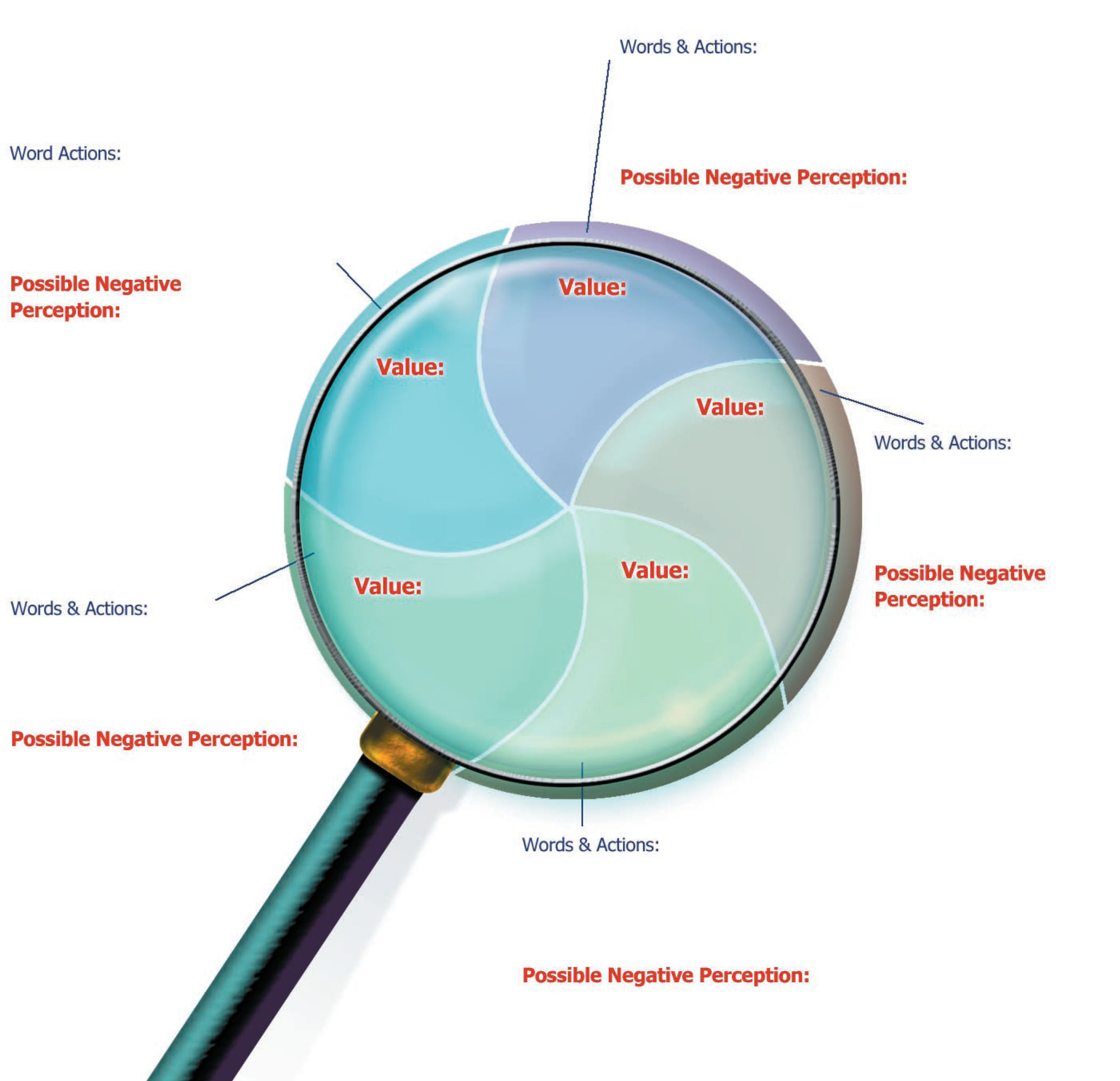
A colleague was just telling me this morning that he had a class of students from France and Italy, and one Thai woman. The students had worked with Cultural Detective Self Discovery; they had reflected on their personal values and history, and created personal Values Lenses.

Next my colleague had walked through the French Values Lens with the class, and asked them to compare their personal Lenses with the national Lens, the country in which all of the students were residing and studying. The French students perceived a lot of resonance with their national culture, and the foreign students identified their experience in France as well.

Next my friend walked through the Italian Values Lens, and got the same reaction.

Finally, when he went to the Thai Values Lens, he realized he knew next to nothing about Thais, and that he couldn’t even pronounce the words on the Lens. Thus, he elected to ask the Thai student, blindsiding her or putting her on the spot if you will — he asked her to come up and introduce the class to the Thai Values Lens, which she had only just seen in that moment!

This Thai participant led the other students, and the professor, on a journey into Thai culture that took their breath away! She shared examples of Thai behavior and their meaning that built the other students’, and the teacher’s, respect for who she is and where she comes from.

Such can be the power of a Values Lens. It is not a stereotype. It captures the central tendency, the norm, of a group of people, in terms people can identify with. Thus, it is usually quite easy for a representative of the culture to introduce the values in a Values Lens, using stories from everyday life in that culture.

Second example, much shorter:

So many people nowadays tell us they are global nomads, TCKs, Blended Culture people. And they are. And, this does not mean that they don’t have a culture; it means they have more cultural strands woven into their identity than perhaps the average person!

The second story involves one young woman, who insisted she was nothing like her national culture. She was an individual, a global citizen: culture-less, in a way. In looking at her national culture Values Lens, she exclaimed out loud during class, “Oh my God! I AM Slovak!”

The goal of Cultural Detective Values Lenses as tools is to facilitate dialogue and understanding, both understanding of self and others, and thus enable collaboration that brings out the best of each of us. Please help us make that happen, by sharing your tips, techniques, and designs, and by encouraging best practice.

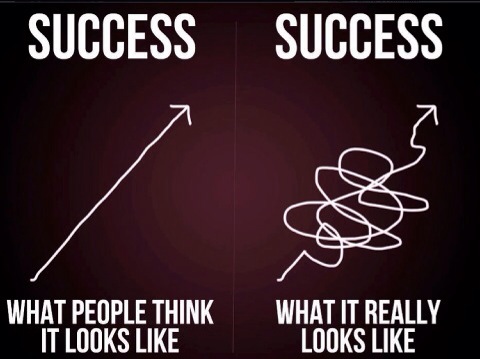
Success? It’s All in How We Gauge It…

711079_3691916951303_1580871364_nThis is a story, or perhaps, more correctly, a cautionary tale, about a very successful expatriate and the highly respected, much-envied western company for which he worked. It is a story that made me think again about how we define success in our lives, and, in particular, how we define success in the global marketplace and success on an expatriate assignment.

The Company: The company is one of the very first to enter the Japanese market after World War II. It holds key patents on several important technologies, and invests decades establishing partnerships with Japan’s leading firms. It prides itself on hiring and promoting Japan’s best and brightest.

By the 1990s, it is the envy of other foreign-capitalized companies in Japan: it has a dominant market presence in its niche industries; long-established, trustworthy partnerships with major local players; and a stellar reputation for consistency, reliability and innovation. The president of the company is Japanese, and its management team is a strong and diverse mix of local and international executives who respect one another and leverage their expertise.

The Japan operation is a huge profit center, as well as the home of research and development breakthroughs leveraged by the company globally. They have strong cross-cultural programs in place for their staff worldwide, as well as for transferees and their receiving organizations.

The Expat: Our expat is intelligent, ambitious, and very capable. He has worked for the company for over 30 years, and is known as an excellent turn-around manager who had saved several manufacturing plants and regional operations, turning their losses into profits. Originally educated as an engineer, he is logical and methodical, and very good with numbers, graphs, and trends. Our expat is married with grown children and grandchildren, speaks a bit of French in addition to his native English, is well-travelled, but has never before lived overseas. This will be his last assignment prior to retirement.

The Situation: The global company, and most particularly home office, is experiencing economic hardship. A few expensive ventures have failed, and it is time to tighten belts, cut back, and save money across the board. Though the Japan operation is one of the most profitable worldwide, it is part of the overall organization and must join in company-wide budget cuts.

The expat is sent to Japan as the new CEO, and is told to cut millions from the annual budget. It is the first time in over a decade that the CEO of the Japan operation is a foreigner. The expat and his wife relocate to Tokyo, and quickly integrate into the local expat social scene. They love their new life in this amazing metropolis.

The Backlash: Local and existing expatriate management “cry foul.” They say it is a short-sighted decision to slash budgets in Japan when the operation is functioning smoothly and keeping others afloat. They say they are being punished for errors they did not cause, in which they were not involved. They warn that budget cuts will have long-lasting negative effects in the Japanese marketplace.

The new CEO explains that change always has its naysayers; people need to “get onboard or get off the ship.” “Tough times call for tough decisions.” “It’s a new day, a new world, a new economy.”

The cross-cultural consultant and existing management explain that the culture is different here, that the new CEO doesn’t yet understand Japan. Drastic changes have long-lasting effects that can’t be undone, can’t be apologized for. They urge him to send this message strongly to the home office, to push the decision back up. They say it’s his duty to make the home office aware of the repercussions of their top-down decision. They tell him that following instructions will mean the death of the Japan operation.

But the CEO has been down this road before. No one likes belt-tightening. No one likes budget cuts. He knows how to turn an operation around. He’s done it before. He doesn’t need people to “like” him. He knows they will respect him once they see the results he achieves. This is an once-in-a-lifetime opportunity, an incredible capstone to his career.

The Outcome: The expat succeeds, in stellar fashion. He fires people. He closes divisions of the company. He retires long-standing partnerships with important local players. He does exactly what he has been charged to do. And he furthers his career: after his two-year assignment he receives a huge bonus. He departs Japan to begin his retirement, riding the accolades of his success.

Home office is proud of their decision to send him; only an expat could have made these kinds of difficult decisions, taken these drastic measures. A local executive wouldn’t have been able to cut such long-standing local partnerships, couldn’t have bit the bullet to fire staff who had worked their whole careers building the company. It was a perfect decision. Money saved. Bottom line improved.

The Longer Term Outcome: Fast forward to four years after the expat’s departure. The highly successful, highly profitable business in Japan, with the enviable stellar reputation, closes down. Plants close. R&D facilities close. Offices throughout the country close.

Leading companies in the industry are no longer interested in partnering; once burned twice shy. After decades of trust building, smart business and shared success, how can they rely on a company that unilaterally decides to throw it all away to improve bottom-line at some far away home office? Why should they do business with a company that so clearly prioritizes home office needs over international success?

The company’s best and brightest have been hired by the competition. They are sour about their previous employer’s lack of loyalty and its short-sightedness. The company is no longer able to attract talented new hires. Who wants to work for a company that focuses on home office success, punishing those who succeed worldwide?

And today? The Japan operation, such an envied and respected company for over sixty years, is no longer. It was “over-milked,” bled dry. Not financially, but culturally, emotionally, trust-depleted.

So, how would you gauge success in this situation? Knowing what you know now, was the CEO successful? At the time everyone thought so. He achieved the immediate goal. What do you think would have happened had he done things differently? Is there a way the expat could have been successful in his goal and maintained trust? Does this mean that every leader needs special tools when completing an overseas assignment? What can we learn from this?

Please ponder those questions while you read the key takeaways from my point of view.

The Lessons:

  1. As expats, we must learn to distinguish between what we know and what we have to learn. We must ask for help. We must be willing to listen. We need to pause and make sure we understand the cultural context in which we are working.
  2. We must ensure that while we use our strengths, we also use “fresh eyes” to see what’s new and different this time. Not every problem can be approached in the same way it was successfully resolved the last time around, in a different country, with different people.
  3. We must be able to discern when to jump at an opportunity, and when to push a decision back up the chain of command. No person is an island. Even a CEO is part of the interconnected web of relationships, responsibilities, and decisions that make up an organization.
  4. As home office executives, we must be able to weigh our priorities, consciously and purposefully. We must think long-term, even when the short-term is jumping up and down in front of us. It is our job to anticipate the multiple impacts of a decision, and shape the process to benefit the organization.
  5. We must be able to hear the truth, from all perspectives, and separate the facts from the complaining. We need to set aside what we want to hear, what we are used to hearing, and be open not only to what is said, but the context and manner in which it is expressed. A cultural informant may help in “translating” the meaning of the message.
  6. As local management, we must learn to discern when we are accurately predicting the future and when we are just resisting change. These are usually questions to explore through dialogue and open-minded discovery. This can be a challenging process, depending on the cultural norms of local management.
  7. As a global team, we must have the tools to enable us to share, hear, and weigh information in order to make the best decisions, for both the short- and long-term. And it is important to remember that the choice and presentation of information is, to some extent culturally influenced. Without a process to truly understand shared information, team members essentially operate in the dark.
  8. A multinational company, it is wise to employ tools like Cultural Detective to help prepare and guide executives on international assignments. Culturally Effective companies recognize the need, and have found Cultural Detective and a trained facilitator can help prevent stories like this from becoming commonplace Cultural Defectives.

Linked to the My Global Life Link-Up at SmallPlanetStudio.com

Link

from Forbes:Jessica

Screen shot from Forbes.com,
©Jessica Hagy: 40 Things to Say Before You Die

I was not familiar with Jessica Hagy before I read this post — 40 Things to Say Before You Die. Read it; you’ll enjoy it. I believe it will remind you of many of the important things in life.

Why am I posting it on the Cultural Detective blog?

  1. Though not intentionally cross-cultural, I believe you’ll agree that the skills, attitudes, mindsets and practices Jessica illustrates in her post all very much apply to cross-cultural interaction. They are core concepts that help us strengthen our intercultural competence.
  2. It is a rarity in life when someone is able to communicate the complex simply, clearly, and powerfully, without “dumbing it down,” while retaining its core essence. It is oh-so-much easier to write long tomes; capturing the main points without sacrificing the larger context, that’s something else entirely. I believe Jessica does this with her drawings. And you tell me, repeatedly, how the Cultural Detective process does that in your organizations.

Evidently Jessica is very well known, and I’m just late to the party. Such a joy to be late in arriving yet to arrive on time!

Please let me know if you enjoy these sorts of re-posts, and how you feel this applies to intercultural competence. Thanks!

Benchmark Statement on Intercultural Competence: AEA

AEA statement coverDo you want to promote intercultural competence in your organization or industry? Are you looking for some guidance? A blueprint? A success story? If so, do I have a “Cultural Effective” for you!

Just over a year ago, friend and colleague Stella Ting Toomey and I had the distinct pleasure of attending the American Evaluation Association‘s annual conference as invited speakers. There I was pleased to witness a commitment to responsible inclusiveness that was truly state of the art.

Six years of diligent work by a task force and other concerned individuals had resulted in a theoretically sound and practical Public Statement on Cultural Competence in Evaluation (AEA 2011, Fairhaven, MA USA).

There is so much about this public statement that stands out for me, not least of which is a definition of culture that is at least on a par with the best of what I’ve seen come out of the intercultural communication field!

Culture can be defined as the shared experiences of people, including their languages, values, customs, beliefs, and mores. It also includes worldviews, ways of knowing, and ways of communicating. Culturally significant factors encompass, but are not limited to, race/ethnicity, religion, social class, language, disability, sexual orientation, age, and gender. Contextual dimensions such as geographic region and socioeconomic circumstances are also essential to shaping culture.

Culture is dynamic, fluid, and reciprocal. That is, culture shapes the behaviors and worldviews of its members and, in turn, culture is shaped by the behavior, attitudes, and worldview of its members. Elements of culture are passed on from generation to generation, but culture also changes from one generation to the next.

Culture not only influences members of groups, it also delineates boundaries and influences patterns of interaction among them. Evaluators frequently work across these boundaries.

I remember my excitement the last couple of times a book has been published with “intercultural competence” in the title. If I am truly honest, I will admit to you that I’ve been disappointed. Amidst good work and steps forward, the books I’ve reviewed rehash a lot of what I feel is old and tired or, even, counter-productive to good practice. But this AEA statement! How do they define intercultural competence? For me it’s spot on — both theoretically sound and skillfully applied!

Cultural competence is not a state at which one arrives; rather, it is a process of learning, unlearning, and relearning. It is a sensibility cultivated throughout a lifetime. Cultural competence requires awareness of self, reflection on one’s own cultural position, awareness of others’ positions, and the ability to interact genuinely and respectfully with others. Culturally competent evaluators refrain from assuming they fully understand the perspectives of stakeholders whose backgrounds differ from their own.

Cultural competence is defined in relation to a specific context or location, such as geography, nationality, and history. Competence in one context is no assurance of competence in another. The culturally competent evaluator (or evaluation team) must have specific knowledge of the people and place in which the evaluation is being conducted—including local history and culturally determined mores, values, and ways of knowing.

The culturally competent evaluator draws upon a wide range of evaluation theories and methods to design and carry out an evaluation that is optimally matched to the context. In constructing a model or theory of how the evaluand operates, the evaluator reflects the diverse values and perspectives of key stakeholder groups.

It is tailor-made for a Cultural Detective: process-based lifelong learning (CD Worksheet); knowledge of self and others and the ability to bridge (3 fundamental CD capacities); situation-specific, contextually grounded effectiveness (CD Critical Incidents); grounding practice in theory (pulling salient theoretical teaching from practical experience); and acknowledging people as complex amalgams of the influences of multiple cultural influences (layering Lenses).

The AEA statement includes the following content:

The Role of Culture and Cultural Competence in Quality Evaluation

  1. What is culture?
  2. Evaluations reflect culture.
  3. What is cultural competence?

Why Cultural Competence in Evaluation Is Important

  1. It is an ethical imperative.
  2. Validity demands it.
  3. Theories are inherently cultural.

Essential Practices for Cultural Competence

  1. Acknowledge the complexity of cultural identity.
  2. Recognize the dynamics of power.
  3. Recognize and eliminate bias in language.
  4. Employ culturally appropriate methods.

The AEA’s blog and their annual conference include lots of project examples and discussions about how to conduct culturally responsible evaluation, through which I’ve witnessed honest dialogue about successes and difficulties. Intercultural competence in evaluation has definitely become an organization-wide effort and an ongoing process for the AEA membership.

The work of the task force continues through today, as they do their best to develop cultural competence in evaluation via education and training, within and outside the AEA, as well as by sharing the public statement and what they have learned via the process they’ve engaged. I am proud to have had a very small role in their extensive process, and pleased to be able to help share it so that others can leverage their work.

Kudos to Dr. Melvin Hall, Cindy Crusto, the American Evaluation Association, and all of those involved in this terrific effort! I know they join me in hoping that their efforts might help you further yours. I will close with an excerpt from their closing:

Evaluators have the power to make a difference, not only directly to program stakeholders but also indirectly to the general public. This is consistent with the Guiding Principle that obliges evaluators to consider the public interest and good in the work they do. In a diverse and complex society, cultural competence is central to making a difference.

Cultural competence connects with and complements existing knowledge and skills in the field. It offers both opportunities and challenges for evaluators. Cultural competence presents evaluators with new horizons for learning, opportunities for renewal, and the potential to deepen understanding of one’s own work in all contexts. Cultural competence challenges evaluators to deepen their self awareness and sensitivity in terms of their own cultures and those of others.

Many evaluators are actively exploring the terrain of cultural competence. They are expanding the boundaries of what it means to respond to cultural diversity in authentic and respectful ways. This statement invites new conversations and connections to advance this sensitive and exciting work.

Get in Intercultural Shape for the New Year!

New Year Collage

Welcome to the New Year — at least for those of you following the Gregorian calendar! Are you ready? Is your organization poised and equipped to make significant positive contributions to this planet of ours? Do you have organizational traditions to kick-off the new year and encourage employees to strive towards new goals?

Most cultures of the world have very special traditions for sending out the old year and bringing in the new one. In Mexico where I live women wear special undergarments on New Year’s Eve — either red for love or yellow for gold or money — symbolizing what they most want to receive in the year ahead. Those who would like to travel carry a suitcase out into the street and around the block.

In Japan where I lived previously, the end of the year is a time to clean the house, purging it of things from the past that are no longer needed. We cook osechi foods, the beautiful make-ahead kinds of delicacies that will feed family and visitors through the first few days of the new year, and allow everyone — including the cook — to enjoy a respite.

What are your traditions for saying goodbye to the past year and greeting the future? Do you make resolutions, set goals, or make plans to learn something new?

My absolute favorite New Year’s was spent with good friends nearly two decades ago. On New Year’s Eve, we wrote down the hurts we’d experienced, the negative habits or memories we continued to carry and wanted to get rid of, the qualities about ourselves that no longer served us, the visions of ourselves, others or our businesses that were not constructive. We made a big bonfire, and we had a field day burning these no-longer-wanted items. Oh how liberating it was! We all felt so light, so energized!

On New Year’s morning we woke before sunrise. We had written, on paper we’d folded into origami boats, the qualities we wanted to receive and nurture in the new year. The positive habits and qualities we wanted to cultivate, relationships and moments we wanted to consciously treasure, and healthy visions of ourselves, others and our businesses that we wanted to hold close. We launched these items into the ocean, setting them into motion.

The beginning of a year is a good time to reflect on our cross-cultural successes (Cultural Effectives) as well as to learn from our mistakes and misunderstandings (Cultural Defectives) and decide what kind of year we want in 2013. Back in October we published a post about intercultural fitness. In November we reiterated why such fitness is so important, why organizations need intercultural fitness.

Maybe reading these posts has helped you to decide what to throw in the fire and what to set out into the water? If your fire is full of cultural missteps and your boat contains a desire to expand your intercultural competence, maybe it’s time you took action!

Cultural Detective wants to encourage you to get fit, too — interculturally fit! Much like committing to an exercise plan or a sensible nutrition plan, committing to prioritizing intercultural competence in the coming year will serve us well personally, in our families, as well as in our work lives. Also, just like a gym, it can be fun. We can spend as much time as we like and we might meet some really interesting people.

The new year is full of special offers for gym memberships, exercise classes, and diet programs — ways to encourage you to get fit in 2013. Just as gyms and diet programs offer incentives this time of year, the Cultural Detective Online intercultural competence gym is offering complimentary three-day subscriptions to help get you focused and motivated!

Here is how to get yours:

  1. Log on to http://www.culturaldetective.com/cdonline/orders/trial before January 31, 2013.
  2. Enter your name, email address and the promotional code: NewYearFitness
  3. You will receive a verification email from cdonline@culturaldetective.com. Be sure to clear it in your spam filter! Click the link in the email, follow the instructions, and explore a new way to improve your intercultural fitness 24/7!

We hope you will take advantage of this special offer to learn how Cultural Detective Online can assist you at home and abroad, with colleagues and friends, in your community and in your organization! Feel free to share this offer with those you care about — we think the world could benefit from a little more intercultural competence on everyone’s part!

Best wishes for a peaceful year ahead from the Cultural Detective team!

Cómo perder su puntualidad en quince días

3191265-mujer-abrazar-un-reloj(English follows the Spanish)

Estas fiestas de fin de año me han dejado la nostalgia de los ausentes a quienes no pude abrazar con el anhelo del reencuentro. En contraste, me han dado la oportunidad de gozarme lo simple de nuestras tradiciones más sentidas. Una de ellas sin duda para mí es la cocina. Debo confesar soy de las que cocina escuchando música de diciembre, desde villancicos como tutaina o mi burrito sabanero, hasta los infaltables temas de la Billos Caraca’s Boys, Los Melódicos o Los Hispanos. Crecí con esta música y a falta de estaciones, en Colombia es Navidad desde que las emisoras comienzan a emitir estas melodías y las vitrinas de tiendas presentan sus decoraciones. El gran inicio es nuestra fiesta de las velitas el 7 de diciembre, cuando todos los alumbrados oficialmente se encienden y  las casas se visten de luz con velas de colores y faroles que se extinguen al amanecer. Es nuestra fiesta de luz.

El ritmo cambia y el tiempo se hace aún más amigo. Contrasta el agite de las calles y sus trancones — embotellamientos — con el ritmo al que se llevan muchas tareas. Esta singular amistad con el tiempo se torna evidente para quienes nos visitan.

Tuvimos con mi familia la gran oportunidad de acoger a quienes estaban solos de paso por nuestra ciudad. Para Navidad, nuestra invitada de California se ganó la membresía en el club de los “gringos chéveres”. La citamos a las 10:00pm, llegó a las 10:15pm pues el taxista la buscó un poco más tarde en el hotel. Brindamos, cenamos y mis padres sin hablar más que yes or hello, le transmitieron nuestras tradiciones — bueno sí, mis hermanos y yo asistimos en la traducción — pero las sonrisas y la música son parte de un idioma universal.  La despedimos de madrugada el 25, luego de tres días en Bogotá se preparaba a disfrutar San Andrés y Cartagena. Su periplo apenas comenzaba.

Para fin de año, nuestros invitados esta vez fueron de Alemania y Francia. Los dos invitados de Alemania ya llevan varias semanas en el país. Su periplo ya los había llevado por Cartagena, la zona cafetera, Boyacá y alrededores del Cañón del Chicamocha. En resumen, se han recorrido casi la mitad del país. La cita a cenar era la misma 10:00pm, y mi razonamiento fue, como son alemanes les decimos a las 10:00pm para que cenemos juntos.

Pasaron las 10:15pm, las 10:30pm y nada. Estos invitados se hicieron amigos del tiempo. Llegaron unos 50min tarde luego de varias llamadas al celular disponible. Uno llega a preocuparse si fue que se perdieron o pararon en la cena equivocada. Cuando llegaron ya habíamos iniciado, simplemente pensamos algo se presentó y no iban a venir, !son alemanes! Llegaron, cenaron, brindamos… y hasta bailamos. Uno de ellos ha dicho que es la mejor Nochevieja de su vida.  Los tres hablan español muy bien, así que pudieron compartir sus experiencias con todos en casa, y fue así como pidieron mil excusas pues en uno de sus recorridos un simpático colombiano los citó “en diez minutos” que se volvieron tal vez cuatro horas.

Su lógica fue, nos dicen a las 10:00pm así que podemos llegar tarde. Al final les dije de este blog y que les contaría a todos como se puede perder la puntualidad en quince días de paso por Colombia. Ahora uno de ellos está de regreso en Alemania, y un alemán y un francés amigos del tiempo están en las playas de San Andrés.

Mis padres han sido los más alegres con estas visitas. Poco saben de sociedades policrónicas o monocrónicas, de alto o bajo contexto, ni tienen idea que el trabajo de Cultural Detective le muestra al mundo que el tiempo es un amigo en este país. Sin embargo ellos saben lo que nos hace auténticos y algo que siempre han enseñado en casa es el valor de querer lo nuestro, nuestras tradiciones y lo que somos — por supuesto, abiertos a aprender de los demás. Mis padres fueron sin duda los grandes anfitriones, hasta mi madre sacó a bailar a uno de los chicos y dió clases de música tropical. Sin duda para todos unas fiestas inolvidables. Como diría mi padre “my home is your home, welcome”.

Si quiere hacerse amigo del tiempo… visite Colombia.

Felicidades y un muy fructífero 2013.spanishfriday

How to Lose Your Punctuality in 15 Days, Written by Maryori Vivas
Translated by Dianne Hofner Saphiere

These end-of-the-year holidays have filled me with nostalgia for those I am unable to hug despite the desire for a reunion. In contrast, they have given me the opportunity to enjoy the simplicity of some of our deepest traditions. One of these for me is without doubt that of the kitchen. I must confess that I am one of those who cooks while listening to holiday music, everything from carols such as Tutaina or Mi Burrito Sabanero, to infallible tunes such as those of the Billos Caracas Boys, Los Melódicos, or Los Hispanos. I grew up with this music; in Colombia Christmas begins when the radio stations start playing such melodies and the shop windows display their holiday decorations. The great beginning of the festivities is the Festival of Lights on December 7th, when holiday lights are officially turned on and the houses are filled with the light of colorful candles and lanterns that aren’t turned off until dawn. This is our Festival of Lights.

The rhythm changes at this time of year, and time becomes even more of a friend than usual. Contrast the excitement of the streets and their traffic jams — traffic stops really — with the rhythm with which we complete the many tasks of the season. This unique friendship with time gradually becomes evident to our guests.

Our family had the wonderful opportunity this year of welcoming into our home those who were traveling alone in our city. For Christmas, our guest from California won membership in the “cool gringos” club. We invited her for 10 pm. She arrived at 10:15, because the taxi had picked her up late at her hotel. We toasted, dined, and my parents, who can’t speak more than “yes” or “hello” in English, communicated our traditions to her — ok, my sister, my brother and I assisted with the translation — but smiles and music are universal languages. We bade her goodbye at dawn on the 25th. After three days in Bogotá she was preparing to enjoy San Andrés and Cartagena. Her journey was just beginning.

On New Year’s Eve, this time our guests were from Germany and France. Our two guests from Germany had already been in our country for several weeks. Their journey had already taken them to Cartagena, the coffee region, Boyacá and the area around the Canyon of Chicamocha. They had travelled over half the country. I told them the same 10 pm for dinner, and my reasoning was that as they are Germans they’d arrive right around 10 pm so we could dine together.

10:15 pm passed, 10:30 pm, and nothing. Our guests had become friends with time. They arrived about 50 minutes later, after various cell phone calls. One starts to worry whether guests have gotten lost or have ended up at the wrong dinner. When they arrived we had already begun, simply imagining that something had come up and they weren’t going to be able to come. After all, they’re German. But they arrived, we ate, we toasted, and we even danced. One of them told us it was the best New Year’s Eve of his life.

All three speak Spanish very well, so they were able to share their experiences with everyone in the house. It was in this way that they asked a thousand pardons for their late arrival, explaining that in one of their travels a kind Colombian had told them “in ten minutes,” which had turned into perhaps four hours. Their logic had been that we’d told them 10 pm, so they could arrive late. In the end I told them about this blog, and that I would tell everyone the story about how to lose punctuality in 15 days of travel in Colombia. Now one of them is back in Germany, and the other German and the French friends of time are enjoying the beaches of San Andrés.

My parents have been the happiest with these visits. They know little about polychronic or monochronic societies, of high or low context, and they have no idea that the work of the Cultural Detective demonstrates to the world that time is a friend in our country. However, they know what makes us authentic and what has always been taught at home: the value of loving what’s ours, our traditions and who we are — of course with an openness to learning about others. My parents were without doubt wonderful hosts; my mother even got one of the young men to dance with her and gave a class on tropical music. These were definitely holidays to remember. As my father would say, “my home is your home; welcome!”

If you would like to be friends with time, visit Colombia.

Happy New Year! I wish you a very successful 2013.

El candidato ideal

(English follows the Spanish)

En un mundo cada vez más interconectado y globalizado, las asignaciones internacionales suelen ser más frecuentes para empleados de empresas multinacionales. Dado lo anterior las empresas han dispuesto de grandes esfuerzos y recursos para optimizar su selección del candidato ideal para las vacantes que surjan y poder iniciar el proceso de expatriación (traslado laboral a otro país con beneficios para el empleado y su familia).

Los llamados departamentos de personal o recursos humanos han alineado sus procesos de reclutamiento y selección con el fin de optimizar la búsqueda y el tan ahnelado hallazgo de quien cumple con los requisitos del cargo y adicionalmente sea capaz adaptarse a un entorno que puede ser similar y muy distante del actual.

A priori se consideran el dominio de los idiomas o experiencias previas en otros países y culturas, lo que podríamos denominar un bagaje intercultural. Sin embargo esto no siempre resulta, ni para la empresa ni para el expatriado.

Conozco dos casos contrastantes de primera mano. Los dos llegaron aquí a Bogotá, de dos países diferentes y para dos asignaciones igualmente diferentes.

El primero venía de Europa, de uno de esos países con cultura monosincrónica, bastante rígido con el tiempo y de los que la puntualidad es un tema que no tiene discusión. Había vivido en Estados Unidos y varios lugares de Europa, incluyendo España por lo cual domina el castellano (con el ceceo que decimos los latinos, yo digo que los españoles hablan siempre con ortografía), soltero, sin hijos y sin pareja. Cambiaba de industria, pero su trabajo vincularía a partir del área comercial su país natal y Colombia como puerta de entrada a América Latina. Llegó con lo que los locales consideramos un muy buen salario, un apartamento en una zona lujosa de la ciudad (cerca a su nueva oficina) y todo el apoyo de su empresa para comenzar una nueva sucursal en mi país. Su tiempo estimado de dos a tres años inicialmente.

Por otro lado, tenemos a un hombre que venía de Israel sin hablar una sílaba de español, casado (llegó con dos hijos, hoy ya tiene tres ) quien vino por una asignación puntual de seis meses. Llegó solo y solamente a dirigir un proyecto de infraestructura en la ciudad. Se enfrentó a dirigir cien operarios y, si podemos decir, a golpes comprender por qué la cerveza es parte del presupuesto de muchas familias de estos empleados a su cargo. Tuvo que lidiar temas familiares, de rendimiento del trabajo individual y de grupo. Aprendió de primera fuente cómo era la contratación pública en Colombia.

Dos escenarios totalmente opuestos y con resultados igualmente contrastantes.

El primero a pesar de su buena voluntad, su dominio del idioma… no logró adaptarse a nuestro entorno, cultura e impuntualidad. Cuando hablaba con él recordaba mi propia vivencia cuando en el Caribe me era tan complicado sentirme fluir. Tuve amigos, pasé momentos muy especiales… pero siempre había algo que me decía, no es tu lugar. En fin, así le pasó a este ejecutivo que no completó el primer año de contrato y se regresó a su país. La última vez que nos comunicamos estaba de paso en Singapur, volvió a su anterior industria y por Facebook me entero de sus movimientos alrededor del planeta (Australia, Alemania, Francia, Estados Unidos…) no ha regresado a Colombia, espero que nos podamos volver a encontrar y disfrutar una buena copa juntos.

El segundo ya habla muy bien español, lleva siete años en el país y ahora ha fundado su propia empresa con talento en un 90% colombiano. Su familia vive con él, y su hijo menor nació aquí. A pesar de tantas diferencias entre su cultura y la nuestra, aprendió a nadar en nuestro rio y podría afirmar que se mueve como pez en el agua. Se proyecta como representante de varias empresas de su país en América Latina, y como dijo uno de nuestros políticos alguna vez… es como si dijera “aquí estoy y aquí me quedo”.

A primera vista el primero de los candidatos se perfilaba como el candidato ideal para quedarse (conozco por cierto muchos solteros que llegan, se casan y se quedan en mi país gracias a la buena fama de las mujeres), pero no fue así y el que parecía que no se quedaría más allá de su asignación regresó a su país por su familia para traerla consigo y quedarse indefinidamente.

No dudo que los departamentos de personal o recursos humanos asociados a cada uno de estos casos y sus esferzos de “relocation” fueron minuciosos, estudiados y abordados con profunda seriedad y profesionalismo. Pienso que a veces, el paso adicional nos corresponde a los que aplicamos y ser muy honestos con nosotros mismos y en la evaluación previa de las nuevas condiciones de vida.

Nuestro desafío desde el punto de vista intercultural es brindar las herramientas adicionales que permitan tomar la decisión más acertada según las condiciones disponibles y hacer el acompañamiento de entrenamiento para su nuevo destino desde el punto de vista de la vida diaria, cultura de negocios, la vida para el empleado y su familia, entre muchos otros.

Debemos entender que no es ni bueno ni malo sentirnos o no a gusto en otro lugar (país, región, entorno). Sin embargo sí debemos conocer lo que más nos impacta (a nosotros y cuando aplique nuestras familias) y por ende identificar en qué lugar nos podemos trasladar para cumplir con el trabajo y además llevar una vida a gusto con nuestra familia.

The Ideal Candidate

By Maryori Vivas, translated by Dianne Hofner Saphiere

In a world that is increasingly interconnected and globalized, international assignments seem ever more frequent for employees of multinational companies. Given the above, firms have invested great efforts and resources to optimize their selection of ideal candidates to fill job vacancies and to be able to initiate the expatriation process (job transfer to another country with benefits for the employee and family).

Personnel and human resource departments have aligned their recruitment and selection processes to optimize the search for those who meet the requirements of the position and who are also capable of adapting to an environment that can be at the same time very similar and very different from their home environment.

It’s considered logical that a successful candidate would have mastery of the new language or previous experience living abroad, but that is not always the case.

I have firsthand knowledge of two contrasting cases. Both transferees arrived here in Bogotá from different countries and for two very different job assignments.

The first person came from Europe, from one of those countries with a monochronic culture, fairly rigid about time, with the belief that punctuality is not a matter for debate. He had lived in North America and various places around Europe, including Spain, and for that reason spoke Castilian well (with the lisp about which Latinos say, “Spaniards always speak with good spelling”). He was single, had no children and no partner. He had changed industries, and his new job involved commercially linking his birth country with Colombia as a gateway to Latin America. The position came with what locals would consider a very good salary, an apartment in an upscale area of the city (near his new office), and the full support of the company to start a new branch in my country. His assignment was estimated to be two to three years, initially.

The contrasting case was a man from Israel, who arrived without speaking even a syllable of Spanish, married (when he arrived he had two children, and today has three), who came for a short-term, six-month assignment. He arrived alone with the single objective of directing an infrastructure project in the city. He needed to manage one hundred operators and, if I might say so, via the school of hard knocks he learned to understand why beer is part of the family budgets of so many of those he supervised. He was thrown into managing employee family issues, individual performance issues, as well as group dynamics. He learned firsthand about public contracting in Colombia.

These were two scenarios that were totally opposite and with results that were equally different.

The first gentleman, despite his goodwill and language skills, failed to adapt himself to our environment, the culture and the tardiness. When I spoke with him I was reminded of my own experience living in the Caribbean, where I found it so complicated to get in the flow of things. I had friends, I had some very special moments, but always there was something telling me, “this is not your place.” In the end, what happened is that this executive returned home before even completing the first year of his multi-year contract. The last time I was in touch with him he was passing through Singapore. He had returned to the previous industry in which he had worked, and I found out via Facebook about his travels all over the world (Australia, Germany, France, USA). He has not returned to Colombia, though I hope we can meet up again some day and enjoy a good drink together.

The second gentleman now speaks Spanish very well. He has spent seven years in country and has now founded his own company with 90% Colombian talent. His family lives with him, and his youngest son was born here. Despite so many differences between his culture and ours, he learned to swim in our river and I can affirm that he moves here like a fish in water. He acts as a Latin American representative for several companies from his country, and as one of our politicians once said, it’s as if he said, “I am here and here I’ll remain.”

At initial glance the first candidate seemed to have the ideal profile for a long-term stay (I definitely know many bachelors who arrive, marry and stay in my country thanks to the good fame of our women), but it was not to be. The one who it would have seemed would not remain beyond a short initial assignment ended up returning to his country to collect his family and bring them back with him to stay here indefinitely.

I have no doubt that the personnel and human resource departments associated with each of these cases engaged in thorough and studied relocation efforts, discussing them with deep seriousness and professionalism. I think that at times, however, the extra step needed is for those of us who apply for overseas assignment to be very honest with ourselves about our life conditions, needs and desires.

Our challenge from an intercultural perspective is to provide additional tools that allow people to make the right decisions according to current realities, and to accompany that with training on daily life, business culture, and personal and social life for the employee and family in the new destination.

We must understand that feeling at home or not in another place (country, region, environment) is not in and of itself good or bad. The key is that we need to know ourselves and our families, what most affects us, and thus be able to discern where we can move in order to conduct our work and maintain a comfortable life with our families.

 

Developing Intercultural Competence — Online?

“While other cultural databases do an effective job of providing country overviews, Cultural Detective Online offers unique and complementary capabilities.”
—Joseph K. Lunn, Project Portfolio Manager and Cross-Cultural Trainer, Zurich North America

What makes for a truly useful online learning tool? When I asked intercultural trainers this question they seemed to want to be able to emulate the face-to-face environment as much as possible. Keep the learners’ attention, make it experiential, real and applicable — and make them think! They don’t need “the answers,” they need to know how to come up with real solutions when they find themselves in the midst of cross-cultural conflict. Oh, and you know the old adage, keep it simple!

So, when developing the Cultural Detective Online tool, some key fundamental concepts were kept in mind:

  1. Personal/professional goal setting should be at the entrance to working with the tool — what are the learners’ objectives in using the tool? They should be able to adapt and change these but also keep them in mind in order to stay on track and achieve them.
  2. Culture-general and culture-specific content and process — this is fundamental to working with the Cultural Detective Method (read more by Janet Bennett on this topic if you are up on it), so no challenge here!
  3. Contextually based learning — also core to the Cultural Detective Methodology is working with real-world critical incidents and pushing the learner to develop an understanding of the underlying role and subtle nuances cultural values can play in everyone’s lives.
  4. Links between deep culture and surface culture, between values and behaviors — again innately a part of working with the Cultural Detective tools and richly impactful (where we get the big aha moments) once the learner discovers, develops and really hones this skill.
  5. Prompting for the learners to summarize and apply their learning to their real situations — this is where the work they’ve put in pays the learner back; in other words what’s the bottom line? How can I really use what I just learned to make a value added difference in my work, in my global team, with my international vendors/clients/offices, etc.?
So we’ve heard from some of our early adapters — Cultural Detective Online will take you further in your intercultural competence journey. Joseph Lunn of Zurich NA says,

“In addition to crisp, clear detailed summaries of each country’s cultural values, the nearly 400 cross-cultural incidents provided show users exactly what can go wrong when cultural understanding gaps exist. The tool follows-up by sharing the differences in cultural values that underlie each incident and offers concrete suggestions to build cultural bridges and avoid similar incidents. CD Online is a great hands-on teaching tool that adds value to:

    • Employees beginning overseas assignments
    • Global project team members
    • Mergers and acquisition partners
    • Outsourcing engagements

Thanks for making this tool available to those who need it at a reasonable cost!”

Developing intercultural competence online? Of course! Take a test drive and see for yourself: Cultural Detective Online!

Every Organization Needs Intercultural Competence

Nearly every organization these days, even the smallest and most local, works with diverse customers, team members, vendors, and service providers. A corner grocery store serves people from different age groups, ethnicities, and spiritual traditions. So, which holiday greetings should the grocery store use, if any, so as not to offend or exclude? Why do some of the regular customers talk only to male employees? Could the store increase profits or attract new customers if it started offering halal meats or Latino grocery items?

What about the graphic designer who puts up a website or Facebook page designed to attract local clients, only to find that the first inquiries come in from overseas? The mere fact that you have an online presence can mean you offer your products and services worldwide. And what about the free clinic that finds itself dealing with patient care issues of recent immigrants from places halfway across the planet? Or disaster relief agencies attempting to coordinate aid from around the world, getting it to the places it needs to be, quickly?

Cross-cultural competence, the ability to communicate effectively across cultures, is a mandatory skill in today’s interconnected world. It will help you:
  • Service diverse customers in the ways they expect.
  • Attract, retain and make the most of the talented professionals your organization needs to succeed.
  • Sell more products or services, to the people who need them.
  • Achieve success in your negotiations.
  • Discern the “right” mergers and acquisitions for your purposes.
  • Get more productivity and satisfaction out of your local and virtual teams, projects, and vendors.
  • Jump start the outcomes of study abroad and international education, as well as expatriate assignments.
  • Ensure you get the most out of the time and money you invest in international, cross-country and regional business travel.
  • Develop mutually respectful relationships with clients, employees and other stakeholders.

Cross-cultural competence is a needed skill for all of us, and it helps improve our family and social lives as well as our work lives. But amidst all the competing priorities for our time and attention, how can we develop such competence? To most of us, going back to school or even taking a few days off work for a class isn’t doable. And besides, like physical fitness, cultural fitness requires ongoing, structured practice, not just one trip to a training room.

If only there were an online cross-cultural coach available to us anytime, anywhere, at low cost. One that didn’t make us memorize lists of dos and don’ts, that didn’t promote stereotypes but rather encouraged dialogue and critical thinking. An online coach that would provide a process for recognizing cultural differences, helping us to understand and leverage them as assets rather than as roadblocks. Better yet, an online coach that could help us make sense of our everyday experiences, learning how to transform obstacles into opportunities, and frustration into innovation. A tool we could navigate freely, according to our needs and interests, not some online talking heads or narrated slide show. A tool that would be available on our time — when and where we want it…

I am very excited to be able to share with you just such a solution, yours free for three days, no strings attached. It is a brand new online system based on the proven Cultural Detective Method used by governments, NGOs and for-profit organizations around the world.

Free 3-day trial to Cultural Detective Online!

Cultural Detective is directly responsible for a 30% increase in our customer satisfaction ratings.”

Cultural Detective sped up my learning curve; it allowed me to become a part of the team and have an impact on the business more quickly.”

“I have received kudos from my managers and the Vice President for having chosen the Cultural Detective. But the kudos should really go to you. Cultural Detective is a rock solid methodology.”

Pass this offer around; the 3-day-free trial offer is good from now through December 31, 2012.
To redeem:

  1. Log on to http://www.culturaldetective.com/cdonline/orders/trial
  2. Enter your name, email address and the code: Promo3
  3. You will receive a verification email from cdonline@culturaldetective.com. Click the link in the email, follow the instructions and you will be ready to go!

Enter your learning goals, explore 50+ fully integrated packages including full Values Lenses and 400 Critical Incidents, or upload and debrief your own real-life situations. Your customers, partners and employees, even your family members, will notice the difference!

Improve your ability to understand and collaborate across cultures, and help your friends, family members and colleagues to do the same! Let’s create a more inclusive, creative, collaborative and productive world out there! Get a clue!

What Do You Mean?! I’ve Worked Abroad 20 Years and Score Low?!

Image from The Vegetarian Athlete

So many of you seemed to resonate with my blog post about intercultural fitness, Tweeting it, Scooping it and passing it around the social media networks, that I thought you might be interested in a short article I originally drafted back in 2005 that uses the metaphor of an athlete to explain intercultural competence.

Developmental Intercultural Competence and the Analogy of an Athlete

Milton Bennett’s Developmental Model of Intercultural Sensitivity (DMIS), first published in 1986, provides a well-regarded theory about the process people go through as they learn to make sense of the complexity of cross-cultural communication. In the late 1990s after much research, an assessment for measuring intercultural sensitivity based on the DMIS was developed. Version 3 of the Intercultural Development Inventory (IDI) is currently in use by qualified practitioners. Owners and users of the IDI have in turn used their results to revamp the DMIS into the Intercultural Development Continuum (IDC).

While such tools can be useful for measuring program effectiveness when used for pre- and post-testing, and can be hugely beneficial for individuals who want to improve their cross-cultural communication and collaboration, there are downsides. I’ve worked with career expatriates and global nomads, for example, who score quite low on the IDI. What this means is that the low-scorer may have a lot of experience, but has not yet engaged in systematic, structured sense-making of those decades of complex intercultural experience. I’ve also worked with quite a few individuals who value harmony as fitting in, and thus, on a scale that measures celebrating differences, they score comparatively low. Predictably, low scores can cause people to become focused on discrediting the instrument or rationalizing the assessment process, rather than on gaining benefit from what the results have to say.

To help learners focus on the guidance these tools can provide, I often use the analogy of an athlete. Just as athletes need multiple abilities to perform well, so do intercultural communicators. Both athletes and intercultural collaborators can use assessments to guide their performance improvement training.

Let’s say that the data on my athletic performance shows that I need increased flexibility. I dedicate several months to becoming more flexible, and then my coach tells me that I now need to shift my focus to building strength — of course while maintaining my flexibility. Months later, I may find that I need to refine my technique in order to make the most of my superior strength and flexibility. Or, I get injured, and I decide to add to my training a focus on my mental game: overcoming adversity, learning from mistakes, being fully present in the moment. Athletes thus focus on multiple abilities at different points throughout their careers in order to perform at their best.

In a similar way, the DMIS, IDI and IDC can be used to show us which issues we should focus on at a given point in time in order to maximally improve our intercultural performance. While developmental models and assessments are designed as measuring sticks or standards of comparison, their value for personal competence development is to highlight to us what competencies we should focus on building at each point in our careers in order to improve our overall performance.

Each of us has to balance the dynamic between comfort and stretch, challenge and support, growth and rest, in our own ways. Knowing what we are good at, as well as where we can improve, can help ensure we continue to develop. Using an assessment tool to gauge and target our intercultural development, in combination with a competence development tool such as Cultural Detective Online for ongoing, structured learning, is a powerful combination.