40 Maps That Will Help You Make Sense of the World

You’ve seen some of these maps before, but I’ll bet you haven’t seen all of them. A very interesting way to visualize differences in our world from various perspectives. Enjoy!


twistedsifter's avatarTwistedSifter


If you’re a visual learner like myself, then you know maps, charts and infographics can really help bring data and information to life. Maps can make a point resonate with readers and this collection aims to do just that.

Hopefully some of these maps will surprise you and you’ll learn something new. A few are important to know, some interpret and display data in a beautiful or creative way, and a few may even make you chuckle or shake your head.

If you enjoy this collection of maps, the Sifter highly recommends the r/MapPorn sub reddit. You should also check out ChartsBin.com. There were also fantastic posts on Business Insider and Bored Panda earlier this year that are worth checking out. Enjoy!


1. Where Google Street View is Available

map-of-the-world-where-google-street-view-is-available

Map by Google


2. Countries That Do Not Use the Metric System

map-of-countires-that-use-metric-system-vs-imperial

View original post 740 more words

Estereotipos: entre el bien y el mal

(English follows Spanish)
La subjetividad es tan inherente al ser humano como lo son sus propias emociones. En el alma mezclamos de manera inseparable la voluntad, el intelecto y la emoción; y según cada una de estas “sea alimentada” podremos actuar de una manera u otra. De hecho es por esto tan famosa la llamada Inteligencia Emocional, que no es otra cosa que alimentar el intelecto y la voluntad para controlar las emociones (y que Daniel Goleman me perdone por hacerlo parecer tan simple).

Por nuestro lado, y digo nuestro porque aquí es lo que nos reune, la Inteligencia Cultural (CQ) busca entonces alimentar “el conocimiento” , la “aprehención mental de las diferencias” y modelar el “comportamiento” entre las culturas.  Obviamente el comportamiento se nutre de nuestras emociones y por ende de alguna manera querámoslo o no se relaciona con nuestra subjetividad.

Sin embargo, como si fuera parte de un círculo vicioso nuestra subjetividad cambia según alimentemos el conocimiento y nos dispongamos a aprender y aprehender. Sí hay que conocer y disponerse a conocer, además de buscar fuentes de información diversas… variadas y paradójicamente, objetivas.

Los estereotipos sin duda alguna son uno de los principales desafíos en nuestra interacción intercultural. Para algunos es el bien… la bendición y el llevar consigo ese pre-juicio (pre: adelantado…inferido…establecido… no cuestionado) que les abre puertas y que les da acceso a una serie de oportunidades negadas para otros.

Ejemplos de esto hay muchos. Podríamos comenzar por las diferencias de género y por ende los pre-juicios alrededor de hombres y mujeres para el desempeño de oficios y responsabilidades. Aún es una realidad latente que hombres y mujeres no recibimos la misma remuneración al realizar/ejecutar la misma tarea y ocupando la misma posición.

Nelson Mandela es tristemente célebre por luchar contra el Apartheid y entregar su vida por demostrar que el color de la piel no interfiere con lo que somos o podemos ofrecer. Los prejuicios sociales se dramatizan entre el amarillismo y el realismo trágico en miles de tragicomedias y novelas reflejando una sociedad estereotipada.  No hay que dar muchos detalles de lo que significa tener un nombre de ascendencia árabe y musulmán en los Estados Unidos luego del 9/11.

Y así hay otras tantas, como la que vivo cuando me discriminan por el lugar donde nací. Entonces los estereotipos se convierten en una especie de estigma, de etiqueta, de prejuicio sin sentido y sin razón. Aunque parezca irreal cuando vivía en Londres a una compañera del college le prohibieron hablar conmigo “peligro es colombiana” y en 1998 buscando un lugar para vivir, llegué a uno de los suburbios a una casa donde lo primero que me dijeron: es usted familiar de Pablo Escobar?

Al final no importa lo bueno que cualquiera nacido en este país pueda tener. Lo malo es la nube negra que nos acompaña, nos limita, nos cierra puertas y lo peor, muchas veces tristemente habla por nosotros y enmudece nuestra voz.

Hay problemas, tal vez más que en otras latitudes… tal vez menos y más publicitadas. Los estereotipos se vuelven peligrosamente en contra de todos, y nos llevan al facilismo de generalizar y el derecho sesgado del absolutismo puro. TODOS los nacidos son, o TODOS los hombres, TODOS los musulmanes, TODOS…. y no! No todos ni todas somos iguales, si bien es cierto tenemos rasgos y características compartidas, el absolutismo es negarnos la posibilidad de nuestro valor como individuos… lo que somos más allá de lo que otros dicen que somos o debemos ser.

(English translation by Dianne Hofner Saphiere)

Stereotypes: Between Good and Evil

Subjectivity is as inherent to humans as are our emotions. In our souls we inextricably mix intellect and emotion, and we behave in one way or another depending on which one we feed. That which is famously called “Emotional Intelligence” (EQ) is, in truth, nothing more than feeding the intellect and controlling emotions (forgive me, Daniel Goleman, for making it seem so simple).

In our field, and I say “our” because it is what brings us together, Cultural Intelligence (CQ) seeks to feed “knowledge,” “mental appreciation of differences,” and to model “behavior” across cultures. Obviously behavior is influenced by our emotions and therefore, like it or not, it relates to our subjectivity.

However, as if it were part of a vicious cycle, our subjectivity changes according to how we nourish knowledge, and we can become better able to learn and comprehend. Yes, it’s necessary to know and to be ready to learn, to search for diverse sources of information — varied and, paradoxically, objective.

Stereotypes without any doubt are one of the major challenges in intercultural interaction. For some it’s the good; the blessing to take with them prejudice (established assumptions and inferences that are not questioned) that opens doors and gives them access to a series of opportunities denied to others.

There are many examples of this. We could start with gender differences and the prejudices surrounding men and women’s abilities to perform jobs and responsibilities. We live with the reality that men and women still do not receive equal pay for equal work or when occupying the same position.

Nelson Mandela is sadly famous for fighting Apartheid and devoting his life to demonstrating that the color of one’s skin does not interfere with who we are or what we have to offer. Social prejudices are dramatized between sensationalism and tragic realism in thousands of tragi-comedies and novels representing a stereotyped society. There is little need to give details surrounding what it means to be a Muslim man of Arab descent in the USA after 9/11.

And there are many more, like those I live with when people discriminate against me due to where I was born. The stereotypes become a type of stigma, a label, of mindless and irrational prejudice. Although it seems surreal, when I lived in London a college friend was prohibited from talking with me because I was “the Colombian danger,” and in 1998 when I was looking for a place to live, I arrived at a suburban house where the first thing they asked me was, “Are you related to Pablo Escobar?”

In the end, it doesn’t matter how good anyone born in this country might be. The evil is the black cloud that accompanies us, limits us, closes doors for us, and worse, that many times sadly speaks for us and mutes our voice.

We in Colombia have problems, perhaps more than in other locations; perhaps fewer but more publicized. Stereotypes come dangerously back against all of us, and they easily take us to generalizations and pure, biased absolutism. ALL OF US are born, ALL OF US are human, ALL OF US are Muslim, ALL … and not!

Not all of us are equal, even though we may share certain traits and characteristics. Absolutism negates the possibility of our value as individuals — it negates who we are, beyond that which others say we are or should be.

Want to Get Rave Reviews AND Truly Make a Difference?

WowlargeHow would you like to revel in unsolicited, overwhelming praise and gratitude? And, on the job, no less?

We all make fun of “happy sheets,” those “feel good” evaluation forms participants are asked to fill out at the conclusion of a training session. But how sweet it is when a hardworking facilitator or coach receives unsolicited kudos! And Cultural Detective can enable you to do just that.

We help you look better and DO better! Cultural Detective provides a core process for developing intercultural competence, and you facilitators, coaches, team leads, study abroad counselors, professors—you add the bells and whistles, the supplementary activities and simulations, the design and personality that weave it all into a smashing success! You know you’re using a state-of-the-art Method, grounded in developmental and constructivist theories, adding both to your credibility and effectiveness.

Here’s an email one corporate trainer recently received after using Cultural Detective. Thank you for sharing it with us!

“Hi,

I trust you are back home, and preparing for your next Cultural Detective training session. I hope all is well.

I want to thank you for coming and bringing your fabulous Cultural Detective presentation and training. I swear to goodness I have used what I learned no less than five times, within our group, to resolve differences that could have been roadblocks otherwise. You squarely “nailed” the subject matter and how to use it. Your passion, your examples, your group exercises, how you drew people out to share their experiences and expectations and your patience (with at least one of us, who shall remain nameless) was inspiring. It was excellent, and the water-cooler talk I heard echoed the same thoughts as mine. I can truthfully say that I got more out of those short, few hours, than any other training I can think of. I am anxious to use the strategy in a discussion with parties of more diverse cultures than my five encounters so far. I’m confident we both will win.

I hope you can carry Cultural Detective all across the organization, because it applies to everyone; I even used it with my wife to determine where we were going to eat, just like the example you used! How about that for an example of classroom to practice! I don’t think it gets any better than that.

Well, thanks again. I just wanted you to know how much I though of your training and what it had done for me, in, what, a week? It was great. Thanks, and if ever I can be of service to you in someway, please don’t hesitate to ask.

Sincerely,

(signature removed for privacy), a practicing cultural detective

The “Veil” in Tunisia

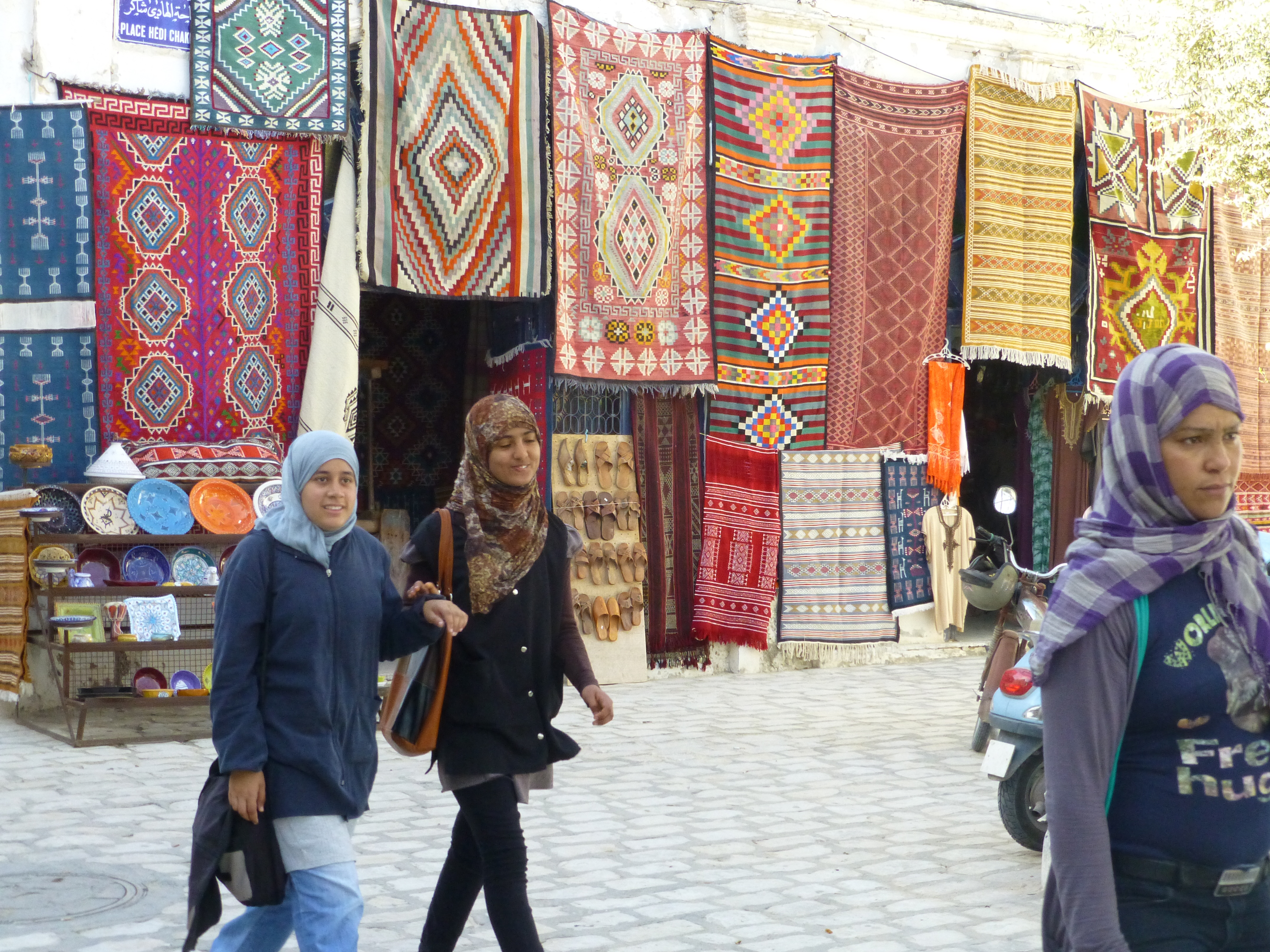
P1020927I am very happy to share this guest blog post, written by a new member of our Cultural Detective community, Dr. Larry Michalak. His story illustrates a topic we’ve posted about before: veiling and how easily people can jump to the (wrong) conclusions about a person’s appearance.

What I particularly appreciate about Larry’s piece is that his list at the end illustrates a vital cross-cultural skill: the ability to generate multiple possible motivations for behavior. This ability is crucially important if we are to get beyond our own biases and expand our worldview, really get to know others, and develop respect, empathy and the ability to collaborate. Here is Larry’s post:

Sit in a café on any street in Tunis (one of the pleasures of life!), and you will notice that the women who pass are covering up more than they used to in years past. There is a new kind of women’s clothing that didn’t exist when I was here in the 1960s—headscarves and smock-like dresses that cover the arms.

This “veiling” phenomenon has become a widespread topic of conversation, journalism, and social and even political analysis. Women began covering up more in the late 1970s, the headscarf was suppressed by the government in schools and public offices until the Tunisian revolution in January 2011, and now women are free to dress as they please.

Some scholars count the percentage of Tunisian women who are veiled, and cite these statistics in articles. This mode of dress (the argument goes) has religious and/or political meaning. It shows an increase in religious conservatism, and/or means that the wearer of the veil is showing sympathy with Islamic politics, opposition to the U.S., etc. When these observations come from secularists they are usually accompanied by expressions of disapproval of the veil.

But there are problems with this argument. One of them is the difficulty of defining what constitutes “veiling.” There is the hijab, which in Tunisia can mean a headscarf or else a headscarf accompanied by a smock-like dress that covers the arms and comes down to the ankles. Sometimes there is just a headscarf, and sometimes the headscarf is worn to cover the woman’s hair—sometimes completely and sometimes not. Full veiling, such as one finds in the Eastern part of the Middle East (e.g., the chador in Iran, the burka in Afghanistan, and the nikab in Saudi Arabia), is very rare in Tunisia. The term “veiling” is used indiscriminately to refer to all these different ways of covering.

Some years ago there was an excellent article in Jeune Afrique by a Tunisian woman journalist who thought that fashion was probably the most important reason for veiling. Some women wear the veil as they would a miniskirt—because it’s the fashion—and the cut and the color are more important than any religious content. Many of these women who veil have never read the Qur’an or performed the prayer. Some go veiled on weekdays and wear bikinis on the beach on the weekend. Some wear the veil to nightclubs with their whisky-drinking boyfriends. And on the boulevards of Tunis, one can see veiled women holding hands with their boyfriends.

My conclusion is: You can’t tell much about people by looking at how they dress. Just as you can’t judge a book by its cover, neither can you judge a woman by her clothing. This goes for men, too. I have known traditionally dressed men with very modern ideas, and men in Western suits who would feel right at home with the Taliban. I once heard a scholar give a paper at a conference, with statistics on what percentage of the women he observed in different places and at different hours were “veiled.” But he was calling lots of things “veils” and assuming that the “veil” reflects religious and/or political opinions.

To make my point, here is a list of ten reasons, other than religious or political, that a Tunisian woman might “veil.”

  1. “I do it to piss off my parents—especially my mother, who doesn’t veil.”
  2. “On TV I saw some women in Egypt who wear it and I think it looks great!”
  3. “I just got married and now I don’t have to advertise my looks.”
  4. “I just washed my hair, and I can’t do a thing with it.”
  5. “So that the guys will leave me alone on the bus.”
  6. “I want people to think that I’m a virgin so that I can find a husband more easily.”
  7. “I’m on my way to have sex with my boyfriend and I don’t want anyone to recognize me.”
  8. “I’m so beautiful that I have to cover up to keep the guys from going crazy.”
  9. “I’m not attractive and I’m self-conscious about it, so I leave my looks to people’s imagination.”
  10. And, finally: “It’s cold out today and I want to keep my head warm.”

In other words, sometimes a headscarf is just a headscarf!

Dr. Larry Michalak is a cultural anthropologist with degrees from Stanford, London and UC/Berkeley. He was Vice Chair of Berkeley’s Center for Middle Eastern Studies for 23 years. His specialty is the Arab World, especially Tunisia, where he was a Peace Corps Volunteer in the 1960s. He has now spent over ten years there. Larry is fluent in Arabic and French. In his retirement he has enjoyed traveling with his wife Karen as an enrichment lecturer for UC/Berkeley and the Smithsonian, and he has also taught on Semester at Sea.  His favorite topics are anthropology of food and anthropology of tourism.

Burka-Clad Super Hero Fights for Girls’ Rights!


ba-cover
This week saw the television launch of an exciting new female superhero, direct from Islamabad, Pakistan: The Burka Avenger!

The star of the animated series of thirteen, 22-minute episodes is a teacher who uses books and pens to fight the evil people who shut down schools and prevent girls from getting an education. The humorous show also teaches kids to protect the environment, and, good news for the Cultural Detective community, to respect diversity and include others.

Each episode features an original song and guest appearances by some of the biggest musical acts in South Asia, including Ali Zafar, Haroon, Ali Azmat, Adil Omar, and Josh. Goals include entertainment and positive messages to youth. The series’ trailer (in English) is below.


The Burka Avenger is the brainchild of Aaron Haroon Rashid, a Pakistan pop star who wanted to create a positive role model to counter the Taliban’s ongoing opposition to girls’ education. In explaining the choice of the burka, which the teacher, Jiya, only wears in superhero mode, Rashid explained, “It’s not a sign of oppression. She is using the burka to hide her identity like other superheroes. Since she is a woman, we could have dressed her up like Catwoman or Wonder Woman, but that probably wouldn’t have worked in Pakistan.”

Of course this may well remind us of the indomitable Malala Yousafzai, whom the Taliban   famously attempted to assassinate last October. On her 16th birthday this past July 12, the amazingly poised and well-spoken Malala delivered the first-ever education policy recommendations written for youth, by youth, to the United Nations (video below). July 12th has now been named Malala Day in her honor.


It is not just Pakistan where girls’ rights to education are in danger. Fortunately, the people at Mighty Girl Books have assembled a terrific list of books for children and teens that explore the challenge of girls’ access to education, worldwide and throughout history.

You may also remember the comic book series “The 99,” in which superheroes inspired by Islam (they are named after the 99 attributes of Allah) fight crime, smash stereotypes and battle extremism. Series creator Naif Al-Mutawa gave a talk at TED Global 2010. A video of his talk is below, and a free online issue is also available.

Need help figuring out 50 million Latinos?

coverLatino—Guest blog post by Brenda Machado-Koller

Yes, I know, it’s a loaded question. But it’s worthwhile taking a look at possible answers.

Latinos or Hispanics are the largest, fastest-growing, and one of the most influential socio-economic ethnic groups in the USA. More than 50 million Latinos reside in the USA today. By 2050, one-in-four US Americans are projected to be of Hispanic descent.

We encounter Latinos in virtually every setting, including business, education, healthcare, politics and in our communities-at-large. It’s time to gain an even deeper understanding of Latinos and to continue building more successful organizations and communities.

You’ll find some of the answers to the fundamental changes in US society in the Cultural Detective® Latino/Hispanic. Interculturalist Dianne Hofner Saphiere and I developed this latest installment of the Cultural Detective Series, and many experts contributed their thoughts to the training materials (my heartfelt thanks to all!). The Cultural Detective Series now includes more than 65 culture- and topic-specific educational guides that have been published over the past decade and frequently updated.

Cultural Detective Latino/Hispanic is available as part of a Cultural Detective Online subscription, or via license as a printable PDF. The participant materials are a 26-page educational guide that introduces an insightful Cultural Lens of overarching Latino values that drive beliefs and behavior. In addition, the package features real life scenarios, best practices and a broad selection of reference materials for further study. Cultural Detective Latino/Hispanic is a powerful tool for human resources professionals, training experts, line managers, team leads or interculturalists who are dedicated to improving organizational effectiveness in a broad variety of settings.

Brenda Machado-Koller is President of Intercultural Business Services LLC. She was born and raised in Puerto Rico by a US American mother and a Puerto Rican father. Brenda holds an M.A. in Intercultural Relations.

Book Review: Global Dexterity

GlobalDexterity

Molinsky, Andy, Harvard Business Review Press. 2013.
ISBN10:1422187276, ISBN13:9781422187272

When it comes to cultural competence, there are some big gaps between knowing about, knowing how to, and actually developing and applying the skills to manage self in real situations. Andy Molinsky, in his new book, Global Dexterity: How to Adapt Your Behavior Across Cultures without Losing Yourself in the Process, has provided us with a methodology for bridging into the third and most critical of these steps. His choice of the word “dexterity” in the title of the book is well chosen to express the fact that we become effective when we have learned how to develop “muscle memory” to respond to real situations in intercultural management and in life, when on strange turf. It is about translating knowledge into behavior and acquiring the habits that make us good at it.

The insights Molinsky provides are not so much about how cultures differ, though the stories he tells make the reader fully aware of the dynamics of these differences. Certainly, one must know and recognize difference, but the book’s key insights are more about how we function wholistically in the circumstances in which we find ourselves. Global Dexterity is a workbook, and the work is up to the user.

Molinsky helps us identify our own “culture code” and that of others — differences in what he calls prototypical thinking and behavior, which may belong to people, to a place or a situation, or to all three at a given moment. In other words, the “detective” work of sniffing out the rules for what is seen as appropriate behavior in a specific cultural setting. The now online Cultural Detective, though not explicitly mentioned in Molinsky’s book, is a good tool for this work. Also, “culture code” as used here should not be limited to the Jungian approach for decoding cultural discourse developed by Clotaire Rapaille, for those familiar with it, though that is also a relevant form of investigation.

Since the variations in code can be almost infinite and therefore paralyzing when it comes to seeking out the right approach to a culture, Molinsky insists we not look for a single “right” behavior, but for a “zone of appropriateness,” a range within which to operate successfully in each culture. He then provides a practical navigational framework for looking into what is most likely to differ as we face situations in this zone. He asks us to pay attention to the relative measures of how direct, enthusiastic, assertive, self promoting and disclosing our behaviors are in comparison with those of the other party. These measures are, admittedly, not exhaustive, but are likely to give us the solid return on our investment of time used to understand and adapt our behavior.

Once aware of the culture code and the zones of appropriateness, the question is how can one stretch one’s comfort zone to overlap with the appropriateness zone of the other’s cultural code. Of course this can be a two way street, but in any case one must diagnose the situation, customize one’s behavior options to fit or bridge the gap, and, ultimately, integrate the customized behavior to the point that it feels right and can become the “new normal” for the situations it fits.

The author identifies three psychological challenges along the way, and he provides a process for dealing with them. First, he uses the word authenticity to speak of the challenge raised by conflict with values and beliefs. Secondly comes competence — does one have the know-how and skill to actually perform the new behavior? The final challenge is dealing with resentment — even if one can perform the behavior, will he or she feel embittered about having to do so?

The helpful metaphor in discussing these challenges is “acting.” An actor needs to learn a new role for a specific part of a drama. Here too, mastering the role needs to be seen as positive acquisition, the realization of potential, rather than as a loss or suppression of self. Today’s language teachers realize this when they no longer speak of “accent reduction” but rather of “accent acquisition.” The search for “authenticity” (the real me) unfortunately is wed to US pop psychology. Objecting, “It’s just not me,” is often an obstacle or an excuse for avoiding the discomfort involved in widening one’s repertoire. Thus, the theater metaphor is particularly useful here. In learning and practicing new skills, it is okay to say, “No, it’s not me…yet…”

So how does one make adopting new paradigm or behavior acceptable to the old self? Besides thinking of it as theater, one can enhance the recognition and acceptance of new behavior by calling on one’s own inner diversity to change one’s perceptions, viz., by aligning the new behavior with one’s goals, weaving it in with other personal or cultural values, or by working to understand and accept the other culture’s logic. If this automatically sounds like rationalistic deviation from what one holds as norms, it must be remembered that we regularly play one value against another in making changes and decisions, and that cultures themselves have both conflicting and complementary discourse to help us navigate life. The author again offers us process, “workbook” pages, for applying this alignment process.

None of this adaptation is likely to occur simply by knowing about differences, and it is here that Molinsky has most to offer to intercultural pedagogy and pedagogues. Few people can incoporate new and alien behaviors spontaneously. It takes practice, practice, paractice, and it is this feature that is most neglected in current intercultural praxis. Gone are the days when a trainer had four or five days to offer participants enough hands-on exercises to try out and then integrate new behaviors in a process of familiarization, rehearsal, and “dress rehearsal” or application to real situations. The reader will have to do this on his or her own, so the author provides pages, tools and questions to facilitate this. There is a potential here for online learning that should be pursued, and Molinsky’s approaches would combine extremely well with a subscription to the Cultural Detective Online tool to provide the ongoing, structured learning needed.

Inevitably, Molinsky points out, we are awash in trial and error, in the challenge of experiential learning. So, he offers further help. There are tips on how to increase one’s chances of being forgiven one’s mistakes, how to look for a cultural model to pattern oneself after, or even how to find a mentor who understands you and your culture well enough to provide feedback, information and support.

What happens, however, when absolutes collide, when ethical standards will be violated if one adapts behavior and accepts practices that are beyond the pale? Here is where the “without losing yourself in the process” line of the book’s title most comes into play. Our creativity for building options is challenged. Humor, gentle insistence, and, if the stakes are not too high, simply contradicting the local norm in your behavior, are given as examples.

Molinsky concludes the book and sums up its import with five key takeaways that compare conventional attitudes about cultural adaptation with the realities that become actionable using the insights, the paradigms and the processes he proposes.

The book is well written and an easy read. The challenge comes if one truly uses the tools it provides to put adaptation into practice. This is incumbant on intercultural professionals who need to model it for their clientele and students. We need to play with Global Dexterity’s excellent start and take it further, lest the old adage, “Those who can do, do; those who can not do, teach!” be applied to preachers of cultural competence who fail to develop and practice “dexterity.”

Using Army Recruitment Ads to Develop Cross-Cultural Skills

Terracotta ArmyLooking for exercises and activities for practicing cross-cultural skills? We at Cultural Detective emphasize that intercultural competence takes practice, is a practice, and cross-training with alternative approaches can help develop strong skills. Here is an approach that I personally never would have thought of, but it is really powerful!

Marion Burgheimer, a very active contributor to our Cultural Detective community, recently shared with us a selection of army recruitment ads from around the world. “Army recruitment ads?!” was my initial thought. I’ve used advertising clips, movie clips, but I for one never would have thought of this approach. Yet, Marion is based in Israel, and for me it makes perfect sense that this approach would be born from that experience. Take a look at the ads and you’ll see what I mean. The differences are astounding.

Marion tells us these ads are terrific tools for learning the skills for discerning what is important to the people with whom we live, work, and in other ways collaborate. The videos are embedded below.

Thank you for your generosity, Marion! Together we can enable equitable, sustainable cross-cultural collaboration!

Activity Instructions:

  1. Have students or participants view the films, then complete one side of a Cultural Detective Worksheet, in order to practice discerning the values at play in the ads, and link them with the messages and wording those values stimulate. Both are important skills that require practice.
  2. As a second step, encourage users to reference the corresponding CD Values Lenses, to see if they provide further clues about and depth of insight into the national values at play in the ads. You can find those Values Lenses in the Cultural Detective Online system.

Australia: (embedding is disabled for this one; just click through)

India

Japan

Lebanon

Russia

USA

Please share with us some of the values you see inherent in these various recruitment ads!

A Question of Trust

Doi Suthep Temple, Horizontal Image (500x332)A small US American software company has been contracted to design some specialized broadcast technology software for a radio station in Thailand. This is the first time the company has received a contract in Southeast Asia and their company executive, Tom Bennett, is looking forward to doing business in the region.

The initial meetings and negotiations with the radio station management have been successful, and Tom Bennett senses that he has built up a good rapport with Khun Chai, the radio station manager. Khun Chai himself is delighted with Tom Bennett’s interest in Thailand and the local Thai community, and he is particularly impressed with Tom’s liking for spicy Thai food. Khun Chai is already contemplating the possibility of doing business with the American company again in the future.

The price is settled, the contract is signed and a deposit is paid…

Are you are a business leader, coach, consultant, speaker or teacher?  Do you want to become culturally competent and self-confident in the global arena?  Does the above story sound similar to projects in which you, your colleagues or clients engage? Despite this auspicious start, all does not end well, as you’ll discover in our upcoming webinar: Cross-cultural Coaching: A Creative and Transformative Process. In that webinar we will introduce you to a powerful and transformative coaching process with Cultural Detective Online!

The coaching process combined with Cultural Detective Online provides you with a comprehensive learning experience that is stimulating, supportive and transformative! In addition to exploring key cultural concepts and culture-specific information, the collaborative and creative coaching environment helps you develop new perspectives and skills for bridging the gap between your personal cultural “sense” and the cultural “sense” of your colleagues and clients.

Our facilitator will be Jan O’Brien, IAC-MCC, who will show us how she coaches expatriate executives towards cross-cultural success. Jan is President of Culture-Conscious International, a coaching and consulting company based in Houston, Texas. She is a US/UK dual national and has lived and worked extensively overseas, in particular in the US and the South East Asia region. Jan is a Certified Cultural Detective facilitator and a Master Certified Coach with the International Association of Coaching (IAC). She has worked with clients from many language and cultural backgrounds and has personally experienced the benefits and challenges of living and working in the global arena.

Register now, as only a few seats remain.

Meeting time is Tuesday 23 July, 2013 at 10 am Mazatlán, Sinaloa, México time. Meeting place is online. Please consult a world clock to verify your local time. 
  • Los Angeles: 8 am
  • Houston: 11 am
  • New York & Santiago de Chile: 12 noon
  • Buenos Aires or Rio: 1 pm
  • Brussels, Paris, Rome, Johannesburg: 6 pm
  • Abu Dhabi & St. Petersburg: 8 pm
  • Delhi: 9:30 pm

TCK (Third Culture Kid) Stories On Film

Video

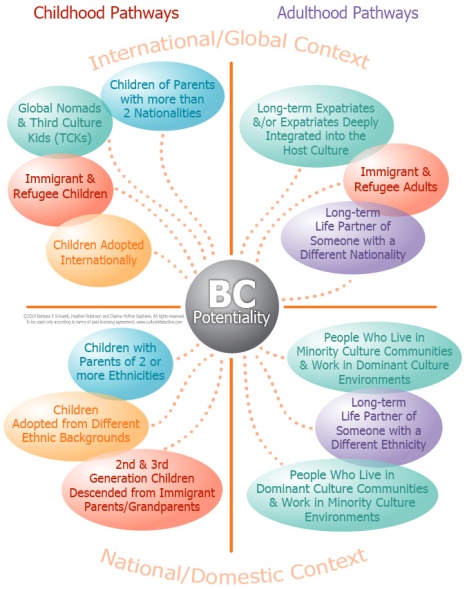
Paths to BCThird culture kids, or “TCKs.” One type of Blended Culture, TCK refers to those of us who have grown up in multiple locations and enlarged our definitions of “home.” We have multiple homes, all near and dear to us. We have multiple cultures, some of which we may be more fluent in than others, and all of which hold deep meaning for us. And, we have created “third cultures,” “blended cultures,” a global, multicultural or cosmopolitan definition of self and family.

The Blended Culture experience is increasingly common. As an expatriate myself, my son is a TCK with multiple national culture affiliations; it’s crucial for me to understand a bit of his experience if I am to parent him appropriately. I pray he grows up to reconcile his identity in constructive, multicultural ways. For those of us who work in international business, schools, study abroad, and with immigrants, it is also extremely helpful to understand at least a bit about the TCK experience. Three recent films may help us do just that.

The first film is called So Where’s Home? A Film About Third Culture Kid Identity, and is by Adrian Bautista. You can view the nine-minute film in its entirety below.

A second film is the award-winning “The Road Home,” directed by Rahul Gandotra. This 24-minute short can be rented or purchased, and the director is currently making a feature length movie about the same characters. You can view a two-minute clip of the film below.

TCKs have unique skill sets and unique challenges. The powerful trailer below (almost nine minutes) shows us what Aga Alegria has in mind as she sets about fundraising to make her documentary film about the TCK experience. Click here to learn more about that effort, or perhaps help her out.

http://vimeo.com/11658942#at=0

We wish all these ventures very well with this important and timely topic! Learn more about a tool to help make the most of the TCK experience.