
Happy New Year! New Year’s and Calendars Around the World

WorldCalendars

Happy New Year!!

Our greetings are sincere; we wish the best for our colleagues, partners, and friends. Intent is important. However, even the most sincere greetings, when unaccompanied by a broader mindset of cross-cultural awareness, can come out sounding neocolonialist, disrespectful or just plain ignorant.

Most non-Chinese know that Chinese New Year often happens in February and is based on a lunar calendar. Many non-Jews are aware that Rosh HaShanah is the Jewish new year, and that it usually occurs around September. But what about other nations, cultures and traditions: when do they celebrate their new year? And how can we demonstrate cross-cultural sensitivity when we wish to express appropriate New Year’s greetings?

The first step is to recognize our own Lens, our own cultural filters. A “happy new year” greeting focused on January 1, 2013 is based on the Gregorian calendar, use of which was ordered by Pope Gregory XIII in 1592. Even Protestant Europe was slow to adopt this calendar, but over the centuries it has gained widespread use to become today’s de facto international standard. Most countries in the world now use it as their sole civil calendar, with exceptions including Saudi Arabia, Iran and Afghanistan. Countries that use another official calendar alongside the Gregorian include India and Israel. To detach the Gregorian calendar a bit from its Roman Catholic roots, it is also called the civil calendar or Common Era (CE) calendar.

Having a recognized international standard is a major change. Thirty-five years ago, when I first started working with a telex machine in Japan, I had to convert dynastic dates to CE dates as part of my daily tasks (I also used a HUGE kanji typewriter that provided me a daily physical workout, prior to the advent of word processing). Now, the general acceptance of the CE calendar is a sign of how much cultures that did not traditionally use the Gregorian calendar have adapted in order to more easily collaborate. Of course, another point of view is that this adaptation shows the success of the Christian colonialists imposing their standard on the rest of the world.

Either way, there is a great need for those of us comfortable with the Common Era calendar to learn a bit about other world calendars, to gain a basic knowledge about and be able to communicate respect for them. Thus, the second step in building cross-cultural competence is to develop our curiosity and knowledge about world calendars.

While the CE calendar is in popular use, alongside it and sometimes instead of it people around the world use solar calendars, lunar calendars, lunar-solar calendars, arithmetic and astronomical calendars. You may see dates you don’t recognize in newspapers when you travel, or in official government or religious documents. Non-Gregorian dating is commonly used to determine holy days, holidays and festivals in many of the world’s traditions. These local, regional, and religious calendars are frequently used to report birth and death dates, and major life and world events. It can get confusing for the international traveler or global nomad, not to mention the unwitting blogger or small business person with an Internet site! There are seven billion people on our planet, and according to my quick calculations, fewer than 10% have primarily used a Gregorian calendar for even most of my lifetime.

How can we navigate the multitude of calendars in our world? Surely we can not be expected to understand or be fluent in all of them. How can we show sensitivity, respect, and a bit of knowledge, rather than arrogance, ignorance, or insult? The third step is to bridge the differences — to understand and learn to work with our partner’s or customer’s traditional calendar.

6 Tips for Partnering with People Who Use
Calendars Different from Yours

  1. Remember that the Common Era calendar is not the only calendar in the world.
  2. Realize that it’s origins are in western Christianity. Avoid the use of “BC,” which refers to “before Christ,” and “AD,” the Latin term Anno Domini. Instead, use “BCE” (Before the Common Era) and “CE” (Common Era).
  3. Do a bit of research about your major customers and partners. What are their spiritual practices? Their ethnic backgrounds? Where are they based geographically? Once you’ve done your homework, you’ve acquired a very basic level of cultural literacy regarding possible calendars your colleagues might use.
  4. Ask them. Asking how an organization and a community dates documents, and how they calculate and observe holidays, shows that you know there are many ways of doing things, that your way is not the only way. It demonstrates a respect for other traditions and helps to build relationships based on mutual trust.
  5. Respect your colleagues’ holidays. If you are told that business closes on certain days, don’t try to undo centuries of tradition. I have so often seen this error committed during my career. An executive insists that employees work on a day that is usually a holiday, as the organization is on a deadline. In the short term, this strategy may be successful. But the long-term negative consequences, in terms of lost loyalty and reputation are immeasurable. Better to focus on outcomes: how can we meet this deadline? Brainstorm with your employees and partners to find mutually acceptable rather than unilateral ways forward.
  6. Offer New Year’s and other holiday greetings as appropriate to your colleagues’ traditions. That usually means that a New Year’s greeting on January 1st will be well received, and often means that another greeting, on their calendar’s New Year, will be even more special. Make a note in your calendar to jog your memory. Such a practice is a solid and frequent reminder that our way is not the only way.

While far from a complete list, I did some research to produce a bit of a guide (below) to some of the world’s calendars in current use. Please note any corrections in the “Comments,” and we will edit as needed. Thank you!

  • Bahá’í (Badí‘): The year 170 BE in the Bahá’í calendar will begin on March 21, 2013 (spring equinox), the 1st (or Bahá) of the month of Bahá in the year Abhá. The Baha’i calendar begins with Bab’s declaration in 1844.
  • Chinese (Mainland): The first day of the year of the Snake 4711 will be February 10, 2013. Legend has it that the Emperor Huangdi invented the calendar in 2637 B.C.E.
  • Chinese (Republic, Minguo): January 1st will bring in the year 102 in Taiwan, Kinmen and Matsu. The calendar began in 1912, the year of the founding of the Republic of China.
  • Coptic (Alexandrian): The Feast of Neyrouz or New Year’s 1729 AM (Anno Martyrum or “Year of the Martyrs”) was September 11, 2012.
  • Eastern Orthodox (Julian): The first day of the year 2013 was on December 19, 2012. It may be worthwhile noting that both Coptic and Eastern Orthodox Christians celebrate Christmas on January 7th (not December 25th).
  • Ethiopian (Ge’ez): Enkutatash, or the new year 2005, began September 11, 2012.
  • Hebrew (Jewish): The year 5773 began on the 1st of Tishrei (the 7th month in the Jewish calendar), or September 16, 2012 — Rosh HaShanah, the day Adam and Eve were created. The Jewish calendar has another New Year’s, the 1st of Nisan (the first month). It will be on March 12, 2013, and is used as the new year to order the holidays. It is seen as the anniversary of the founding of the Jewish people.
  • Indian National Calendar (Saka): The 1st of the month of Caitra, year 1935, will fall on March 22, 2013. The current Saka era began in 78 CE.
  • Indian Popular Calendar (Vikram Samvat): The year 2069 will begin the first day after the new moon in the month of Chaitra, April 11, 2013 — Hindi New Year.  In the Gujarati tradition, it began on the day after Diwali, on the 1st of kartak or November 14th. The calendar was created by the Emperor Vikramaditya of Ujjain following his victory over the Shakas in 56 BCE.
  • Indigenous, First Nations, and Native Peoples: There are many communities and much diversity worldwide. A lunar calendar is generally used and the year revolves around the seasons.
  • Islamic (lunar Hijri): The year 1434 AH began on the 1st of Muharram, November 15, 2012. The Islamic calendar begins when Muhammad emigrated from Mecca to Medina in 622 CE.
  • Japanese: January 8th will bring in the 1st of the year Heisei 25, which began when Emperor Akihito took the throne in 1989 (year one).
  • Mayan: A new baktun or cycle begins December 22, 2012.
  • Persian (solar Hijri): March 21st, or the 1st of Farvadin, will greet the year 1392 SH. It is determined by the spring equinox. Norouz or Persian new year has been celebrated for at least 3000 years and is rooted in the Zoroastrian tradition. The calendar marked its beginning in agreement with the Islamic calendar based on Muhammad’s emigration from Mecca to Medina (Hegira). Due to the Persian solar adjustment to the Islamic lunar Hijri calendar, the year count between the two calendars has diverged.
  • Thai (Suriyakhati): January 1st will bring in the Buddhist year 2556 of the Thai solar (legal) calendar.

Additional Resources:

Two handy calendar converters:

Readers, we look forward to hearing you tell us about your New Year’s. What greetings do you prefer, and when? How do you celebrate?

Whichever calendar you prefer, the Cultural Detective team wishes you all success, health, and joy!


El candidato ideal

(English follows the Spanish)

En un mundo cada vez más interconectado y globalizado, las asignaciones internacionales suelen ser más frecuentes para empleados de empresas multinacionales. Dado lo anterior las empresas han dispuesto de grandes esfuerzos y recursos para optimizar su selección del candidato ideal para las vacantes que surjan y poder iniciar el proceso de expatriación (traslado laboral a otro país con beneficios para el empleado y su familia).

Los llamados departamentos de personal o recursos humanos han alineado sus procesos de reclutamiento y selección con el fin de optimizar la búsqueda y el tan ahnelado hallazgo de quien cumple con los requisitos del cargo y adicionalmente sea capaz adaptarse a un entorno que puede ser similar y muy distante del actual.

A priori se consideran el dominio de los idiomas o experiencias previas en otros países y culturas, lo que podríamos denominar un bagaje intercultural. Sin embargo esto no siempre resulta, ni para la empresa ni para el expatriado.

Conozco dos casos contrastantes de primera mano. Los dos llegaron aquí a Bogotá, de dos países diferentes y para dos asignaciones igualmente diferentes.

El primero venía de Europa, de uno de esos países con cultura monosincrónica, bastante rígido con el tiempo y de los que la puntualidad es un tema que no tiene discusión. Había vivido en Estados Unidos y varios lugares de Europa, incluyendo España por lo cual domina el castellano (con el ceceo que decimos los latinos, yo digo que los españoles hablan siempre con ortografía), soltero, sin hijos y sin pareja. Cambiaba de industria, pero su trabajo vincularía a partir del área comercial su país natal y Colombia como puerta de entrada a América Latina. Llegó con lo que los locales consideramos un muy buen salario, un apartamento en una zona lujosa de la ciudad (cerca a su nueva oficina) y todo el apoyo de su empresa para comenzar una nueva sucursal en mi país. Su tiempo estimado de dos a tres años inicialmente.

Por otro lado, tenemos a un hombre que venía de Israel sin hablar una sílaba de español, casado (llegó con dos hijos, hoy ya tiene tres ) quien vino por una asignación puntual de seis meses. Llegó solo y solamente a dirigir un proyecto de infraestructura en la ciudad. Se enfrentó a dirigir cien operarios y, si podemos decir, a golpes comprender por qué la cerveza es parte del presupuesto de muchas familias de estos empleados a su cargo. Tuvo que lidiar temas familiares, de rendimiento del trabajo individual y de grupo. Aprendió de primera fuente cómo era la contratación pública en Colombia.

Dos escenarios totalmente opuestos y con resultados igualmente contrastantes.

El primero a pesar de su buena voluntad, su dominio del idioma… no logró adaptarse a nuestro entorno, cultura e impuntualidad. Cuando hablaba con él recordaba mi propia vivencia cuando en el Caribe me era tan complicado sentirme fluir. Tuve amigos, pasé momentos muy especiales… pero siempre había algo que me decía, no es tu lugar. En fin, así le pasó a este ejecutivo que no completó el primer año de contrato y se regresó a su país. La última vez que nos comunicamos estaba de paso en Singapur, volvió a su anterior industria y por Facebook me entero de sus movimientos alrededor del planeta (Australia, Alemania, Francia, Estados Unidos…) no ha regresado a Colombia, espero que nos podamos volver a encontrar y disfrutar una buena copa juntos.

El segundo ya habla muy bien español, lleva siete años en el país y ahora ha fundado su propia empresa con talento en un 90% colombiano. Su familia vive con él, y su hijo menor nació aquí. A pesar de tantas diferencias entre su cultura y la nuestra, aprendió a nadar en nuestro rio y podría afirmar que se mueve como pez en el agua. Se proyecta como representante de varias empresas de su país en América Latina, y como dijo uno de nuestros políticos alguna vez… es como si dijera “aquí estoy y aquí me quedo”.

A primera vista el primero de los candidatos se perfilaba como el candidato ideal para quedarse (conozco por cierto muchos solteros que llegan, se casan y se quedan en mi país gracias a la buena fama de las mujeres), pero no fue así y el que parecía que no se quedaría más allá de su asignación regresó a su país por su familia para traerla consigo y quedarse indefinidamente.

No dudo que los departamentos de personal o recursos humanos asociados a cada uno de estos casos y sus esferzos de “relocation” fueron minuciosos, estudiados y abordados con profunda seriedad y profesionalismo. Pienso que a veces, el paso adicional nos corresponde a los que aplicamos y ser muy honestos con nosotros mismos y en la evaluación previa de las nuevas condiciones de vida.

Nuestro desafío desde el punto de vista intercultural es brindar las herramientas adicionales que permitan tomar la decisión más acertada según las condiciones disponibles y hacer el acompañamiento de entrenamiento para su nuevo destino desde el punto de vista de la vida diaria, cultura de negocios, la vida para el empleado y su familia, entre muchos otros.

Debemos entender que no es ni bueno ni malo sentirnos o no a gusto en otro lugar (país, región, entorno). Sin embargo sí debemos conocer lo que más nos impacta (a nosotros y cuando aplique nuestras familias) y por ende identificar en qué lugar nos podemos trasladar para cumplir con el trabajo y además llevar una vida a gusto con nuestra familia.

The Ideal Candidate

By Maryori Vivas, translated by Dianne Hofner Saphiere

In a world that is increasingly interconnected and globalized, international assignments seem ever more frequent for employees of multinational companies. Given the above, firms have invested great efforts and resources to optimize their selection of ideal candidates to fill job vacancies and to be able to initiate the expatriation process (job transfer to another country with benefits for the employee and family).

Personnel and human resource departments have aligned their recruitment and selection processes to optimize the search for those who meet the requirements of the position and who are also capable of adapting to an environment that can be at the same time very similar and very different from their home environment.

It’s considered logical that a successful candidate would have mastery of the new language or previous experience living abroad, but that is not always the case.

I have firsthand knowledge of two contrasting cases. Both transferees arrived here in Bogotá from different countries and for two very different job assignments.

The first person came from Europe, from one of those countries with a monochronic culture, fairly rigid about time, with the belief that punctuality is not a matter for debate. He had lived in North America and various places around Europe, including Spain, and for that reason spoke Castilian well (with the lisp about which Latinos say, “Spaniards always speak with good spelling”). He was single, had no children and no partner. He had changed industries, and his new job involved commercially linking his birth country with Colombia as a gateway to Latin America. The position came with what locals would consider a very good salary, an apartment in an upscale area of the city (near his new office), and the full support of the company to start a new branch in my country. His assignment was estimated to be two to three years, initially.

The contrasting case was a man from Israel, who arrived without speaking even a syllable of Spanish, married (when he arrived he had two children, and today has three), who came for a short-term, six-month assignment. He arrived alone with the single objective of directing an infrastructure project in the city. He needed to manage one hundred operators and, if I might say so, via the school of hard knocks he learned to understand why beer is part of the family budgets of so many of those he supervised. He was thrown into managing employee family issues, individual performance issues, as well as group dynamics. He learned firsthand about public contracting in Colombia.

These were two scenarios that were totally opposite and with results that were equally different.

The first gentleman, despite his goodwill and language skills, failed to adapt himself to our environment, the culture and the tardiness. When I spoke with him I was reminded of my own experience living in the Caribbean, where I found it so complicated to get in the flow of things. I had friends, I had some very special moments, but always there was something telling me, “this is not your place.” In the end, what happened is that this executive returned home before even completing the first year of his multi-year contract. The last time I was in touch with him he was passing through Singapore. He had returned to the previous industry in which he had worked, and I found out via Facebook about his travels all over the world (Australia, Germany, France, USA). He has not returned to Colombia, though I hope we can meet up again some day and enjoy a good drink together.

The second gentleman now speaks Spanish very well. He has spent seven years in country and has now founded his own company with 90% Colombian talent. His family lives with him, and his youngest son was born here. Despite so many differences between his culture and ours, he learned to swim in our river and I can affirm that he moves here like a fish in water. He acts as a Latin American representative for several companies from his country, and as one of our politicians once said, it’s as if he said, “I am here and here I’ll remain.”

At initial glance the first candidate seemed to have the ideal profile for a long-term stay (I definitely know many bachelors who arrive, marry and stay in my country thanks to the good fame of our women), but it was not to be. The one who it would have seemed would not remain beyond a short initial assignment ended up returning to his country to collect his family and bring them back with him to stay here indefinitely.

I have no doubt that the personnel and human resource departments associated with each of these cases engaged in thorough and studied relocation efforts, discussing them with deep seriousness and professionalism. I think that at times, however, the extra step needed is for those of us who apply for overseas assignment to be very honest with ourselves about our life conditions, needs and desires.

Our challenge from an intercultural perspective is to provide additional tools that allow people to make the right decisions according to current realities, and to accompany that with training on daily life, business culture, and personal and social life for the employee and family in the new destination.

We must understand that feeling at home or not in another place (country, region, environment) is not in and of itself good or bad. The key is that we need to know ourselves and our families, what most affects us, and thus be able to discern where we can move in order to conduct our work and maintain a comfortable life with our families.


Developing Intercultural Competence — Online?

“While other cultural databases do an effective job of providing country overviews, Cultural Detective Online offers unique and complementary capabilities.”
—Joseph K. Lunn, Project Portfolio Manager and Cross-Cultural Trainer, Zurich North America

What makes for a truly useful online learning tool? When I asked intercultural trainers this question they seemed to want to be able to emulate the face-to-face environment as much as possible. Keep the learners’ attention, make it experiential, real and applicable — and make them think! They don’t need “the answers,” they need to know how to come up with real solutions when they find themselves in the midst of cross-cultural conflict. Oh, and you know the old adage, keep it simple!

So, when developing the Cultural Detective Online tool, some key fundamental concepts were kept in mind:

  1. Personal/professional goal setting should be at the entrance to working with the tool — what are the learners’ objectives in using the tool? They should be able to adapt and change these but also keep them in mind in order to stay on track and achieve them.
  2. Culture-general and culture-specific content and process — this is fundamental to working with the Cultural Detective Method (read more by Janet Bennett on this topic if you are up on it), so no challenge here!
  3. Contextually based learning — also core to the Cultural Detective Methodology is working with real-world critical incidents and pushing the learner to develop an understanding of the underlying role and subtle nuances cultural values can play in everyone’s lives.
  4. Links between deep culture and surface culture, between values and behaviors — again innately a part of working with the Cultural Detective tools and richly impactful (where we get the big aha moments) once the learner discovers, develops and really hones this skill.
  5. Prompting for the learners to summarize and apply their learning to their real situations — this is where the work they’ve put in pays the learner back; in other words what’s the bottom line? How can I really use what I just learned to make a value added difference in my work, in my global team, with my international vendors/clients/offices, etc.?
So we’ve heard from some of our early adapters — Cultural Detective Online will take you further in your intercultural competence journey. Joseph Lunn of Zurich NA says,

“In addition to crisp, clear detailed summaries of each country’s cultural values, the nearly 400 cross-cultural incidents provided show users exactly what can go wrong when cultural understanding gaps exist. The tool follows-up by sharing the differences in cultural values that underlie each incident and offers concrete suggestions to build cultural bridges and avoid similar incidents. CD Online is a great hands-on teaching tool that adds value to:

    • Employees beginning overseas assignments
    • Global project team members
    • Mergers and acquisition partners
    • Outsourcing engagements

Thanks for making this tool available to those who need it at a reasonable cost!”

Developing intercultural competence online? Of course! Take a test drive and see for yourself: Cultural Detective Online!

Every Organization Needs Intercultural Competence

Nearly every organization these days, even the smallest and most local, works with diverse customers, team members, vendors, and service providers. A corner grocery store serves people from different age groups, ethnicities, and spiritual traditions. So, which holiday greetings should the grocery store use, if any, so as not to offend or exclude? Why do some of the regular customers talk only to male employees? Could the store increase profits or attract new customers if it started offering halal meats or Latino grocery items?

What about the graphic designer who puts up a website or Facebook page designed to attract local clients, only to find that the first inquiries come in from overseas? The mere fact that you have an online presence can mean you offer your products and services worldwide. And what about the free clinic that finds itself dealing with patient care issues of recent immigrants from places halfway across the planet? Or disaster relief agencies attempting to coordinate aid from around the world, getting it to the places it needs to be, quickly?

Cross-cultural competence, the ability to communicate effectively across cultures, is a mandatory skill in today’s interconnected world. It will help you:
  • Service diverse customers in the ways they expect.
  • Attract, retain and make the most of the talented professionals your organization needs to succeed.
  • Sell more products or services, to the people who need them.
  • Achieve success in your negotiations.
  • Discern the “right” mergers and acquisitions for your purposes.
  • Get more productivity and satisfaction out of your local and virtual teams, projects, and vendors.
  • Jump start the outcomes of study abroad and international education, as well as expatriate assignments.
  • Ensure you get the most out of the time and money you invest in international, cross-country and regional business travel.
  • Develop mutually respectful relationships with clients, employees and other stakeholders.

Cross-cultural competence is a needed skill for all of us, and it helps improve our family and social lives as well as our work lives. But amidst all the competing priorities for our time and attention, how can we develop such competence? To most of us, going back to school or even taking a few days off work for a class isn’t doable. And besides, like physical fitness, cultural fitness requires ongoing, structured practice, not just one trip to a training room.

If only there were an online cross-cultural coach available to us anytime, anywhere, at low cost. One that didn’t make us memorize lists of dos and don’ts, that didn’t promote stereotypes but rather encouraged dialogue and critical thinking. An online coach that would provide a process for recognizing cultural differences, helping us to understand and leverage them as assets rather than as roadblocks. Better yet, an online coach that could help us make sense of our everyday experiences, learning how to transform obstacles into opportunities, and frustration into innovation. A tool we could navigate freely, according to our needs and interests, not some online talking heads or narrated slide show. A tool that would be available on our time — when and where we want it…

I am very excited to be able to share with you just such a solution, yours free for three days, no strings attached. It is a brand new online system based on the proven Cultural Detective Method used by governments, NGOs and for-profit organizations around the world.

Free 3-day trial to Cultural Detective Online!

Cultural Detective is directly responsible for a 30% increase in our customer satisfaction ratings.”

Cultural Detective sped up my learning curve; it allowed me to become a part of the team and have an impact on the business more quickly.”

“I have received kudos from my managers and the Vice President for having chosen the Cultural Detective. But the kudos should really go to you. Cultural Detective is a rock solid methodology.”

Pass this offer around; the 3-day-free trial offer is good from now through December 31, 2012.
To redeem:

  1. Log on to http://www.culturaldetective.com/cdonline/orders/trial
  2. Enter your name, email address and the code: Promo3
  3. You will receive a verification email from cdonline@culturaldetective.com. Click the link in the email, follow the instructions and you will be ready to go!

Enter your learning goals, explore 50+ fully integrated packages including full Values Lenses and 400 Critical Incidents, or upload and debrief your own real-life situations. Your customers, partners and employees, even your family members, will notice the difference!

Improve your ability to understand and collaborate across cultures, and help your friends, family members and colleagues to do the same! Let’s create a more inclusive, creative, collaborative and productive world out there! Get a clue!

What Do You Mean?! I’ve Worked Abroad 20 Years and Score Low?!

Image from The Vegetarian Athlete

So many of you seemed to resonate with my blog post about intercultural fitness, Tweeting it, Scooping it and passing it around the social media networks, that I thought you might be interested in a short article I originally drafted back in 2005 that uses the metaphor of an athlete to explain intercultural competence.

Developmental Intercultural Competence and the Analogy of an Athlete

Milton Bennett’s Developmental Model of Intercultural Sensitivity (DMIS), first published in 1986, provides a well-regarded theory about the process people go through as they learn to make sense of the complexity of cross-cultural communication. In the late 1990s after much research, an assessment for measuring intercultural sensitivity based on the DMIS was developed. Version 3 of the Intercultural Development Inventory (IDI) is currently in use by qualified practitioners. Owners and users of the IDI have in turn used their results to revamp the DMIS into the Intercultural Development Continuum (IDC).

While such tools can be useful for measuring program effectiveness when used for pre- and post-testing, and can be hugely beneficial for individuals who want to improve their cross-cultural communication and collaboration, there are downsides. I’ve worked with career expatriates and global nomads, for example, who score quite low on the IDI. What this means is that the low-scorer may have a lot of experience, but has not yet engaged in systematic, structured sense-making of those decades of complex intercultural experience. I’ve also worked with quite a few individuals who value harmony as fitting in, and thus, on a scale that measures celebrating differences, they score comparatively low. Predictably, low scores can cause people to become focused on discrediting the instrument or rationalizing the assessment process, rather than on gaining benefit from what the results have to say.

To help learners focus on the guidance these tools can provide, I often use the analogy of an athlete. Just as athletes need multiple abilities to perform well, so do intercultural communicators. Both athletes and intercultural collaborators can use assessments to guide their performance improvement training.

Let’s say that the data on my athletic performance shows that I need increased flexibility. I dedicate several months to becoming more flexible, and then my coach tells me that I now need to shift my focus to building strength — of course while maintaining my flexibility. Months later, I may find that I need to refine my technique in order to make the most of my superior strength and flexibility. Or, I get injured, and I decide to add to my training a focus on my mental game: overcoming adversity, learning from mistakes, being fully present in the moment. Athletes thus focus on multiple abilities at different points throughout their careers in order to perform at their best.

In a similar way, the DMIS, IDI and IDC can be used to show us which issues we should focus on at a given point in time in order to maximally improve our intercultural performance. While developmental models and assessments are designed as measuring sticks or standards of comparison, their value for personal competence development is to highlight to us what competencies we should focus on building at each point in our careers in order to improve our overall performance.

Each of us has to balance the dynamic between comfort and stretch, challenge and support, growth and rest, in our own ways. Knowing what we are good at, as well as where we can improve, can help ensure we continue to develop. Using an assessment tool to gauge and target our intercultural development, in combination with a competence development tool such as Cultural Detective Online for ongoing, structured learning, is a powerful combination.

Cultural Detective Online is LIVE!!!!!!!!

Cultural Detective is proud to announce the new product launch of Cultural Detective Online! This tool is like having a virtual coach in your back pocket, successfully guiding you through the all-too-common missteps of cross-cultural negotiations and communications. Please check out the four videos on the home page. Today only (15-16 October, depending where you are on the planet) there is a 25% launch discount; enter promo code:   CDO-blog25  during checkout.

Huge thanks goes out to each of you who have worked with and incorporated the Cultural Detective Method into work with your clients or employee populations globally, as over the past eight years this tool has become a significant contribution to the intercultural field. Because of our clients and team, Cultural Detective has become globally recognized as one of the premier developmental tools of our time. Now we are on the cusp of very exciting and broader use of the tool through Cultural Detective Online! This new product launch furthers our mission of encouraging communities globally to prosper through intercultural understanding and collaboration.

Cultural Detective Online is useful in a broad range of contexts including global business negotiations and multicultural team effectiveness, international assignments and study abroad, and for successfully communicating within our families and communities, and within and across faith traditions.

A subscription to Cultural Detective Online offers the opportunity to explore the concepts of “culture” and “values” and how they impact communication in everyday life. It provides access to dozens of culture-specific Values Lenses and topic-specific Challenges Lenses, hundreds of real world cross-cultural incidents, and the easy-to-use Cultural Detective process for improving the ability to collaborate successfully across cultures, both on individual and organizational levels.

We are excited to announce that subscriptions are now available for individuals or groups, and we invite you to subscribe to Cultural Detective Online today by visiting http://www.culturaldetective.com/cdonline/ ! Subscriptions start at less than US$100/year, and are less for larger groups of subscribers. You will rarely find more value for your money.

Cultural Detective Online for International Teams

You’ve already told us Cultural Detective is fabulous. That it’s helped your team achieve its deliverables. That it’s rocketed your performance to new levels. That’s why we are very excited to SOON be able to offer you the Cultural Detective product line as an integrated, online system rather than as stand-alone packages! And, better yet, it’s designed as a personal coach, encouraging you and your team members to track your goals, summarize and apply your learning, and upload, debrief and share with a facilitator, team lead or each other your daily life experiences (and make accurate meaning from them).

Be sure to stay tuned for our official launch. Or, enter to win a free subscription for you or your team!

If you are unable to view the video above (if you are on an iPad or other device that doesn’t play Flash), click here to view the video on YouTube.

Please feel free to share this video with others who might be seeking a virtual intercultural coach. Please let us know what you think! Thank you!

Latino Growth in USA Signals Need for Change

Andrés Tapia has written an article for Diversity Executive, in which he outlines the need to adapt US business practices in order to attract, retain and make the most of Latino talent. In the article, he references (and gives you a sneak peak of) our upcoming Cultural Detective Latino/Hispanic.

Cultural Detective Online: Virtual Coach for Expats and Business Travelers

You’ve already told us Cultural Detective is fabulous. That it’s helped your team achieve its deliverables. That it’s rocketed your performance to new levels. That’s why we are very excited to SOON be able to offer you the Cultural Detective product line as an integrated, online system rather than as stand-alone packages! And, better yet, it’s designed as a personal coach, encouraging you to track your goals, apply your learning to your business objectives, and upload and debrief your own life experiences.

Be sure to stay tuned for our official launch. Or, enter to win a free subscription for you or your team!

If you are unable to view the video above (if you are on an iPad or other device that doesn’t play Flash), click here to view the video on YouTube. Please feel free to share this video with others who might be seeking a virtual intercultural coach. Thank you!

Diversity and Attrition in the Global Executive Suite

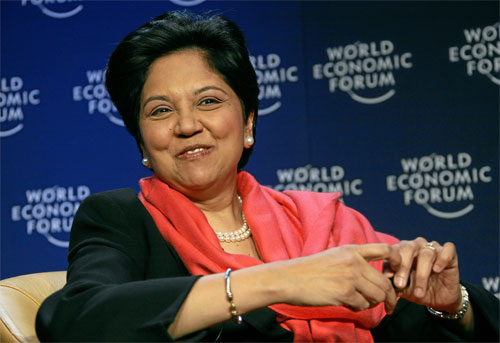
Image of Indra Krishnamoorthi Nooyi, PepsiCo CEO (NOT the subject of this post)

A major global corporation lost a 25-year senior executive at the prime of her career. She explained in her exit interview, “The corporate culture here is too parochial and I am tired of fighting it.”

How did the company lose such a gifted executive, at the point it could have most benefited from her contributions?

I will tell you a story that she shared with me, one that will hopefully provide a taste of how she felt during her career with this company. She shared the story with me at the conclusion of a two-day training course I had conducted, in which she had just participated.

“Dianne, I have so very much enjoyed this global management training you have facilitated for us. These are exactly the cross-cultural skills and mindsets needed in our world today! You are providing us tools and processes for acknowledging and using unique contributions, hearing the voice and perspectives of all involved. This type of training is so very different from diversity training,” she told me.

Well, I happen to be a fan of diversity training. I was troubled by her words, and wanted to understand what this obviously intelligent, wise woman did not like about it.

“Well, Dianne, in my experience diversity trainers go through the motions. They do activities and they often don’t know why. I’ll give you just one example. A year or so ago I was in a senior management diversity training. The facilitator asked us to stand in a line, side by side. He instructed us to take one step back if English was not our first language. A step back if our skin color was not white. He said to take another step back if we were not Christian. A step back if we had not attended a first-tier university. On and on he cited the categories, and I took so many steps back that I was the only person at the far side of the room, alone. There were several others in between, but I was visibly alone.”

“I thought to myself, ‘YES! THIS is what I’ve been trying to tell you all these years! This company forces me to do backbends and jump through hoops in order to succeed! I have to lose who I am to influence decision making. I have to communicate in a way I dislike in order to be heard! Let’s change this corporate culture to be more inclusive!’ Oh, Dianne, I was so excited by this powerful exercise!”

“But, do you know what happened? The President of the company looked at me standing there in the back of the room and said, ‘Look how inclusive we are. A dark-skinned woman, an Indian Jain, can become a senior director!’ I thought to myself, do you know how much harder than a man I have had to try to succeed? How much harder than a white skinned person? How much harder than a European or American? He seemed to have no idea of the price I’d had to pay for my promotions. He didn’t acknowledge my accomplishments or the super-human efforts of other minorities in our organization. Rather, he prided the company on its color-blindness! And worse yet, the trainer didn’t say anything! The exercise concluded, and we went on to the next activity! Rather than a learning moment, the activity only reinforced ignorance and legitimized discrimination! I was absolutely crushed and stunned.”

Such a loss for this corporation. Such a difficult decision for this woman to have had to make. It was also a challenging position for the trainer to have been in; hindsight is 20-20 regarding how the trainer could have handled the President’s comments, and debriefed the activity, more effectively.

Let me close by asking you this: Have we all taken the time today to empathize, to put ourselves in someone else’s shoes? Have we done our part to change dysfunctional systems? What have each of us learned today?

I look forward to your comments on this post. Thanks!

Linked to the My Global Life Link-Up at SmallPlanetStudio.