The Best-Kept Secret of Successful Teams

4 Phase ModelAlmost every team and community today is diverse in some way or another: gender, age, spirituality, professional training, ethnicity, nationality… While we respect other styles and cultures, most of us still get stuck at some point where we say, “OK, we’re different; now how do we work (or live) side-by-side? How do we harness our differences as creative assets? At a minimum, how do we simply keep from driving each other crazy?”

We might work with partners who view time as flexible and events as unfolding. This may mean that, to them, deadlines are mutable and subject to change. Meanwhile, we push ourselves and our bodies, working overtime to make sure we honor our commitment to an agreed-upon deadline. While we may respect our colleagues’ view of time management on a theoretical basis, and perhaps envy them their apparently healthy work-life balance, how do we succeed with partners who don’t seem to respect their commitments to deadlines?

Perhaps we have a neighbor or even a waiter at a favorite restaurant who communicates very directly, yet we prefer a bit more indirection, thank you. While we respect their communication style, it can get irritating and try our patience.

Too often we fail to actively seek to bridge differences because we see them as something negative, as something that separates rather than unites us. Yet, by ignoring our differences, by pretending they are not there, we imbue them with great power. Eventually they can get the best of us, surprising us at awkward moments and causing frustration and tension. Our reluctance to address differences may stem from a fear that acknowledging their existence may push us farther apart rather than allowing us to collaborate enjoyably.

So, how do we transform these differences into assets? How do we convert them from something to be denied, hidden, or tamped down, into something to be embraced and used for the good of the organization and the team?

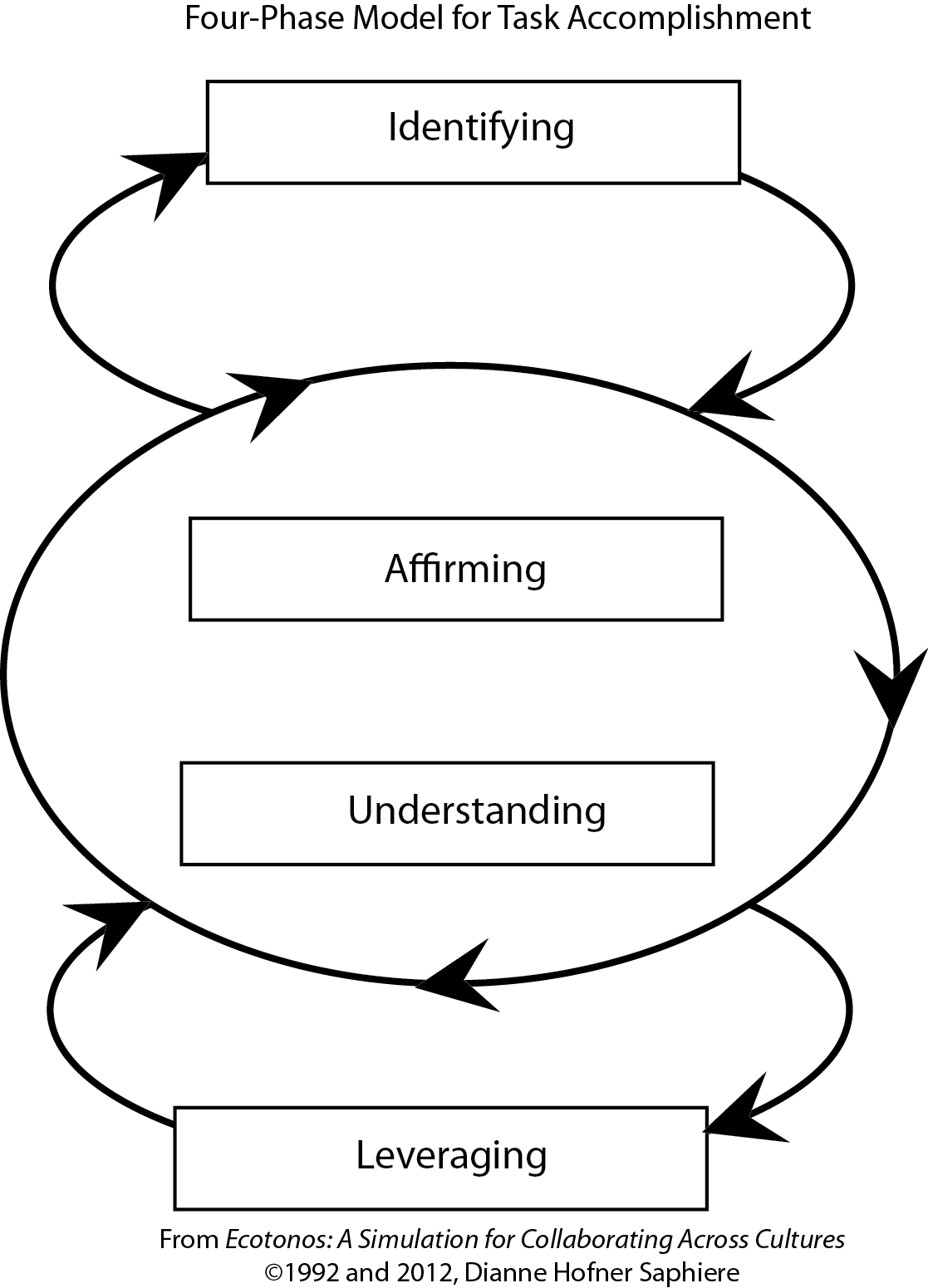
One model that has proven quite useful over the past two decades of use comes from the classic and widely used simulation, Ecotonos: A Simulation for Collaborating Across Cultures. Called the “Four-Phase Model for Task Accomplishment,” this very simple approach guides us to first identify the similarities and differences at play in our interaction, verbally affirm them, spend time understanding them and, finally, explore how to leverage them.

How a specific team leverages similarities and differences will depend on the members of the team and their shared goals and realities. Each team creates its own team culture, ideally based upon and growing out of the first three phases of this Four-Phase Model.

As you can see in the graphic above, the Four-Phase Model is not linear, but rather each phase weaves into and out of the other. For example, understanding may lead to further identifying, or leveraging may lead to added affirmation.

A text description of the Model accompanies Ecotonos and provides further elaboration of the graphic:

Identifying
  • Perceiving similarities and differences
  • Establishing which differences are divisive and which commonalties unite
  • Creating self-awareness of one’s own strengths and styles
  • Appropriate balancing of the tension between sameness and difference
Affirming
  • Confirming individual commonalties and differences
  • Substantiating that difference is desirable
  • Legitimizing difference in the eyes of the group
  • Welcoming conflict and paying attention
Understanding
  • Attempting to understand the other person’s perspective
  • Stepping into the other’s shoes
  • Mirroring/exploring and discovering together
  • Probing for deeper comprehension using various approaches
  • Seeing an issue from several vantage points
Leveraging
  • Defining how team members can contribute to goal accomplishment
  • Agreeing on methods for utilizing team expertise
  • Facilitating the generation of creative solutions
  • Creating a “team” culture
  • Focusing on efficiency and effectiveness

Once people become comfortable with the Identifying Phase, they may perceive the Affirming Phase as something unnecessary, a waste of everyone’s time. “We are all adults. We don’t need to give one another kudos.”

But my extensive experience proves, over and over again, that taking the time and effort to actively engage in the Affirming Phase is well worth the investment. Proceeding more slowly allows the team to accomplish more in less time, so to speak.

Below is one video that illustrates the value of affirmation in our lives. It is pretty long, but you’ll get the idea pretty quickly and I’m confident you’ll enjoy watching it.

The Four-Phase Model is one tool that can powerfully transform conflict into productivity and innovation. And, by the way, don’t forget that you are awesome!
 

Success? It’s All in How We Gauge It…

711079_3691916951303_1580871364_nThis is a story, or perhaps, more correctly, a cautionary tale, about a very successful expatriate and the highly respected, much-envied western company for which he worked. It is a story that made me think again about how we define success in our lives, and, in particular, how we define success in the global marketplace and success on an expatriate assignment.

The Company: The company is one of the very first to enter the Japanese market after World War II. It holds key patents on several important technologies, and invests decades establishing partnerships with Japan’s leading firms. It prides itself on hiring and promoting Japan’s best and brightest.

By the 1990s, it is the envy of other foreign-capitalized companies in Japan: it has a dominant market presence in its niche industries; long-established, trustworthy partnerships with major local players; and a stellar reputation for consistency, reliability and innovation. The president of the company is Japanese, and its management team is a strong and diverse mix of local and international executives who respect one another and leverage their expertise.

The Japan operation is a huge profit center, as well as the home of research and development breakthroughs leveraged by the company globally. They have strong cross-cultural programs in place for their staff worldwide, as well as for transferees and their receiving organizations.

The Expat: Our expat is intelligent, ambitious, and very capable. He has worked for the company for over 30 years, and is known as an excellent turn-around manager who had saved several manufacturing plants and regional operations, turning their losses into profits. Originally educated as an engineer, he is logical and methodical, and very good with numbers, graphs, and trends. Our expat is married with grown children and grandchildren, speaks a bit of French in addition to his native English, is well-travelled, but has never before lived overseas. This will be his last assignment prior to retirement.

The Situation: The global company, and most particularly home office, is experiencing economic hardship. A few expensive ventures have failed, and it is time to tighten belts, cut back, and save money across the board. Though the Japan operation is one of the most profitable worldwide, it is part of the overall organization and must join in company-wide budget cuts.

The expat is sent to Japan as the new CEO, and is told to cut millions from the annual budget. It is the first time in over a decade that the CEO of the Japan operation is a foreigner. The expat and his wife relocate to Tokyo, and quickly integrate into the local expat social scene. They love their new life in this amazing metropolis.

The Backlash: Local and existing expatriate management “cry foul.” They say it is a short-sighted decision to slash budgets in Japan when the operation is functioning smoothly and keeping others afloat. They say they are being punished for errors they did not cause, in which they were not involved. They warn that budget cuts will have long-lasting negative effects in the Japanese marketplace.

The new CEO explains that change always has its naysayers; people need to “get onboard or get off the ship.” “Tough times call for tough decisions.” “It’s a new day, a new world, a new economy.”

The cross-cultural consultant and existing management explain that the culture is different here, that the new CEO doesn’t yet understand Japan. Drastic changes have long-lasting effects that can’t be undone, can’t be apologized for. They urge him to send this message strongly to the home office, to push the decision back up. They say it’s his duty to make the home office aware of the repercussions of their top-down decision. They tell him that following instructions will mean the death of the Japan operation.

But the CEO has been down this road before. No one likes belt-tightening. No one likes budget cuts. He knows how to turn an operation around. He’s done it before. He doesn’t need people to “like” him. He knows they will respect him once they see the results he achieves. This is an once-in-a-lifetime opportunity, an incredible capstone to his career.

The Outcome: The expat succeeds, in stellar fashion. He fires people. He closes divisions of the company. He retires long-standing partnerships with important local players. He does exactly what he has been charged to do. And he furthers his career: after his two-year assignment he receives a huge bonus. He departs Japan to begin his retirement, riding the accolades of his success.

Home office is proud of their decision to send him; only an expat could have made these kinds of difficult decisions, taken these drastic measures. A local executive wouldn’t have been able to cut such long-standing local partnerships, couldn’t have bit the bullet to fire staff who had worked their whole careers building the company. It was a perfect decision. Money saved. Bottom line improved.

The Longer Term Outcome: Fast forward to four years after the expat’s departure. The highly successful, highly profitable business in Japan, with the enviable stellar reputation, closes down. Plants close. R&D facilities close. Offices throughout the country close.

Leading companies in the industry are no longer interested in partnering; once burned twice shy. After decades of trust building, smart business and shared success, how can they rely on a company that unilaterally decides to throw it all away to improve bottom-line at some far away home office? Why should they do business with a company that so clearly prioritizes home office needs over international success?

The company’s best and brightest have been hired by the competition. They are sour about their previous employer’s lack of loyalty and its short-sightedness. The company is no longer able to attract talented new hires. Who wants to work for a company that focuses on home office success, punishing those who succeed worldwide?

And today? The Japan operation, such an envied and respected company for over sixty years, is no longer. It was “over-milked,” bled dry. Not financially, but culturally, emotionally, trust-depleted.

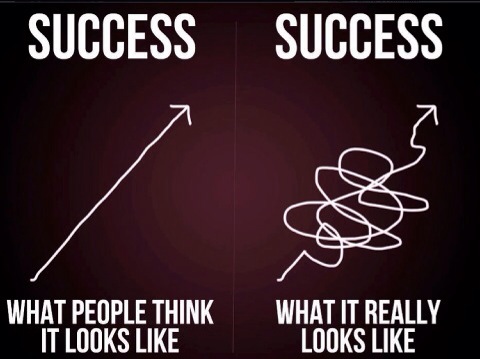
So, how would you gauge success in this situation? Knowing what you know now, was the CEO successful? At the time everyone thought so. He achieved the immediate goal. What do you think would have happened had he done things differently? Is there a way the expat could have been successful in his goal and maintained trust? Does this mean that every leader needs special tools when completing an overseas assignment? What can we learn from this?

Please ponder those questions while you read the key takeaways from my point of view.

The Lessons:

  1. As expats, we must learn to distinguish between what we know and what we have to learn. We must ask for help. We must be willing to listen. We need to pause and make sure we understand the cultural context in which we are working.
  2. We must ensure that while we use our strengths, we also use “fresh eyes” to see what’s new and different this time. Not every problem can be approached in the same way it was successfully resolved the last time around, in a different country, with different people.
  3. We must be able to discern when to jump at an opportunity, and when to push a decision back up the chain of command. No person is an island. Even a CEO is part of the interconnected web of relationships, responsibilities, and decisions that make up an organization.
  4. As home office executives, we must be able to weigh our priorities, consciously and purposefully. We must think long-term, even when the short-term is jumping up and down in front of us. It is our job to anticipate the multiple impacts of a decision, and shape the process to benefit the organization.
  5. We must be able to hear the truth, from all perspectives, and separate the facts from the complaining. We need to set aside what we want to hear, what we are used to hearing, and be open not only to what is said, but the context and manner in which it is expressed. A cultural informant may help in “translating” the meaning of the message.
  6. As local management, we must learn to discern when we are accurately predicting the future and when we are just resisting change. These are usually questions to explore through dialogue and open-minded discovery. This can be a challenging process, depending on the cultural norms of local management.
  7. As a global team, we must have the tools to enable us to share, hear, and weigh information in order to make the best decisions, for both the short- and long-term. And it is important to remember that the choice and presentation of information is, to some extent culturally influenced. Without a process to truly understand shared information, team members essentially operate in the dark.
  8. A multinational company, it is wise to employ tools like Cultural Detective to help prepare and guide executives on international assignments. Culturally Effective companies recognize the need, and have found Cultural Detective and a trained facilitator can help prevent stories like this from becoming commonplace Cultural Defectives.

Linked to the My Global Life Link-Up at SmallPlanetStudio.com

Developing Intercultural Competence — Online?

“While other cultural databases do an effective job of providing country overviews, Cultural Detective Online offers unique and complementary capabilities.”
—Joseph K. Lunn, Project Portfolio Manager and Cross-Cultural Trainer, Zurich North America

What makes for a truly useful online learning tool? When I asked intercultural trainers this question they seemed to want to be able to emulate the face-to-face environment as much as possible. Keep the learners’ attention, make it experiential, real and applicable — and make them think! They don’t need “the answers,” they need to know how to come up with real solutions when they find themselves in the midst of cross-cultural conflict. Oh, and you know the old adage, keep it simple!

So, when developing the Cultural Detective Online tool, some key fundamental concepts were kept in mind:

  1. Personal/professional goal setting should be at the entrance to working with the tool — what are the learners’ objectives in using the tool? They should be able to adapt and change these but also keep them in mind in order to stay on track and achieve them.
  2. Culture-general and culture-specific content and process — this is fundamental to working with the Cultural Detective Method (read more by Janet Bennett on this topic if you are up on it), so no challenge here!
  3. Contextually based learning — also core to the Cultural Detective Methodology is working with real-world critical incidents and pushing the learner to develop an understanding of the underlying role and subtle nuances cultural values can play in everyone’s lives.
  4. Links between deep culture and surface culture, between values and behaviors — again innately a part of working with the Cultural Detective tools and richly impactful (where we get the big aha moments) once the learner discovers, develops and really hones this skill.
  5. Prompting for the learners to summarize and apply their learning to their real situations — this is where the work they’ve put in pays the learner back; in other words what’s the bottom line? How can I really use what I just learned to make a value added difference in my work, in my global team, with my international vendors/clients/offices, etc.?
So we’ve heard from some of our early adapters — Cultural Detective Online will take you further in your intercultural competence journey. Joseph Lunn of Zurich NA says,

“In addition to crisp, clear detailed summaries of each country’s cultural values, the nearly 400 cross-cultural incidents provided show users exactly what can go wrong when cultural understanding gaps exist. The tool follows-up by sharing the differences in cultural values that underlie each incident and offers concrete suggestions to build cultural bridges and avoid similar incidents. CD Online is a great hands-on teaching tool that adds value to:

    • Employees beginning overseas assignments
    • Global project team members
    • Mergers and acquisition partners
    • Outsourcing engagements

Thanks for making this tool available to those who need it at a reasonable cost!”

Developing intercultural competence online? Of course! Take a test drive and see for yourself: Cultural Detective Online!

Resource Review: GDI Benchmarks

We tend to get a lot of phone calls asking us to recommend a cross-cultural assessment instrument. Usually I ask what  seems to me a very logical question: “What is it you are trying to assess?” I am then often shocked to hear that the caller is not able to answer my question!

As an organizational effectiveness practitioner I am concerned with individual and interpersonal effectiveness as well as that of the overall organization. We all live and work within systems, and if that system rewards and encourages us NOT to be cross-culturally competent, we are going to nurse burnout if we try to demonstrate and develop that skill. Organizational systems and structures need to support and reinforce individual and interpersonal competence. That is why “Global Diversity and Inclusion Benchmarks: Standards for Organizations Around the World” is one of my favorite assessment tools.

Written by Cultural Detective Global Diversity and Inclusion co-author Alan Richter, along with the very talented Julie O’Mara, the tool is available for use free of charge, though the authors ask that you submit a written request for permission (julie@omaraassoc.com or alanrichter@qedconsulting.com).

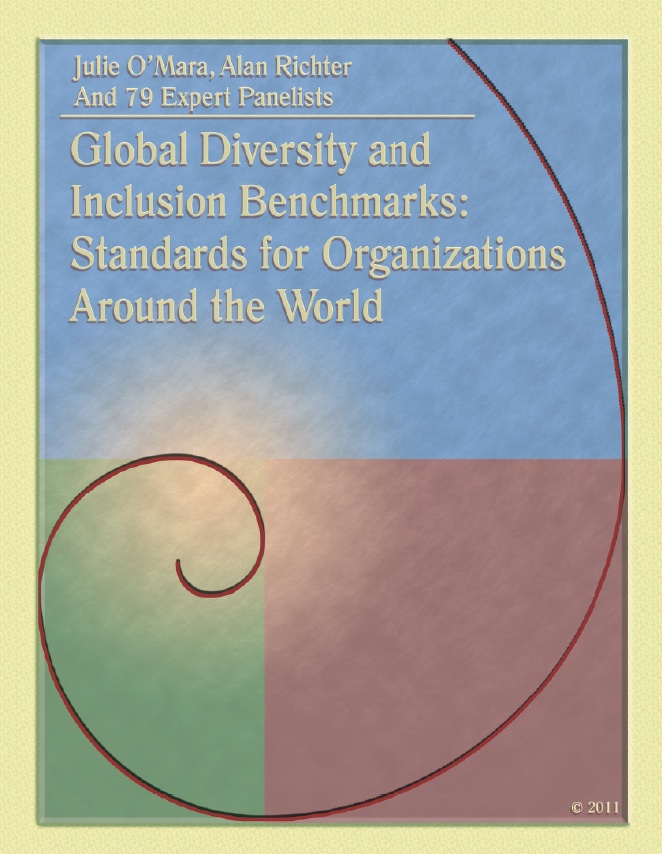
Newly updated in 2011, the 32-page booklet is based on a core model of 13 categories arranged into four key areas: Foundational Factors, Internal Abilities, External Benchmarks, and Bridging Competencies (you can already imagine how well this blends with a Cultural Detective approach!). The assessment instrument involves rating the organization at one of five levels for each of the 13 categories. Thus, it is very easy to use and educates as it assesses.

The GDI Benchmarks are based on extensive contributions from 79 experts around the world, and were developed from groundbreaking research in the early 1990s. Please contact Julie or Alan to learn more. And please share with us your organization’s progress with these benchmarks as you use Cultural Detective!

Every Organization Needs Intercultural Competence

Nearly every organization these days, even the smallest and most local, works with diverse customers, team members, vendors, and service providers. A corner grocery store serves people from different age groups, ethnicities, and spiritual traditions. So, which holiday greetings should the grocery store use, if any, so as not to offend or exclude? Why do some of the regular customers talk only to male employees? Could the store increase profits or attract new customers if it started offering halal meats or Latino grocery items?

What about the graphic designer who puts up a website or Facebook page designed to attract local clients, only to find that the first inquiries come in from overseas? The mere fact that you have an online presence can mean you offer your products and services worldwide. And what about the free clinic that finds itself dealing with patient care issues of recent immigrants from places halfway across the planet? Or disaster relief agencies attempting to coordinate aid from around the world, getting it to the places it needs to be, quickly?

Cross-cultural competence, the ability to communicate effectively across cultures, is a mandatory skill in today’s interconnected world. It will help you:
  • Service diverse customers in the ways they expect.
  • Attract, retain and make the most of the talented professionals your organization needs to succeed.
  • Sell more products or services, to the people who need them.
  • Achieve success in your negotiations.
  • Discern the “right” mergers and acquisitions for your purposes.
  • Get more productivity and satisfaction out of your local and virtual teams, projects, and vendors.
  • Jump start the outcomes of study abroad and international education, as well as expatriate assignments.
  • Ensure you get the most out of the time and money you invest in international, cross-country and regional business travel.
  • Develop mutually respectful relationships with clients, employees and other stakeholders.

Cross-cultural competence is a needed skill for all of us, and it helps improve our family and social lives as well as our work lives. But amidst all the competing priorities for our time and attention, how can we develop such competence? To most of us, going back to school or even taking a few days off work for a class isn’t doable. And besides, like physical fitness, cultural fitness requires ongoing, structured practice, not just one trip to a training room.

If only there were an online cross-cultural coach available to us anytime, anywhere, at low cost. One that didn’t make us memorize lists of dos and don’ts, that didn’t promote stereotypes but rather encouraged dialogue and critical thinking. An online coach that would provide a process for recognizing cultural differences, helping us to understand and leverage them as assets rather than as roadblocks. Better yet, an online coach that could help us make sense of our everyday experiences, learning how to transform obstacles into opportunities, and frustration into innovation. A tool we could navigate freely, according to our needs and interests, not some online talking heads or narrated slide show. A tool that would be available on our time — when and where we want it…

I am very excited to be able to share with you just such a solution, yours free for three days, no strings attached. It is a brand new online system based on the proven Cultural Detective Method used by governments, NGOs and for-profit organizations around the world.

Free 3-day trial to Cultural Detective Online!

Cultural Detective is directly responsible for a 30% increase in our customer satisfaction ratings.”

Cultural Detective sped up my learning curve; it allowed me to become a part of the team and have an impact on the business more quickly.”

“I have received kudos from my managers and the Vice President for having chosen the Cultural Detective. But the kudos should really go to you. Cultural Detective is a rock solid methodology.”

Pass this offer around; the 3-day-free trial offer is good from now through December 31, 2012.
To redeem:

  1. Log on to http://www.culturaldetective.com/cdonline/orders/trial
  2. Enter your name, email address and the code: Promo3
  3. You will receive a verification email from cdonline@culturaldetective.com. Click the link in the email, follow the instructions and you will be ready to go!

Enter your learning goals, explore 50+ fully integrated packages including full Values Lenses and 400 Critical Incidents, or upload and debrief your own real-life situations. Your customers, partners and employees, even your family members, will notice the difference!

Improve your ability to understand and collaborate across cultures, and help your friends, family members and colleagues to do the same! Let’s create a more inclusive, creative, collaborative and productive world out there! Get a clue!

What Do You Mean?! I’ve Worked Abroad 20 Years and Score Low?!

Image from The Vegetarian Athlete

So many of you seemed to resonate with my blog post about intercultural fitness, Tweeting it, Scooping it and passing it around the social media networks, that I thought you might be interested in a short article I originally drafted back in 2005 that uses the metaphor of an athlete to explain intercultural competence.

Developmental Intercultural Competence and the Analogy of an Athlete

Milton Bennett’s Developmental Model of Intercultural Sensitivity (DMIS), first published in 1986, provides a well-regarded theory about the process people go through as they learn to make sense of the complexity of cross-cultural communication. In the late 1990s after much research, an assessment for measuring intercultural sensitivity based on the DMIS was developed. Version 3 of the Intercultural Development Inventory (IDI) is currently in use by qualified practitioners. Owners and users of the IDI have in turn used their results to revamp the DMIS into the Intercultural Development Continuum (IDC).

While such tools can be useful for measuring program effectiveness when used for pre- and post-testing, and can be hugely beneficial for individuals who want to improve their cross-cultural communication and collaboration, there are downsides. I’ve worked with career expatriates and global nomads, for example, who score quite low on the IDI. What this means is that the low-scorer may have a lot of experience, but has not yet engaged in systematic, structured sense-making of those decades of complex intercultural experience. I’ve also worked with quite a few individuals who value harmony as fitting in, and thus, on a scale that measures celebrating differences, they score comparatively low. Predictably, low scores can cause people to become focused on discrediting the instrument or rationalizing the assessment process, rather than on gaining benefit from what the results have to say.

To help learners focus on the guidance these tools can provide, I often use the analogy of an athlete. Just as athletes need multiple abilities to perform well, so do intercultural communicators. Both athletes and intercultural collaborators can use assessments to guide their performance improvement training.

Let’s say that the data on my athletic performance shows that I need increased flexibility. I dedicate several months to becoming more flexible, and then my coach tells me that I now need to shift my focus to building strength — of course while maintaining my flexibility. Months later, I may find that I need to refine my technique in order to make the most of my superior strength and flexibility. Or, I get injured, and I decide to add to my training a focus on my mental game: overcoming adversity, learning from mistakes, being fully present in the moment. Athletes thus focus on multiple abilities at different points throughout their careers in order to perform at their best.

In a similar way, the DMIS, IDI and IDC can be used to show us which issues we should focus on at a given point in time in order to maximally improve our intercultural performance. While developmental models and assessments are designed as measuring sticks or standards of comparison, their value for personal competence development is to highlight to us what competencies we should focus on building at each point in our careers in order to improve our overall performance.

Each of us has to balance the dynamic between comfort and stretch, challenge and support, growth and rest, in our own ways. Knowing what we are good at, as well as where we can improve, can help ensure we continue to develop. Using an assessment tool to gauge and target our intercultural development, in combination with a competence development tool such as Cultural Detective Online for ongoing, structured learning, is a powerful combination.

Facilitated Online Learning Sessions for Cross-Cultural Skills


How can you quickly develop the skills necessary to lead your global team, manage your global project or prepare for expansion to emerging markets, without leaving your desk?

The Cultural Detective team presents a two-part series of Facilitated Online Learning Sessions that will provide you with the keys to a proven, industry-changing and industry-leading toolset for developing your individual and organizational global competence and to ultimately succeed where “culture conflicts” caused failed ventures.

  • Learn how to build trust in your global relationships.
  • Develop highly productive global teams.
  • Complete projects on time and under budget.
  • Determine how to best enter and succeed in your targeted international markets.
  • Know how to deliver superior client service, globally.
  • Get the most from your international assignees by equipping them with the skills necessary to excel in any culture.

Sessions will be held Wednesday and Friday, February 27 and March 1, 2013! Click here for more information or to reserve your spot. Seats are limited.


Cultural Detective Online is LIVE!!!!!!!!

Cultural Detective is proud to announce the new product launch of Cultural Detective Online! This tool is like having a virtual coach in your back pocket, successfully guiding you through the all-too-common missteps of cross-cultural negotiations and communications. Please check out the four videos on the home page. Today only (15-16 October, depending where you are on the planet) there is a 25% launch discount; enter promo code:   CDO-blog25  during checkout.

Huge thanks goes out to each of you who have worked with and incorporated the Cultural Detective Method into work with your clients or employee populations globally, as over the past eight years this tool has become a significant contribution to the intercultural field. Because of our clients and team, Cultural Detective has become globally recognized as one of the premier developmental tools of our time. Now we are on the cusp of very exciting and broader use of the tool through Cultural Detective Online! This new product launch furthers our mission of encouraging communities globally to prosper through intercultural understanding and collaboration.

Cultural Detective Online is useful in a broad range of contexts including global business negotiations and multicultural team effectiveness, international assignments and study abroad, and for successfully communicating within our families and communities, and within and across faith traditions.

A subscription to Cultural Detective Online offers the opportunity to explore the concepts of “culture” and “values” and how they impact communication in everyday life. It provides access to dozens of culture-specific Values Lenses and topic-specific Challenges Lenses, hundreds of real world cross-cultural incidents, and the easy-to-use Cultural Detective process for improving the ability to collaborate successfully across cultures, both on individual and organizational levels.

We are excited to announce that subscriptions are now available for individuals or groups, and we invite you to subscribe to Cultural Detective Online today by visiting http://www.culturaldetective.com/cdonline/ ! Subscriptions start at less than US$100/year, and are less for larger groups of subscribers. You will rarely find more value for your money.

Fortune 500 Client Prepares to Support Global Clients

“We have achieved, for the first time in my five years working on the Learning and Development team, a 100% satisfaction rating from our learners. This is quite an achievement, considering that learners spent 12 hours over three days in the classroom. They typically are resistant to being in the classroom for more than two hours at any given time!”

Such feedback from one of our Fortune 500 Learning & Development Managers is so wonderful to hear and just as powerful is what led to these results — it is a great story to repeat. Take a read!

“Our initial plan was to offer strict localization training that would concentrate on such basic details about Australia as spelling, unique business terminology, time zones, and the fact that they use the metric system. We also planned to train basic Australian etiquette: the do’s and don’ts.

In my search for training that we could purchase and customize to our specific needs, I came across Cultural Detective and discovered that we could, using your materials and methodology, offer our learners much more than the basics. In fact, what I found in Cultural Detective was an approach to cross-cultural communication that would leverage and greatly enhance the communication skills that our team already puts to use every day to achieve shared understanding with our U.S. business-to-business customers.

Clearly, Cultural Detective was a natural fit for us—a fact that was driven home when I attended the FOLE (facilitated online learning event) sessions and saw a great example of how the training could be delivered online (something I very much appreciated, since most all of our training will be virtual by next year!). The FOLE sessions put all the pieces of the puzzle together for me and gave me plenty of ideas for conducting the training in a fun and engaging way.

After attending the FOLE sessions, I worked closely with an Australian SME who works on our Customer Services team. His willingness and enthusiasm to share his culture made adapting Cultural Detective to our purposes a real joy. As your methodology strongly suggests, having someone who grew up in the culture directly participate in the development process helped breathed life into the content, and it also added a level of credibility to the training that made it even more engaging and effective.

But what really made the Australian training effective was the fact that we prefaced it with your Self-Discovery course. Learners who may have been a bit skeptical about having to take part in a course on “culture,” when they typically receive “nuts-and-bolts” training on how to meet their customers’ technical and marketing needs, were plainly won over to the idea, at times in moving ways. Members of our team whom I have known and trained for a number of years, and who rarely participate in the classroom, shared powerful childhood stories that demonstrated their ability to connect the personal and the cultural in deep and meaningful ways.

The Self-Discovery course cleared the way for us to dig into the Australian Cultural Detective course and make what in some cases were startling discoveries. One such discovery emerged when my Australian SME, who was in the training session (not only because he is my SME, but because he will be part of this new Australian program), shared his cultural core values with the rest of the group, all of whom are native-born Americans. His values were not only quite different from the rest of the group, but they meshed perfectly with the Australian core values, once I revealed that lens to everyone. The impact on the class, including on my SME, was clear and immediate: they were startled by concrete evidence of fundamental cultural differences.

Because of this discovery, as well as their very personal engagement with their own cultural makeup, learners were able to engage with the Critical Incidents deeply, perceptively, and energetically. We were able to pull out and analyze many “clues” from the incidents, while having a lot of fun doing so!

The other discovery came when I was working with another trainer on my team whose focus was on our new client company’s marketing strategy and how it evolved over many years in Australia. When he shared his extensive research on that strategy, it was immediately clear that the Australian core values I was covering were at the heart of our client’s branding. Based on that finding, we were able to weave our courses together into a powerful and cohesive curriculum.

To ensure that the lessons learned in the classroom stick and continue to grow, our coaching team (who participated in both beta sessions and live training) are now making connections back to the Cultural Detective method, concepts, and terminology as they guide learners through the initial relationship-building process with our customers. And the anecdotal evidence of the overwhelming effectiveness of this coaching is pouring in already.

I have received kudos from my managers and the Vice President of Services for having chosen and successfully delivered the Cultural Detective training. But the kudos should really go to you and your company, Kris. Cultural Detective is a rock solid methodology.

Thanks again for all your help making this training possible. When we take our next step into the global market, we know who we will turn to for training solutions.”

When you take your next step into the global marketplace, who will you turn to?

The Case of Who’s in Charge: Whose language will we speak?

Or: “How to lose a US$1 million investment in less than an hour.”

Cultural Detective and the Case of Who’s in Charge

This case takes place in one of the world’s largest companies. The company has recruited, at much expense, a leading Nigerian scientist to head up a project; he is perhaps the only person in the world with the unique knowledge base, experience and connections needed to see this major project through to fruition.

The company has gone to great expense to relocate the Nigerian project manager to western Europe, and to assemble a cross-functional team of the company’s leading professionals to aid with the project. The project is of huge significance for the company. The plan is that it will break new ground and shift the way such projects are implemented worldwide. There is much hope and excitement, as well as huge investment and anticipated return, riding on it.

The project manager, the Nigerian scientist, calls a meeting with three of his team members. All four people greet one another in English, shake hands, and sit at a table for the meeting. The project manager introduces the agenda, in English. After a few minutes the discussion seems to naturally shift from English into the local language, and continues for about 45 minutes.

At the conclusion of the meeting, the four gentlemen stand up, again shake hands, and shift back to English to congratulate one another. One of them says, “I think we have devised an excellent plan.”

The project manager replies, “Oh, yes? And what would that plan be?”

The three others appear puzzled. “The plan we just agreed to,” they say. “The plan we’ve been discussing.”

The Nigerian responds, “I didn’t understand a word you were saying. I don’t speak that language.”

“Why didn’t you say so?! We could have switched to English!!” The others’ mouths drop open in disbelief at this waste of time, and the scientist’s failure to speak up.

“I am the project manager. I called this meeting, and I started it in English. All our correspondence has been in English. You all changed the language. It is a power play. Your colonialist ways never seem to change.”

After this meeting, the project manager requested his removal from the project. It appeared this hugely anticipated effort was dead before it had even gotten going!

An orientation to cross-cultural collaboration, including work on understanding and learning to deal with issues of post-colonialism, may have prevented this rocky start. There are times when, once mistakes have been made, there is no rescue or remedy. Convincing these team members to give it another go, to get past their doubts and discuss ways of respectfully and productively working together, required skilled facilitation. The project manager was convinced that his team members were racist, and the team members were convinced the project manager was overly sensitive. Both thought the other arrogant.

What are some of the techniques you might use in such a scenario? How might you help the team members gain empathy for what the project manager was feeling? How might you equip them with the skills they need to demonstrate respect in such an environment? How might you help the project manager develop the skills he needs to manage team members effectively, given post-colonialist realities?