Bridging Cultures Online Learning Event: Register Now!

Bridging Cultures2
How do you translate knowledge of cultural differences into practice? What should you actually do differently to communicate better, and how do you ensure that what you are doing is effective?

  • Identify “bridge builders” and “bridge blockers” to your success
  • Learn techniques for in-the-moment bridging of differences to ensure that conversations spiral upwards instead of downwards
  • Develop strategies to both prepare for and repair cross-cultural relationships
  • Develop high impact, creative resolutions that take into consideration interpersonal, intercultural, and situational factors

During the webinar we will use Cultural Detective Bridging Cultures. This package is a little different than many in our series: rather than focusing on a specific culture, this package includes exercises and processes to help you navigate the differences you face. It is all about translating cultural savvy into action.

Cultural Detective Bridging Cultures cover

As you probably know, the Cultural Detective Series develops three core intercultural capacities: Subjective Culture, Cultural Literacy, and Cultural Bridging. Every packet in our series develops all three of these capacities; culture-specific packages have a particular focus on Cultural Literacy, while CD Self Discovery and CD Bridging Cultures focus more in-depth on the other two target capacities.

The Cultural Detective Bridging Cultures package is for anyone wanting to move from awareness to action, and it makes a great complement to any Cultural Detective culture-specific package. Join the webinar and learn more about the package and how to use its unique activities and exercises to enhance your own skills and/or your training program.

WHO

Facilitator for this event will be Kate Berardo, co-author of Cultural Detective® Self Discovery and Cultural Detective® Bridging Cultures. She provides consulting, training, and coaching to help individuals be effective global leaders and organizations to navigate complex cultural challenges. Kate has developed and delivered learning events in more than eighteen countries, with individuals from over fifty nations, using both online and traditional facilitation tools. Her work has been featured in media worldwide, most recently on CNN’s Business Traveller and the Dubai daily Gulf News.

Kate holds a distinguished Master’s in Intercultural Communication from the University of Bedfordshire, UK, and is a summa cum laude graduate of Northwestern University in the USA. She is certified in the Myers-Briggs Type Indicator®. With George Simons and Simma Lieberman, Kate authored Putting Diversity to Work, a training guide for managers to leverage diversity in the workplace. Raised in California, she has also lived in Japan, Spain, France, England, and Denmark. Her work and travel to over forty countries have given her a deep understanding of the intricacies of bridging boundaries and barriers.

WHEN
Monday, June 13, 2016 from 10:00 AM to 11:30 AM (MDT)
Register now to secure your place! 

Announcing the Fifth Edition of Ecotonos: Build Cross-Cultural Teams!

IMG_1735

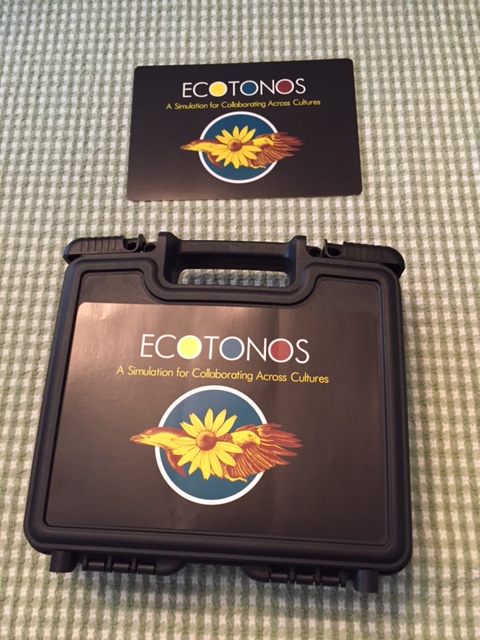
Ecotonos: A Simulation for Collaborating Across Cultures is a classic in the intercultural field. It simulates teaming across cultural differences, and thus helps learners practice and refine cross-cultural collaboration skills. It can be played multiple times for developmental learning, since there is no “trick” to the game. Play and debrief require a minimum of 100 minutes, but is so rich that quite a few professors refer back to and pull learning from the Ecotonos experience throughout the entire semester of a course.

First published in 1992, Ecotonos is now in its fifth edition!

I want to thank—immensely—Kathryn Stillings, who headed up the most recent reprinting: from finding sources for the plastic carrying case and the metal culture buttons, to proofreading and managing the printing, and hardest of all, assembling the finished product and getting it shipped off to our fulfillment center. And she claims to have had fun doing it!

The photos below prove that when you purchase Ecotonos you are getting hand-assembled, artisanal quality goods! 😉 Click on any image to view it larger or see a slideshow. Of course, Kathryn took the pictures, so you sadly don’t see her in any of these.

If you don’t use Ecotonos in your classes or trainings, you are missing out on an invaluable tool for developing cross-cultural teaming competence. The game can be reused for years and years; order yours today!

To Slurp or Not to Slurp

PERCEPTION AND DECEPTION COVER FACE 3One of the greatest benefits of working across cultures, aside from the terrific people, is the fabulous food we are privileged to enjoy. I’m sure most of you agree, as some of our food posts have proved to be popular entries on this blog:

  1. French Food Culture Selling Men’s Underwear
  2. Food Speaks in Many Tongues
  3. The Squid Has Been Fried: Chinese Food Culture
  4. Ukiuki, Pichipichi, Pinpin: Japanese Food Onomatopeia
  5. Bicycling in the Yogurt: the French Food Fixation

In the 90-second video below, Joe Lurie, author of Perception and Deception: A Mind Opening Journey Across Cultures, tells the story of a Fulbright Scholar who spoke five languages, yet refused to sit next to Japanese colleagues during meals.

Differences in customs and etiquette can damage relationships; Perception and Deception provides stories from nearly 100 cultures. Be sure to order your copy today.

Once you’ve read it, remember that it is the underlying values we hold and the assumptions we make that are the differences that make a difference to productivity and satisfaction. Cultural Detective helps you learn on that deeper level, building understanding as well as strategies and skills for harnessing differences as assets. Get  your subscription today!

How Language Can Deceive

PERCEPTION AND DECEPTION COVER FACE 3“We’re all coming to be like each other. While there’s some truth to that, it’s also truth that in coming together so rapidly—with technology, migration across borders—we are unprepared for the contact between people and cultures we know nothing about.”

Joe Lurie recently spoke to a sold-out crowd at the Commonwealth Club of California. In this two-minute excerpt from that presentation, Joe tells the sad story of a woman looking for a job who isn’t hired, at least in part, because of her name.

We’ve published about the importance of names previously on this blog. While Joe and Fadwa’s story is anecdotal, it echoes the experience of thousands of others worldwide. You may recall the widely reported story of José Zamora, who was hired only after he changed the name on his resumé to “Joe.” According to Recruiter magazine:

Job applicants with white names needed to send about 10 resumes to get one callback; those with African-American names needed to send around 15 resumes to get one callback. This would suggest either employer prejudice or employer perception that race signals lower productivity.

The book, Perception and Deception: A Mind Opening Journey Across Cultures, tells hundreds of stories like this one, in an effort to help the reader develop awareness and understanding, so they can then use Cultural Detective to build their skills and competence. If you haven’t yet read the book, be sure to order it now. Better yet, order a copy for Aunt Margret or your Cousin Vinny, too.

Developing Cultural Competency as a Life-long Journey

CSxMJSzXAAARY7-I have long admired Christian Höferle of The Culture Mastery. He is a German-born intercultural trainer and consultant living in Georgia (USA), a certified facilitator of Cultural Detective, and writes a funny and useful blog that has taught US-born me a lot about southern US culture.

Christian recently began a new podcast series—The Culture Guy—that keeps me chuckling while also reminding me what’s important about cross-cultural effectiveness. I was honored to be his third guest, and thoroughly enjoyed the wide-ranging conversation. Christian is intelligent, witty, and committed to excellence. I trust you will find the interview worthwhile; you can listen by clicking the playbar below or on this link.

After you’ve listened to the podcast, please take a moment to share with us one of your “cultural fool” moments, an example of when your “common sense” wasn’t shared, or a favorite tip for success across cultures. We look forward to reading them!

Great Press Response to CD’s New Book!

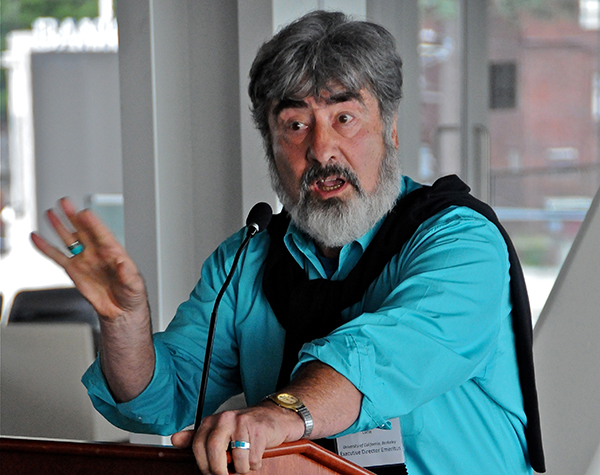
JoeLurie600Cultural Detective is the proud publisher of a wonderful new book chock-full of stories of intercultural interaction from around the world—a book that contains loads of proverbs and insights to current events as well: Perception and Deception: A Mind-Opening Journey Across Cultures, authored by Joe Lurie.

Response from the press to the new book has been swift and highly positive.

  1. The first article came from the National Peace Corps Association. Joe has a fellowship endowed in his honor, one designed to enable returned Peace Corps volunteers to obtain their PhDs. Isn’t that terrific? So they used our book to encourage people to apply and further their education! Read more about Joe, the book and the fellowship in this terrific article.
  2. University of California Berkeley profiled Perception and Deception in a public affairs news release, Former I-House director explores cross-cultural encounters in new book.
  3. Perception and Deception was also showcased recently in Psychology Today, in an article entitled, Do You Perceive Things the Way They Really Are?

Joe has been doing quite a few readings, and one that is open to the public is coming up on Tuesday, December 8, at the Commonwealth Club in San Francisco. He is an incredible storyteller, and it’s sure to be a lively audience, so don’t miss the opportunity!

Perception and Deception: A Mind-Opening Journey Across Cultures is available in print or ebook versions, via your local bookseller or amazon. Be sure to get your copy today! The book makes a wonderful gift.

The Pulitzer’s of Diversity

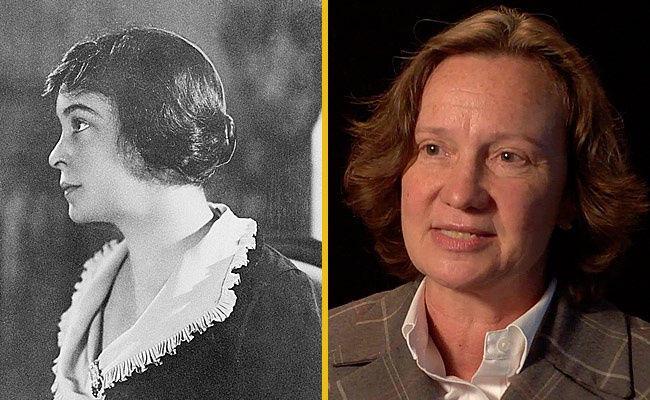
Edith Anisfield Wolf, Photo from the Cleveland Foundation

Edith Anisfield Wolf, photo from the Cleveland Foundation

Do you think you are well-read on world cultures? Do you occasionally wonder what one person can do to promote justice in this world of ours? Are you someone who thinks that it’s primarily people of color who recognize the vital importance of diversity on our planet? If so, think again and most definitely read on.

Edith Anisfield Wolf, born way back in 1889, was a poet, businesswoman and philanthropist from Cleveland who had a lifelong passion for social justice. The daughter of immigrants, Edith spoke four languages (English, French, German and Spanish) and used literature as a means to explore racial prejudice and celebrate human diversity.

In 1935 she created the Anisfield-Wolf Book Awards, to honor books that explore these very issues. That makes 2015 the Award’s 80th anniversary! Congratulations and thank you, Edith! Note how visionary that makes her—establishing this important Award 20 years before the U.S. Supreme Court’s landmark Brown v. Board of Education decision! Edith died in 1963, but her legacy lives on.

“The Anisfield-Wolf Book Awards recognize books that have made important contributions to our understanding of racism and our appreciation of the rich diversity of human cultures…Today it remains the only American book prize focusing on works that address racism and diversity. Past winners have presented the extraordinary art and culture of peoples around the world, explored human-rights violations, exposed the effects of racism on children, reflected on growing up biracial, and illuminated the dignity of people as they search for justice.”
—Anisfield-Wolf website

Over the past 80 years the Award has highlighted nearly 200 significant books, most of which I have not read. So I need to get going! For those of us who may be intimidated by such a long list, they also have a smaller list of 24 “Lifetime Achievement” books, or you can sort winners by year or according to the categories of fiction, non-fiction or poetry.

Again from the Award’s website: “The Cleveland Foundation, the world’s first community foundation, has administered the Anisfield-Wolf prize since 1963. Before then, the Saturday Review sponsored the awards. From the early 1960s until 1996, internationally renowned anthropologist and author Ashley Montagu chaired the awards jury. That panel of globally prominent scholars and writers has since been overseen by Henry Louis Gates Jr., the acclaimed scholar, lecturer, social critic, writer, and editor.”

Have you heard of this Award? Despite its prestigious history and huge contribution, and the fact that the Anisfield-Wolf’s cash prizes equal the Pulitzer’s, many people haven’t heard of it. Perhaps that’s due to how ahead of its time the Award was, though Karen Long, the Award’s manager, has another theory:

“[The] Anisfield-Wolf remains a relatively unknown honor. Awards manager Karen Long suspects she knows why. ‘Things that address race are considered, sometimes in the larger culture, as homework or broccoli or good for you.'” —USA’s National Public Radio

Cultural Detectives, I am thrilled to be on the journey to developing intercultural competence, respect, understanding, collaboration and justice with you. And, I’m feeling like we need to work together to make sure more people know about this incredible resource! Let’s start by watching the Awards via live feed this Thursday, September 10, at 6:00 pm Cleveland time (GMT-4), and by circulating this post widely to your networks.

The Blame Game

BlameVAcccountabilityBlame is one of the most powerful tools in the repertoire of a Cultural Defective. Do you want to diminish trust in a relationship? Cause irritation? Ensure that others do not want to help you succeed? Ruin a perfect opportunity for cross-cultural collaboration? Then blame is a good strategy.

In contrast, Cultural Detective advises you to “refuse to take offense”—a much smarter operating norm for Cultural Effectives. Has someone failed to inform you in a timely manner? Rather than blaming them for rudeness or unprofessionalism, it is more constructive to learn the intentions behind their (lack of) communication, explain your preferences, and together create a shared way forward—a “third culture.”

“Blame is the discharging of discomfort and pain. It has an inverse relationship with accountability.”
—Brené Brown

When others have a different cultural norm, mindset, or “common sense,” it is most productive and sanity-preserving to acknowledge and understand these differing “cultural senses”! Actively taking accountability for co-creating shared norms provides a way to work together more effectively. It also facilitates trust, while embedding as “normal” the processes and a mindsets to help solve future problems.

We are fans of Brené Brown, as many of you may be, too. The video below captures this basic concept of blame vs. accountability in her inimitably humorous and insightful style, albeit not in a cross-cultural context.

Are you looking to build intercultural competence, and learn a reliable process to transform blame into accountability? A subscription to Cultural Detective Online for you, your family, or team will help you accomplish just that!

Report from the Field: Creating Models Worthy of Emulation

IMG_6315-640x480Many thanks to Benjamin Smith, Ph.D., linguist, intercultural consultant and trainer, and owner of Broad Imagination LLC, for this guest post.

“Recently, I was invited to lead a cultural sensitivity training for a company facing some key human resource challenges. I was given a little background information prior to my arrival, but stopped the director short as he was bringing me up-to-speed in our meeting, in order to be able to gather information during the needs assessment without preconceived notions.

The printed workbook and facilitator guide that I use to supplement my training is produced by Cultural Detective®, a company with decades of success in the intercultural field. I find that their philosophy dovetails well with mine in that they help me guide users through a process of understanding the “Lenses” through which they see the world.

To accomplish this objective, Cultural Detective® presents Values Lenses—for key cultures such as nationality, gender, spiritual tradition, age or generation, and sexual orientation—as well as Personal Values Lenses.

I feel blessed to have worked with such a remarkable group of individuals who are committed to improving their intercultural communication skills. One of the most important takeaways for me from the training was realizing that obtaining a better understanding of where we come from refines our assessment of others, and sheds a positive light on helping us accurately interpret others’ behavior.

Obtaining a better understanding of where we come from, refines our assessment of others and sheds a positive light on helping us accurately interpret others’ behavior.

My approach to the project included one-on-one interviews with each participant during and at the conclusion of the training. Thanks to valuable advice from more experienced interculturalists, the interviews enabled me to gather useful information—people often reveal things in private that they are reticent to share with a group. These insights informed the content and delivery of the training.

I deliberately engaged my strength of connectedness as I spoke with people individually. The interviews afforded me the opportunity to create a space where I could genuinely listen to participants and tailor the training to their concerns. I typically schedule a follow-up interview after the training to assess what learning has taken place.

In this intimate setting, prior to and after the training, I find that, while people are eager to talk about what everyone else is doing wrong, they are not so quick to admit their own faults. They often overemphasize their exhaustive efforts to resolve intercultural conflicts, and minimize the efforts of their colleagues.

Through appreciative inquiry and inductive listening, I can facilitate peoples’ ability to see the things they were not initially aware of, and shed light on areas where their efforts can be more effective, to gain traction and avoid spinning their wheels. These interviews are powerful supplements to the training itself, enabling participants to apply their learning and develop personal development plans.

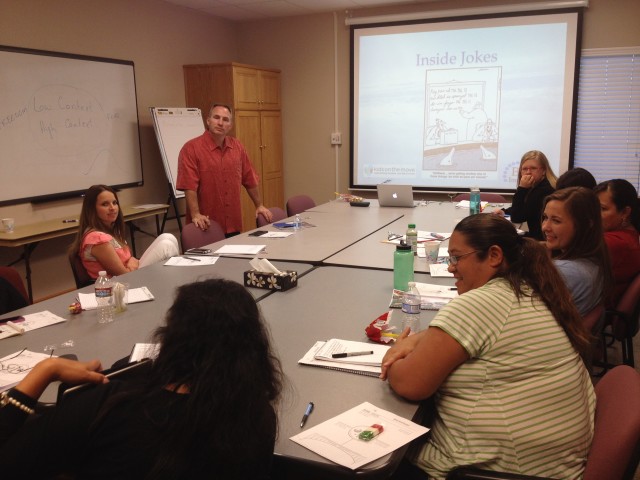
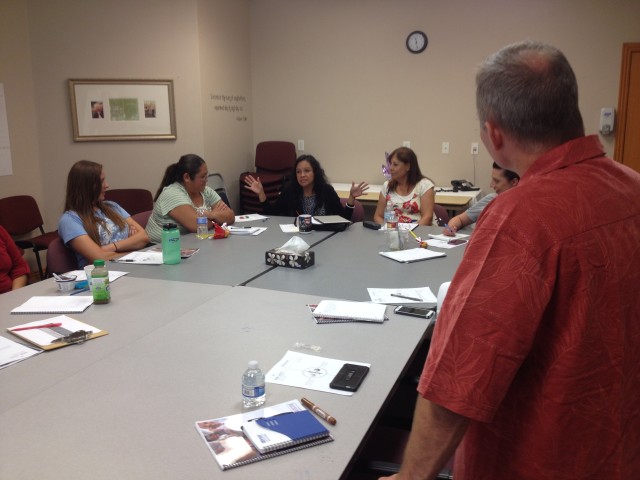
I designed several activities for the group sessions during which participants would be able to showcase their cultures and articulate their Personal Values Lens—the glass through which they view the world, colored by the values they embrace.

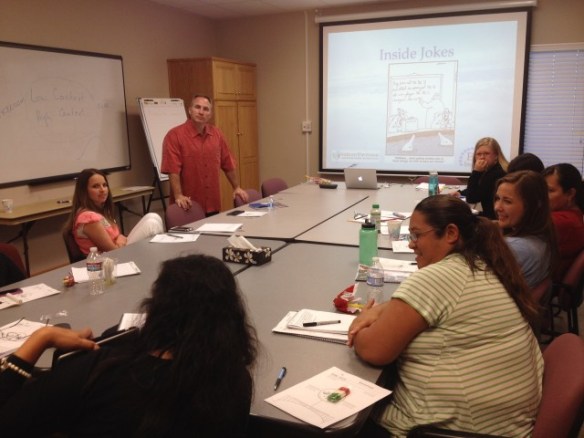
It was refreshing to see how people listened to and celebrated the cultural traditions shared by others through songs, recipes, and inside family jokes. There were several points when we analyzed family stories that had been passed through the generations, and examined the values those stories contain. It was amazing to see how participants recognized the uniqueness of each individual and what they had to share. It was also a great reminder of how anxious people are to be recognized for their contributions.

It was amazing to see how those present recognized the uniqueness of each individual and what they had to share. It was also a great reminder of how anxious people are to be recognized for their contributions.

Another facet of my company’s approach—Broad Imagination LLC—supported by the Cultural Detective® Model, consists of helping clients develop solutions themselves through a facilitated discussion. A Cultural Detective® session is not a passive chat that is forgotten when we all go home. It requires me, as a facilitator, to be present—to truly listen to and push participants for practical solutions. People tend to skirt difficult topics and slip into euphemisms or clichés as a way of avoiding the “elephant in the room.” I appreciated the courage of those who were willing to name their fears, explore them, and address them publicly.
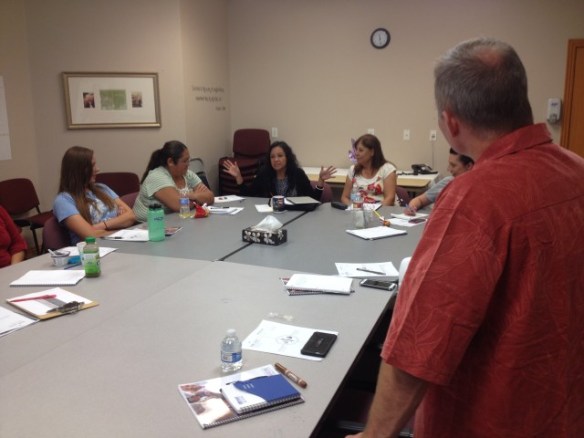
IMG_6318-640x480Some “aha” moments for trainees in this session included:

  1. Common sense is not the same as cultural sense. What we may consider to be general knowledge or a logical conclusion is not shared by everyone. Knowing that different cultures have a unique perspective on any given cultural encounter helps us open our minds and make room for unexpected conclusions.
  2. All countries do not have the same value for “ethnic exoticness” and, therefore, respect. For example, in the USA, one may appreciate a Mexican flag being displayed in a cubicle, while the display of a Canadian flag might not earn the same appreciation. It is far more common that the more “exotic” and underrepresented the culture, the more interest we take in their displays of nationalism and pride.
  3. It doesn’t matter how much time someone has spent living among other cultures, biases persist and are hard to shake. It is one thing to spend time abroad, and another to make the effort to go outside our comfort zones to truly understand another’s cultural Lens.
  4. Language has a way of revealing lack of trust in an organization. When there is low trust, it does not matter what a person does, it can still touch off our sensibilities. Being offended that someone is speaking an unfamiliar language in our presence may cause us to bristle because we suspect that they are talking about us. It may not be that the language is threatening or that there are unsavory nonverbal cues, rather simply the fact that the language is spoken in a low-trust environment results in a negative spiral of lower trust.
  5. All we can really do is observe behavior. When we seek to explain why someone did something or what their motives were, we are venturing into judgment and assumptions. Assuming the best positive intent behind observed words and actions helps mitigate potential incorrect negative perceptions and opens our mind to collaborative solutions.

The Cultural Detective® Model emphasizes three core competencies: Subjective Culture (understanding ourselves); Cultural Literacy (our ability to understand others); and Building Cultural Bridges (the ability for two or more people to collaborate productively across cultures). These competencies are taught in a variety of ways, but I have found that when learners participate in this discovery of cultural identity through provocative discussions, they overcome their anxieties and find that the issues they once believed to be insurmountable obstacles are really stepping-stones to greater appreciation and collaboration.

I love the fact that this particular client’s mission focused on “creating a positive model.” That is precisely what intercultural training provides. The training that Broad Imagination aims to deliver, and which Cultural Detective® helped accomplish, created a model worthy of emulation, one that will serve as a touch stone for future positive intercultural encounters.

Armed with an appreciation for the rich and unique cultural heritage that each employee brings to the table (representing a plethora of values and cultural influences), participants can now implement specific strategies with their colleagues, and try new approaches to the same situations—with improved results, greater personal satisfaction and increased intercultural confidence.

Just Released! New Book: Perception and Deception

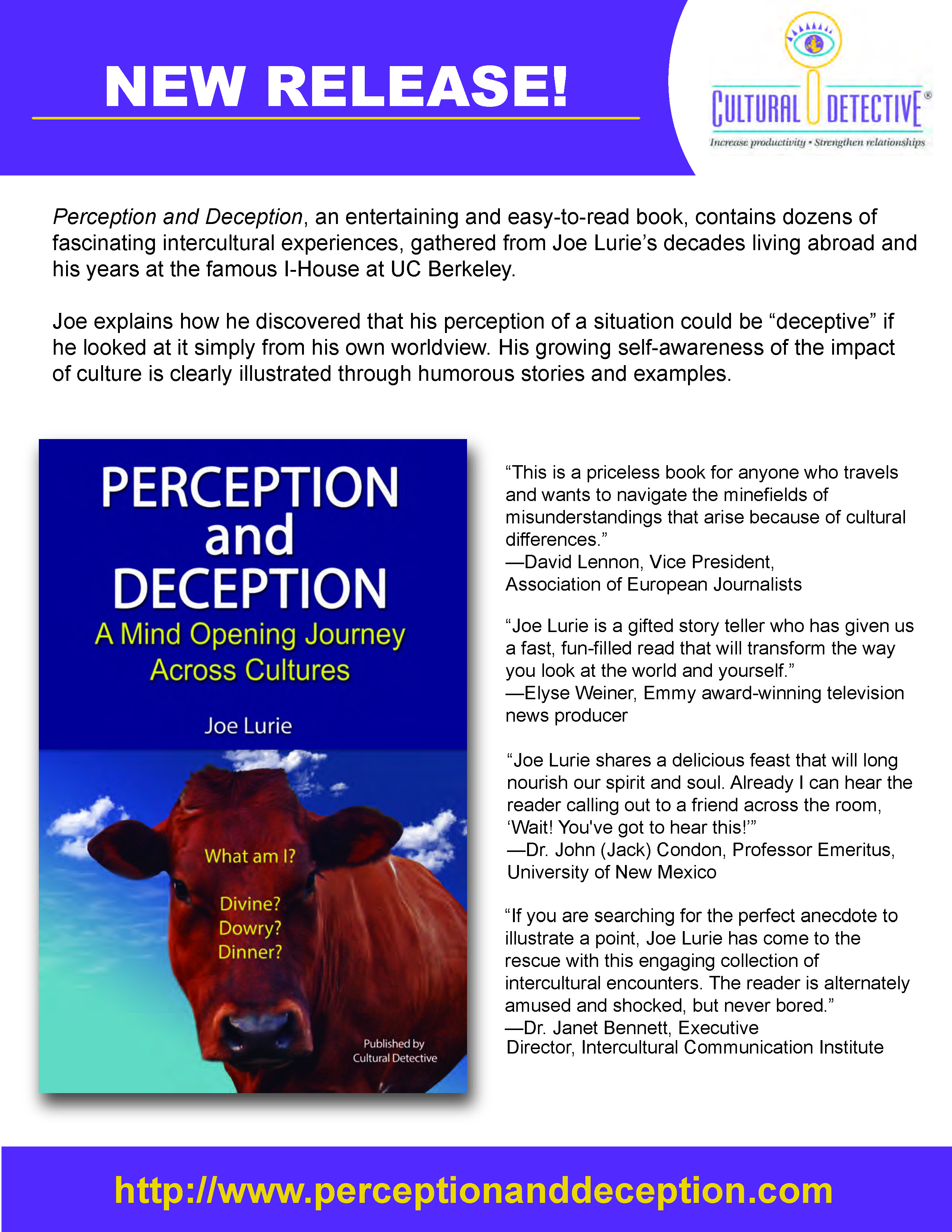
PERCEPTION AND DECEPTION COVER FACE 3Need a powerful story to illustrate your point about intercultural miscommunication? Want to help someone understand that different cultures may utilize the same word, concept, image, gesture, sound or touch to mean different things? Could you use a proverb that gives insight into another person’s cultural worldview? Search no more—Joe Lurie , intercultural trainer, Executive Director Emeritus at UC Berkeley’s International House, and former Peace Corps Volunteer, has got you covered!

Perception and Deception: A Mind Opening Journey Across Cultures, is an entertaining, eye-opening and easy-to-read book that contains dozens of intriguing intercultural experiences, gathered from Joe’s research and his decades living abroad and managing Berkeley’s International House, one of the largest, most diverse living centers on the planet.

In an informative and enticing manner, the author explains how he discovered that his perception of a situation could be “deceptive” when he looked at it simply through his own Lens. Joe’s growing self-awareness of the impact of culture is clearly illustrated through his humorous stories and striking culture clash examples from news reports across the globe. Better yet, these stories are indexed by culture! Joe also shares pearls of wisdom about perception, perspective and the nature of “truth” from his rich personal collection of proverbs and sayings from around the world.

Joe’s infectious curiosity in uncovering and understanding cultural differences will help readers, no matter their profession, age or cultural background, gain a fuller appreciation for the richness of human diversity, and the multiple things that can go wrong when trying to communicate across cultures. You, your students, colleagues, clients, friends, and family will all enjoy this engaging book, published by Cultural Detective, and now available in paperback. Kindle on Amazon and other e-versions from Barnes and Noble and Apple will be coming soon.

Perception and Deception is an engaging and insightful introduction to cross-cultural communication in a globalized world. For more information, reviews, a peek inside the book, and a link to purchase a copy, visit www.PerceptionandDeception.com.

Purchase the book now.

You are also welcome to copy and print the flyer below to share with your colleagues and friends.
Perception Deception Flyer White